Week 1- Mixing Tee
AIM:
To set up steady-state simulations to compare the mixing effectiveness when hot inlet temperature is 360C & the Cold inlet is at 190C using k-epsilon and k-omega SST model for the following model.
- Case 1
- Short mixing tee with a hot inlet velocity of 3m/s.
- Momentum ratio of 2, 4.
- Case 2
- Long mixing tee with a hot inlet velocity of 3m/s.
- Momentum ratio of 2, 4.
- To compare the following values from the 2 cases.
- Cell count
- Average outlet temperature
- Number of iterations for convergence
- To make the following results.
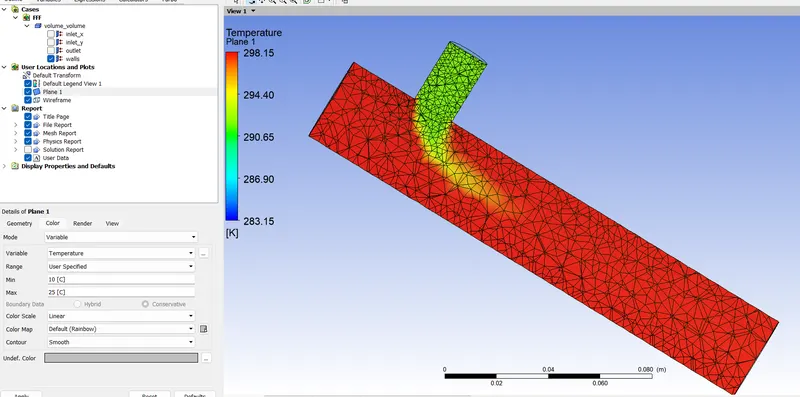
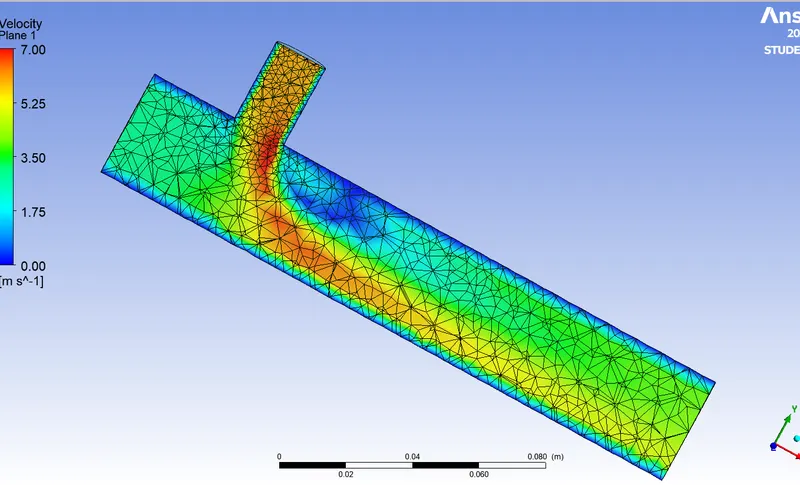
- Velocity and temperature contour plots on the cut planes along and across the pipe.
- Velocity and temperature line plots along and across the length of the pipe.
- Perform Mesh independent study for any one case.
- Discuss the effect of length and momentum ratio on results.
PROCEDURE:
Geometry:
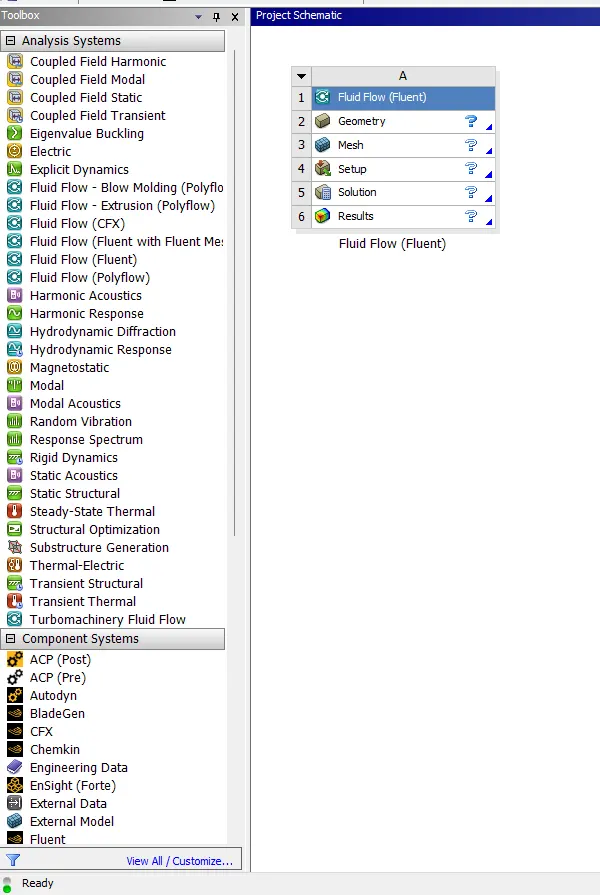
- First, to make a simulation setup, select Fluid Flow(Fluent) from the left side window of the workbench.
- Next, select the geometry it will be opened in spaceclaim
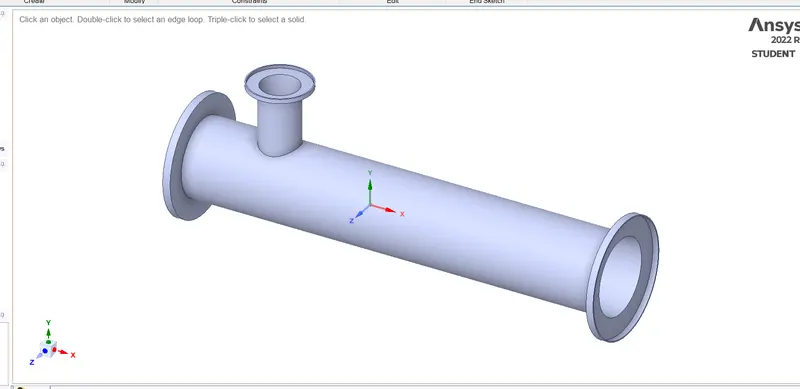
- After opening the geometry, Select File ---> Open ---> and click the file that you wanted to open 'mixing_Tee_short.STEP'.
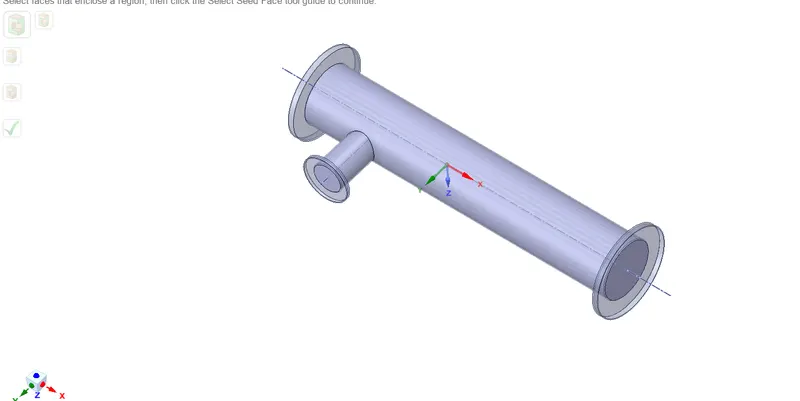
- Then click Prepare on the top menu bar to extract the volume that is needed for simulation
- After opening volume extract, click the edges from where the fluid flow is in contact
- clicking the tick mark in shell so that geometry which doesn't have the role to play during simulation is removed
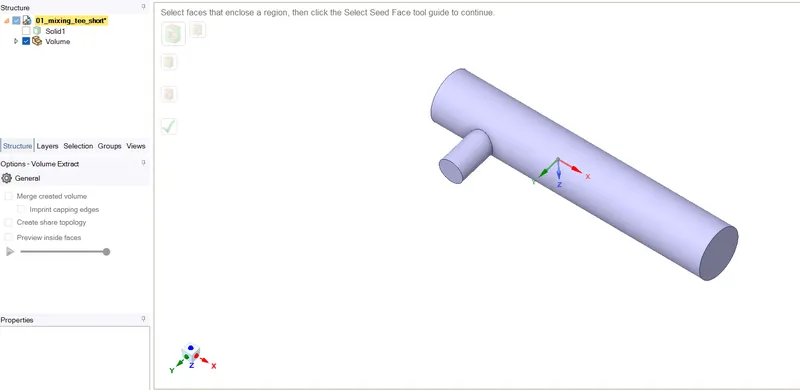
- Then right click the shell and select supress for physics.
Mesh:
- After completing geometry, close the window and double click the mesh in the workbench
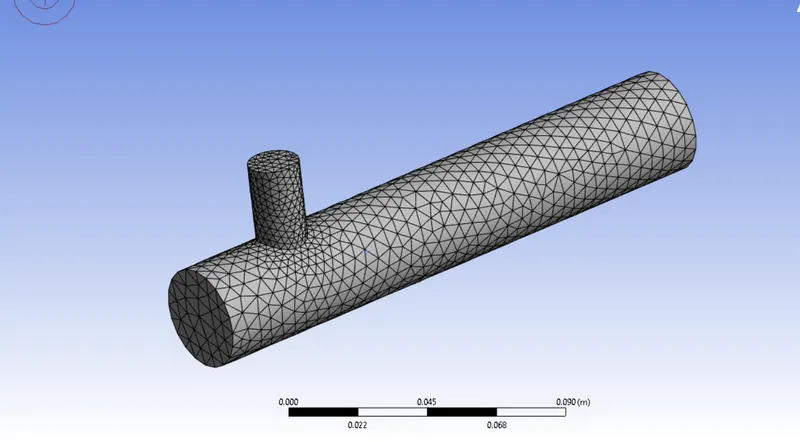
- The window for mesh will open with imported geometry.
- Right click on the surfaces of the geometry and select Create named selection for naming the surface.
- For inlet and outlet of the surface, give name as 'inlet y , inlet x and outlet so that ansys can read the name and give the flow direction
- Now mesh the surface with default element size
Setup:
- Now double click the Setup and open it.
- Tick the 'Double precision' check box and start the setup.
- To change the units of the measurements, click units in the top left of the menu bar
- For checking mesh, click mesh -> Perform mesh check.
- Now, To selecting the type of model, select viscous in tool bar and select the model required and it's classification and its types.
- Then click the tick mark in 'Energy' check box since the temperature parameter is involved in simulation
- Select 'boundary' in toolbar and select the surface where you have to setup the boundary conditions
- The boundary conditions for temperature and velocity are inserted and apply ok.
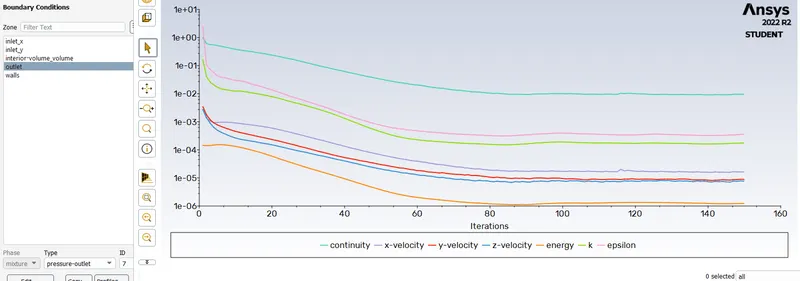
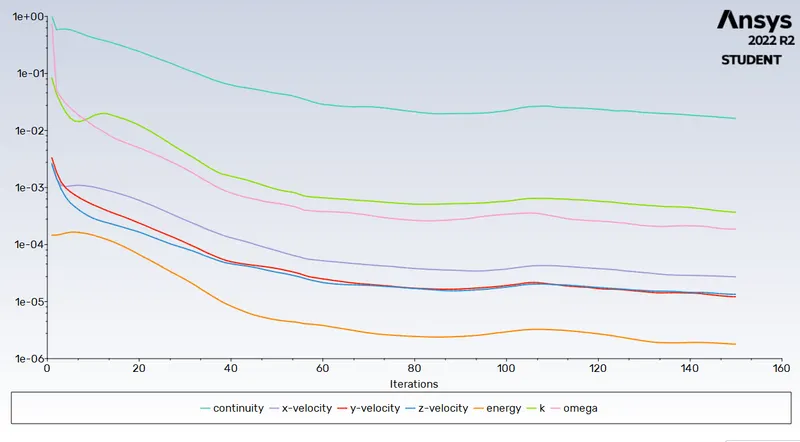
- Click on initialize to initialze the data and click calculate to perform iteration. Give the iteration number as 150
SETUP AND SOLUTION:
CASE 1:
- Short mixing Tee with a hot inlet velocity of 3m/s
- Momentum ratio of 2,4
CASE 2:
- Long mixing Tee with a hot inlet velocity of 3m/s
- Momentum ratio of 2,4
|
SETUP |
SHORT TEE ( HOT INLET VELOCITY = 3m/s) |
|
|
K-EPSILON |
K-OMEGA |
|
|
SOLVER TYPE |
Pressure based |
Pressure based |
|
VELOCITY |
Absolute |
Absolute |
|
TIME |
Steady |
Steady |
|
VISCOUS MODEL |
Realizable K-epsilon with standard wall function |
K-omega SST model |
|
MATERIAL |
Air |
Air |
|
CELL ZONES |
Fluid type : air |
Fluid type : air |
|
BOUNDARIES |
· For Inlet_x Velocity magnitude = 3m/s Temperature = 360c · For Inlet_y Velocity magnitude = 6m/s Temperature =190c · For Outlet Gauge pressure = 0 pa |
· For Inlet_x Velocity magnitude = 3m/s Temperature = 360c · For Inlet_y Velocity magnitude = 6m/s Temperature =190c · For Outlet Gauge pressure = 0 pa |
RESULTS:
K-EPSILON MODEL:
RESIDUAL PLOT:
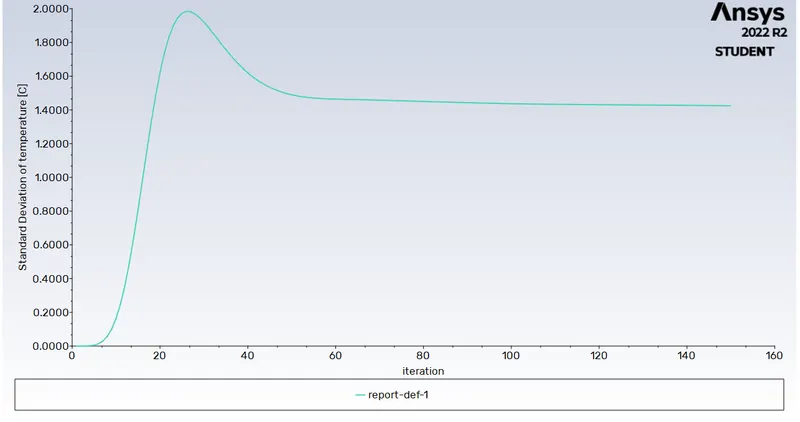
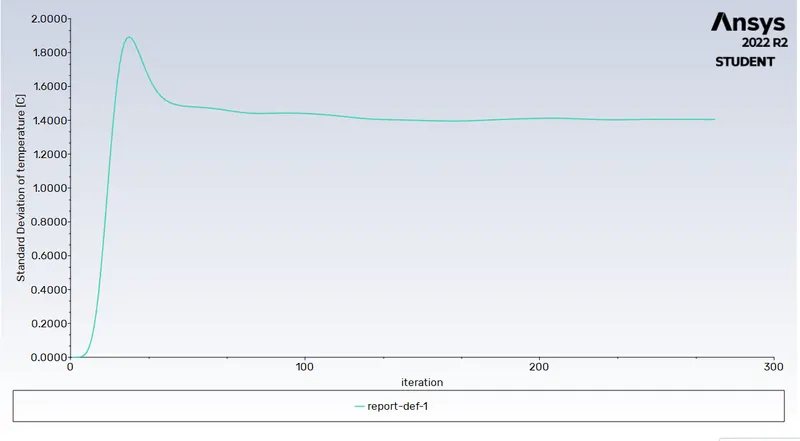
STANDARD DEVIATION:
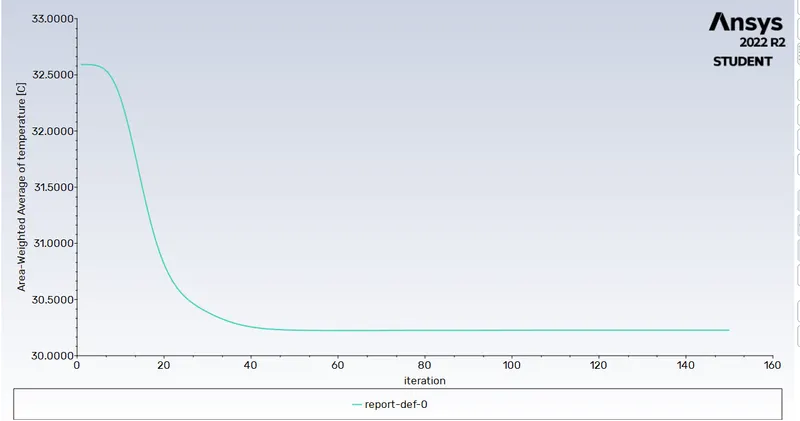
AREA WEIGHTED AVERAGE:
CONTOUR PLOT:
TEMPERATURE CONTOUR:
VELOCITY CONTOUR:
K-OMEGA MODEL:
RESIDUAL PLOT:
STANDARD DEVIATION:
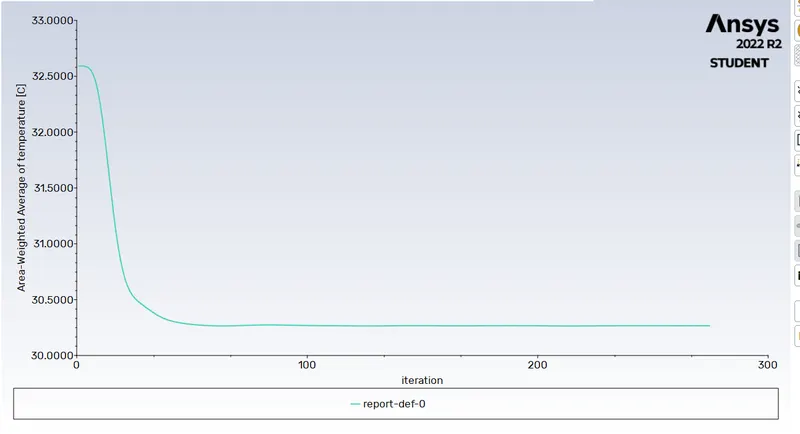
AREA WEIGHTED AVERAGE:
CONTOUR PLOT:
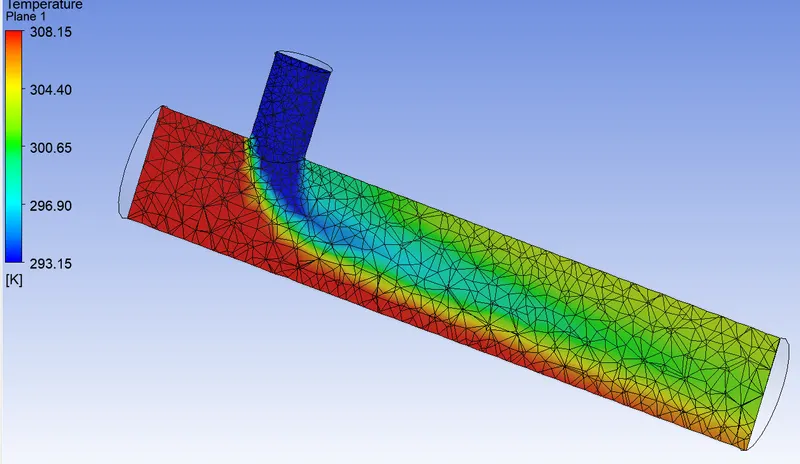
TEMPERATURE CONTOUR:
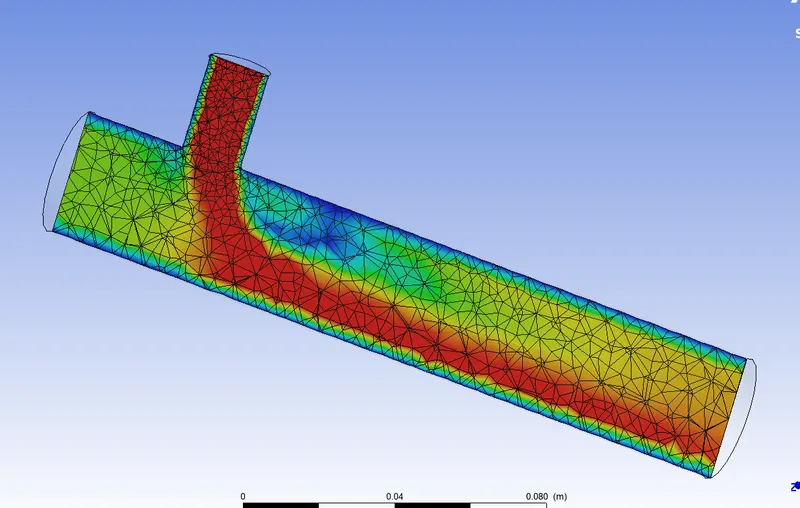
VELOCITY CONTOUR:
|
|
SHORT TEE (MR = 2) |
|
|
K-EPSILON |
K-OMEGA |
|
|
AVERAGE OUTLET TEMPERATURE |
30.26 |
30.26 |
|
STANDARD DEVIATION |
1.5 |
1.6 |
|
NO OF ITERATIONS |
150 |
150 |
|
|
SHORT TEE (MR = 4) |
|
|
K-EPSILON |
K-OMEGA |
|
|
AVERAGE OUTLET TEMPERATURE |
27.5 |
27.57 |
|
STANDARD DEVIATION |
1.1 |
1.2 |
|
NO OF ITERATIONS |
230 |
250 |
LONG TEE:
- Same procedure is followed till meshing
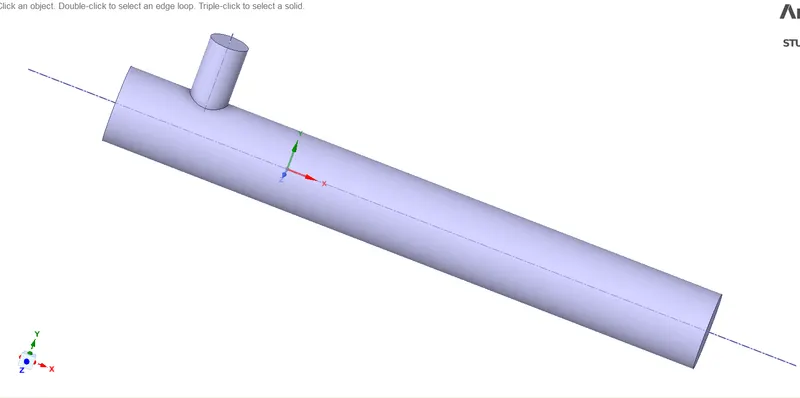
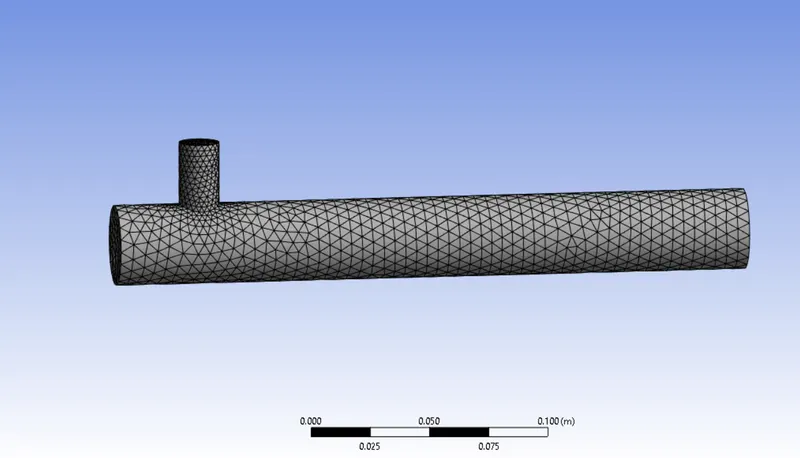
CASE 2:
- Long mixing Tee with a hot inlet velocity of 3m/s
- Momentum ratio of 2,4
|
SETUP |
Long TEE ( HOT INLET VELOCITY = 3m/s) |
|
|
K-EPSILON |
K-OMEGA |
|
|
SOLVER TYPE |
Pressure based |
Pressure based |
|
VELOCITY |
Absolute |
Absolute |
|
TIME |
Steady |
Steady |
|
VISCOUS MODEL |
Realizable K-epsilon with standard wall function |
K-omega SST model |
|
MATERIAL |
Air |
Air |
|
CELL ZONES |
Fluid type : air |
Fluid type : air |
|
BOUNDARIES |
· For Inlet_x Velocity magnitude = 3m/s Temperature = 360c · For Inlet_y Velocity magnitude = 6m/s Temperature =190c · For Outlet Gauge pressure = 0 pa |
· For Inlet_x Velocity magnitude = 3m/s Temperature = 360c · For Inlet_y Velocity magnitude = 6m/s Temperature =190c · For Outlet Gauge pressure = 0 pa |
RESULTS:
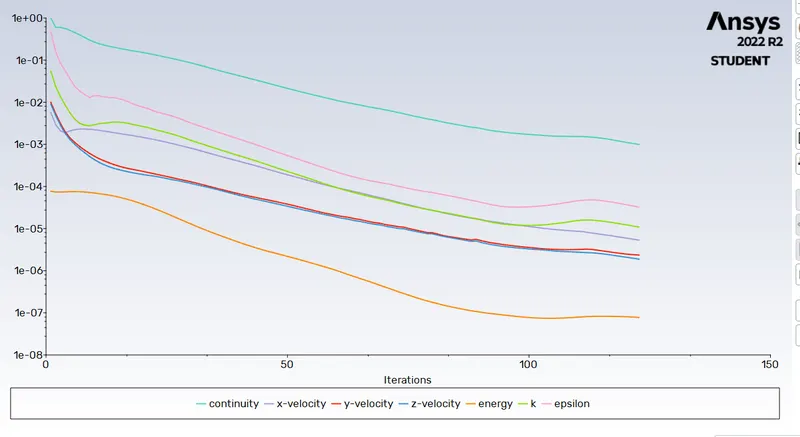
RESIDUAL PLOT:
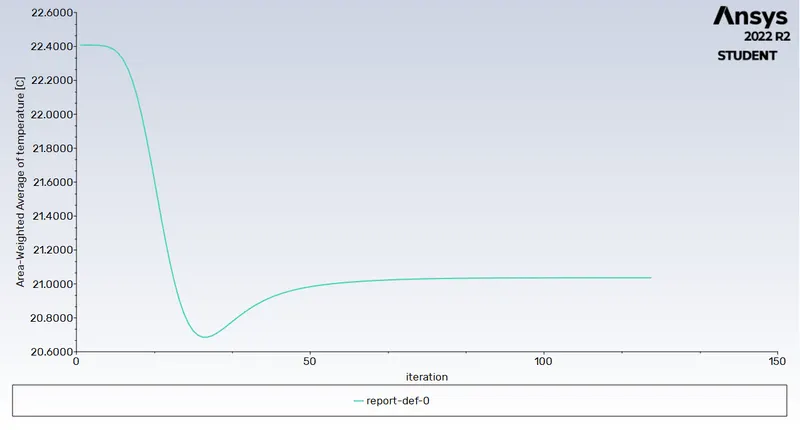
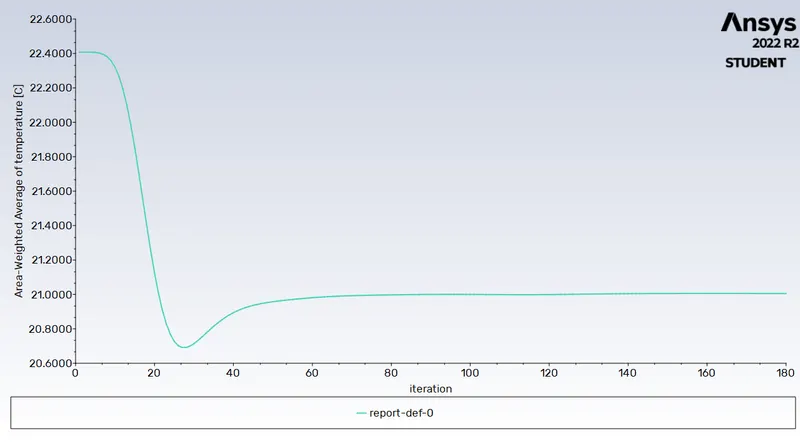
AREA WEIGHTED AVERAGE:
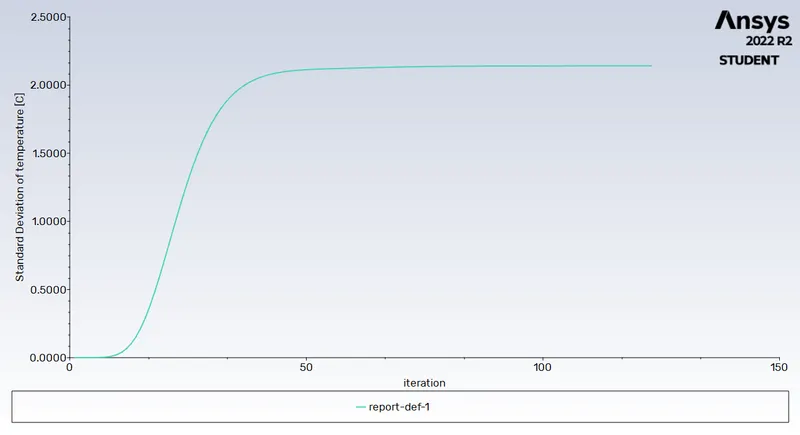
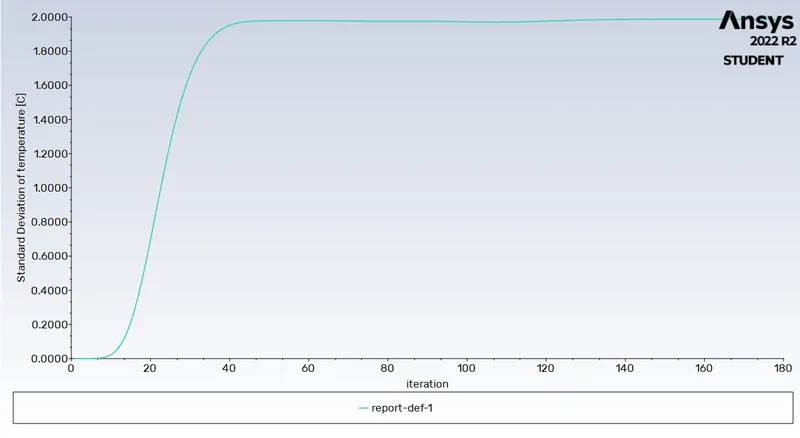
STANDARD DEVIATION:
CONTOUR PLOT:
TEMPERATURE CONTOUR:
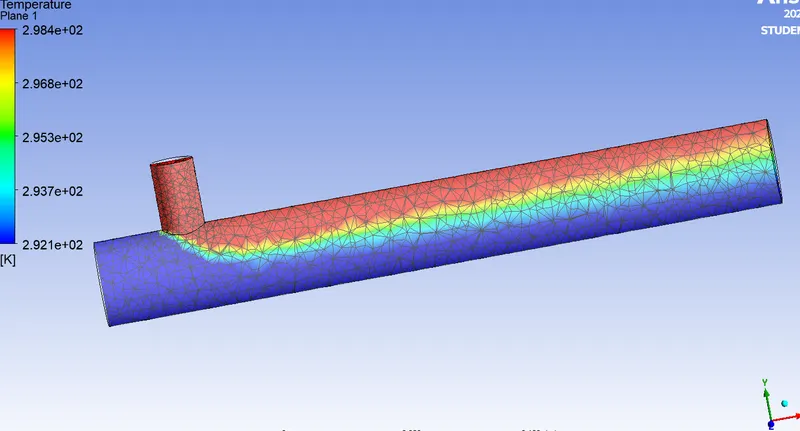
VELOCITY CONTOUR:
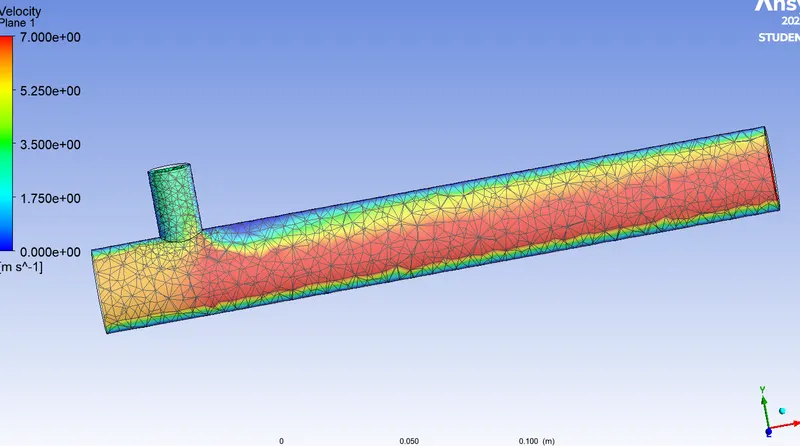
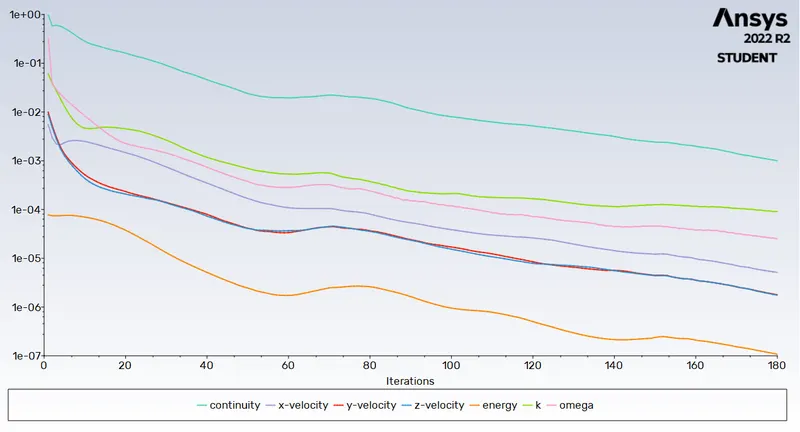
K-OMEGA MODEL:
RESIDUAL PLOT:
STANDARD DEVIATION:
AREA WEIGHTED AVERAGE:
|
|
LONG TEE (MR = 2) |
|
|
K-EPSILON |
K-OMEGA |
|
|
AVERAGE OUTLET TEMPERATURE |
30.26 |
30.26 |
|
STANDARD DEVIATION |
1.2 |
0.9 |
|
NO OF ITERATIONS |
150 |
150 |
|
|
LONG TEE (MR = 4) |
|
|
K-EPSILON |
K-OMEGA |
|
|
AVERAGE OUTLET TEMPERATURE |
27.48 |
27.49 |
|
STANDARD DEVIATION |
0.4 |
0.6 |
|
NO OF ITERATIONS |
230 |
250 |
COMPARISON OF BOTH LONG AND SHORT TEE:
|
K-EPSILON REALIZABLE MODEL |
||||
|
GEOMETRY |
MOMENTUM RATIO |
AVERAGE OUTLET TEMPERATURE |
NO. OF ITERATIONS |
STANDARD DEVIATION |
|
SHORT TEE |
2 |
30.26 |
150 |
1.5 |
|
SHORT TEE |
4 |
27.5 |
230 |
1.1 |
|
LONG TEE |
2 |
30.26 |
150 |
1.2 |
|
LONG TEE |
4 |
27.48 |
230 |
0.4 |
AVERAGE OUTLET TEMPERATURE:
Irrespective of length of the mixing Tee, the average outlet temperature on both cases are quite same.
MOMENTUM RATIO:
- As momentum ratio increases, the velocity of cold inlet fluid increases and due to high relative velocity between the fluid it experiences higher turbulence and therefore the outlet fluid temperature decreases.
- For momentum ratio 2, the average outlet fluid temperature is 30 whereas for momentum ratio 4 the average outlet fluid temperature is 27. From these we can say that there will be a drop in temperature if momentum ratio increases.
- In order to obtain better mixing the velocity of cold air is important. By increasing the cold fluid velocity the outlet temperature gets reduced.
NO. OF ITERATIONS:
The longer Tee takes more time to converge than short Tee.
CONCLUSION:
- Higher the momentum ratio, higher will be the mixing efficiency of Tee joint.
- Increasing the length of the pipe doesn’t serve the purpose of mixing efficiently. So, it is efficient to use short pipe
Mesh independent study:
The mesh independent study is performed for the below case.
Model: k-ε model
Geometry model: Short mixing tee (3 m/s inlet velocity)
Momentum ratio: 2
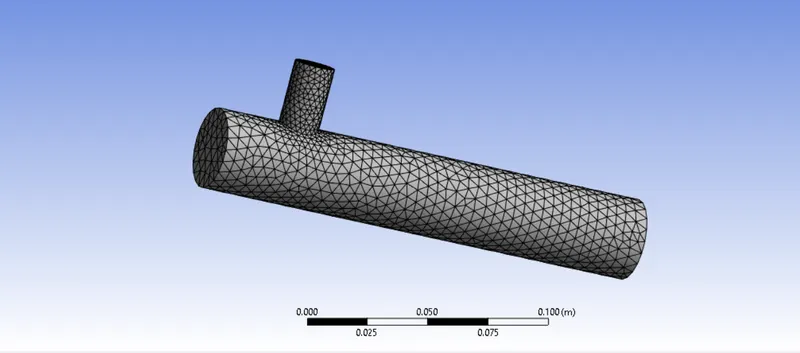
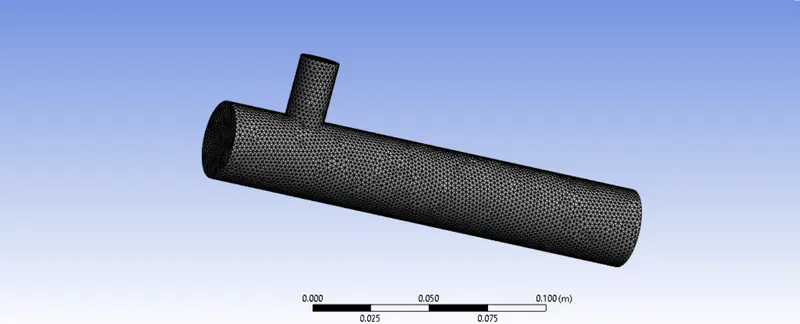
The mesh size of the above case is made finer with decreasing mesh size in each step. We have performed the case studies for 0.005,0.003,0.002 case studies for mesh independent study and results are tabulated in the table.
Mesh geometry with element size of 0.005:
Mesh geometry with element size of 0.003:
Mesh geometry with element size of 0.002:
Observation from the mesh study:
- From the above mesh refinement study, it is observed that the average outlet temperature of the case is found to be 30.2 degree Celcius and as the mesh gets finer, the average temperature at outlet temperature increases to negligible amount which states that it is diverging one.
- As the mesh size decreases, standard deviation increases beacuse as the number of cells increases, the temperature is calculated more accurately increasing deviation in calculated values from one cell to another cell.
CONCLUSION:
- As the length of the mixing tee increases, the mixing time is more before it exits from the outlet. Thus the long mixing tee has better mixing characteristics.
- The mesh size of 3mm gives the best predicted results than other two mesh size
- As the mesh size is coarser, the number of iterations required to converge to final result is less
- Decreasing the mesh size, the average outlet temperature starts approaching towards the analytical results.