Week 1- Mixing Tee
AIM:
Your job is to set up steady-state simulations to compare the mixing effectiveness when hot inlet temperature is 360C & the Cold inlet is at 190C.
Use the k-epsilon and k-omega SST model for the first case and based on your judgment use the more suitable model for further cases. Giving the reason for choosing a suitable model is compulsory.
- Case 1
- Short mixing tee with a hot inlet velocity of 3m/s.
- Momentum ratio of 2, 4.
- Case 2
- Long mixing tee with a hot inlet velocity of 3m/s.
- Momentum ratio of 2, 4.
Momentum ratio = velocity at cold inlet / velocity at hot inlet
In a table, compare the following values from the 2 cases.
- Cell count
- Average outlet temperature
- Number of iterations for convergence
Expected results:
- Velocity and temperature contour plots on the cut planes along and across the pipe.
- Velocity and temperature line plots along and across the length of the pipe.
- Perform Mesh independent study for any one case.
- Discuss the effect of length and momentum ratio on results.
INTRODUCTION:
ANSYS WORKFLOW PROCESS:

GEOMETRY:
Construct a two or three dimensional representation of the object to be modelled and tested using the work plane coordinate system within ANSYS.
MESH: At this point ANSYS understands the makeup of the part. Now define how the modelled system should be broken down into finite pieces.
SETUP: The case setup will be done using ansys fluent
SOLUTION: Ansys fluent where run time result visualization is done
RESULTS: Post processing of results will be done here using CFD-post
SHORT TEE:
The computational models are uploaded to the Ansys Space Claim as a step file.
CASE I:
CASE 1.1:
- Short mixing tee with a hot inlet velocity of 3m/s.
- Momentum ratio of 2.
|
SETUPS |
SHORT TEE (MR=2 AND HOT INLET VELOCITY = 3m/s)
|
|
|
K-EPSILON |
K-OMEGA |
|
|
SOLVER TYPE |
Pressure based |
Pressure based |
|
VELOCITY FORMULATION |
Absolute |
Absolute |
|
TIME |
Steady |
Steady |
|
VISCOUS MODEL |
Realizable K-epsilon with standard wall function |
K-omega SST model |
|
MATERIAL |
Air |
Air |
|
CELL ZONES |
Fluid type : air |
Fluid type : air |
|
BOUNDARIES |
· Inlet_x (velocity inlet) Velocity magnitude 3m/s Temperature - 360c · Inlet_y (velocity inlet) Velocity magnitude 6m/s Temperature – 190c · Outlet (pressure outlet) Gauge pressure – 0 pa · Walls – stationary walls |
· Inlet_x (velocity inlet) Velocity magnitude 3m/s Temperature - 360c · Inlet_y (velocity inlet) Velocity magnitude 6m/s Temperature – 190c · Outlet (pressure outlet) Gauge pressure – 0 pa · Walls – stationary walls |
The hybrid scheme is used for initialization and the no. of iterations are setup and then click on calculate option.
GEOMETRY SETUP:
The computational models are uploaded to the Ansys Space Claim as a step file.
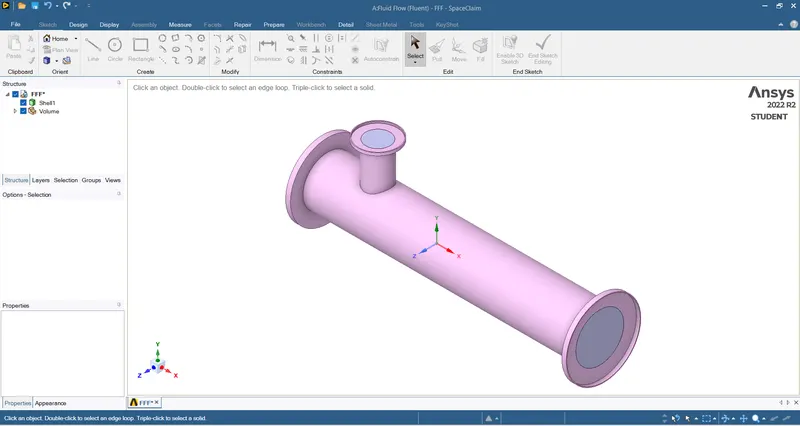
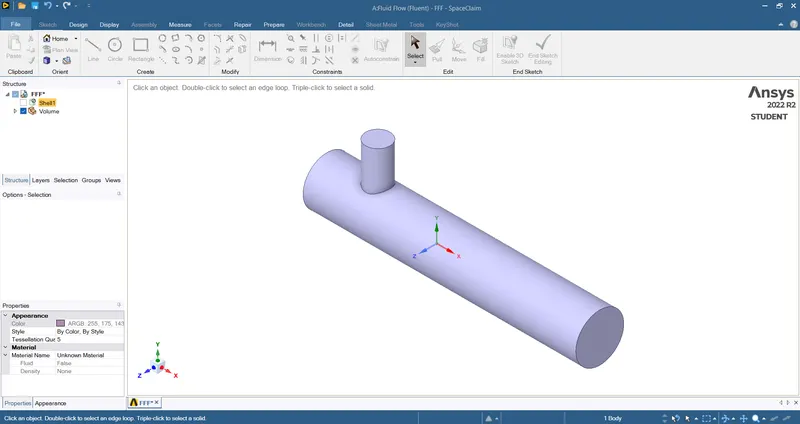
VOLUME EXTRACT:
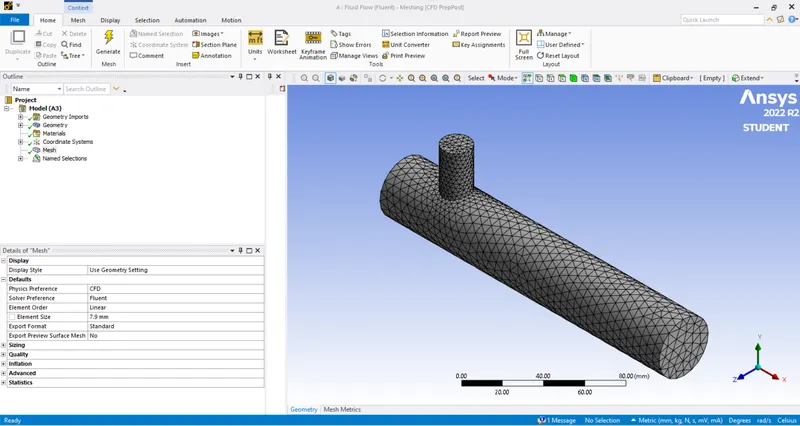
MESH GENERATION:
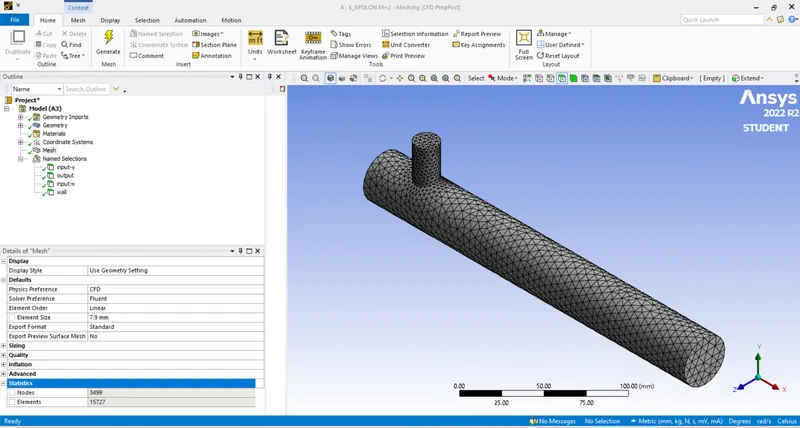
The boundary names inlet_x, inlet_y, outlet and wall are defined using the named selection option.
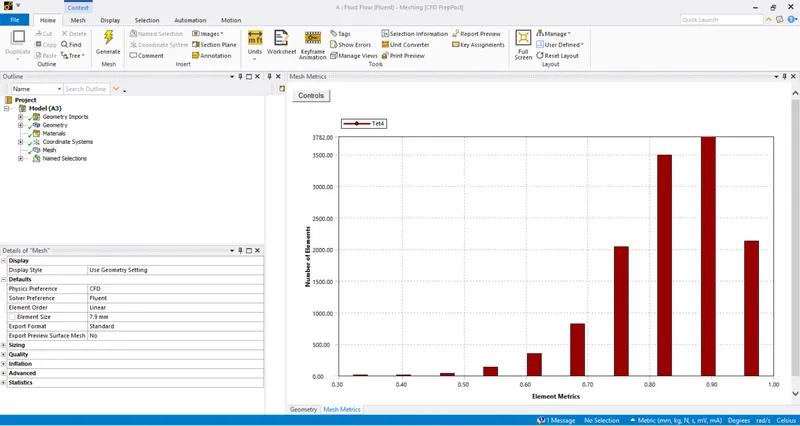
ELEMENT MATRICS:
RESULT:
1.1-K_EPSILON M=2
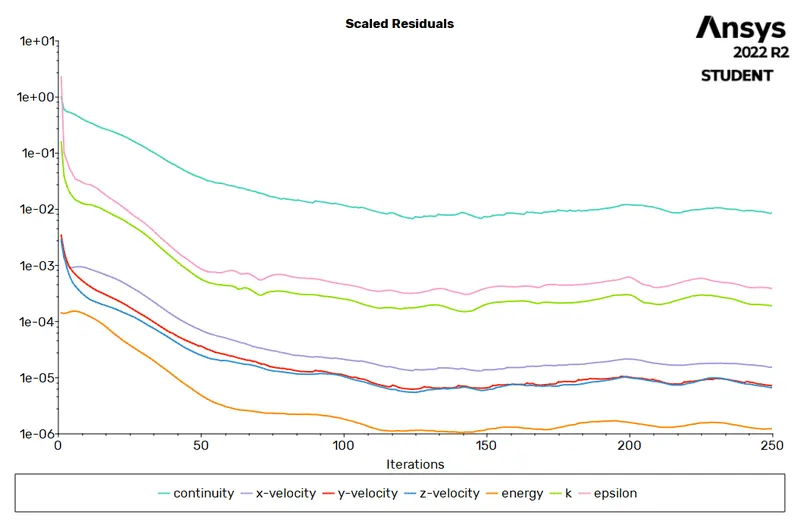
SCALED_RESIDUALS:
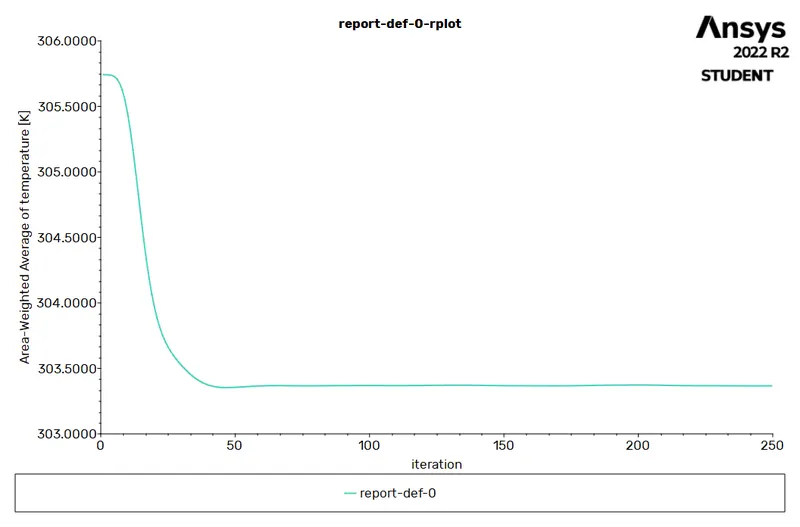
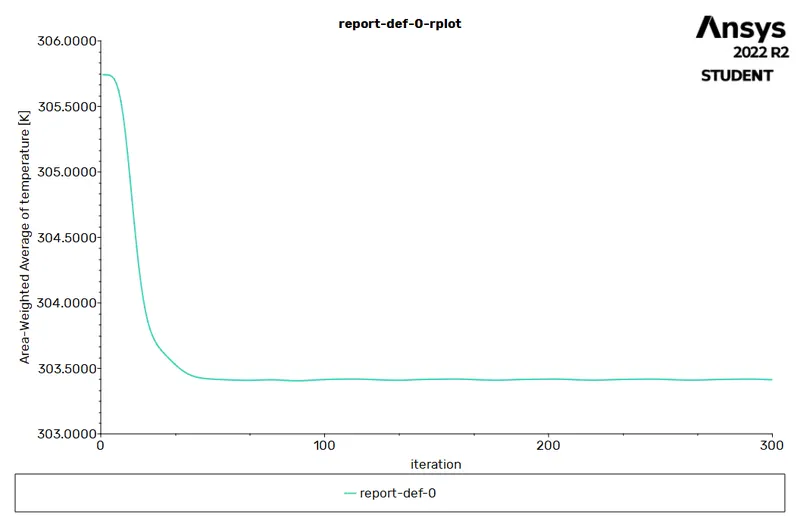
AREA WEIGHED AVG TEMPERATURE:
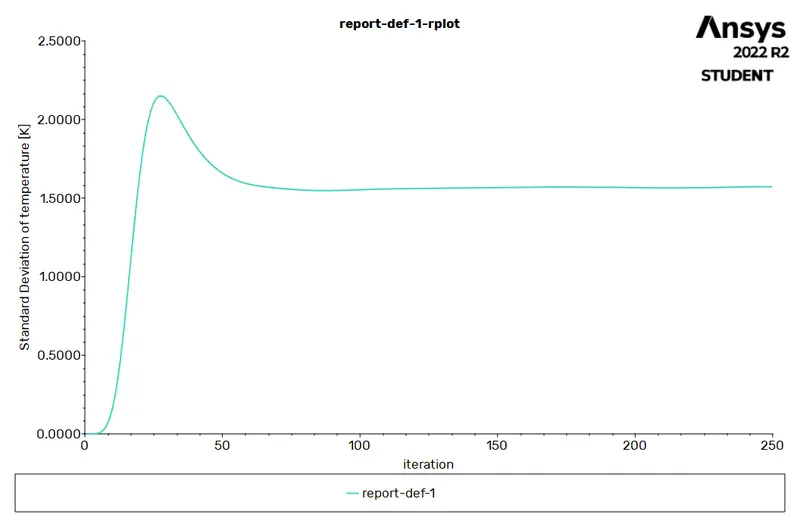
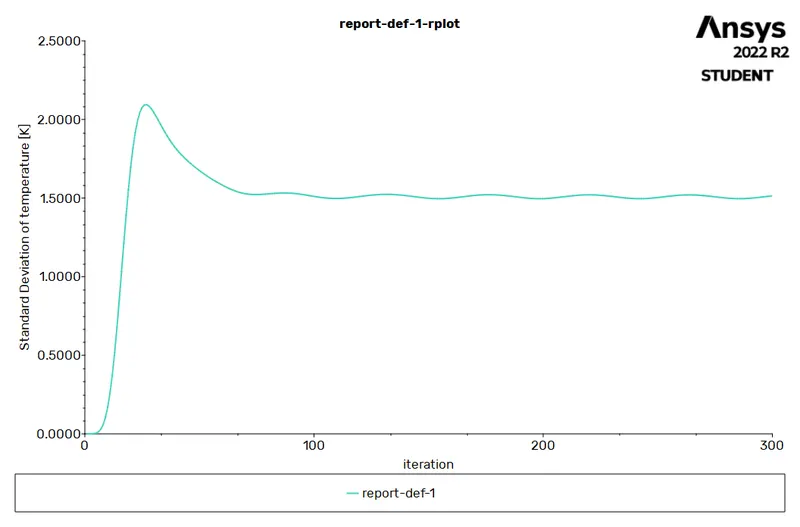
STANDARD_DEVIATION:
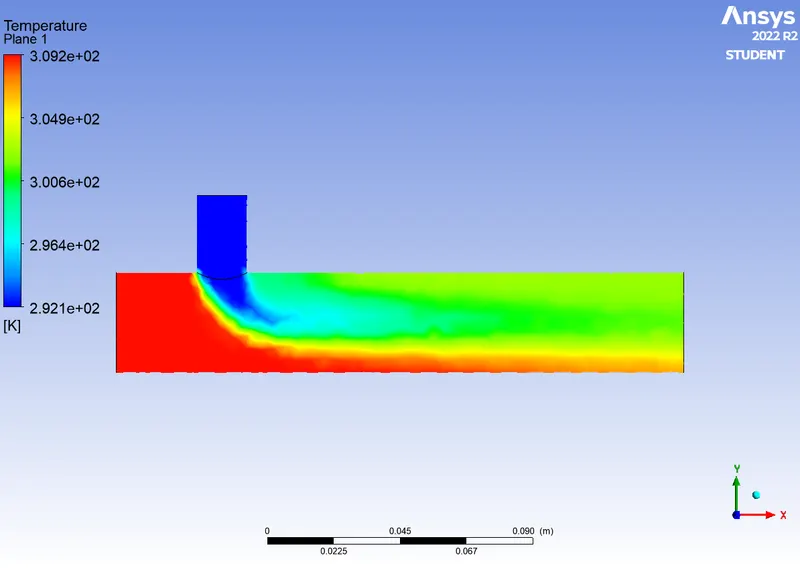
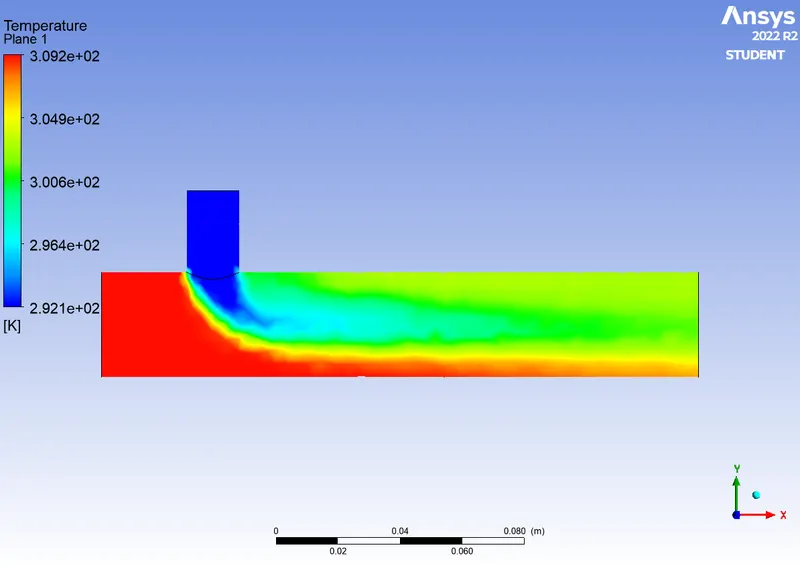
TEMPERATURE PLOT:
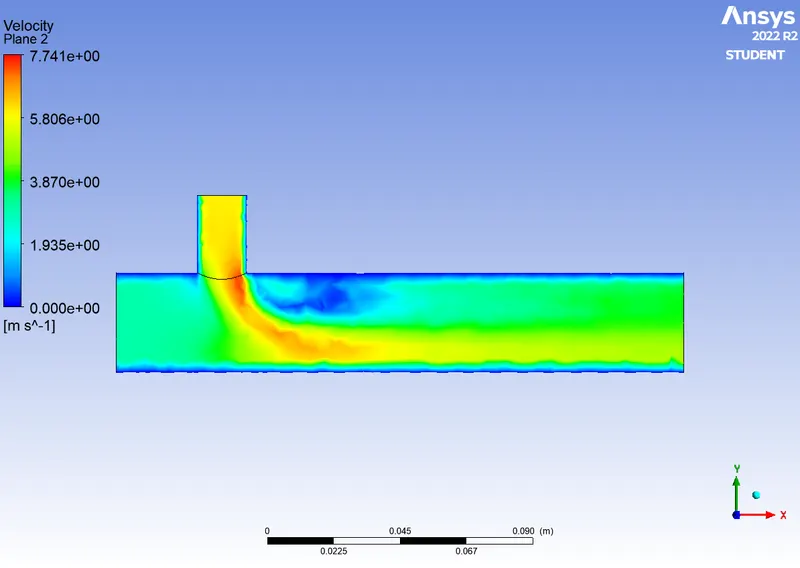
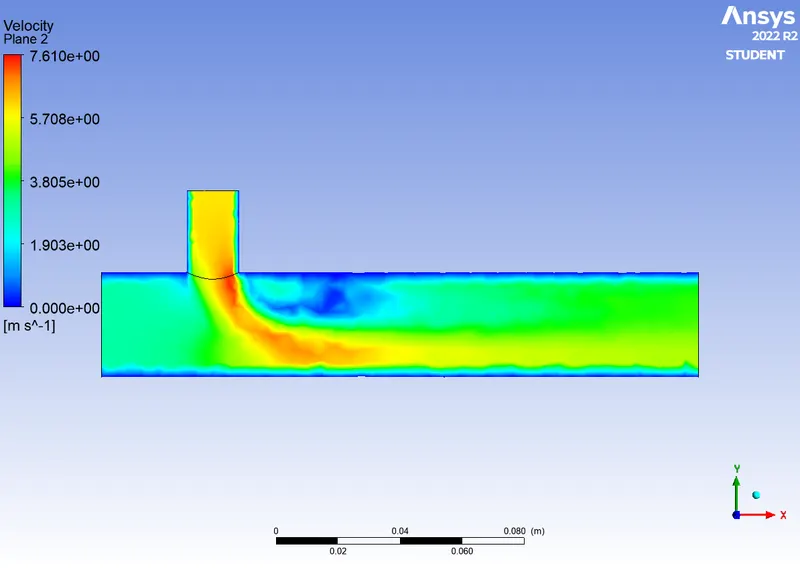
VELOCITY PLOT:
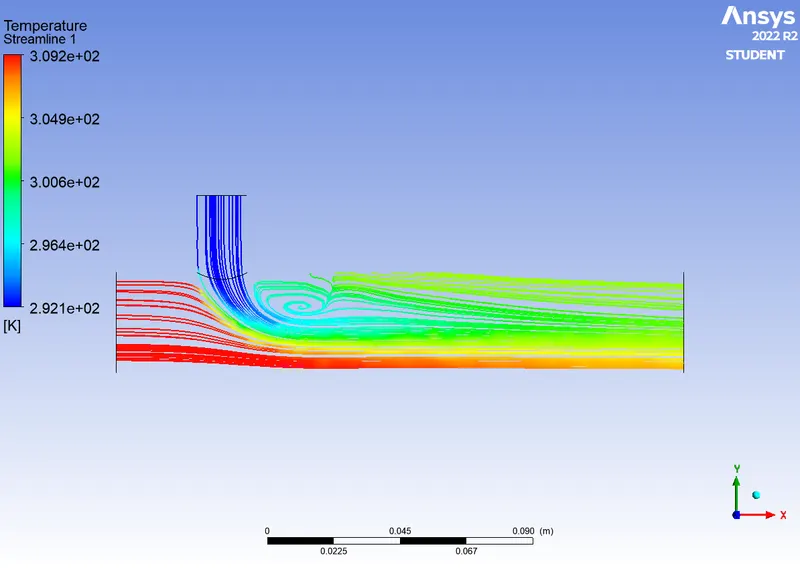
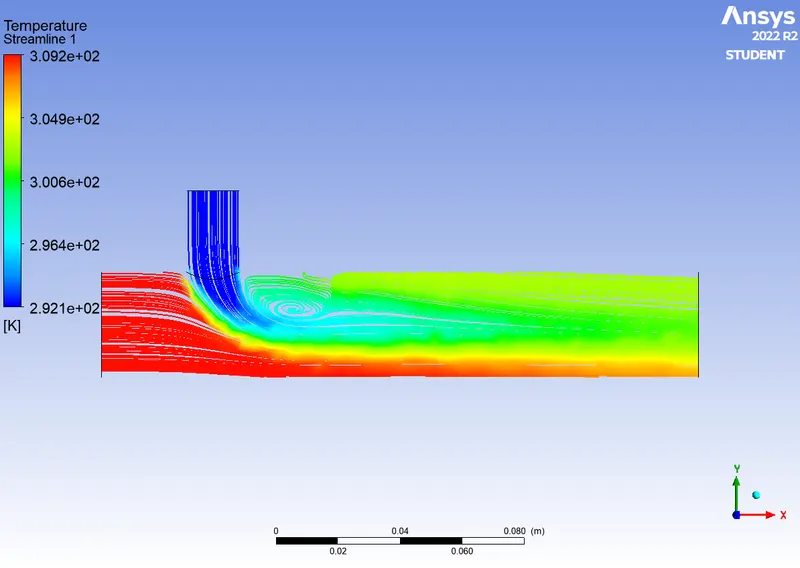
TEMPERATURE STREAMLINE PLOT:
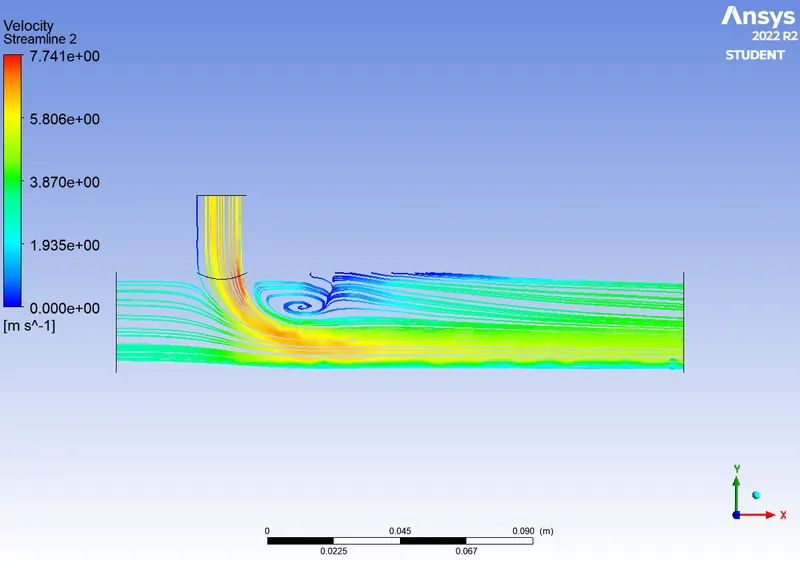
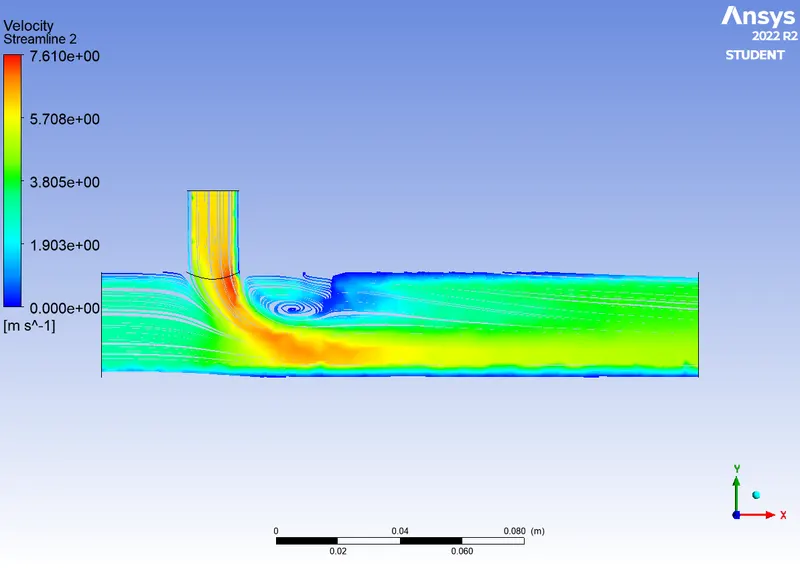
VELOCITY STREAMLINE_PLOT:
1.1 K_OMEGA M=2
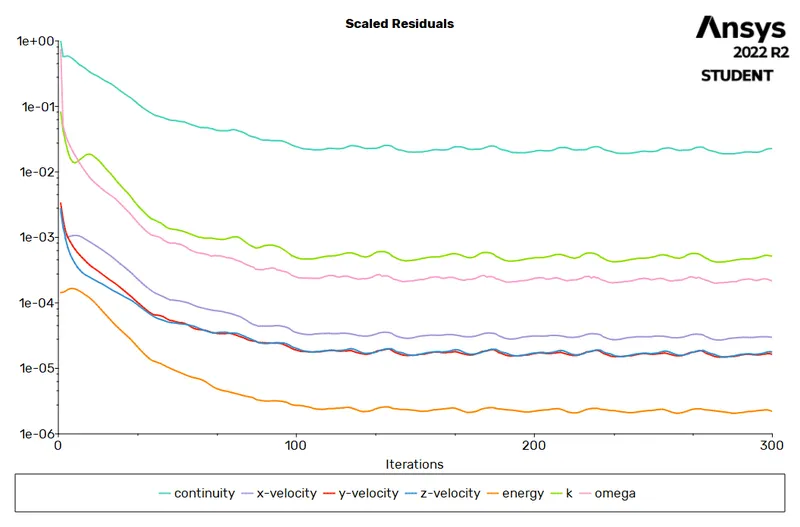
SCALED RESIDUALS:
AREA WEIGHED AVG TEMPERATURE:
STANDARD DEVIATION:
TEMPERATURE PLOT:
VELOCITY PLOT:
TEMPERATURE STREAMLINE :
VELOCITY STEAMLINE PLOT:
RESULT:
SHORT TEE (MR=2) K_EPSILON K_OMEGA
AVERAGE OUTLET TEMPERATURE [K] 303.3 K 303.42 K
STANDARD DEVIATION 1.57 1.51
NO OF ITERATIONS 250 300
--------------------------------------------------------------------------------------------------------------------------------------
SETUP 1.2: K_EPSILON
- Short mixing tee with a hot inlet velocity of 3m/s.
- Momentum ratio of 4.
|
SETUPS |
SHORT TEE (MR=4 AND HOT INLET VELOCITY = 3m/s)
|
|
|
K-EPSILON |
K-OMEGA |
|
|
SOLVER TYPE |
Pressure based |
Pressure based |
|
VELOCITY FORMULATION |
Absolute |
Absolute |
|
TIME |
Steady |
Steady |
|
VISCOUS MODEL |
Realizable K-epsilon with standard wall function |
K-omega SST model |
|
MATERIAL |
Air |
Air |
|
CELL ZONES |
Fluid type : air |
Fluid type : air |
|
BOUNDARIES |
· Inlet_x (velocity inlet) Velocity magnitude 3m/s Temperature - 360c · Inlet_y (velocity inlet) Velocity magnitude 12m/s Temperature – 190c · Outlet (pressure outlet) Gauge pressure – 0 pa · Walls – stationary walls |
· Inlet_x (velocity inlet) Velocity magnitude 3m/s Temperature - 360c · Inlet_y (velocity inlet) Velocity magnitude 12m/s Temperature – 190c · Outlet (pressure outlet) Gauge pressure – 0 pa · Walls – stationary walls |
RESULT:
1.2 -K_EPSILON M=4
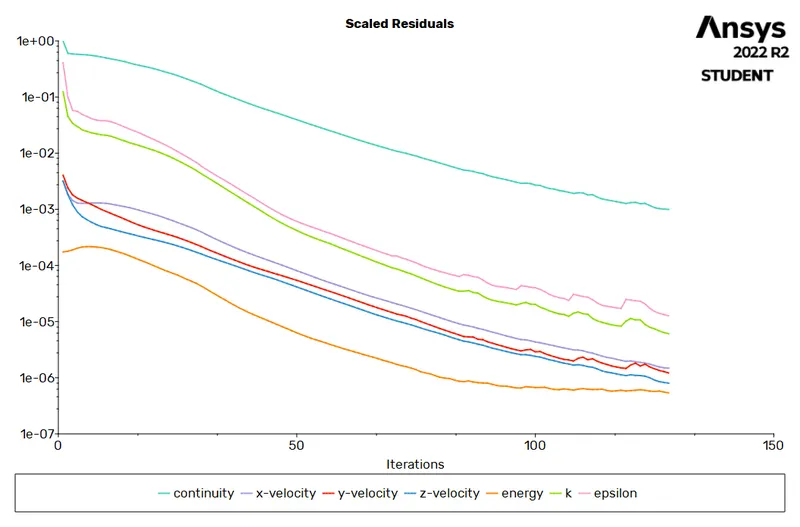
SCALED RESIDUALS:
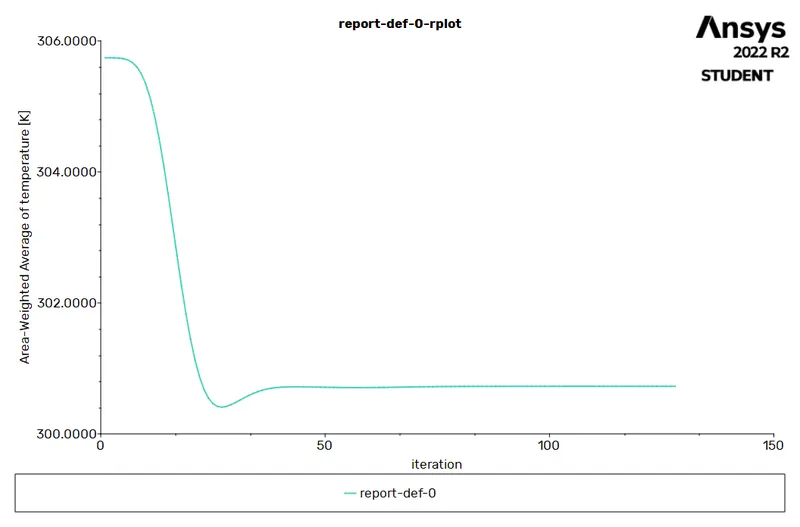
AREA WEIGHED AVG TEMPERATURE:
STANDARD DEVIATION:
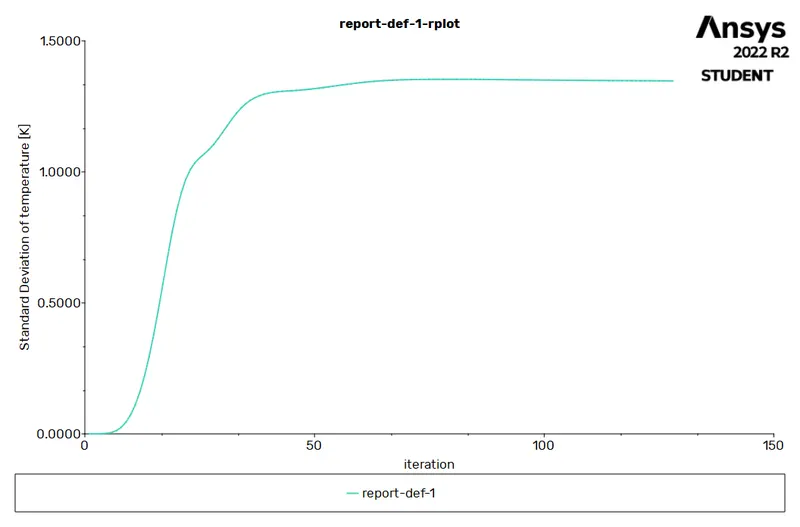
TEMPERATURE PLOT:
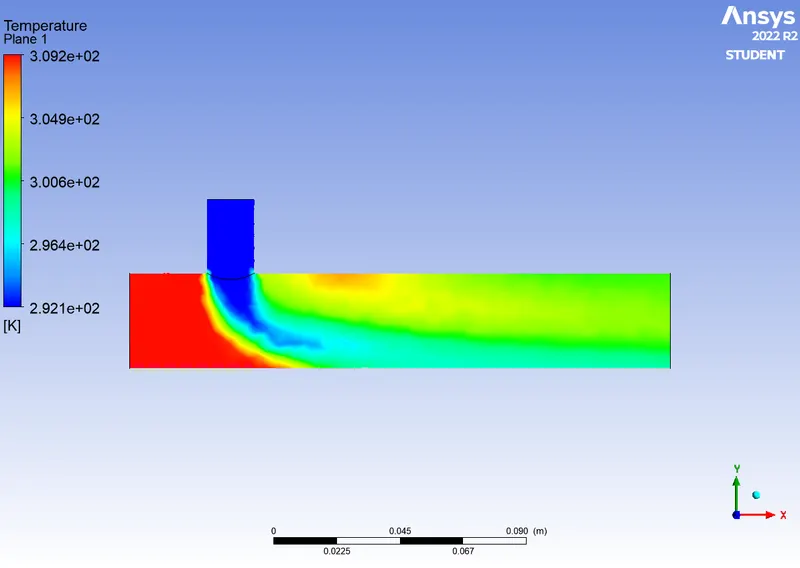
VELOCITY PLOT:
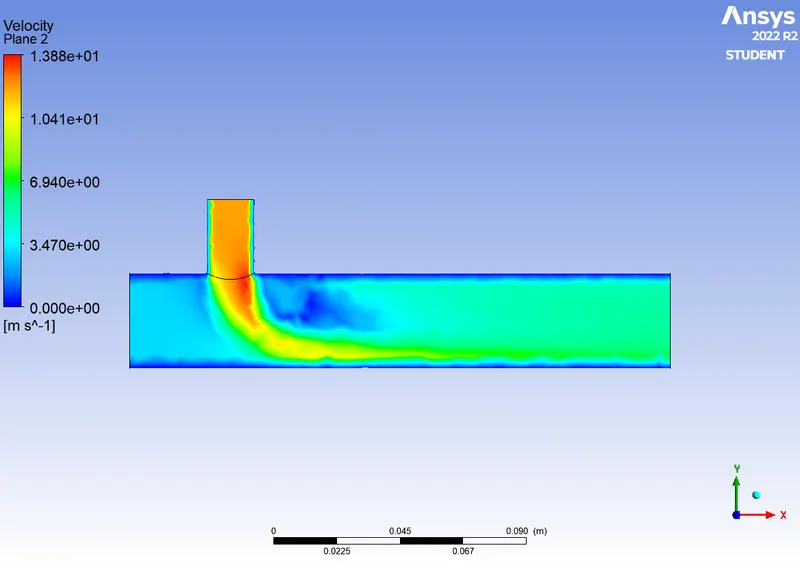
TEMPERATURE STREAMLINE:
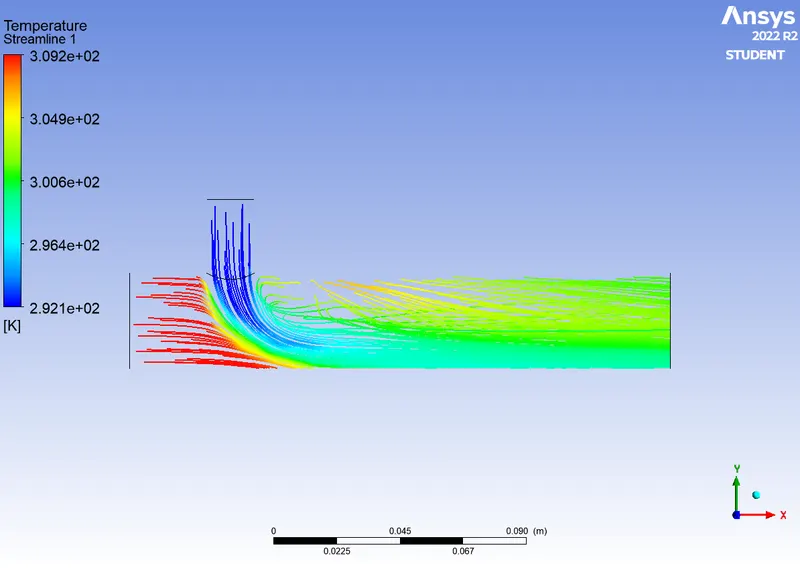
VELOCITY STREAMLINE:
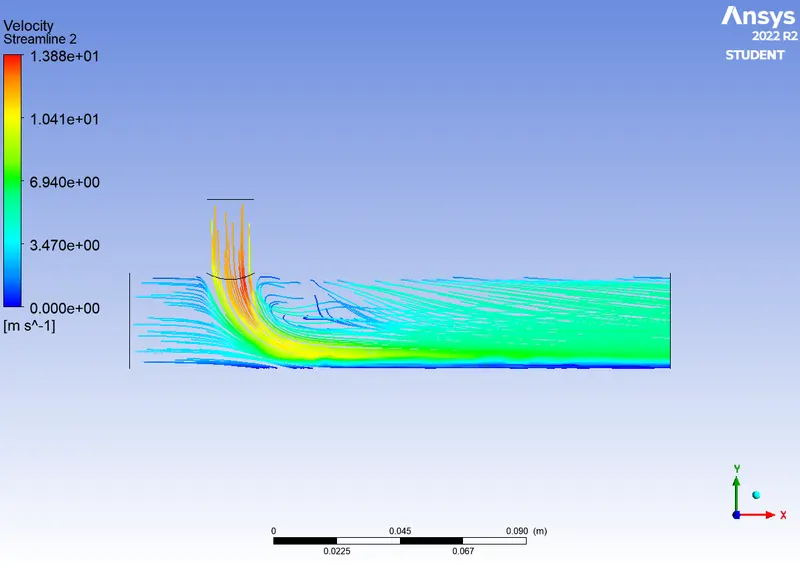
1.2 -K_OMEGA M=4
SCALED RESIDUALS:
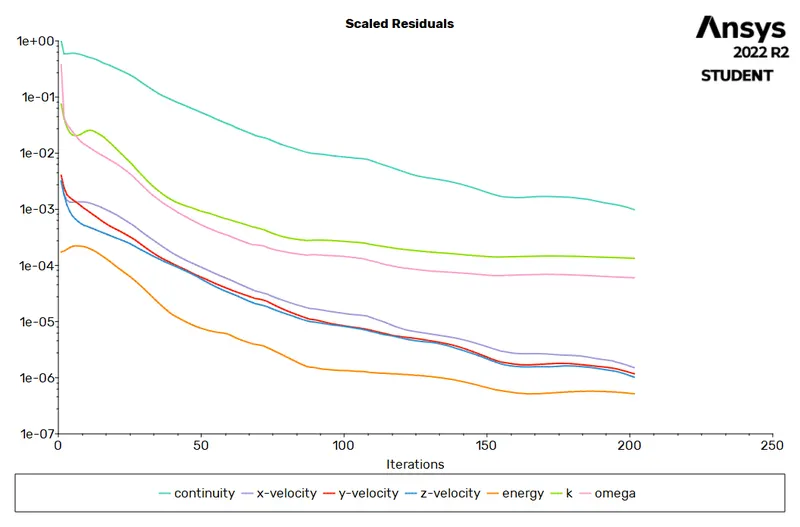
AREA WEIGHED AVG TEMPERATURE:
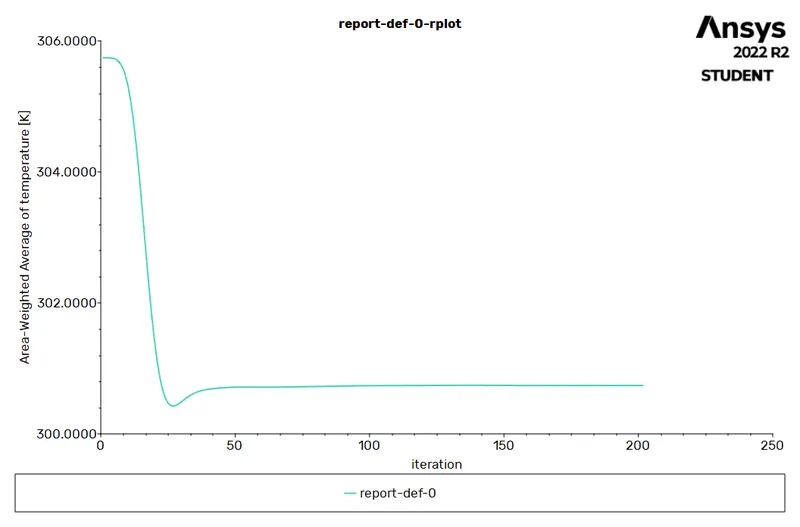
STANDARD DEVIATION:
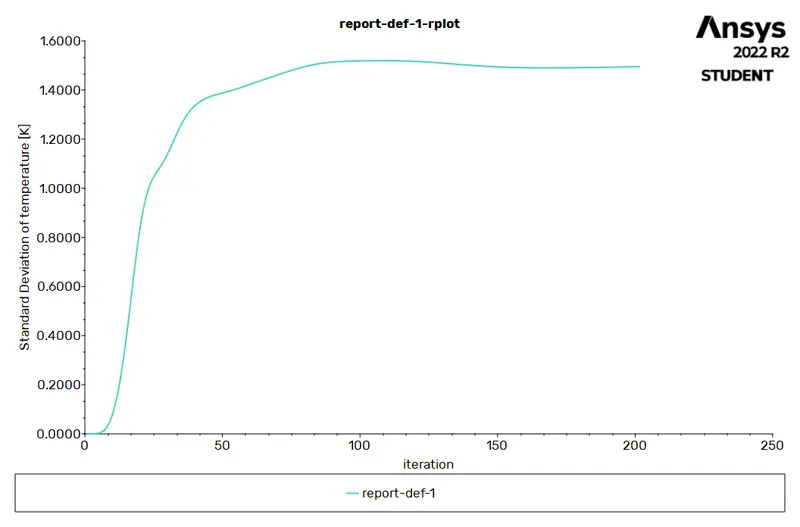
TEMPERATURE PLOT:
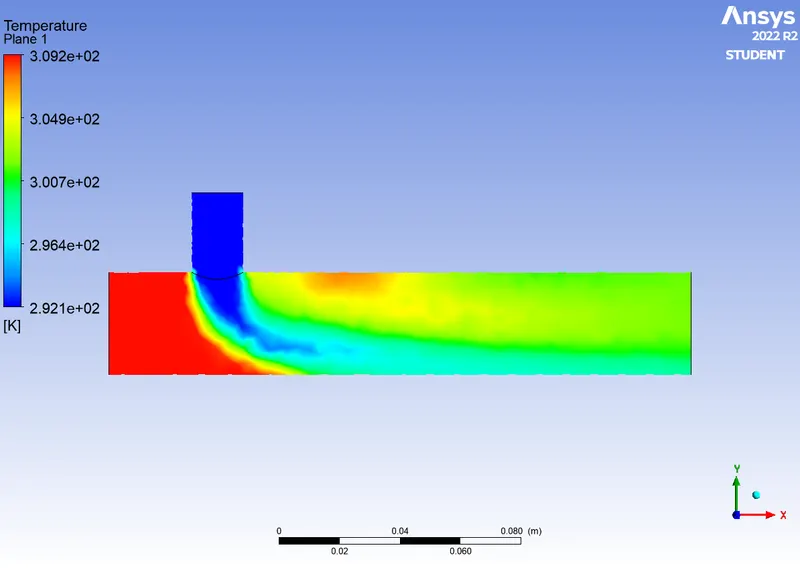
VELOCITY PLOT:
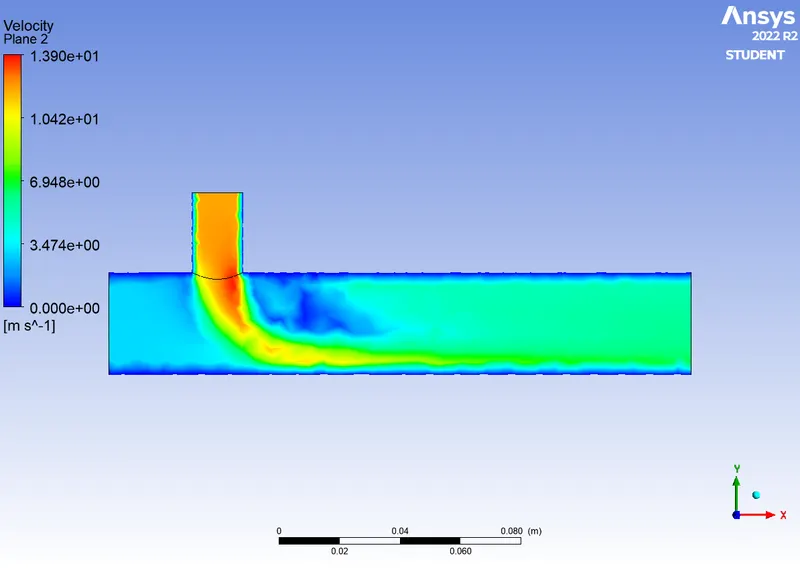
TEMPERATURE STREAMLINE:
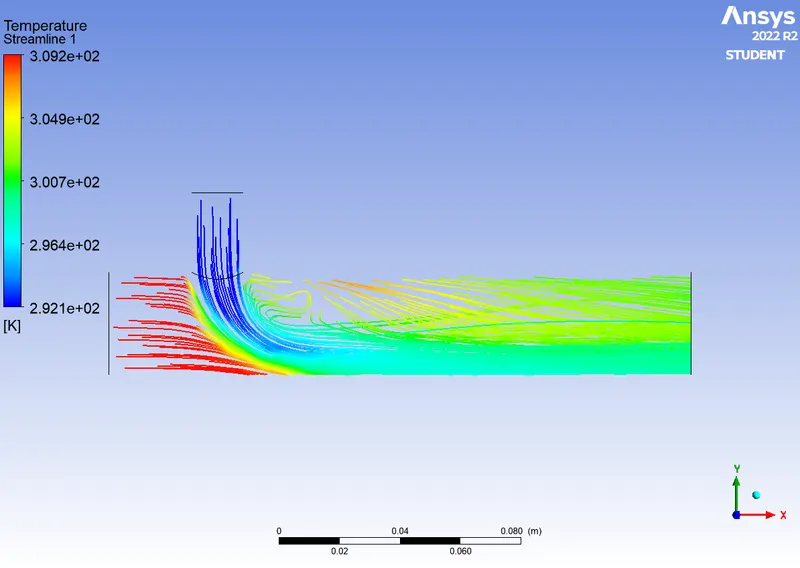
VELOCITY STREAMLINE:
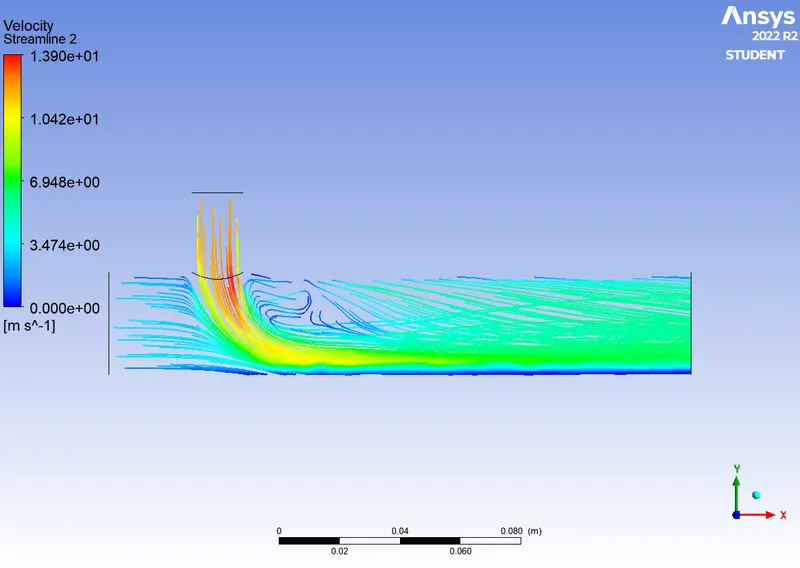
RESULT:
SHORT TEE (MR=2) K_EPSILON K_OMEGA
AVERAGE OUTLET TEMPERATURE [K] 300.73 K 300.743 K
STANDARD DEVIATION 1.35 1.49
NO OF ITERATIONS 129 202.91
CONCLUSION:
AVERAGE OUTLET TEMPERATURE:
On comparing the both models with analytical solution we got nearly the same results.
ITERATIONS TO CONVERGE:
No. of iterations taken to converge is less for Realisable K-epsilon model than K-omega SST model.
-----------------------------------------------------------------------------------------------------------------------------------
------------------------------------------------------------------------------------------------------------------------------------
CASE 2:
LONG TEE:
GEOMETRY SETUP:
The computational models are uploaded to the Ansys Space Claim as a step file.
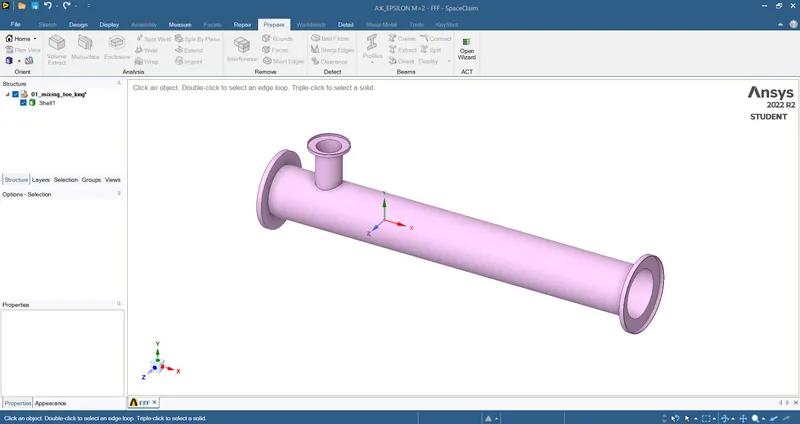
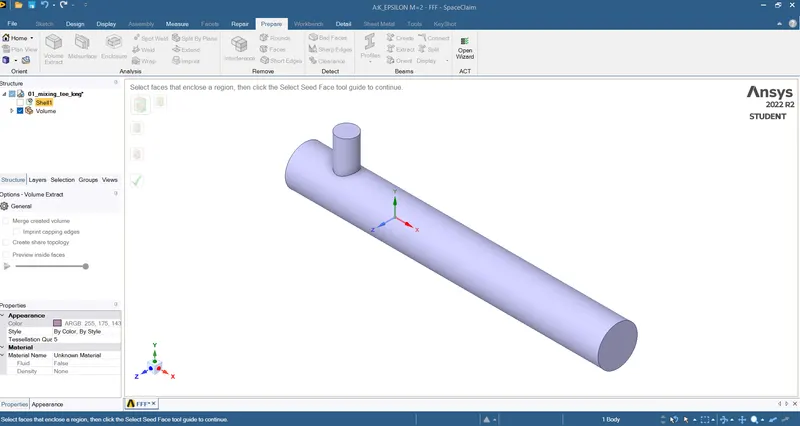
VOLUME_EXTRACT:
MESH GENERATION:
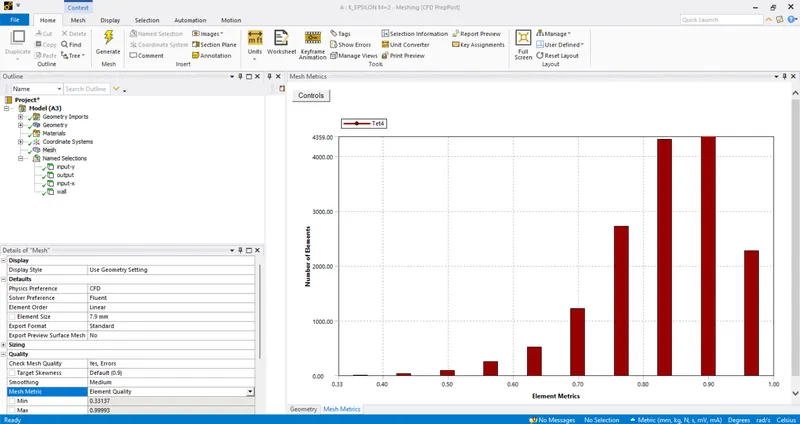
ELEMENT MATRICS:
The hybrid scheme is used for initialization and the no. of iterations are setup and then click on calculate option.
CASE 2:
- Short mixing Tee with a hot inlet velocity of 3m/s
- Momentum ratio of 2.
|
SETUPS |
SHORT TEE (MR=2 AND HOT INLET VELOCITY = 3m/s)
|
|
|
K-EPSILON |
K-OMEGA |
|
|
SOLVER TYPE |
Pressure based |
Pressure based |
|
VELOCITY FORMULATION |
Absolute |
Absolute |
|
TIME |
Steady |
Steady |
|
VISCOUS MODEL |
Realizable K-epsilon with standard wall function |
K-omega SST model |
|
MATERIAL |
Air |
Air |
|
CELL ZONES |
Fluid type : air |
Fluid type : air |
|
BOUNDARIES |
· Inlet_x (velocity inlet) Velocity magnitude 3m/s Temperature - 360c · Inlet_y (velocity inlet) Velocity magnitude 6m/s Temperature – 190c · Outlet (pressure outlet) Gauge pressure – 0 pa · Walls – stationary walls |
· Inlet_x (velocity inlet) Velocity magnitude 3m/s Temperature - 360c · Inlet_y (velocity inlet) Velocity magnitude 6m/s Temperature – 190c · Outlet (pressure outlet) Gauge pressure – 0 pa · Walls – stationary walls |
The hybrid scheme is used for initialization and the no. of iterations are setup and then click on calculate option.
CASE 2.1:K-EPSILON
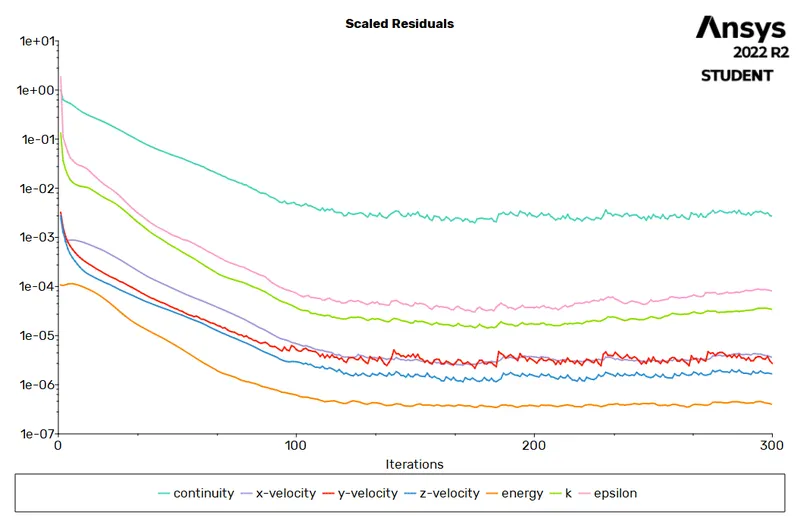
SCALED RESIDUALS:
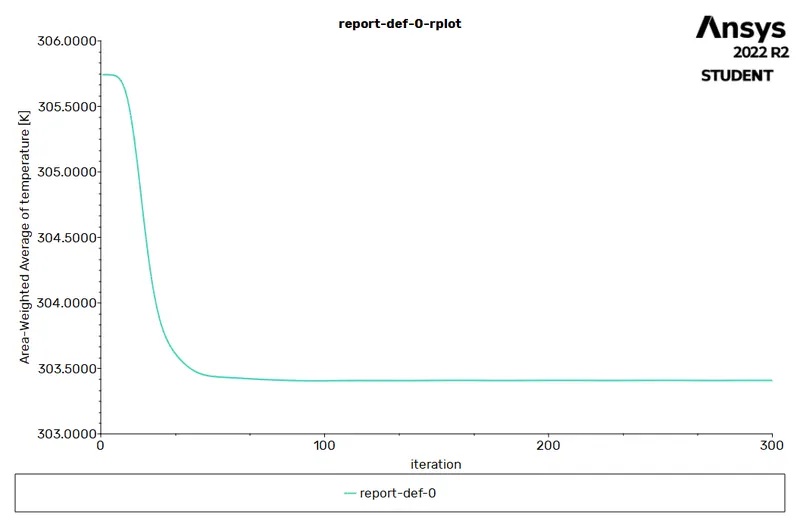
AREA WEIGHED AVG TEMPERATURE:
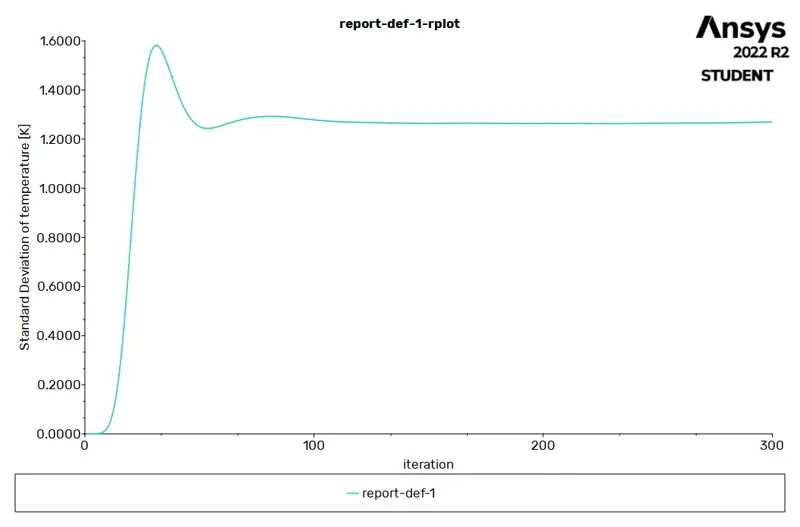
STANDARD DEVIATION:
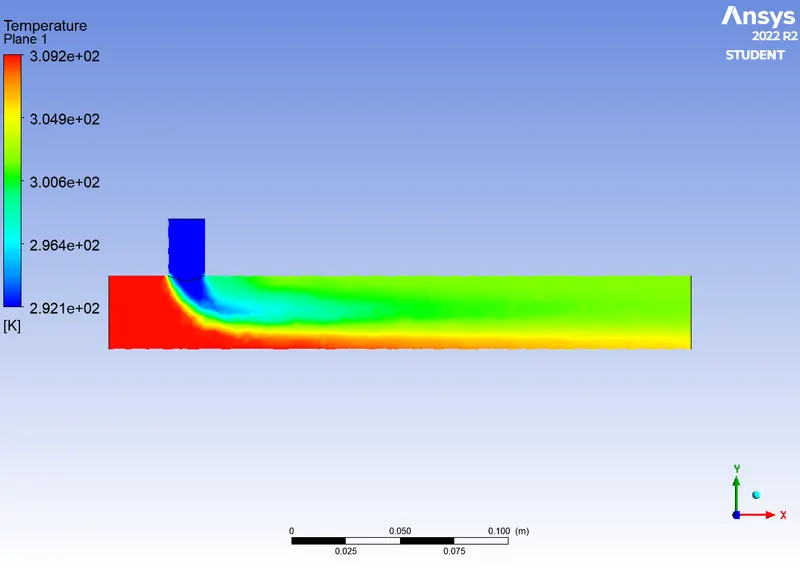
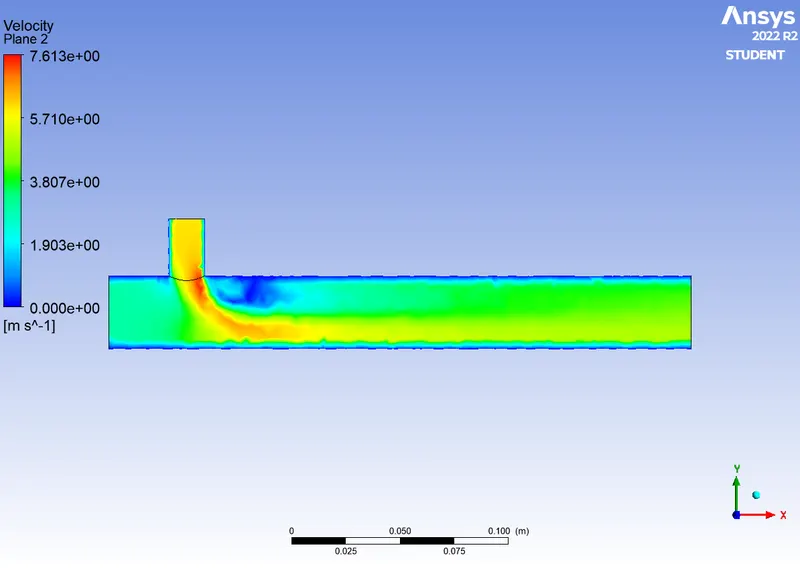
TEMPERATURE PLOT:
VELOCITY PLOT:
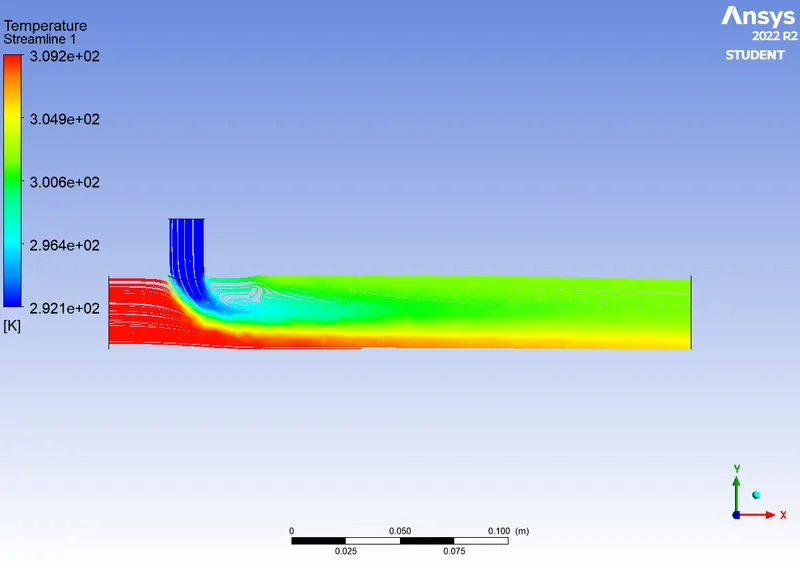
TEMPERATURE STREAMLINE:
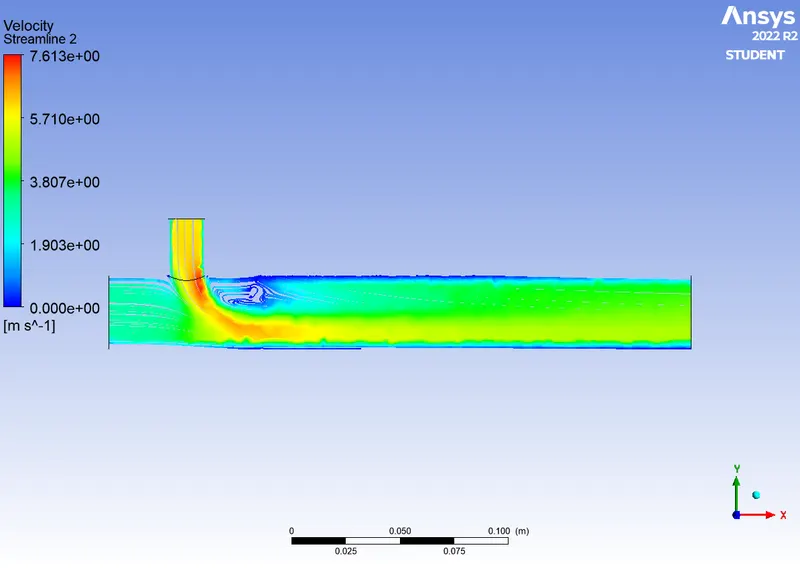
VELOCITY STREAMLINE :
CASE 2.1:K-OMEGA
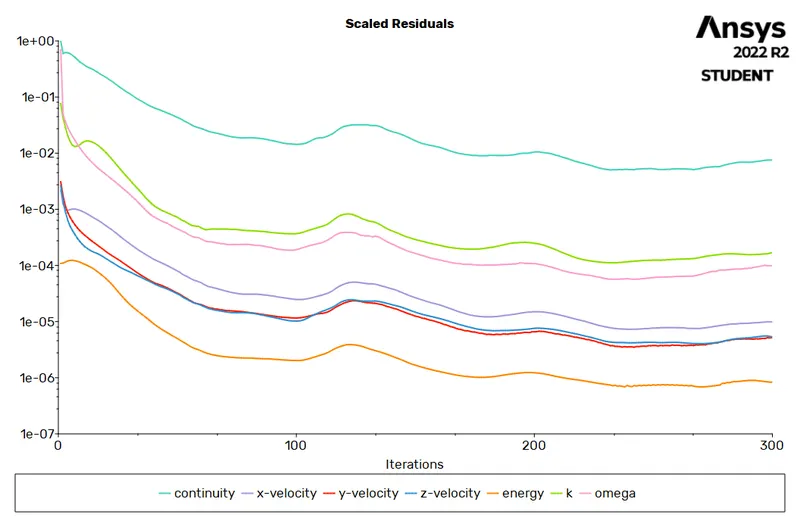
SCALED RESIDUALS:
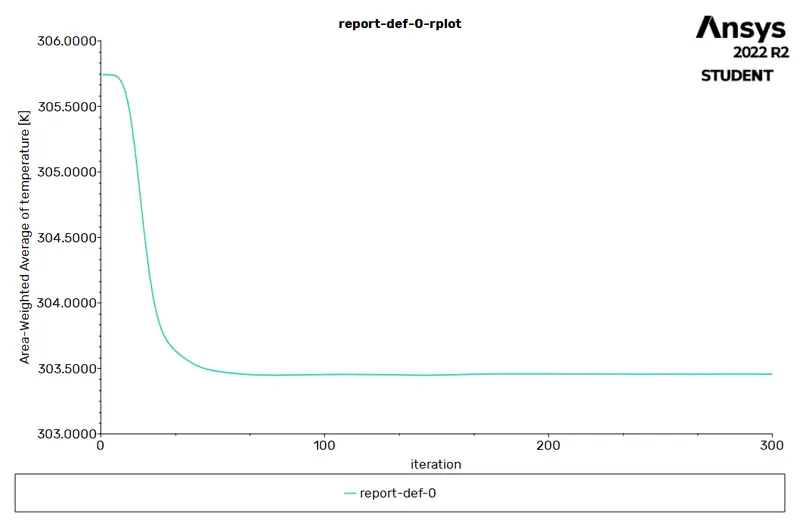
AREA WEIGHED AVG TEMPERATURE:
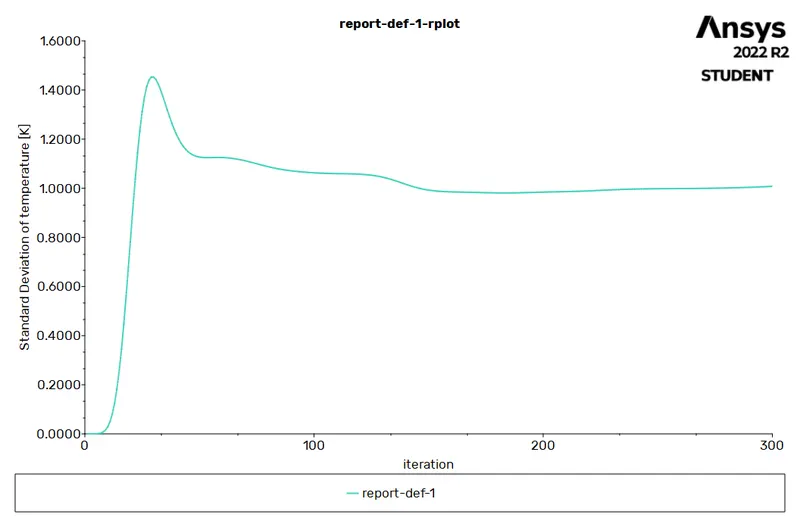
STANDARD DEVIATION:
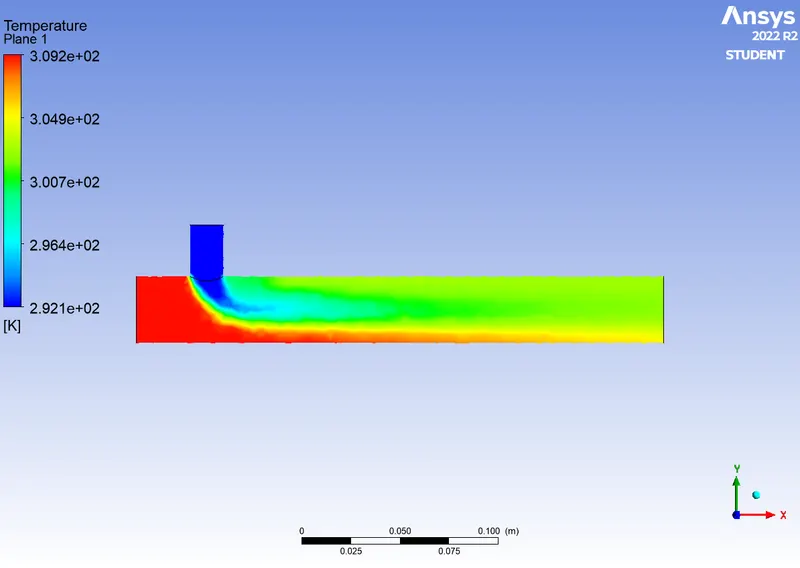
TEMPERATURE PLOT:
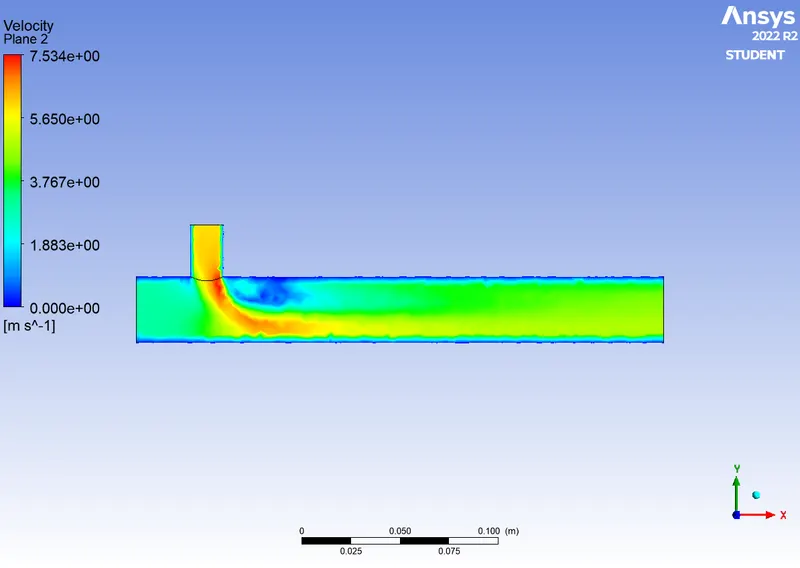
VELOCITY PLOT:
TEMPERATURE STREAMLINE:
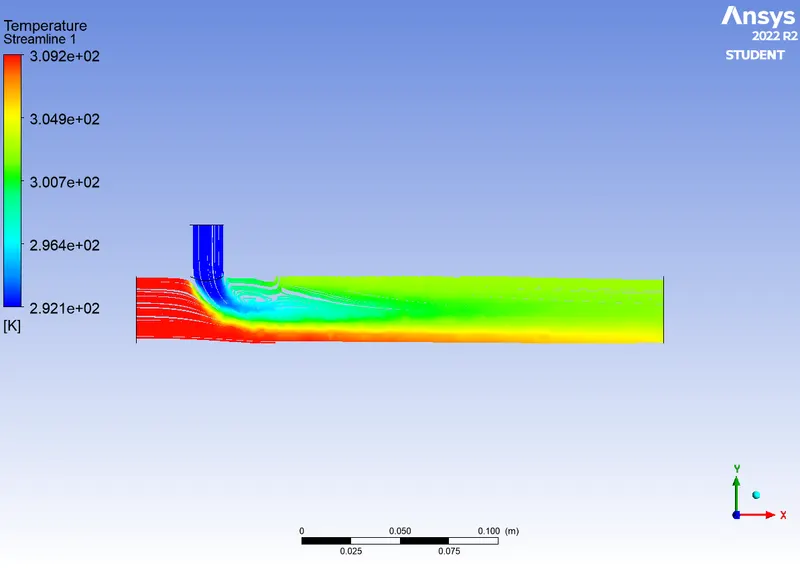
VELOCITY STREAMLINE:
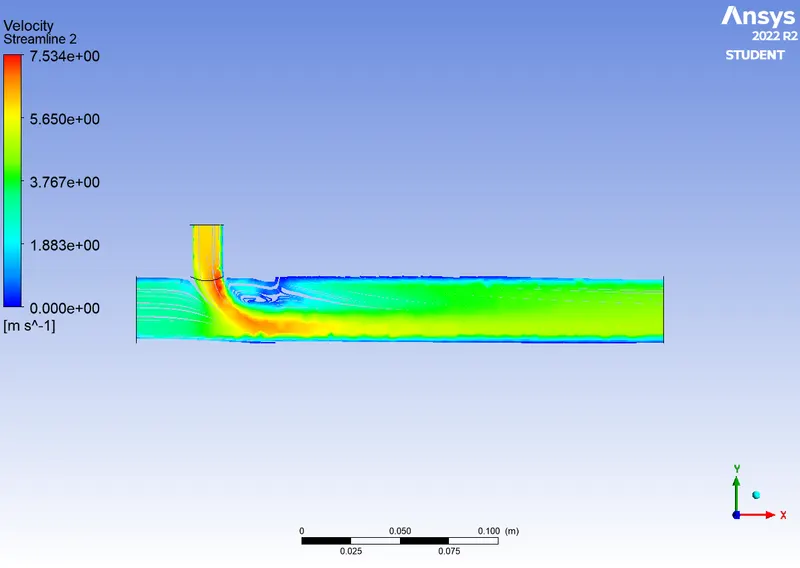
RESULT:
SHORT TEE (MR=2) K_EPSILON K_OMEGA
AVERAGE OUTLET TEMPERATURE [K] 300.169 K 300.464 K
STANDARD DEVIATION 1.2765 1.01
NO OF ITERATIONS 300 300
----------------------------------------------------------------------------------------------------------------------------------
CASE 2:
- Short mixing Tee with a hot inlet velocity of 3m/s
- Momentum ratio of 4.
|
SETUPS |
SHORT TEE (MR=4 AND HOT INLET VELOCITY = 3m/s)
|
|
|
K-EPSILON |
K-OMEGA |
|
|
SOLVER TYPE |
Pressure based |
Pressure based |
|
VELOCITY FORMULATION |
Absolute |
Absolute |
|
TIME |
Steady |
Steady |
|
VISCOUS MODEL |
Realizable K-epsilon with standard wall function |
K-omega SST model |
|
MATERIAL |
Air |
Air |
|
CELL ZONES |
Fluid type : air |
Fluid type : air |
|
BOUNDARIES |
· Inlet_x (velocity inlet) Velocity magnitude 3m/s Temperature - 360c · Inlet_y (velocity inlet) Velocity magnitude 12m/s Temperature – 190c · Outlet (pressure outlet) Gauge pressure – 0 pa · Walls – stationary walls |
· Inlet_x (velocity inlet) Velocity magnitude 3m/s Temperature - 360c · Inlet_y (velocity inlet) Velocity magnitude 12m/s Temperature – 190c · Outlet (pressure outlet) Gauge pressure – 0 pa · Walls – stationary walls |
K_EPSILON M=4:
SCALED RESIDUALS:
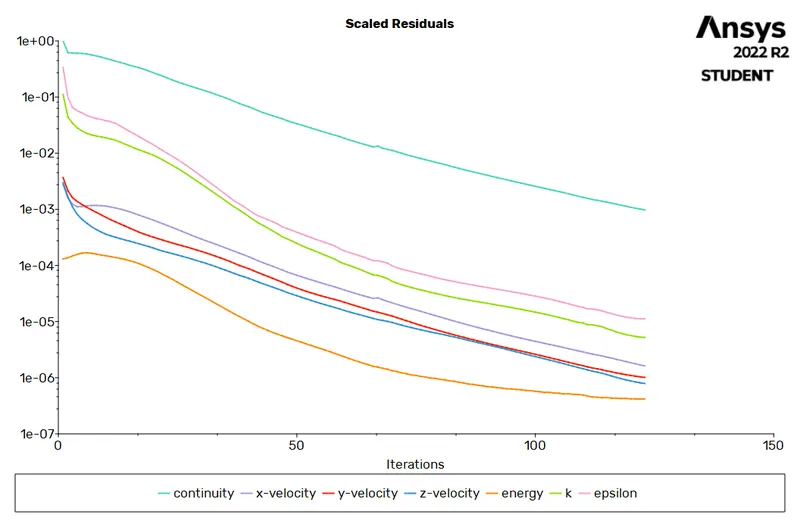
AREA WEIGHED AVG TEMPERATURE:
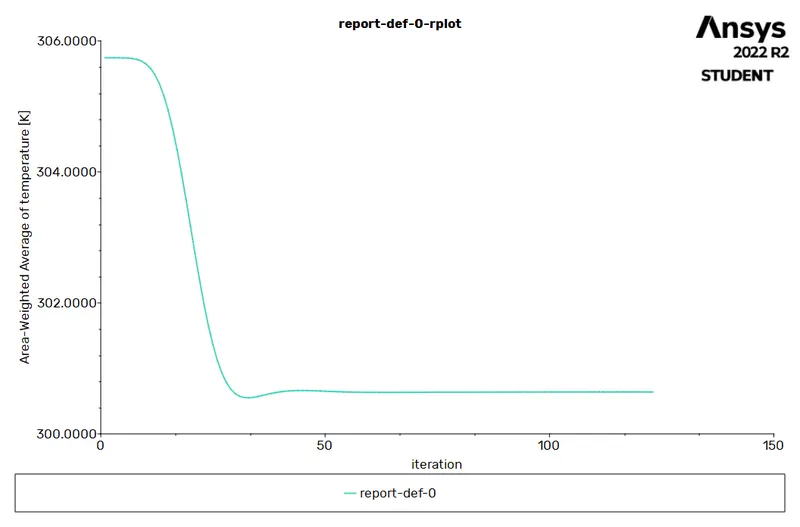
STANDARD DEVIATION:
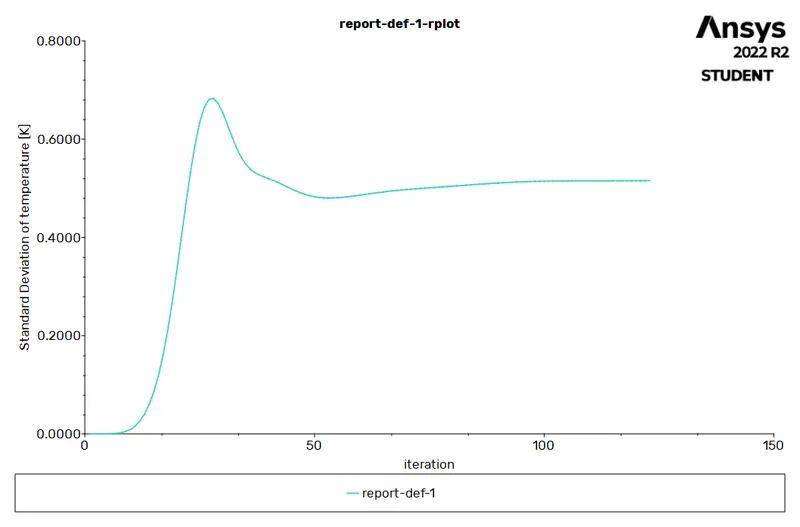
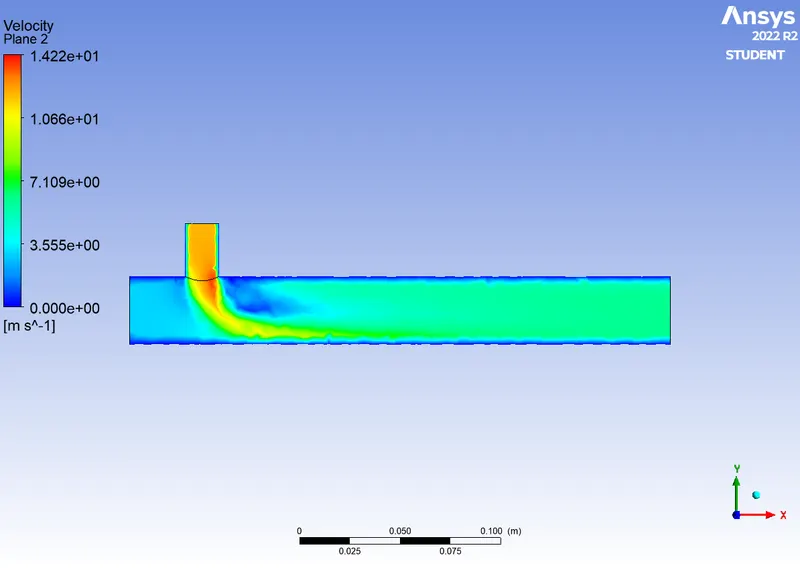
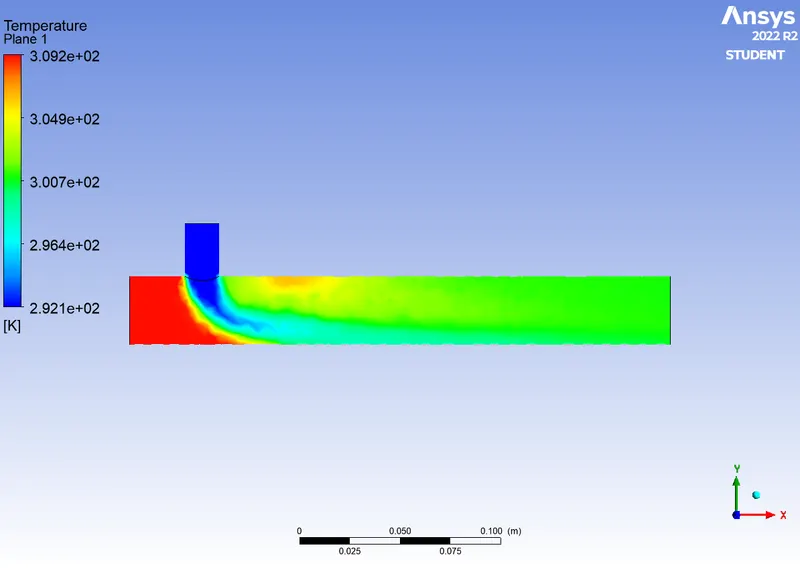
TEMPERATURE PLOT:
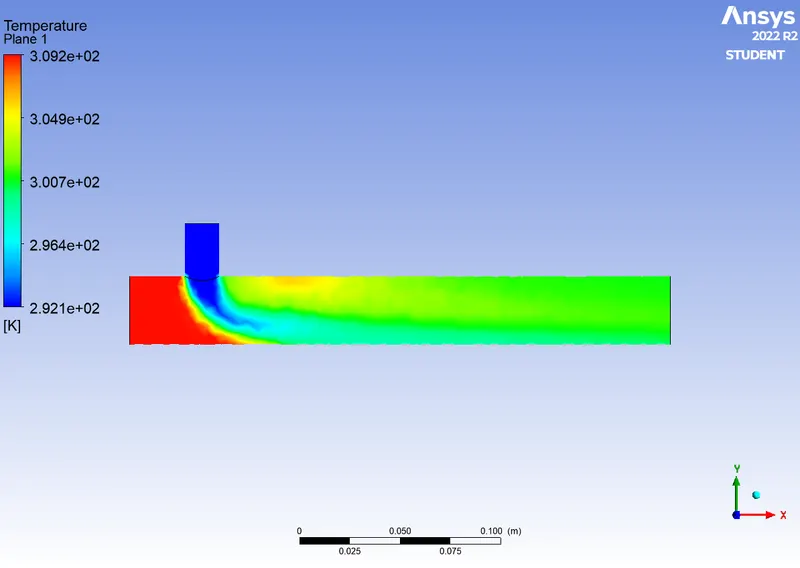
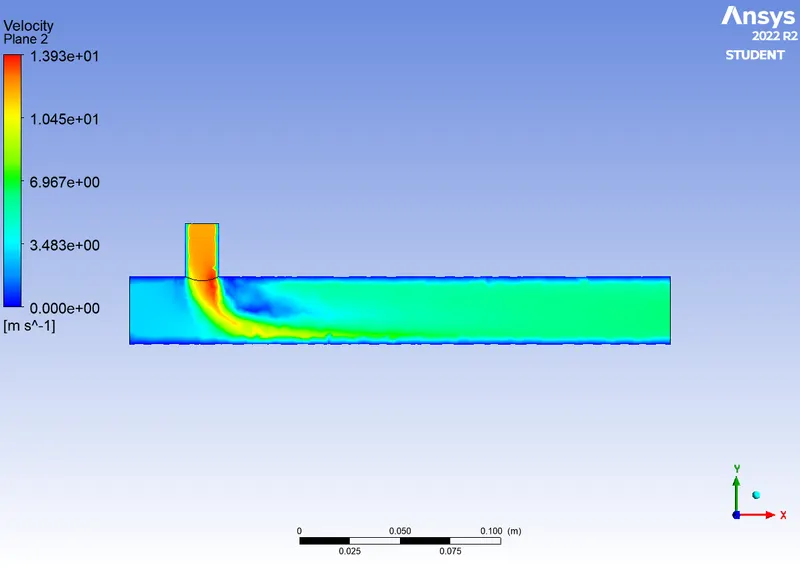
VELOCITY PLOT:
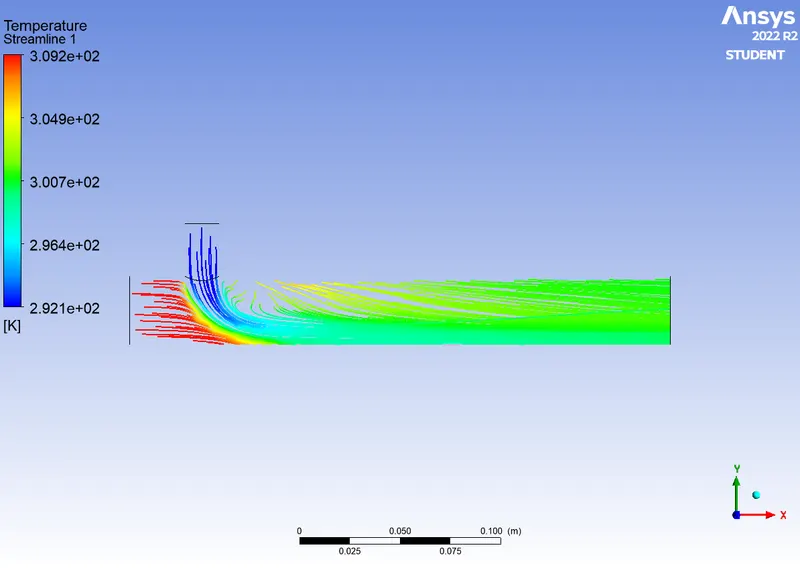
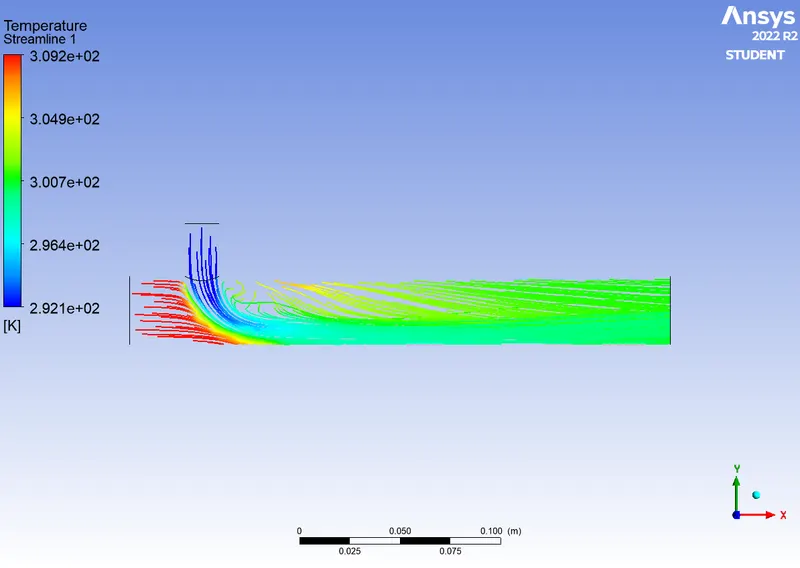
TEMPERATURE STREAMLINE:
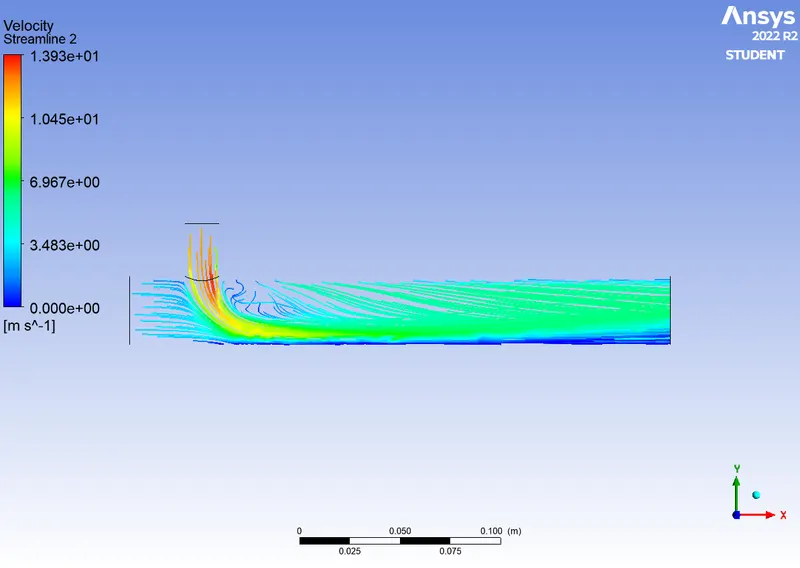
VELOCITY STREAMLINE :
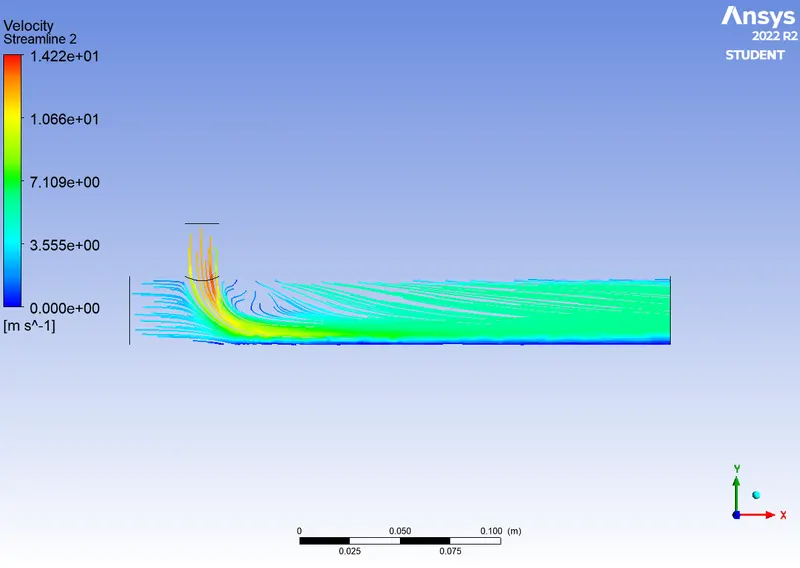
K-OMEGA M=4:
SCALED RESIDUALS:
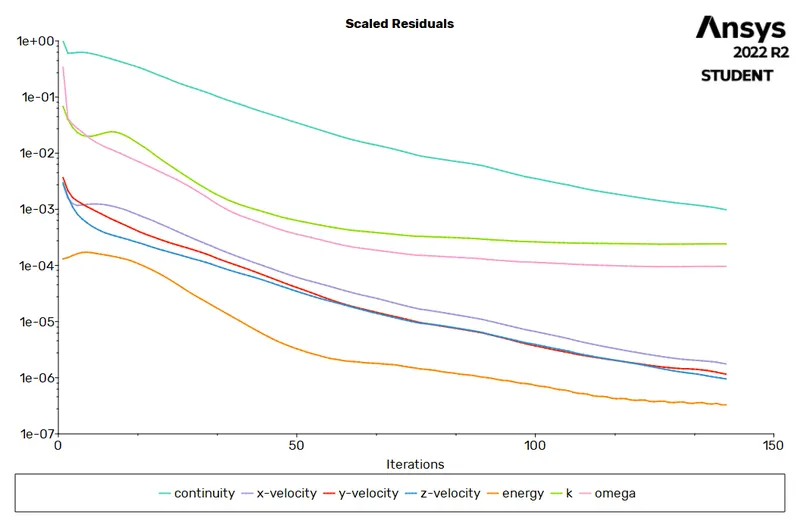
AREA WEIGHED AVG TEMPERATURE:
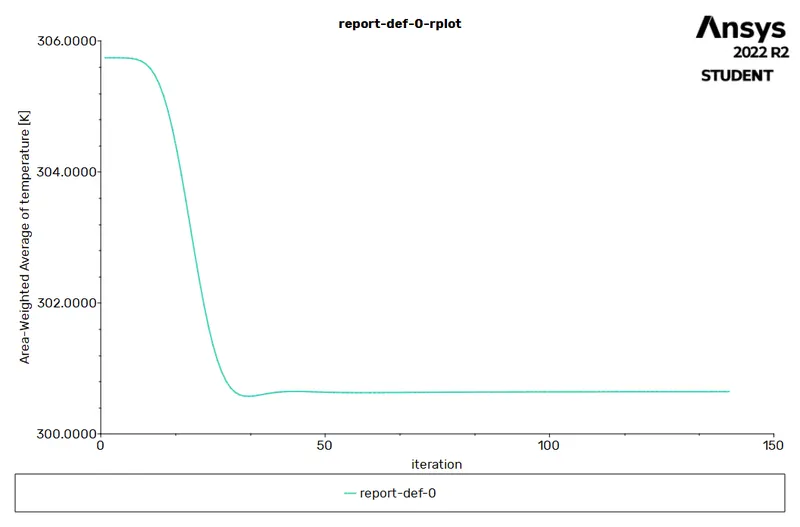
STANDARD DEVIATION:
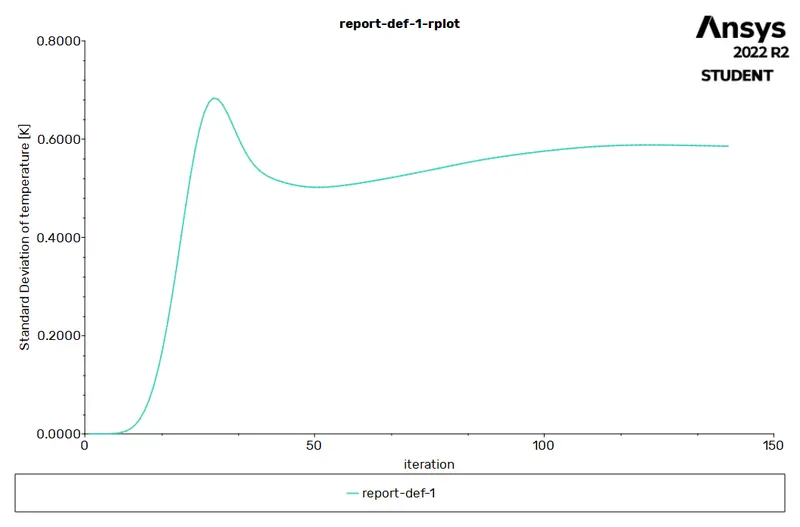
TEMPERATURE PLOT:
VELOCITY PLOT:
TEMPERATURE STREAMLINE :
VELOCITY STREAMLINE :
RESULT:
SHORT TEE (MR=2) K_EPSILON K_OMEGA
AVERAGE OUTLET TEMPERATURE [K] 300.655 K 300.655
STANDARD DEVIATION 0.5158 0.5872
NO OF ITERATIONS 124 141
AVERAGE OUTLET TEMPERATURE:
On comparing the both models with analytical solution we got nearly the same results.
ITERATIONS TO CONVERGE:
No. of iterations taken to converge is less for Realisable K-epsilon model than K-omega SST model.