Week 1- Mixing Tee
MIXING TEE
Mixing Tees utilizes a specifically engineered internal geometry to efficiently mix two fluid streams into one combined stream. Mixing tees are widely used in the petrochemical, HVAC industry, etc. in which two fluid streams with different physical and/or chemical properties mix.
OBJECTIVE:
For this challenge, we have created two versions of the mixing tee. One of them is longer than the other.
Our job is to set up steady-state simulations to compare the mixing effectiveness when the hot inlet temperature is 360C & the Cold inlet is at 190C.
Use the k-epsilon and k-omega SST model for the first case and based on your judgment use the more suitable model for further cases. Giving the reason for choosing a suitable model is compulsory.
Case 1
Short mixing tee with a hot inlet velocity of 3m/s.
Momentum ratio of 2, 4.
Case 2
Long mixing tee with a hot inlet velocity of 3m/s.
Momentum ratio of 2, 4.
ANSYS WORKFLOW:
GEOMETRY: Construct a two or three-dimensional representation of the object to be modeled and tested using the work plane coordinate system within ANSYS.
MESH: At this point, ANSYS understands the makeup of the part. Now define how the modeled system should be broken down into finite pieces.
SETUP: The case setup will be done using Ansys fluent
SOLUTION: Ansys fluent where run-time result visualization is done
RESULTS: Post-processing of results will be done here using CFD-post
SHORT TEE:
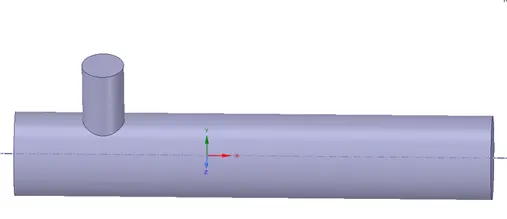
GEOMETRY SETUP:
In this stage, the geometrical 3d model was prepared for the meshing process.
MESH GENERATION:
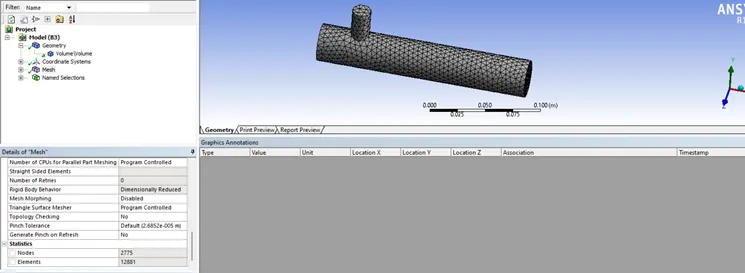
Create meshing for the simulation process here we separate the body into cells, and the mesh size and types are defined in this stage.
SETUP AND SOLUTION:
In this stage, the testing parameters and conditions are applied based on our requirement
CASE 1:
- Short mixing Tee with a hot inlet velocity of 3m/s
- Momentum ratio of 2,4
|
S.NO |
SETUPS |
K-MEGA |
K-EPSILON |
|
1 |
Solver Type |
Pressure based |
Pressure based |
|
2 |
Velocity Formulation |
Absolute |
Absolute |
|
3 |
Time |
Steady |
Steady |
|
4 |
Viscous type |
Realizable K-epsilon with standard wall function |
K-omega SST model |
|
5 |
CELL ZONES |
Fluid type: air |
Fluid type: air |
|
6 |
BOUNDARIES |
Inlet_x (velocity inlet) Velocity magnitude 3m/s Temperature - 360c · Inlet_y (velocity inlet) Velocity magnitude 6m/s Temperature – 190c · Outlet (pressure outlet) Gauge pressure – 0 pa · Walls – stationary walls |
Inlet_x (velocity inlet) Velocity magnitude 3m/s Temperature - 360c · Inlet_y (velocity inlet) Velocity magnitude 6m/s Temperature – 190c · Outlet (pressure outlet) Gauge pressure – 0 pa · Walls – stationary walls |
|
7 |
Scheme |
Hybrid |
Hybrid |
RESULTS:
K-EPSILON MODEL:
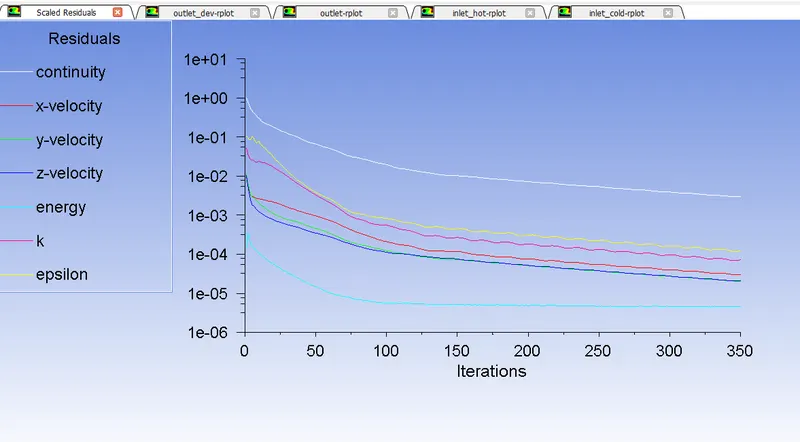
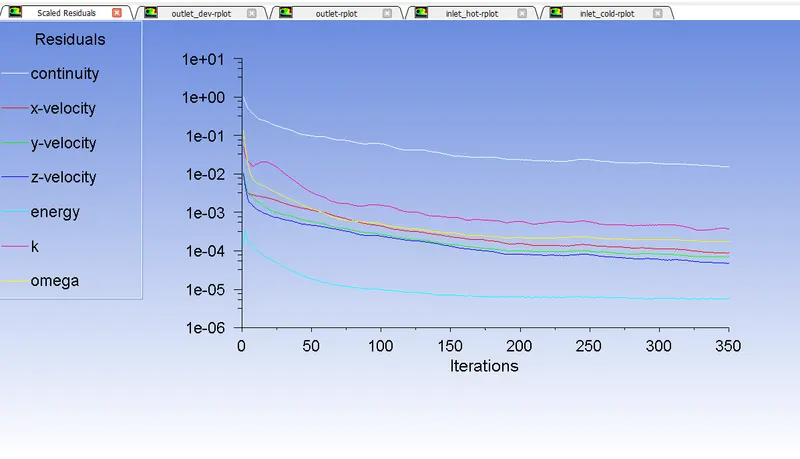
RESIDUAL PLOT:
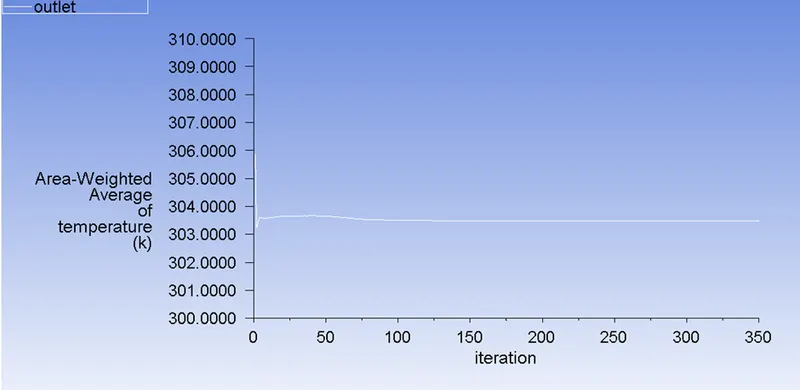
AREA WEIGHTED AVERAGE:
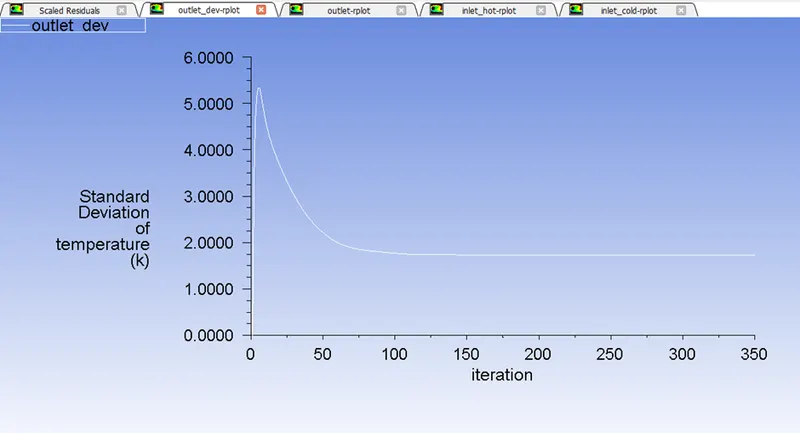
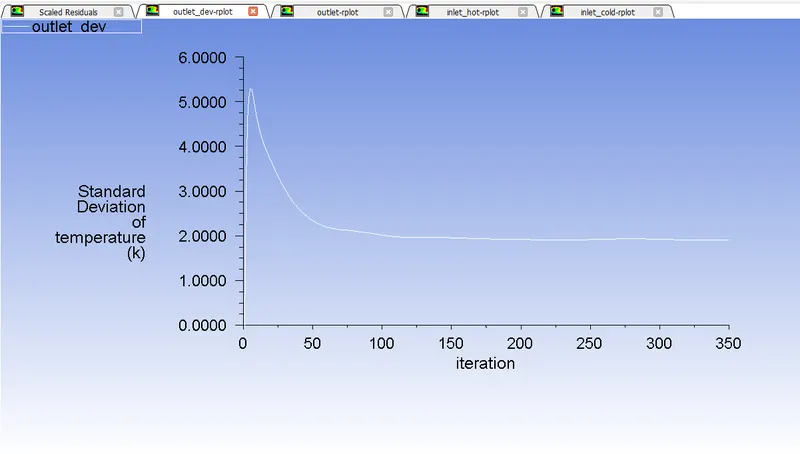
STANDARD DEVIATION:
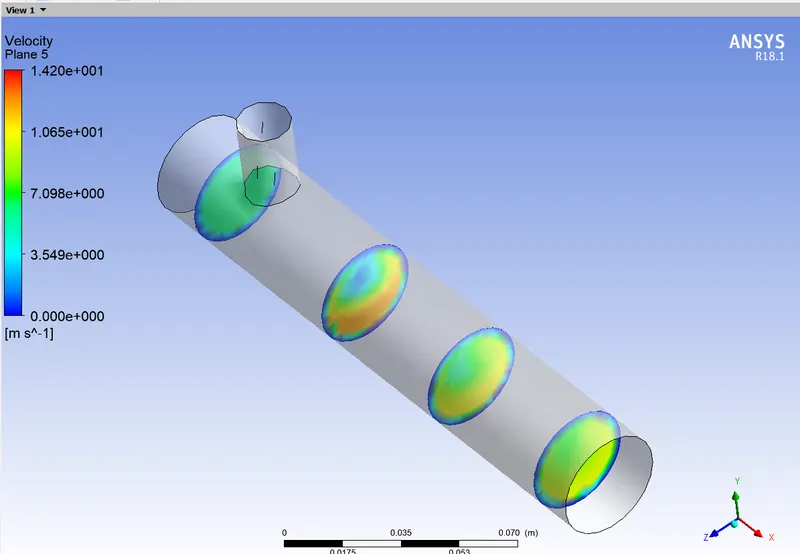
CONTOUR PLOT:
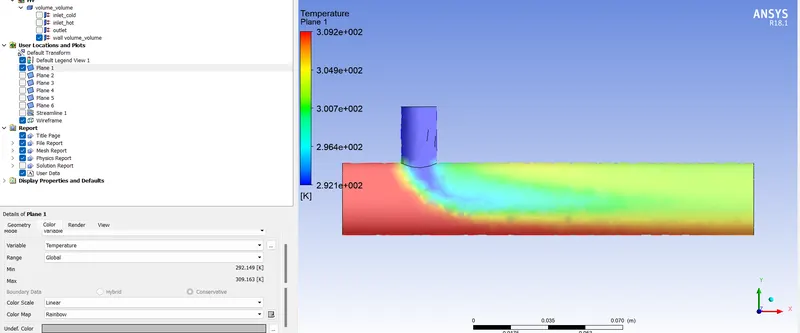
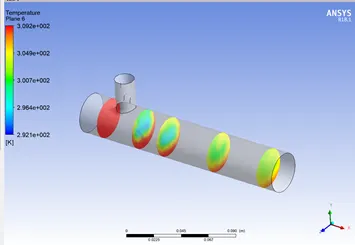
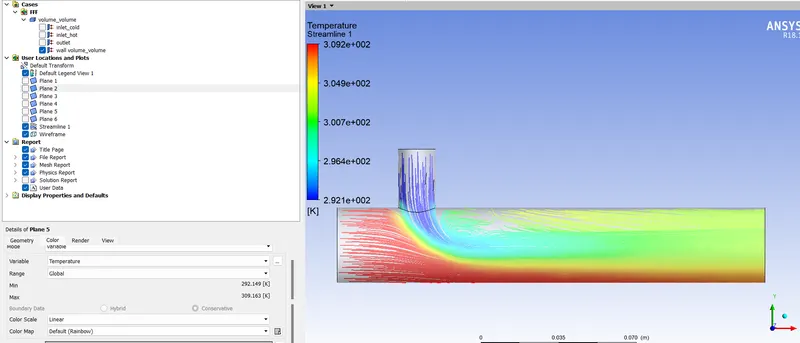
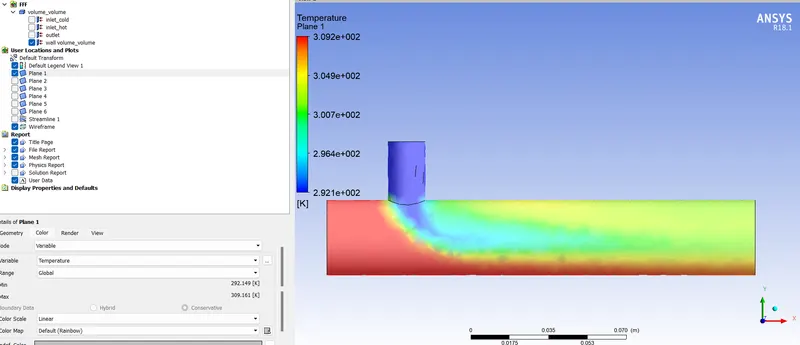
TEMPERATURE CONTOUR:
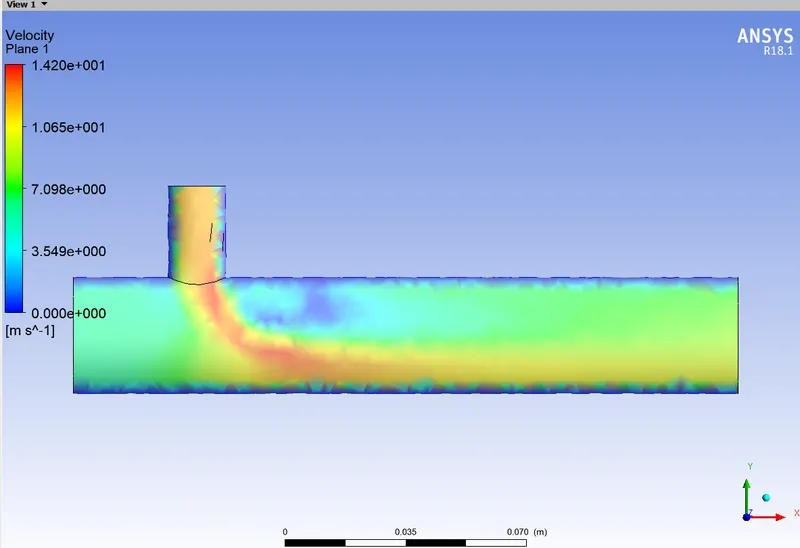
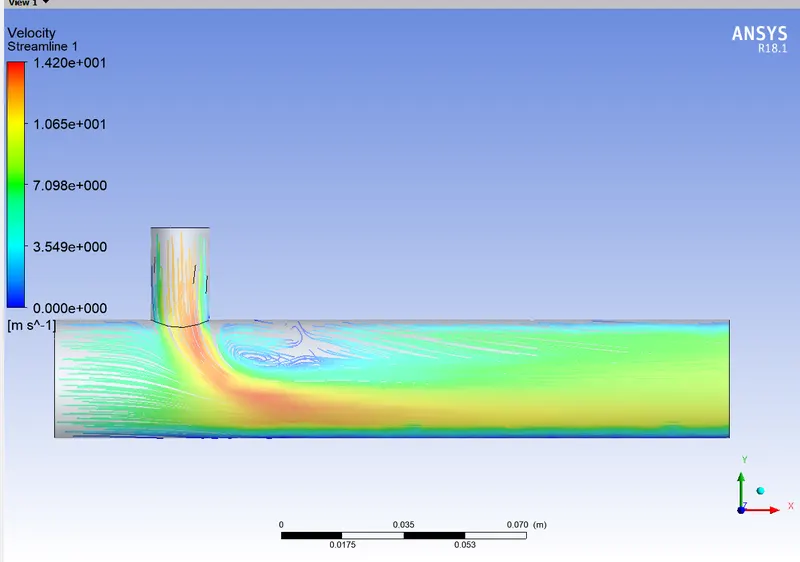
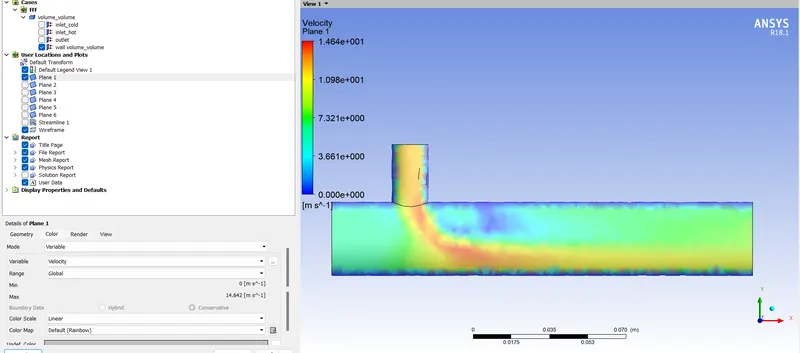
VELOCITY CONTOUR:
STREAMLINE PLOT:
TEMPERATURE:
VELOCITY:
K-OMEGA MODEL:
RESIDUAL PLOT:
AREA WEIGHTED AVERAGE:
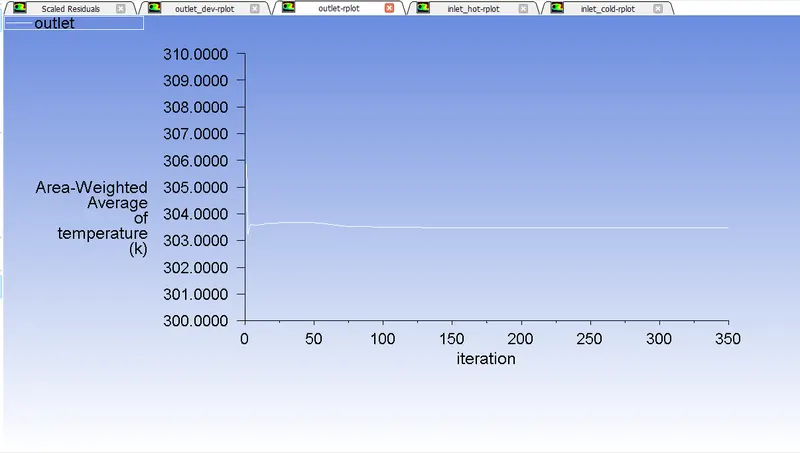
STANDARD DEVIATION:
CONTOUR PLOT:
TEMPERATURE CONTOUR:
VELOCITY CONTOUR:
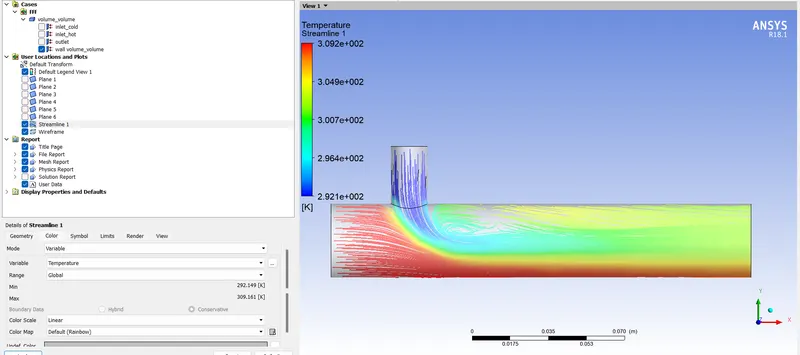
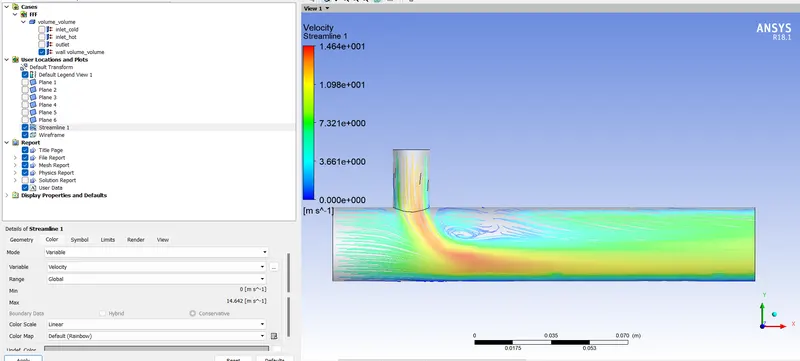
STREAMLINE PLOT:
TEMPERATURE:
VELOCITY:
|
|
SHORT TEE (MR = 2) |
|
|
K-EPSILON |
K-OMEGA |
|
|
AVERAGE OUTLET TEMPERATURE [K] |
303.4 |
303.4 |
|
STANDARD DEVIATION |
5.28 |
5.3 |
|
NO OF ITERATIONS |
150 |
170 |
ANALYTICAL SOLUTION:
MOMENTUM RATIO 2:
- Mass of hot fluid (mh) = rho*a*Vh = 997*0.0009*3 = 2.69 kg/s
- Mass of cold fluid (mc) = rho*a*Vc = 997*0.0009*6 = 1.35 kg/s
- Temperature of mixture (Tmixture) = (mh*Th + mc*Tc)/(mc + mh) = 30.3190c = 303.319k
MOMENTUM RATIO 4:
- Mass of hot fluid (mh) = rho*a*Vh = 997*0.0009*3 = 2.69 kg/s
- Mass of cold fluid (mc) = rho*a*Vc = 997*0.0009*12 = 2.3928 kg/s
- Temperature of mixture (Tmixture) = (mh*Th + mc*Tc)/(mc + mh) = 27.990c = 300.99k
CONCLUSION:
AVERAGE OUTLET TEMPERATURE:
On comparing both models with the analytical solution we got nearly the same results.
ITERATIONS TO CONVERGE:
No. of iterations taken to converge is less for the Realisable K-epsilon model than the K-omega SST model.
STANDARD DEVIATION:
K-Epsilon gives better efficiency than the K-Omega model. so we can move with K-Omega.
So based on the above observations the K-epsilon turbulence model is predicting the results accurately in less no. of iterations. So we can use a realizable k-epsilon model for case 2(Long TEE)
CASE 2:
- Long mixing tee with a hot inlet velocity of 3m/s.
- Momentum ratio of 2, 4.
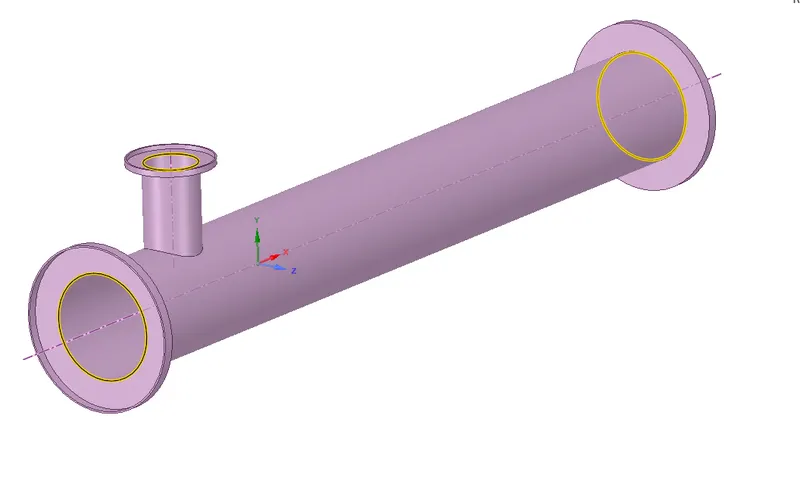
GEOMETRY SETUP:
In this stage, the geometrical 3d model was prepared for the meshing process.
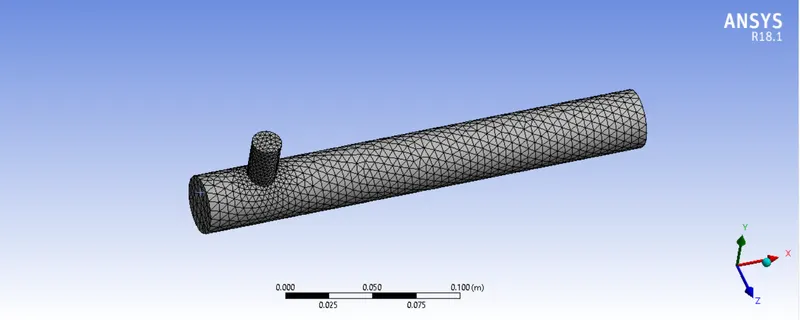
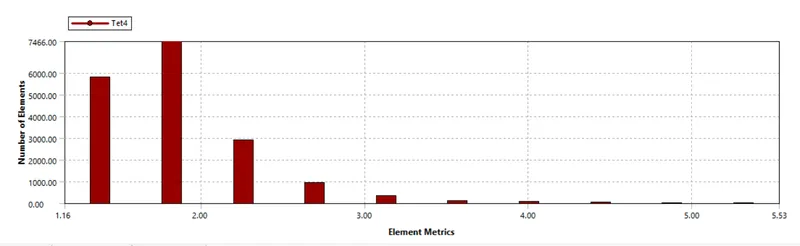
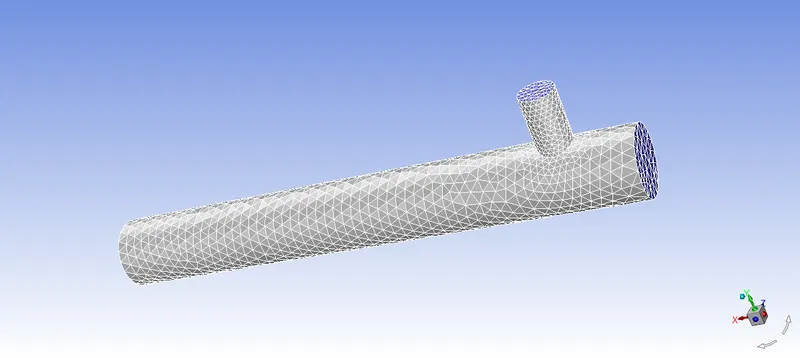
MESH GENERATION:
Create meshing for the simulation process here we separate the body into cells, the mesh size and types are defined in this stage
SETUP AND SOLUTION:
|
S.NO |
SETUPS |
K-EPSILON |
|
1 |
Solver Type |
Pressure based |
|
2 |
Velocity Formulation |
Absolute |
|
3 |
Time |
Steady |
|
4 |
Viscous type |
K-omega SST model |
|
5 |
CELL ZONES |
Fluid type: air |
|
6 |
BOUNDARIES |
Inlet_x (velocity inlet) Velocity magnitude 3m/s Temperature - 360c · Inlet_y (velocity inlet) Velocity magnitude 6m/s Temperature – 190c · Outlet (pressure outlet) Gauge pressure – 0 pa · Walls – stationary walls |
|
7 |
Scheme |
Hybrid |
The hybrid scheme is used for initialization and the no. of iterations is setup and then click on calculate option.
RESULTS:
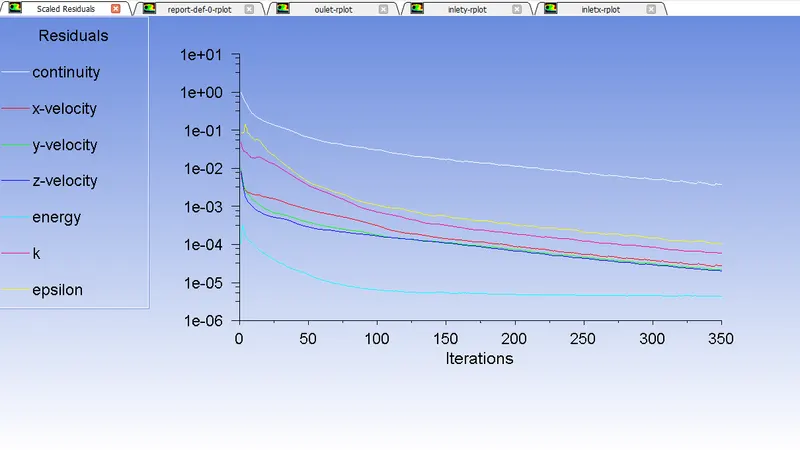
RESIDUAL PLOT:
AREA WEIGHTED AVERAGE:
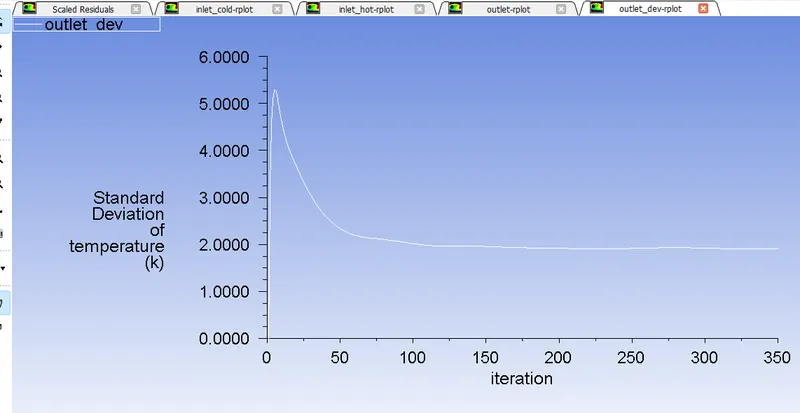
STANDARD DEVIATION OF TEMPERATURE:
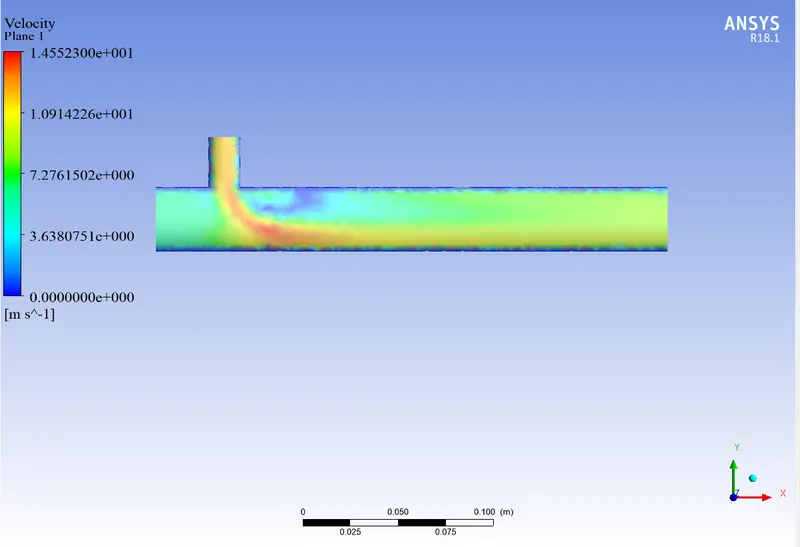
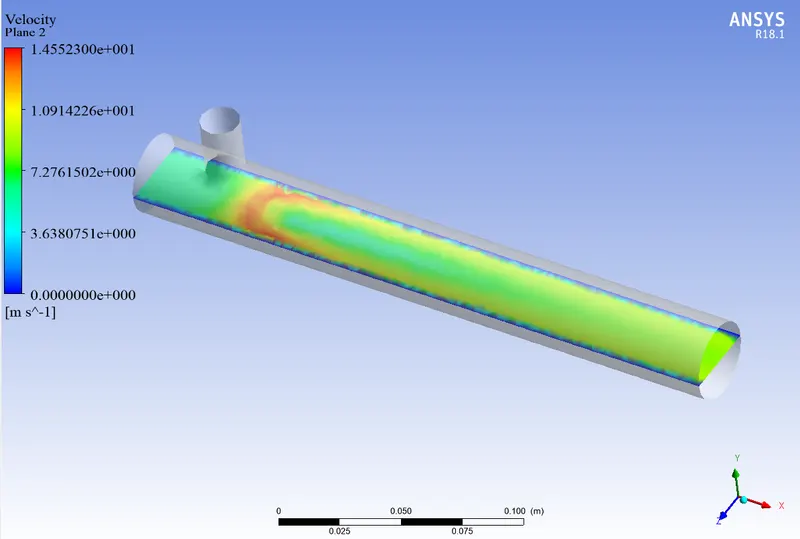
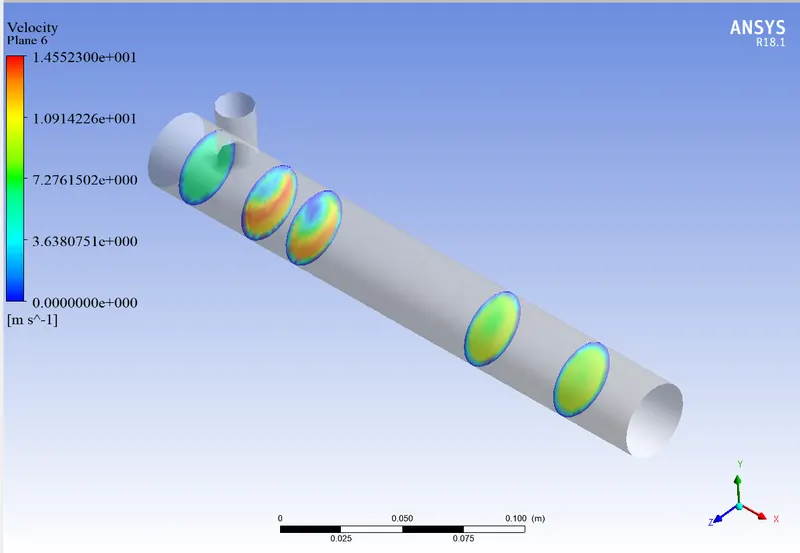
CONTOUR PLOT:
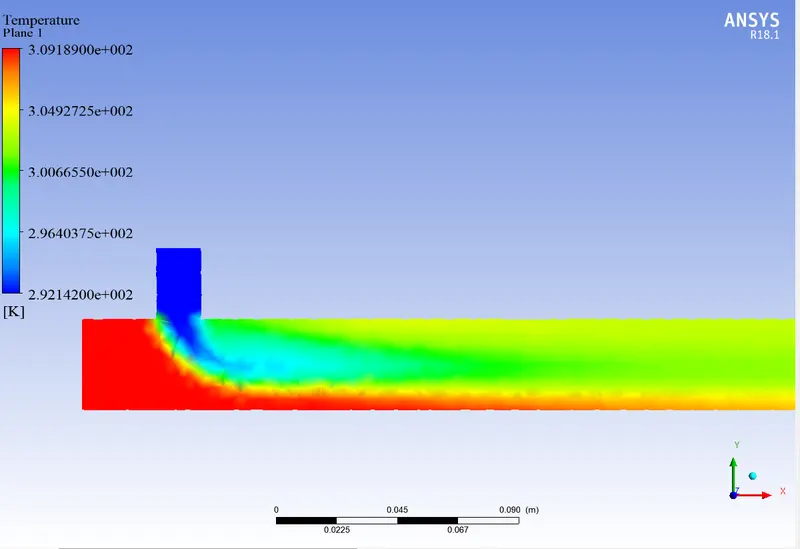
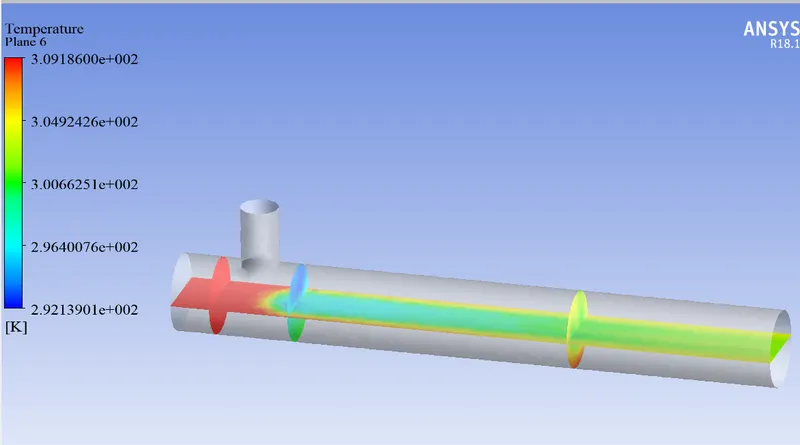
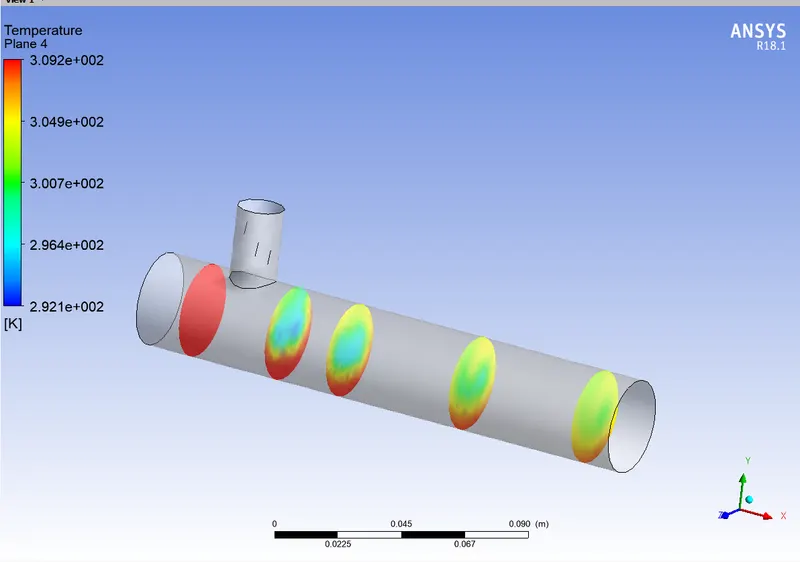
TEMPERATURE CONTOUR:
VELOCITY CONTOUR:
STREAMLINE PLOT:
TEMPERATURE:
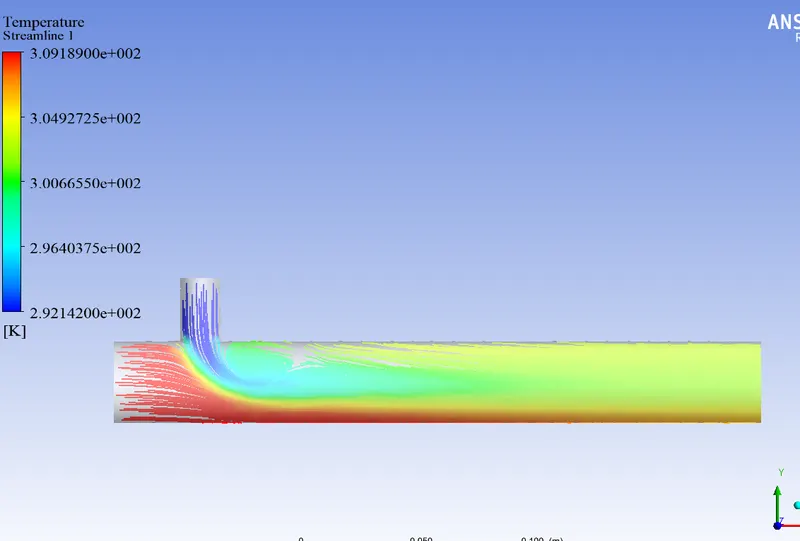
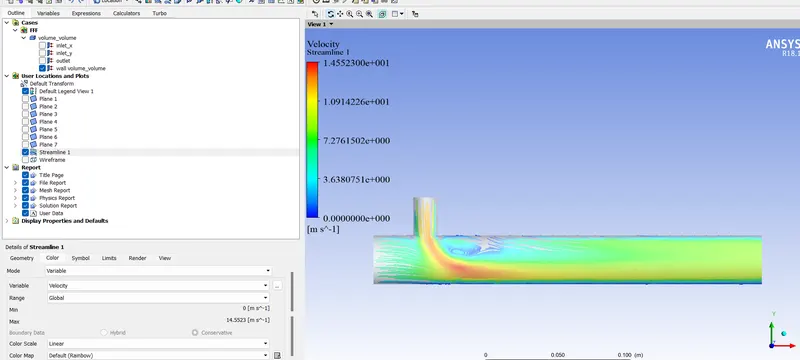
VELOCITY:
SUMMARY:
|
|
SHORT TEE (MR = 2,4) |
LONG TEE (MR = 2,4) |
|
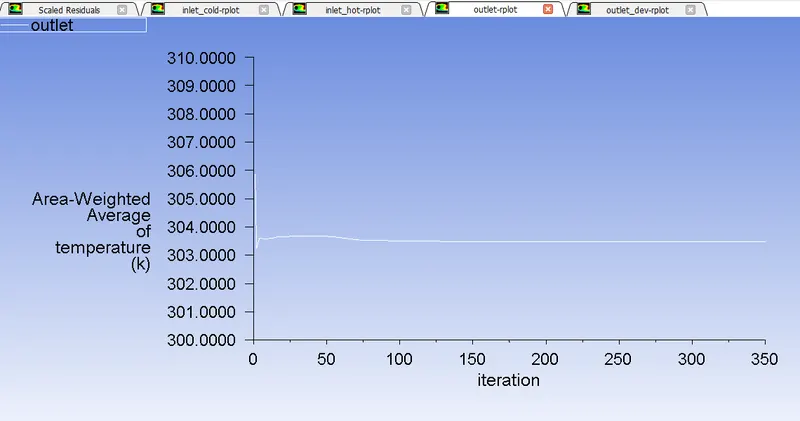
AVERAGE OUTLET TEMPERATURE [K] |
303.367 |
300.449 |
|
STANDARD DEVIATION |
5.3 |
5.2 |
|
NO OF ITERATIONS |
150 |
170 |
COMPARISON OF BOTH LONG AND SHORT TEE:
K-Epsilon Reaslisable model:
|
GEOMETRY |
MOMENTUM RATIO |
MESH SIZE CELL |
CELL COUNT AVERAGE |
AVERAGE OUTLET TEMPERATURE [K] |
NO. OF ITERATIONS |
STANDARD DEVIATION SHORT SHORT-SHORT |
|
SHORT TEE |
2,4 |
5MM |
17652 |
303.413 |
150 |
5.3 |
|
LONG TEE |
2,4 |
5MM |
12881 |
300.396 |
130 |
5.2 |
CONCLUSION:
- The mesh size of 5 mm gives the best-predicted results than the other two mesh size
- Reducing Mesh size was increasing the accuracy of results.
- Decreasing the mesh size, the average outlet temperature of the analytical results