Week 1- Mixing Tee
In this there are 2 models of the mixing tee where first one is long mixing tee and the second one short mixing tee.
Under this 2 models we have to do the 2 different cases for each model and from which we have to analyze the each model and have to provide the :
- Velocity and temperature contour plots on the cut planes along and across the pipe.
- Velocity and temperature line plots along and across the length of the pipe.
- Perform Mesh independent study for any one case.
- Discuss the effect of length and momentum ratio on results.
By observing the given description above we can say that the with 2 different inlet temperatures we have to observe the outlet temperature of the mixing tee of th geometry.
Now solving the Model 1
Details of Model 1
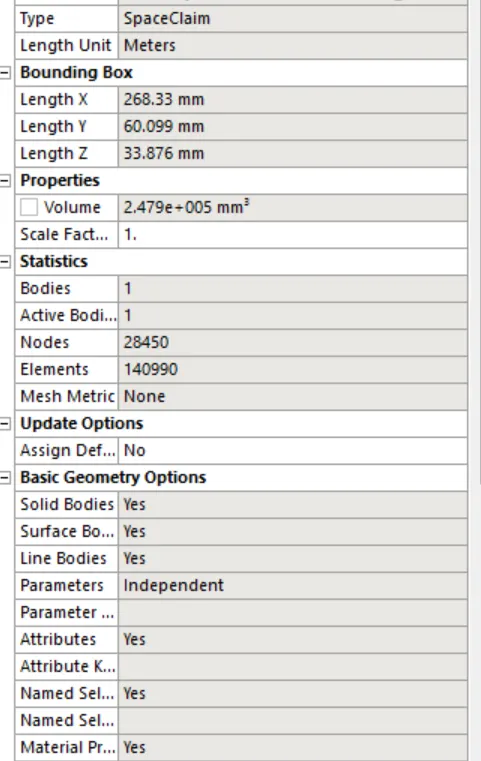
Case 1:
Boundary Conditions:
| Inlet Temperature in x direction | 36 degree celsius |
| Inlet temperature in y direction | 19 degree celsius |
| Inlet velocity in x direction | 3 m/s |
| Inlet vlecity in y direction | 6 m/s |
| Meshing value | 2mm |
| No. of iterations | 900 |
Import the geometry to the work bench and do the required changes for generating the mesh.
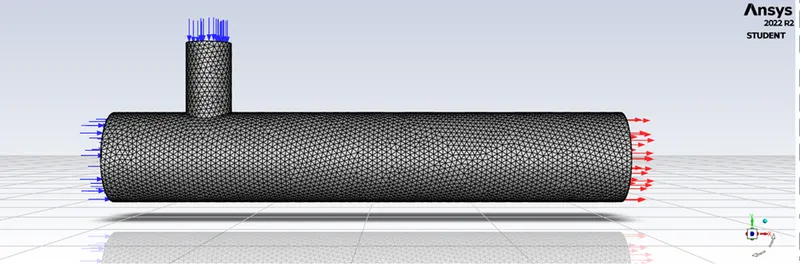
Apply the boundary conditions as mentioned in the table then intilaize the geometry.
Mixing long tee with inlet temperature 36 in x direction and inlet temperature 19 in y direction where hot inlet velocity is 3m/s and cold inlet velocity is 6m/s with momentum ratio is 2 and the meshing quality is 2mm.
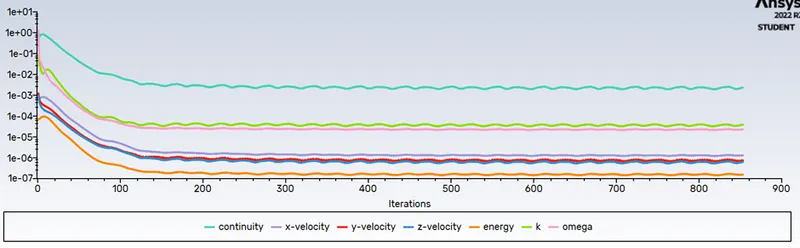
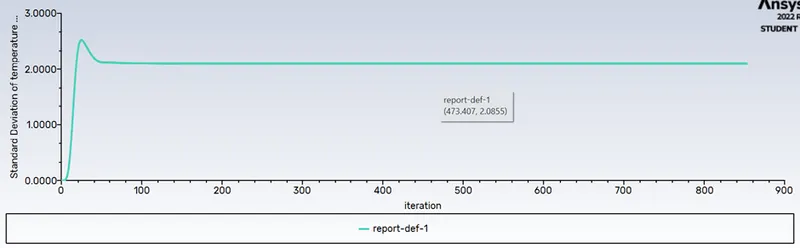
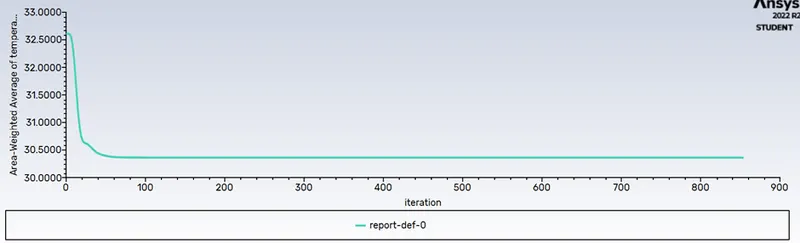
After initializing the geomerty with proper boundary conditions run the mesh with number of iterations 900 as mentioned in the table. After running the mesh it will be generating the plot of Scaled Residuals, Standard Deviation of Tmeperature, Avergae weight of the Temperature.
Scaled residuals
Standard Deviation of temperature:
Area-weighted average of temperature
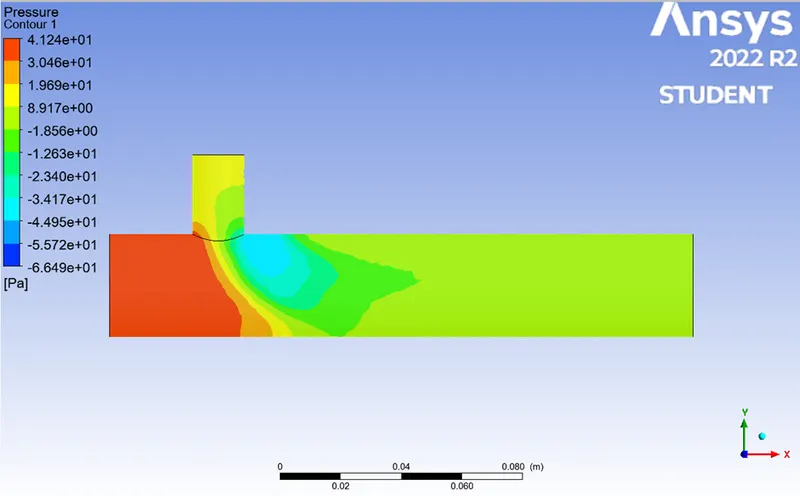
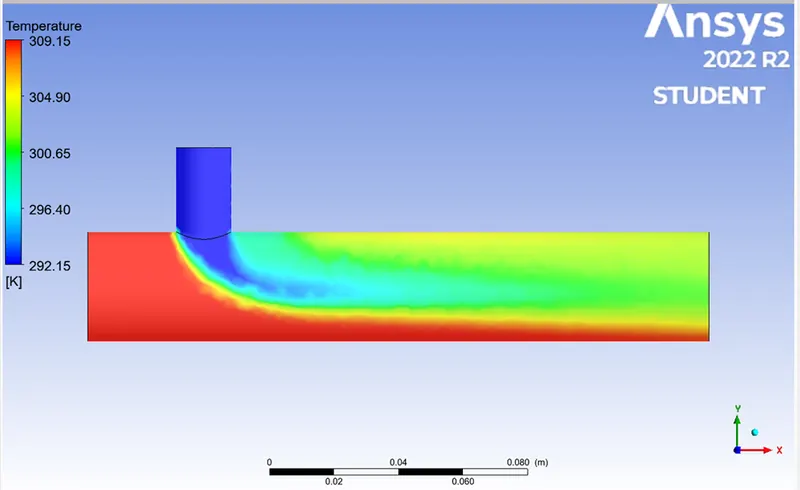
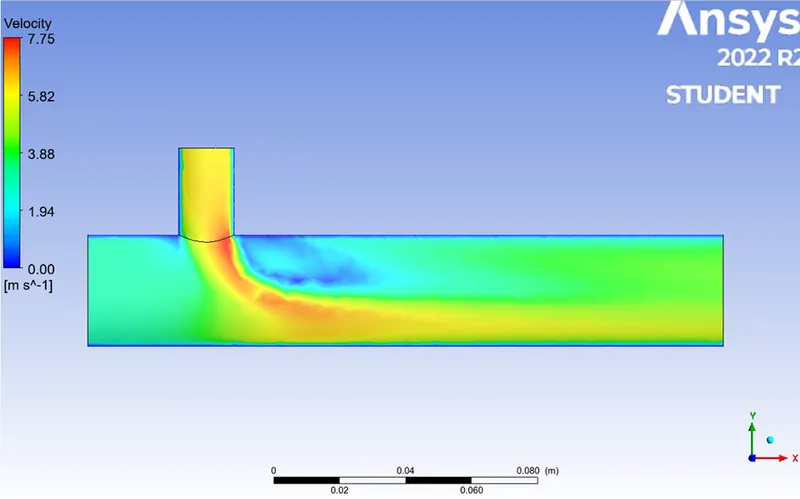
After Generating the Meshing properties now doing the contour of the temperature and pressure for the case 1.
Temperature contour
Velocity contour
Case 2:
Boundary Conditions:
| Temperature inlet in x-direction |
36 degree celsius |
| Temperature inlet in y direction | 19 degree celsius |
| Pressure inlet in x-direction | 3 m/s |
| Pressure inlet in y-direction | 12m/s |
| Meshing value | 2mm |
| No. of Iterations | 150 |
Import the geometry to the work bench and do the required changes for generating the mesh.
Apply the boundary conditions as mentioned in the table then intilaize the geometry.
Mixing long tee with inlet temperature 36 in x direction and inlet temperature 19 in y direction where hot inlet velocity is 3m/s and cold inlet velocity is 12m/s with momentum ratio is 2 and the meshing quality is 2mm.
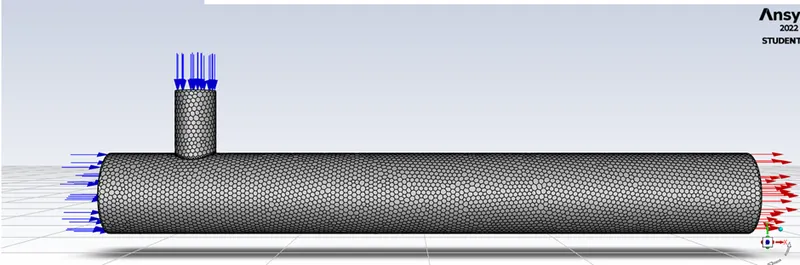
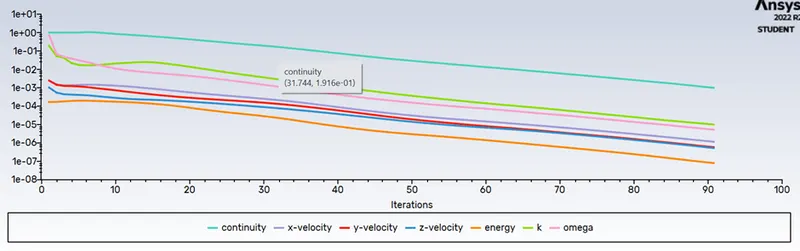
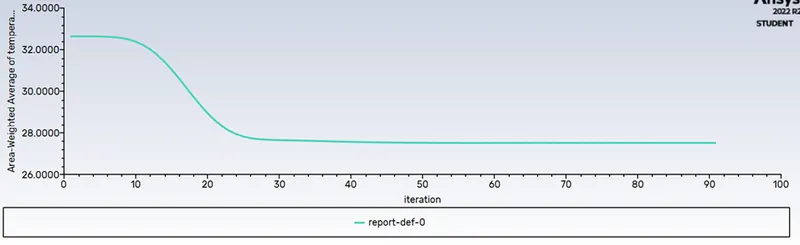
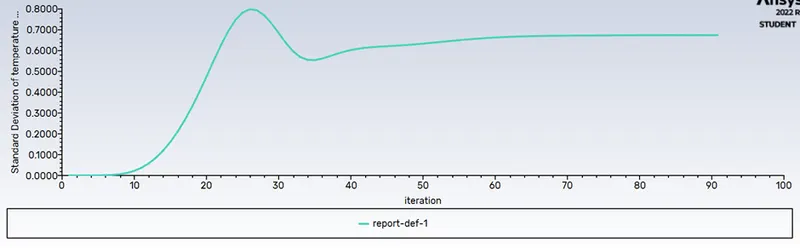
After initializing the geomerty with proper boundary conditions run the mesh with number of iterations 900 as mentioned in the table. After running the mesh it will be generating the plot of Scaled Residuals, Standard Deviation of Tmeperature, Avergae weight of the Temperature.
Scaled residuals
Area-weight average of Temperature:
Strandard Deviation of Temperature:
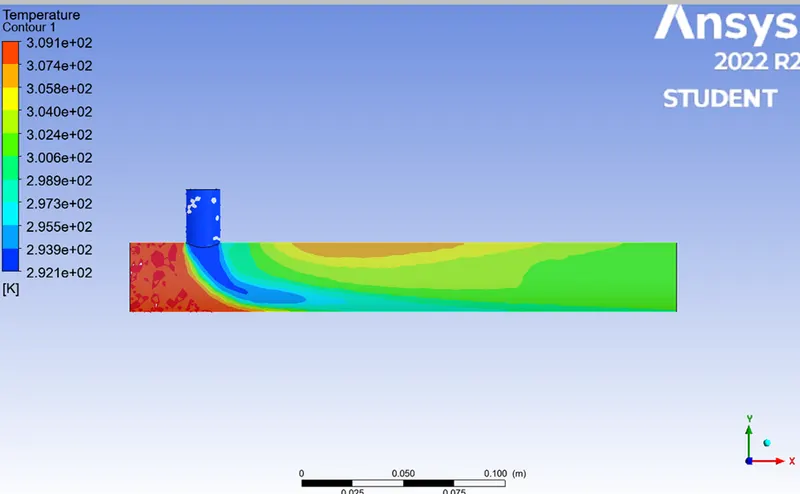
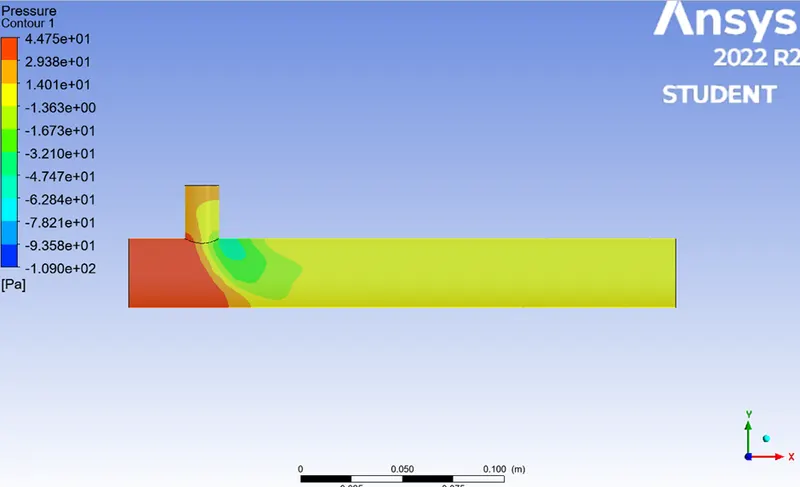
After Generating the Meshing properties now doing the contour of the temperature and pressure for the case 2.
Temperature Contour
Pressure Contour
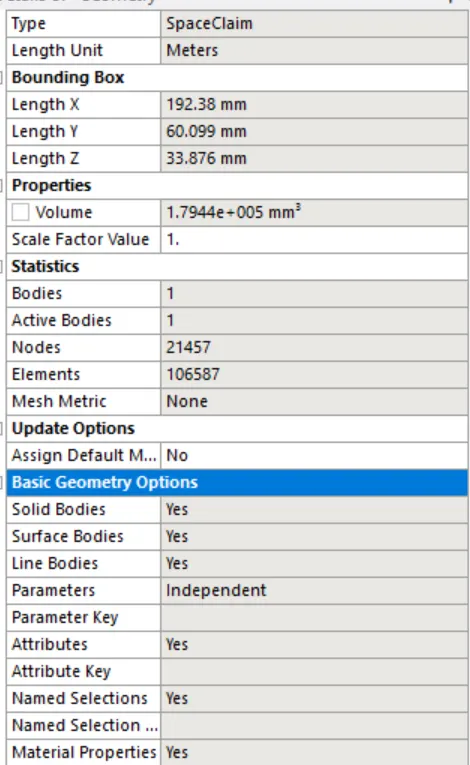
In this model the length of the geometry is lesser than the previous geometry and remaining boundary conditions are same.
Details of the geometry:
Case 1)
Boundary Conditions:
| Inlet Temperature in x direction | 36 degree celsius |
| Inlet temperature in y direction | 19 degree celsius |
| Inlet velocity in x direction | 3 m/s |
| Inlet vlecity in y direction | 6 m/s |
| Meshing value | 2mm |
| No. of iterations | 1000 |
We have to the similarly like model1 case1 no need to the any changes and only geometry has to be changed.
Import the geometry to the work bench and do the required changes for generating the mesh.
Apply the boundary conditions as mentioned in the table then intilaize the geometry.
Mixing long tee with inlet temperature 36 in x direction and inlet temperature 19 in y direction where hot inlet velocity is 3m/s and cold inlet velocity is 6m/s with momentum ratio is 2 and the meshing quality is 2mm.
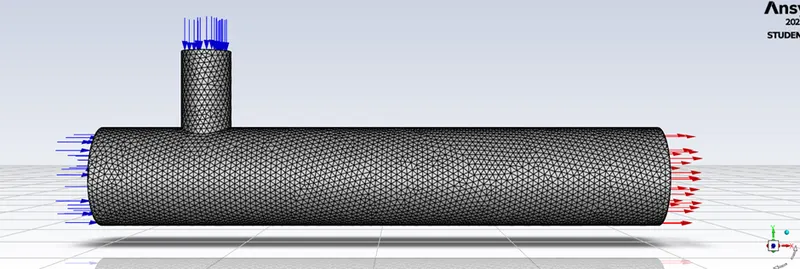
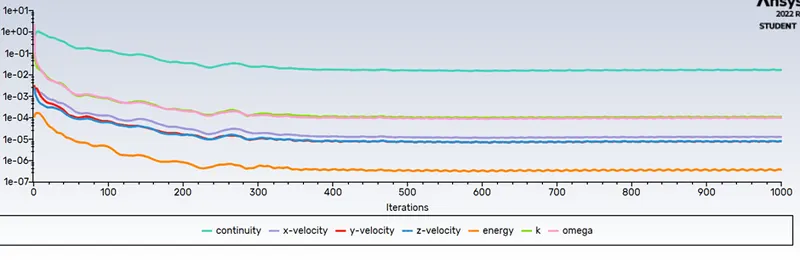
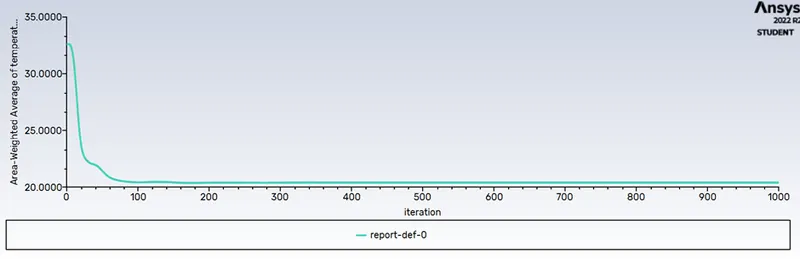
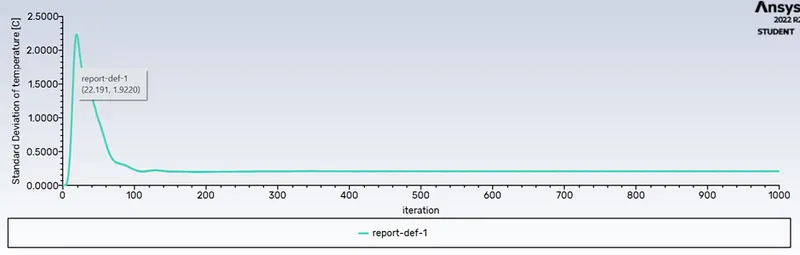
After initializing the geomerty with proper boundary conditions run the mesh with number of iterations 900 as mentioned in the table. After running the mesh it will be generating the plot of Scaled Residuals, Standard Deviation of Tmeperature, Avergae weight of the Temperature.
Scaled residuals
Area-weighted of avg Temperature:
Standard Deviation of Temperature:
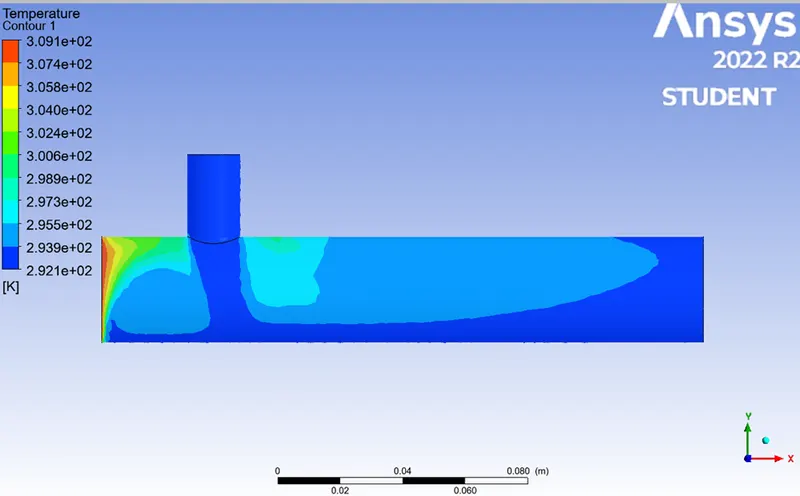
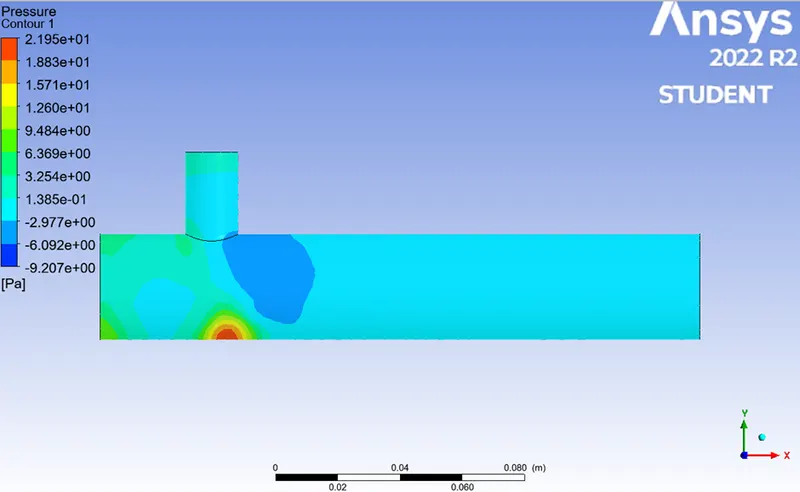
After Generating the Meshing properties now doing the contour of the temperature and pressure for the case 1.
Temperature contour
Pressure Contour:
Case 2)
Boundary Conditions:
| Temperature inlet in x-direction |
36 degree celsius |
| Temperature inlet in y direction | 19 degree celsius |
| Pressure inlet in x-direction | 3 m/s |
| Pressure inlet in y-direction | 12m/s |
| Meshing value | 2mm |
| No. of Iterations |
1000 |
Import the geometry to the work bench and do the required changes for generating the mesh.
Apply the boundary conditions as mentioned in the table then intilaize the geometry.
Mixing long tee with inlet temperature 36 in x direction and inlet temperature 19 in y direction where hot inlet velocity is 3m/s and cold inlet velocity is 12 m/s with momentum ratio is 2 and the meshing quality is 2mm.
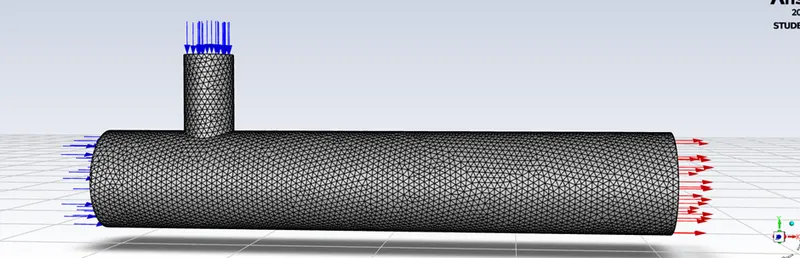
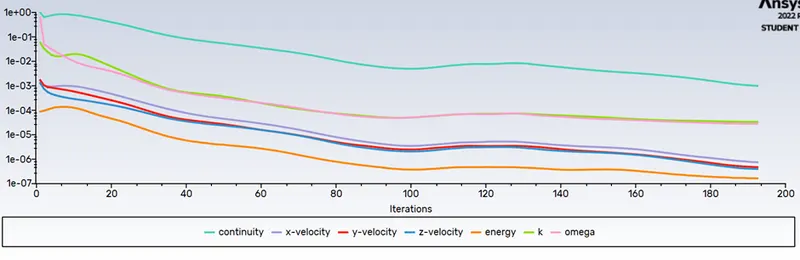
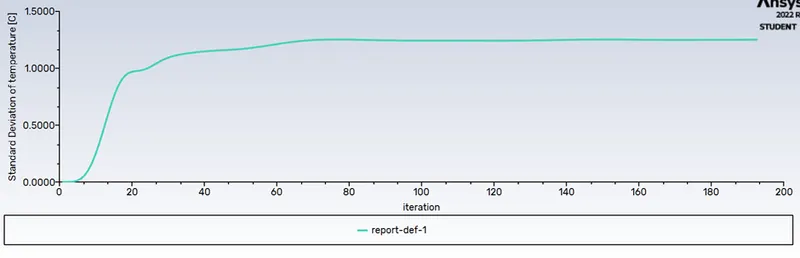
After initializing the geomerty with proper boundary conditions run the mesh with number of iterations 1000 as mentioned in the table. After running the mesh it will be generating the plot of Scaled Residuals, Standard Deviation of Tmeperature, Avergae weight of the Temperature.
Scaled Residuals
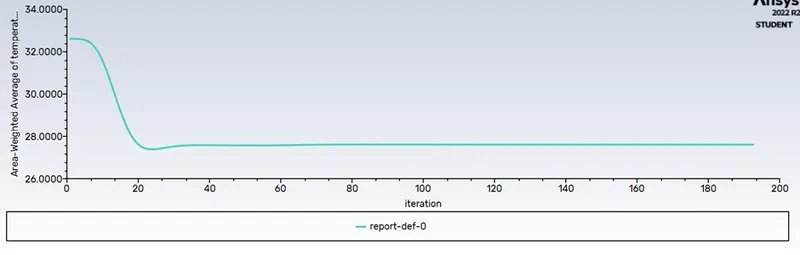
Area-Weighted Avg of Temperature:
Standard deviation of Temperature:
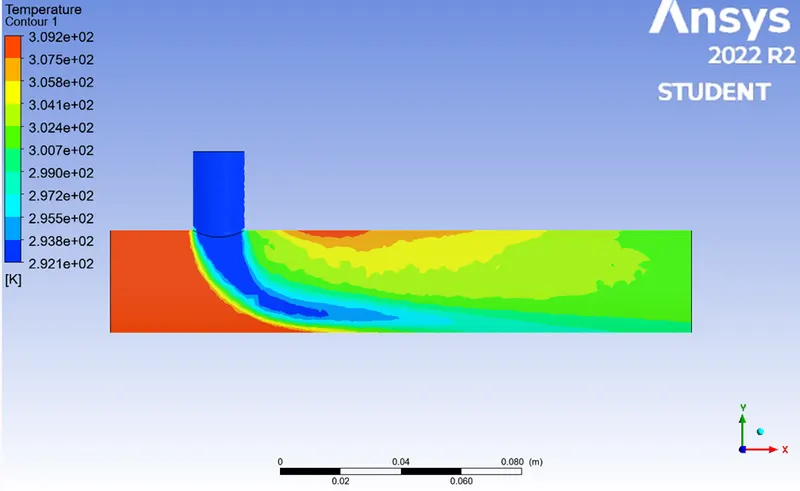
After Generating the Meshing properties now doing the contour of the temperature and pressure for the case 2.
Temperature Contour
Pressure Contour: