Week 1- Mixing Tee
Aim: To simulate the flow through a pipe with a Tee junction and affects of variation in geometric and flow parameters on the flow. The Challenge is divided into following parts:
- Comparison of k-omega SST model and k-epsilon model.
- Comparison of results for short and long pipes with Tee junction.
- Comparison of results for momentum ratio =2 and 4.
- Grid Independence
Results:
Case 1:
The following plots were obtained for Case 1 with 'momentum ratio = 4' with rest of the parameters being similar.
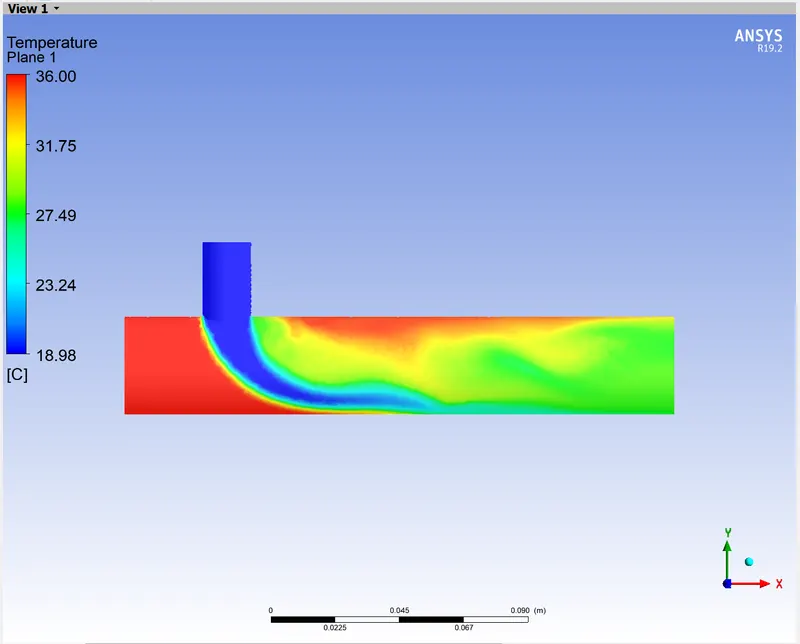
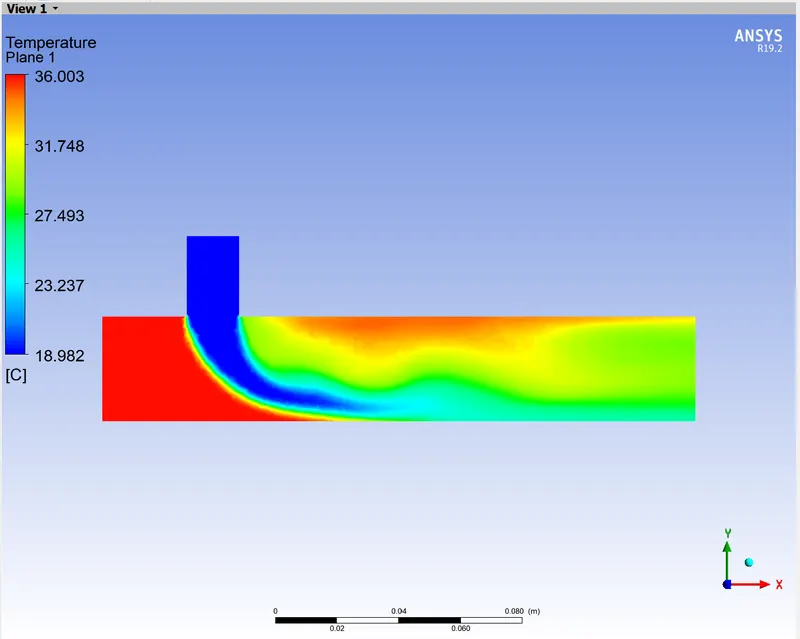
k-omega SST model k-epsilon model
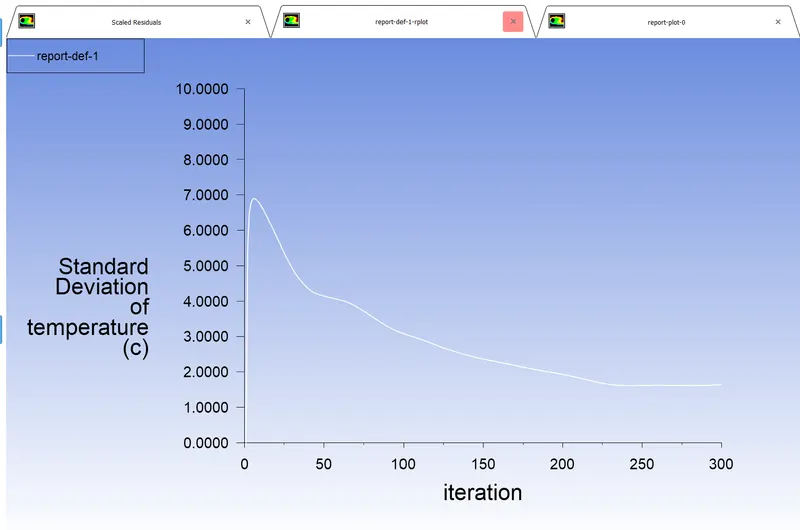
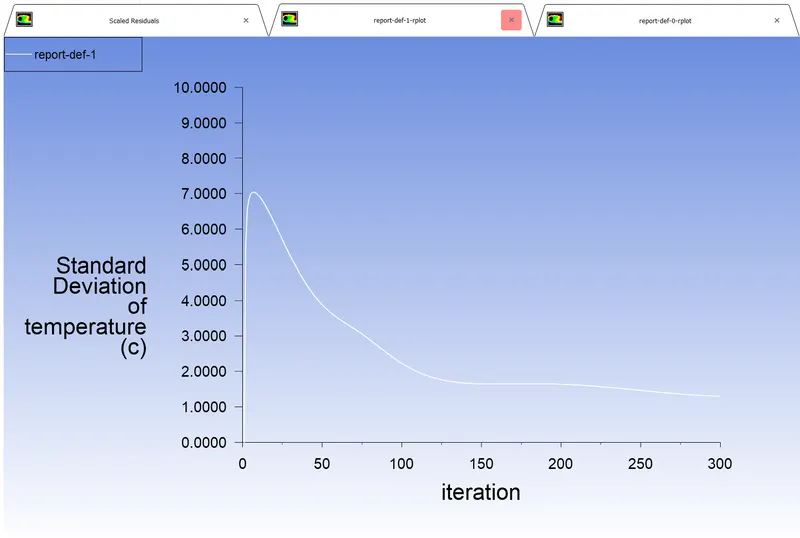
S.D. of Temperature for k-omega SST model S.D. of Temperature for k-epsilon model
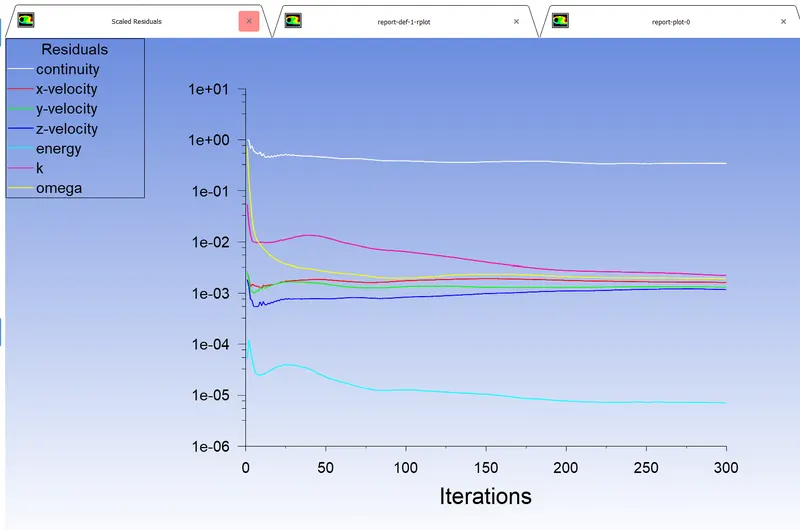
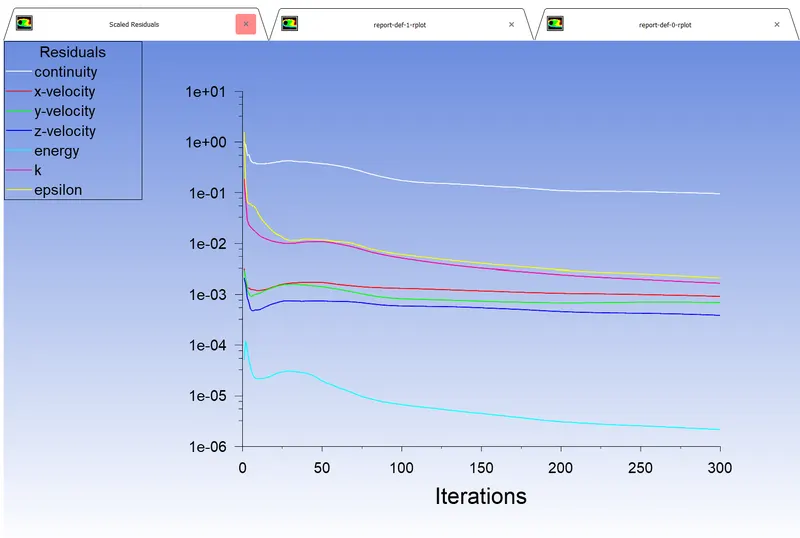
Scaled Residuals of k-omega model Scaled Residuals of k-epsilon
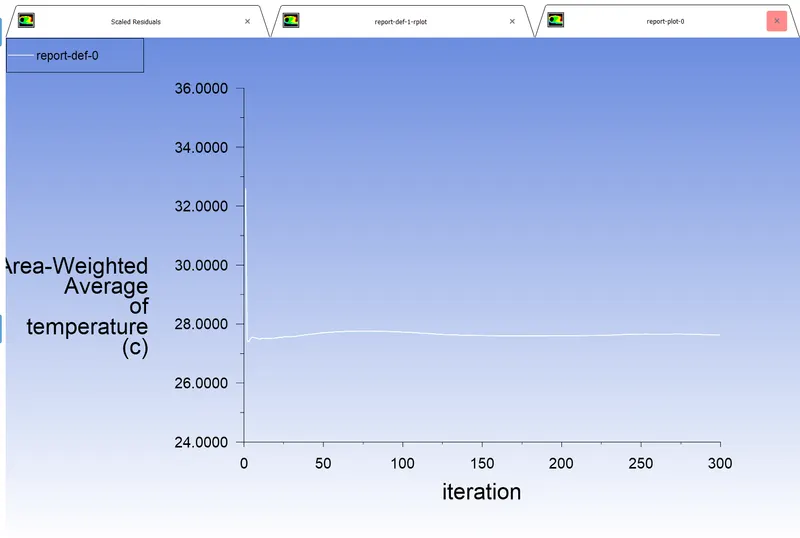
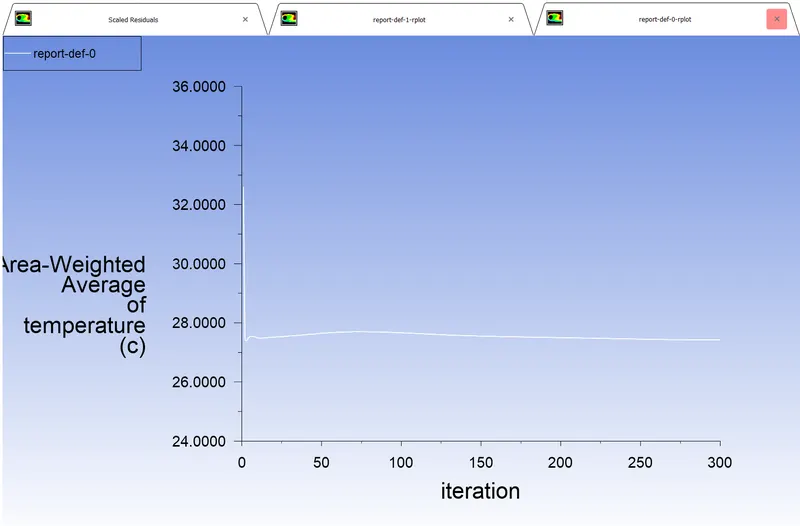
Area Weighted Temp. k-omega model Area Weighted Temp. k-epsilon model
Case 2:
Temperature Profile along the pipe length:
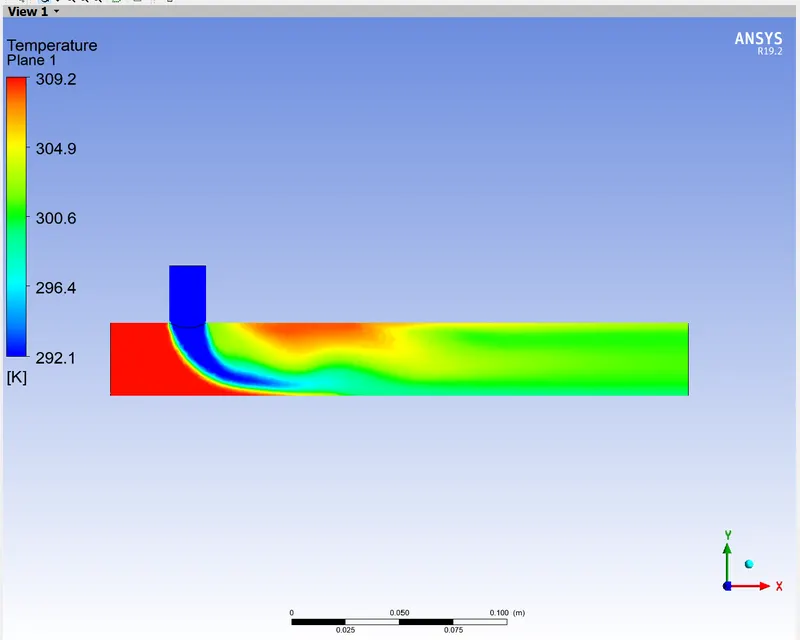
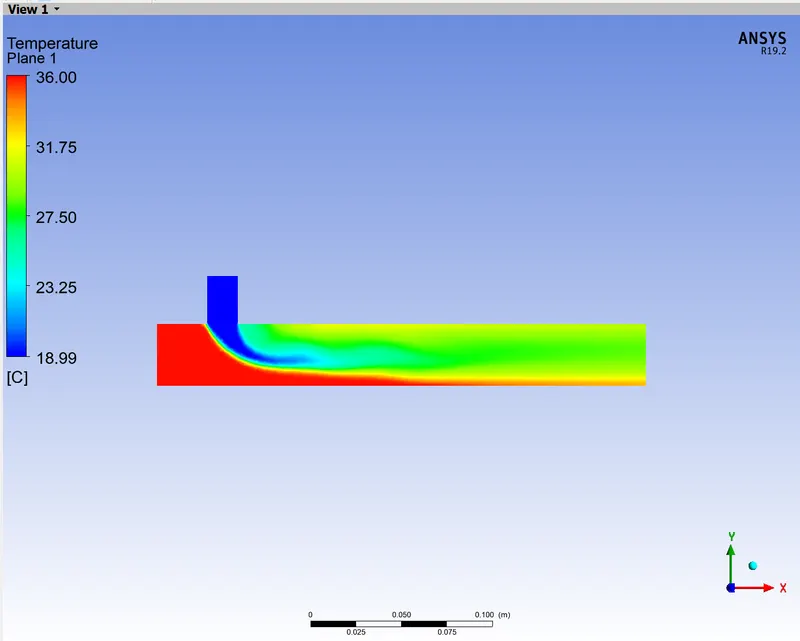
long pipe with momentum ratio =4 long pipe with momentum ratio =2
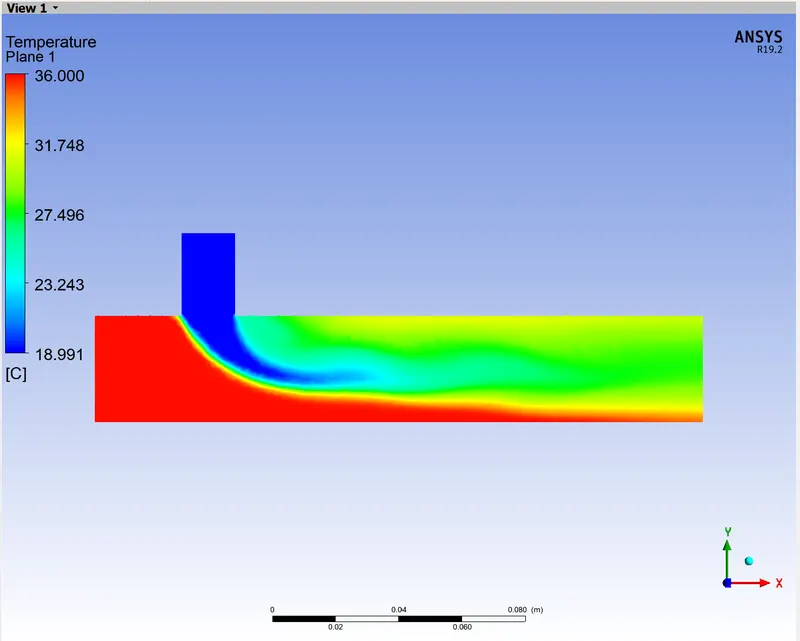
short pipe with momentum ratio =4 short pipe with momentum ratio =2
Temperature profile across the pipe just downstream of Tee Junction:
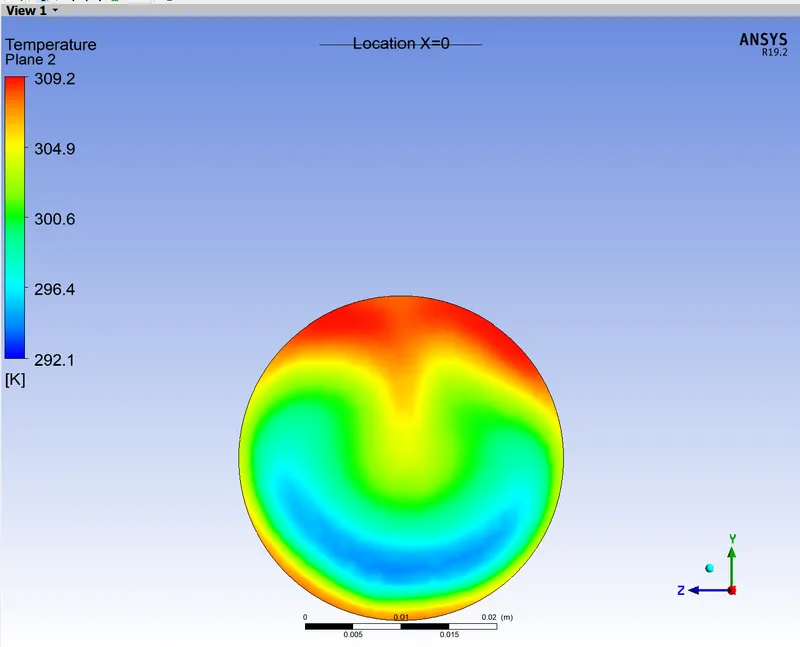
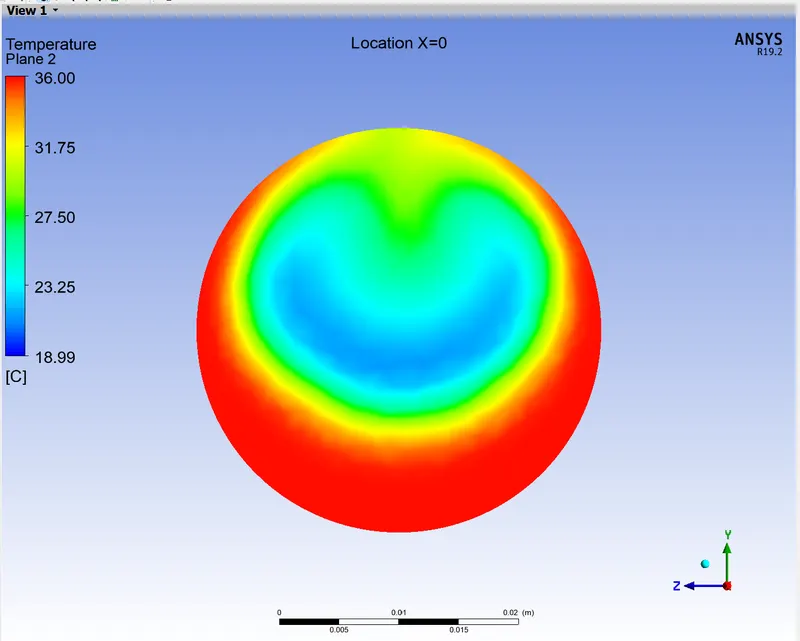
long pipe with momentum ratio =4 long pipe with momentum ratio =2
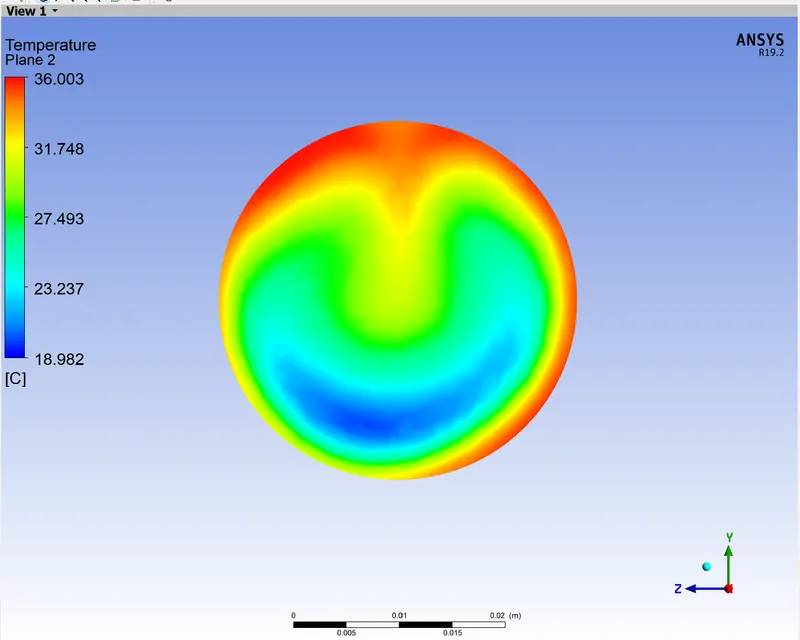
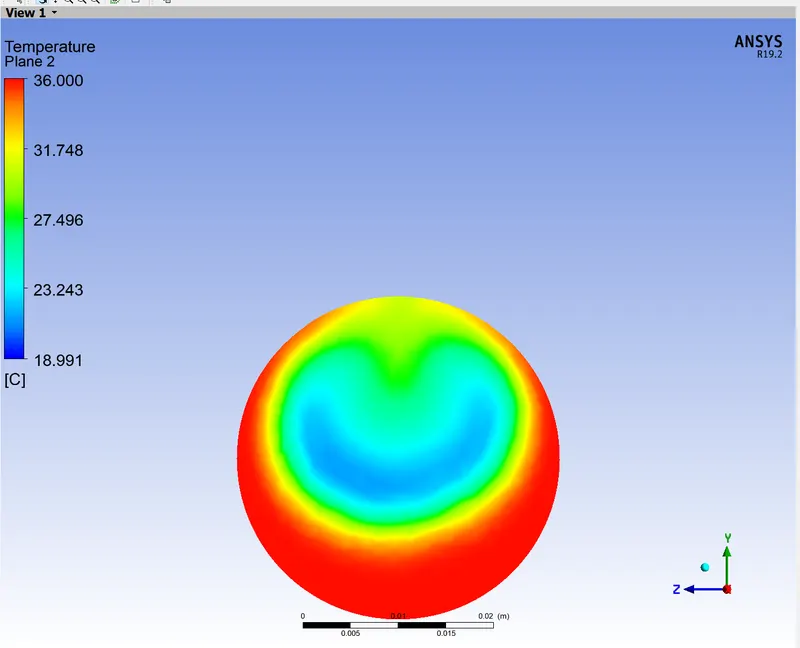
short pipe with momentum ratio =4 short pipe with momentum ratio =2
Scaled residuals plot:
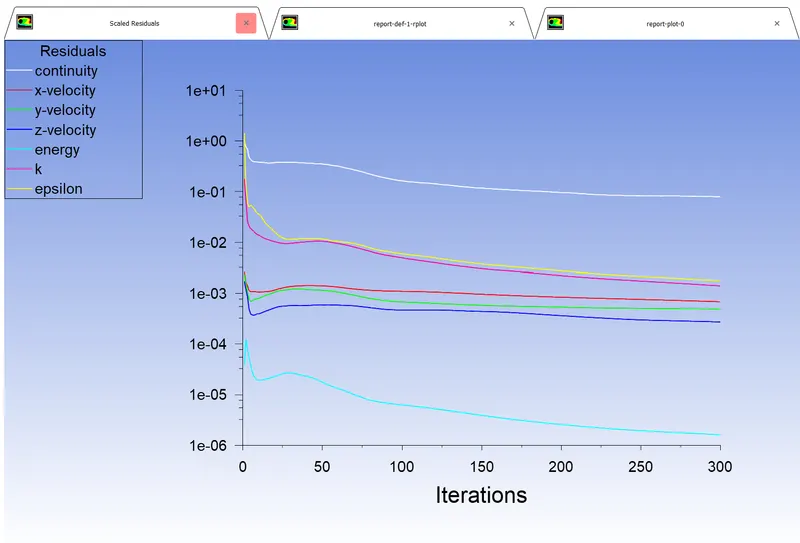
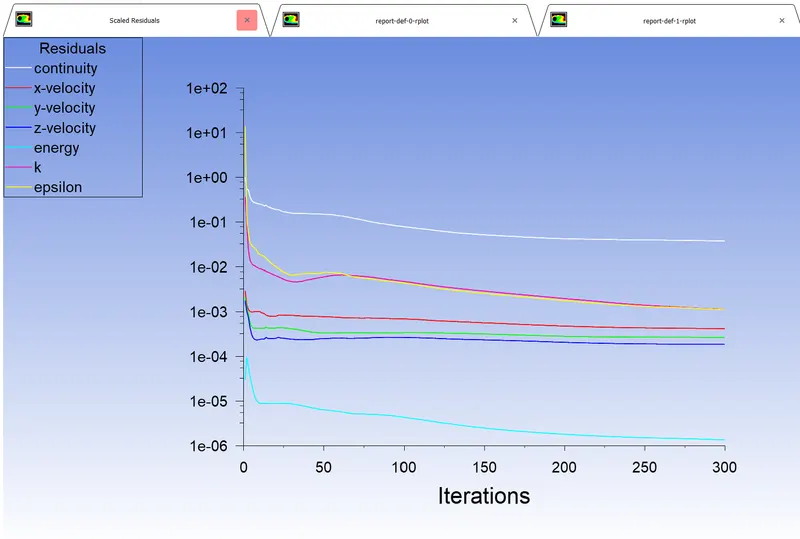
long pipe with momentum ratio =4 long pipe with momentum ratio =2
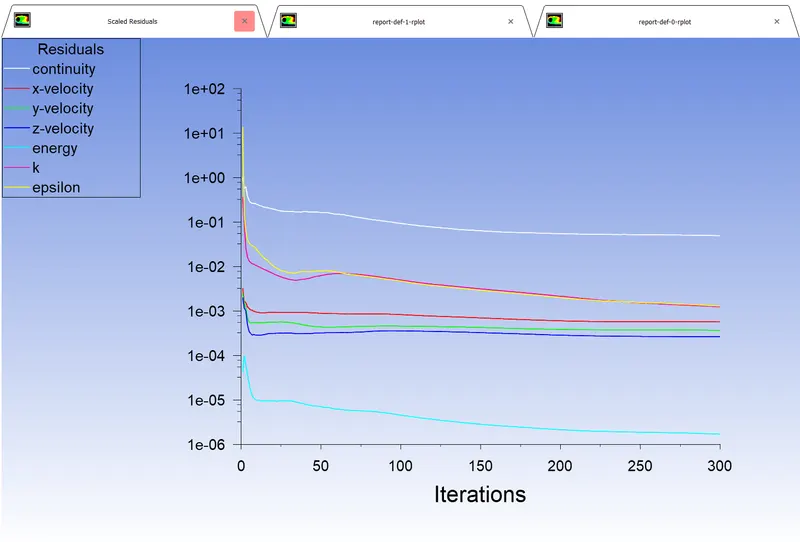
short pipe with momentum ratio =4 short pipe with momentum ratio =2
Area-Weighted Average of Temperature:
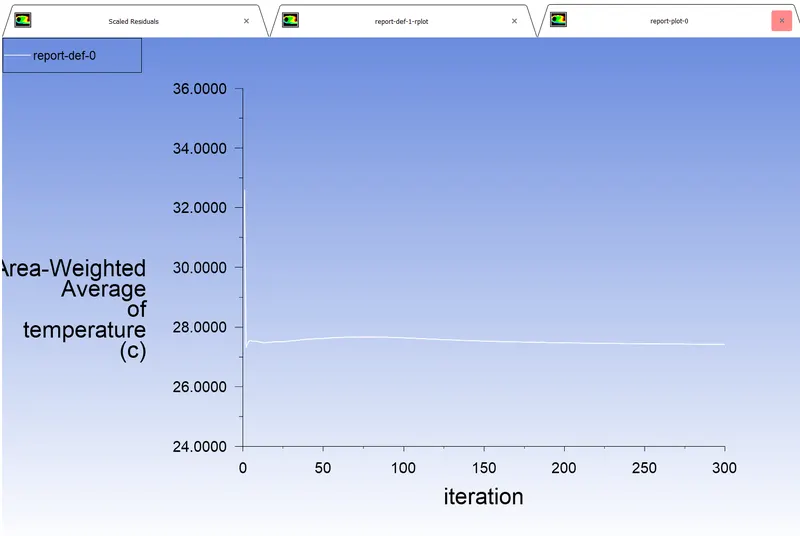
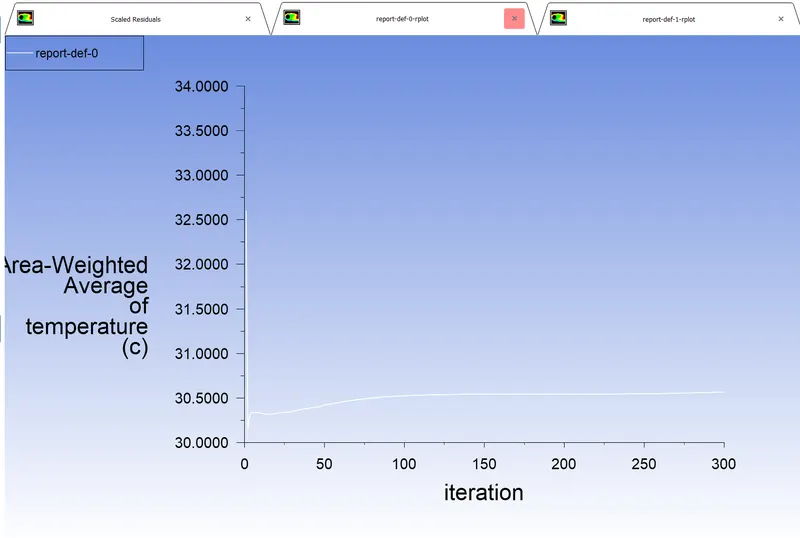
long pipe with momentum ratio =4 long pipe with momentum ratio =2
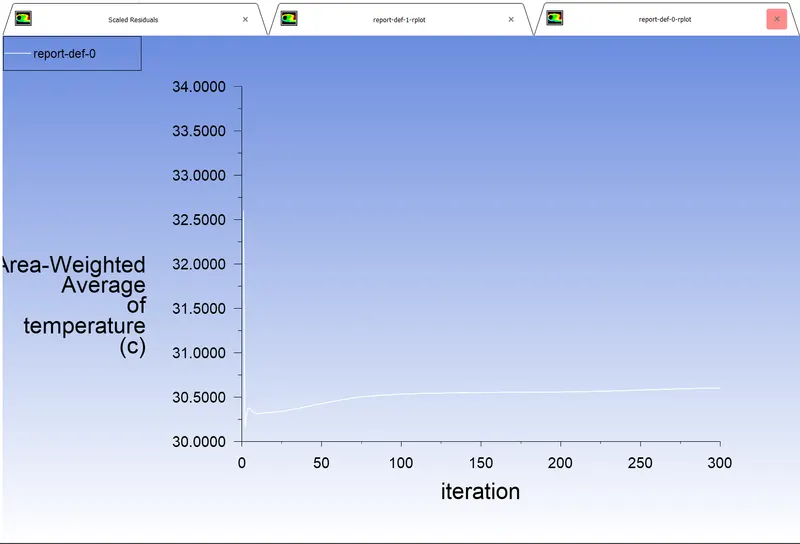
short pipe with momentum ratio =4 short pipe with momentum ratio =2
Standard Deviation Of Temperature:
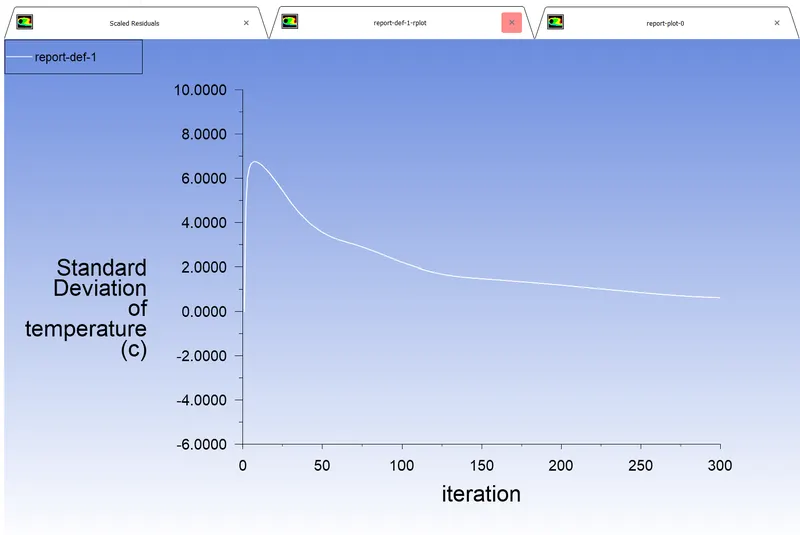
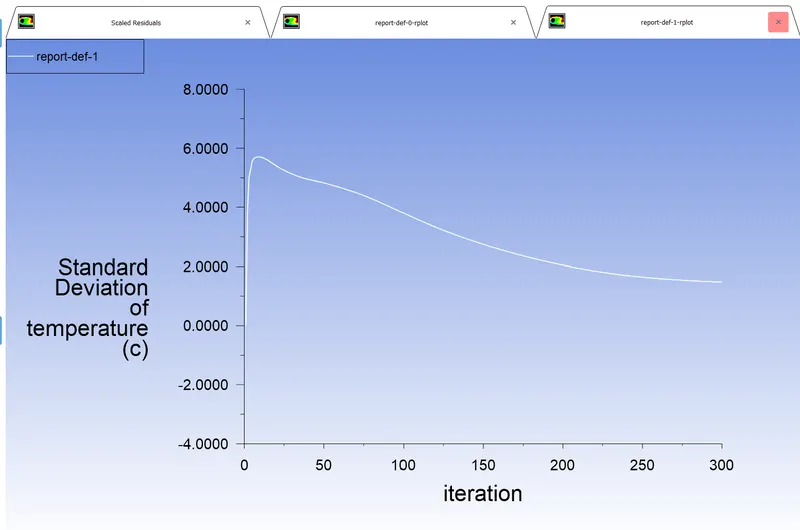
long pipe with momentum ratio =4 long pipe with momentum ratio =2
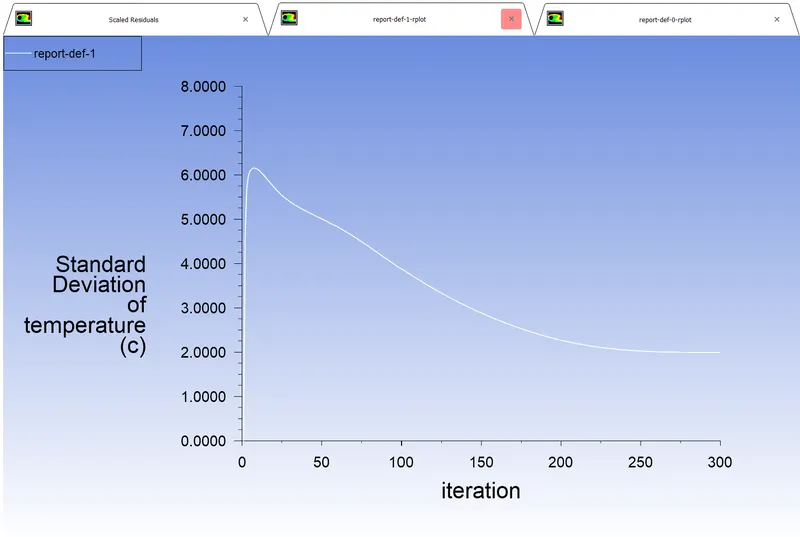
short pipe with momentum ratio =4 short pipe with momentum ratio =2
Velocity profile along the length of the pipe:
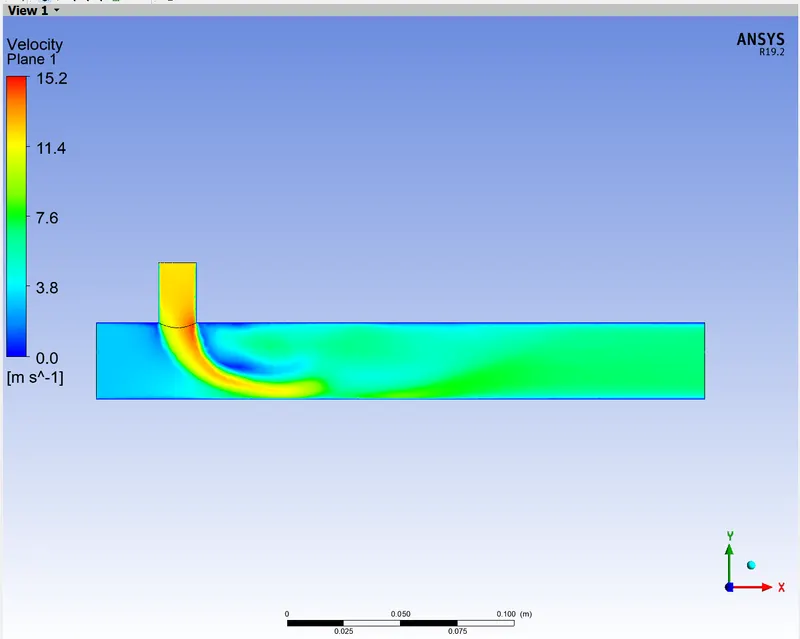
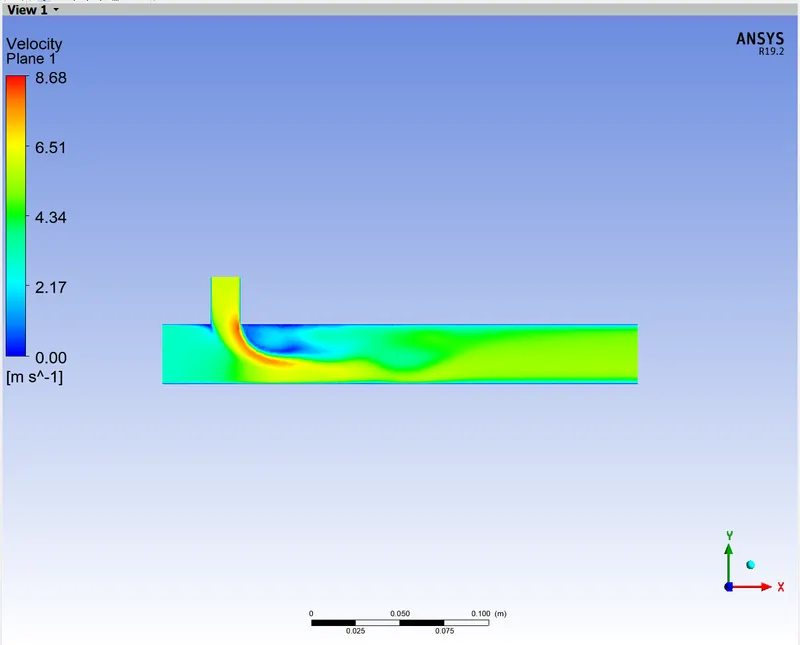
long pipe with momentum ratio =4 long pipe with momentum ratio =2
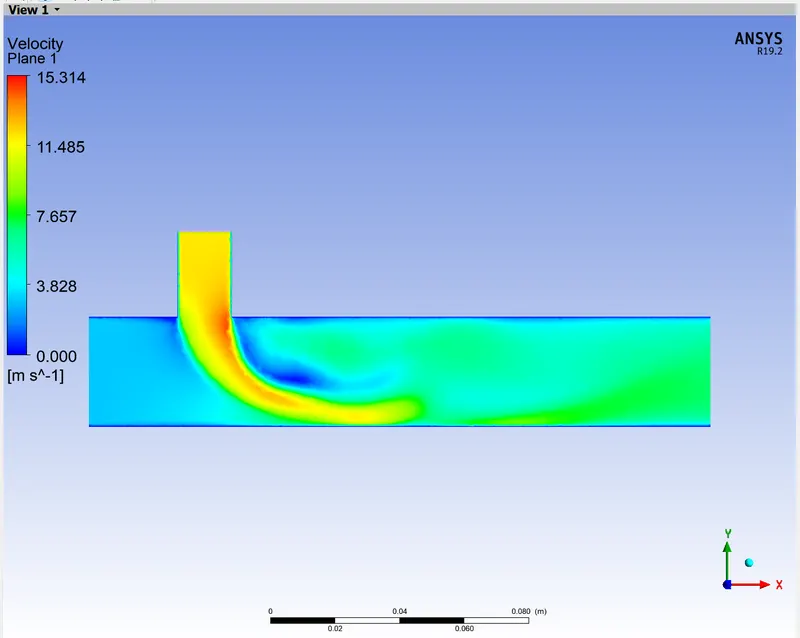
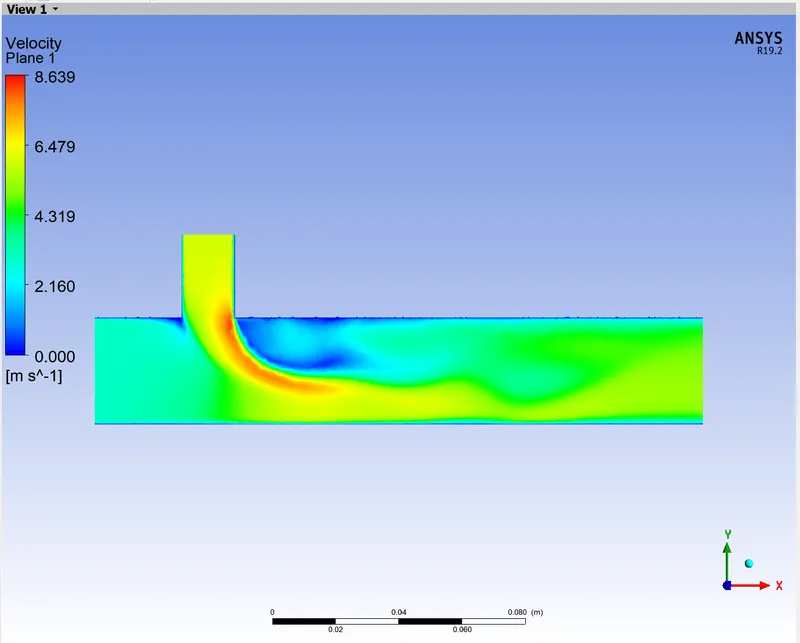
short pipe with momentum ratio =4 short pipe with momentum ratio =2
Velocity profile across the the pipe just after the T-Junction:
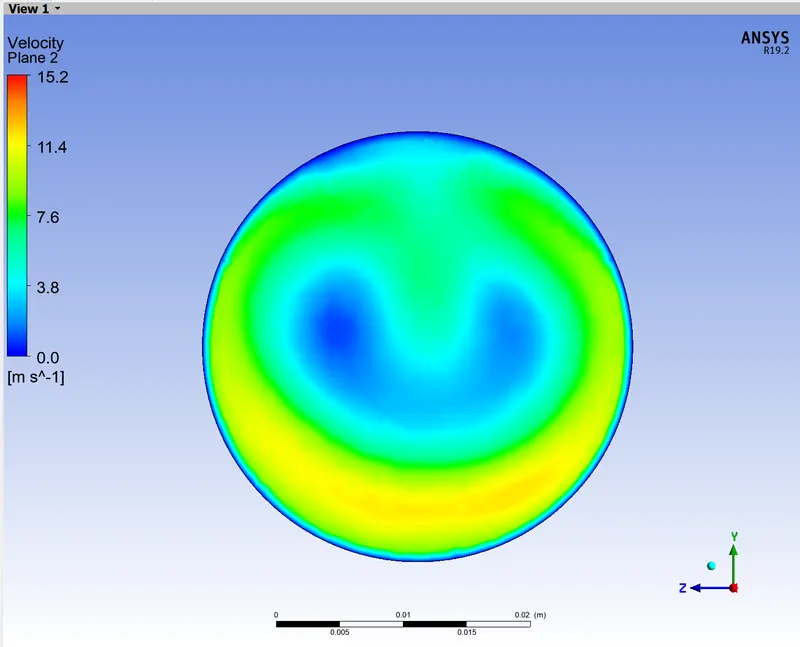
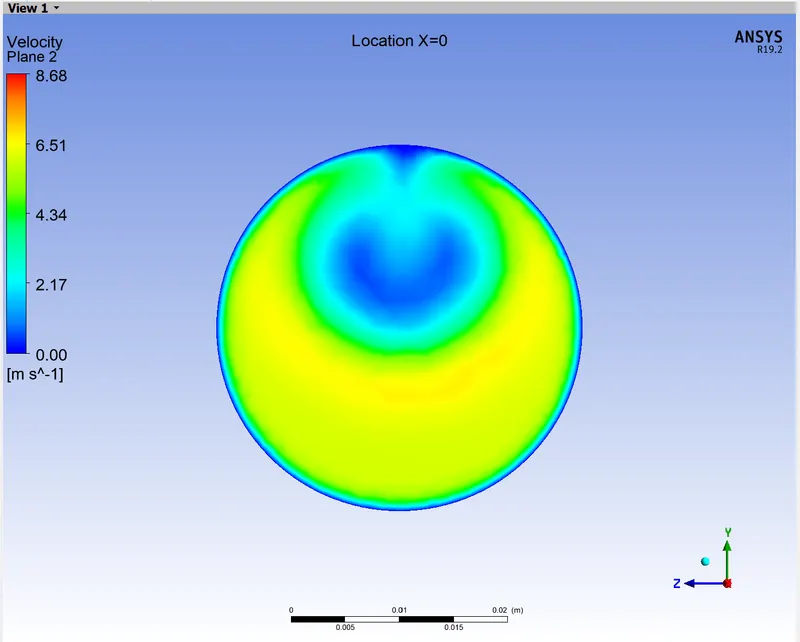
long pipe with momentum ratio =4 long pipe with momentum ratio =2
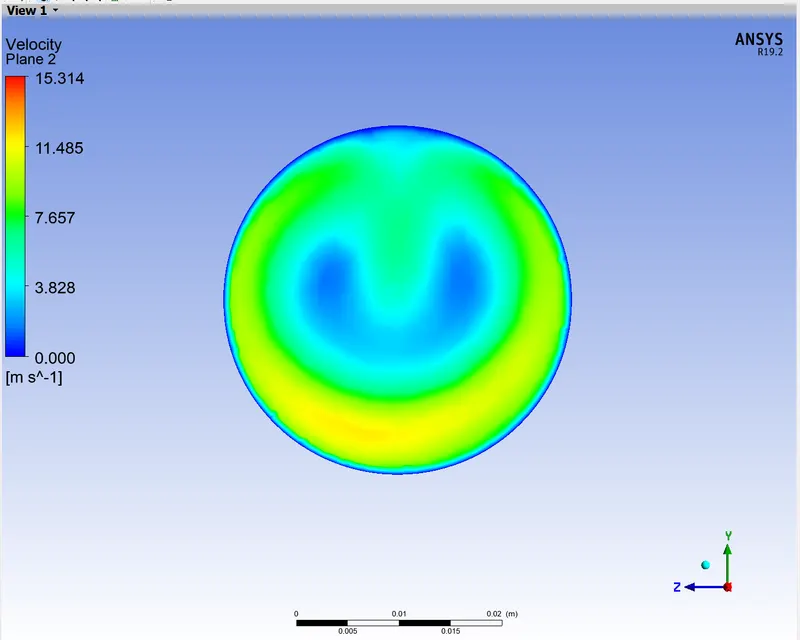
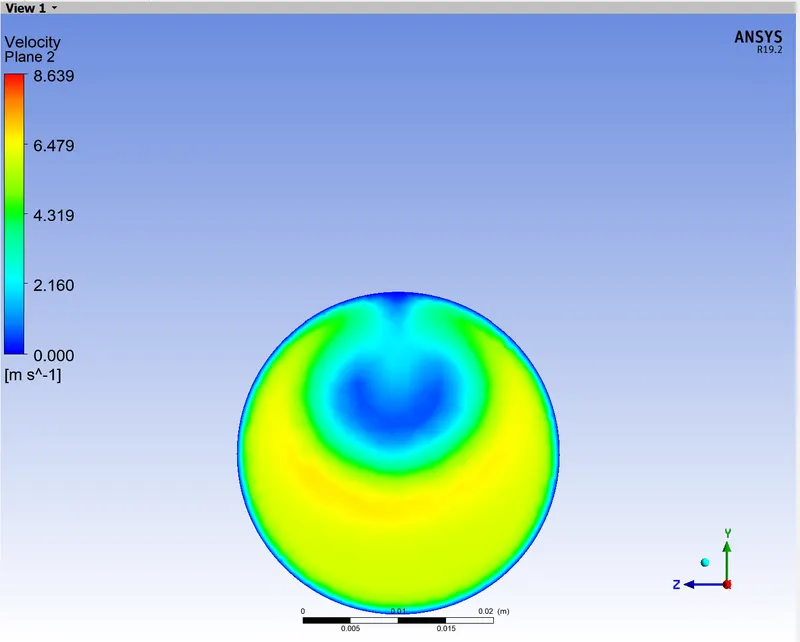
short pipe with momentum ratio =4 short pipe with momentum ratio =2
For Momentum Ratio=4 :
| PIPE | Momentum Ratio | Avg Outlet Temperature | Avg. Outlet Velocity | Iterations |
| SHORT | 4 | 27.537°C | 6.059 m/s | 300 |
| LONG | 4 | 27.452°C | 6.004 m/s | 300 |
For Momentum Ratio=2 :
| PIPE | Momentum Ratio | Avg Outlet Temperature | Avg. Outlet Velocity | Iterations |
| SHORT | 2 | 30.603°C | 4.502 m/s | 300 |
| LONG | 2 | 30.562°C | 4,502 m/s | 300 |
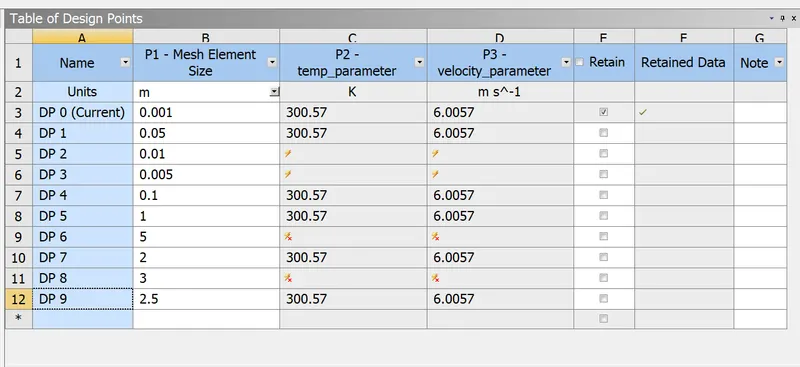
Grid Independence:
Observations:
Case 1:
- The results from both the model looks similar with some notable differences. The cold air flow looks more realistic (more diffused) in the k-epsilon model than the k-omega SST model. Whereas, the turbulency near the walls is seemed to be better captured in k-omega SST model than the k-epsilon model.
- The Standard Deviation in the temperature profile for k-epsilon model is comparitively lower than the Standard Deviation of the temperature field.
- The area-weighted average of temperature field is similar in both the cases.
Case 2:
On observing the resulting plots and result table values we see the results for a given momentum ratio the average velocity at outlet and average temperature at the outlet are similar. i.e. increasing the length of pipe does not have any significant effect on the average oulet conditions of the flow. However the flow distribution is much more uniform for the longer pipe than the shorter one.
Case 3:
When Momentum ratio is increased from 2 to 4 the mixing occurs more thoroughly and the flow is much more uniform across a cross section further downstream of the flow. The reeason being that not only diffusion but also turbulency helps in achieving uniformity in the flow parameters like velocity and temperature much sooner than the flow with low momentum ratio.
Case 4:
As seen from the result table, when element size used as a parameter to see its effect on the simulation result. The solution converged for a grid size of 2.5 and below but solutions blows for values above 2.5.