Week 1- Mixing Tee
Aim:
To create a model for the mixing tee using ansys fluent for the sub sequent cases.
To find :
Case 1:
Short mixing tee with hot inlet velocity 3m/s and momentum ratio (2,4)
- Cell count
- Average outlet temperature
- Number of iterations for convergence
Case 2:
Long mixing tee with a hot inlet velocity of 3m/s and momentum ratio (2,4)
- Cell count
- Average outlet temperature
- Number of iterations for convergence
Solver and model settings :
K- EPSILON model
Steady state simulation with hot inlet temperature 360C and cold inlet temperature 190C.
Following results are to be interpreted:
- Velocity and temperature contour plots on the cut planes along and across the pipe.
- Velocity and temperature line plots along and across the length of the pipe.
- Perform Mesh independent study for any one case.
- Discuss the effect of length and momentum ratio on results.
Theory:
Initial studies :
All the fluid related problem are solved by basic Governing Equation
The physical parameters are modelled by proper set of non linear partial differential equation
MASS CONSERVATION EQUATION
ENERGY CONSERVATION EQUATION
MOMENTUM CONSERVATION EQUATIONS
these three equations plays a major role in determing the physical structure of the fluid.
ANALYTICAL SOLUTIONS:
Case i (a) :
Temp of Hot fluid : 36
Temp of Cold fluid : 19
velocity of hot fluid : 3 m/s
momentum ratio : 2
Solution :
momentum ratio = velocity of cold fluid / velocity of hot fluid
2 = x/3
x= 6 m/s
velocity of the cold fluid = 6 m/s
Mass balance eqn :
mass flow rate of cold fluid + mass flow rate of hot fluid = mass flow rate of outlet
(ρAv) cold + (ρAv) hot = (ρAv) outlet
[since air is common medium density is constant]
[area = [(π/4)*d^2] ]
(d^2 * v)cold + (d^2 * v)hot = (d^2 * v)outlet
Since the diameter and velocity of the hot and cold fluid is known velocity of the outlet is found.
area can be found from the given geometry
Geometry --> measure --> calculated
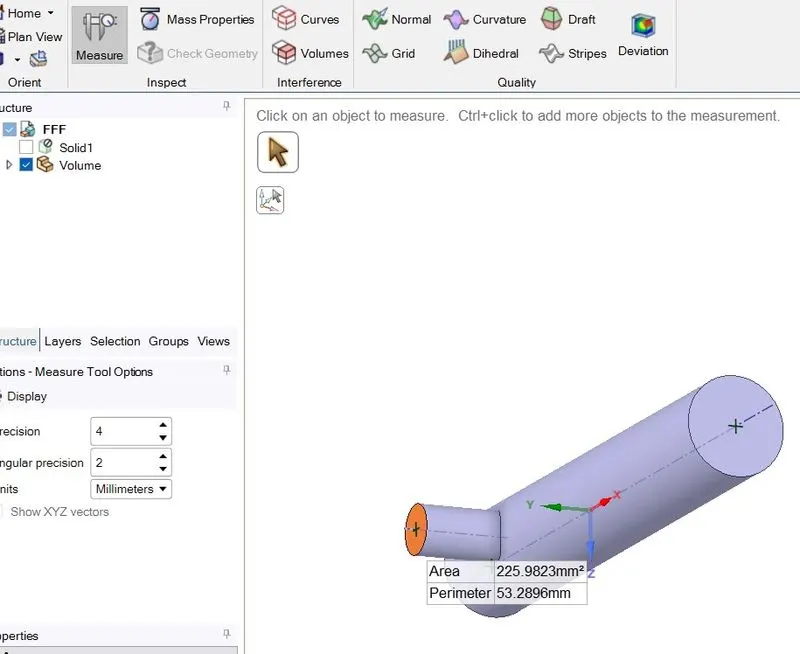
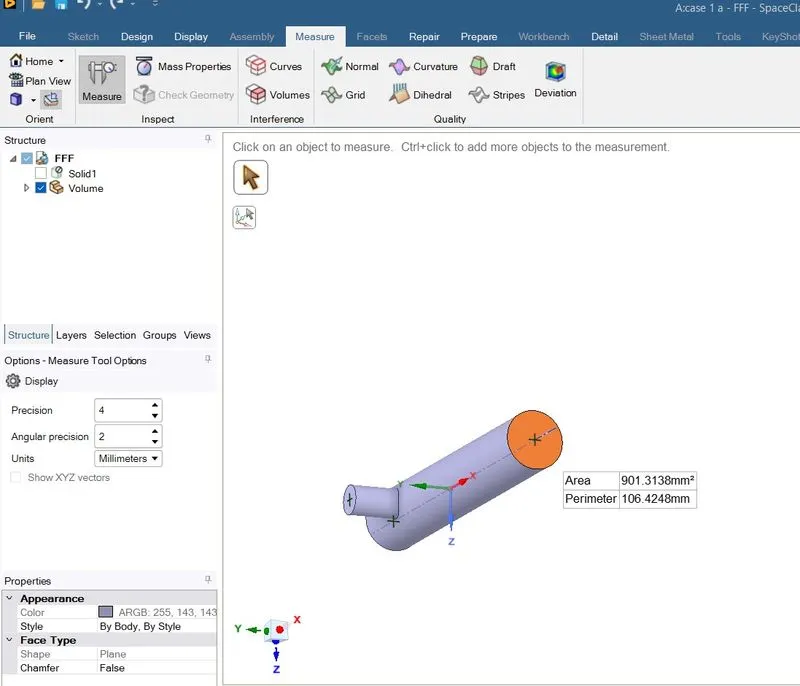
velocity of outlet fluid = [(Av)hot + (Av) cold ]/ (A) outlet
= [(0.0009*3)+(0.0002*6)]/(0.0009)
=4.3 m/s
Energy balance equation :
energy of cold fluid + energy of hot fluid= energy of outlet fluid.
(m*h)cold +(m*h)hot = (m*h)outlet
(m*cp*t)cold +(m*cp*t)hot =(m*cp*t)outlet
[specific heat cp is constant ]
(t)outlet = [(m*t)c +(m*t)h]/(m)outlet
mass flow rate can be found.
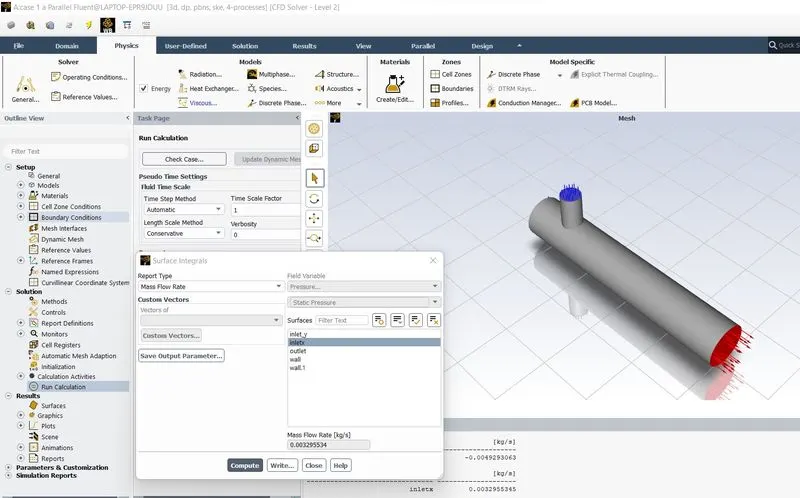
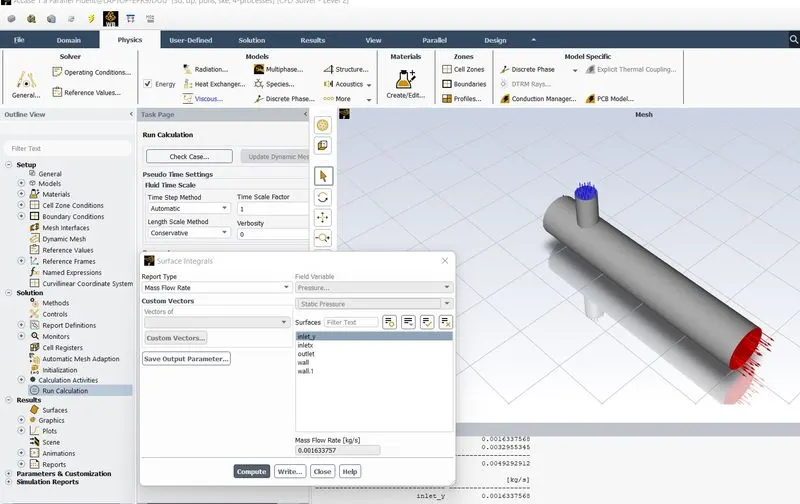
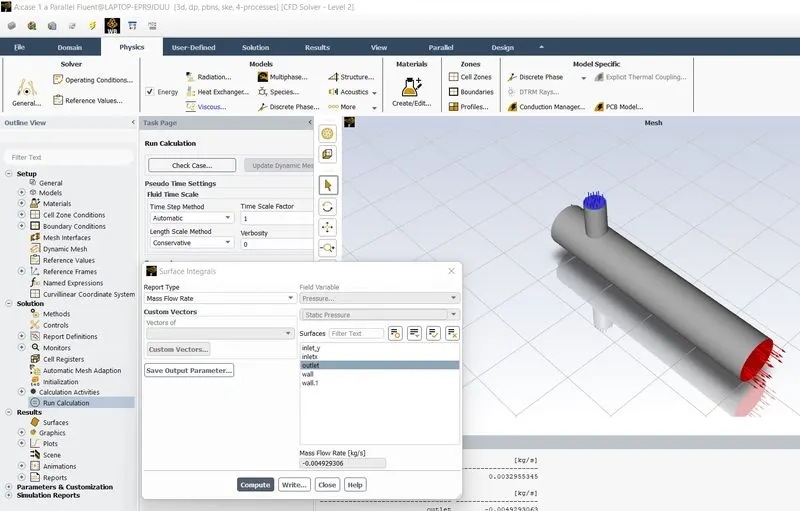
(t)outlet = [[0.0032 *36]+[0.0016 * 19]]/0.0049
= 29.7 0C
Procedure :
Case 1 (a): Mixing short tee with Momentum Ratio 2
Open ansys fluent --> Geometry --> spaceclaim
1, Import the model by file open import of the short Tee.
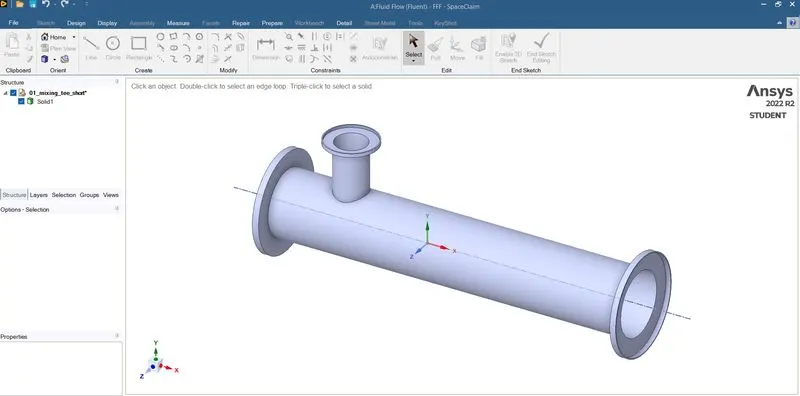
2, extract the fluid volume by prepare --> volume extract --> change to edges --> select the edges of the fluid volume --> volume created.
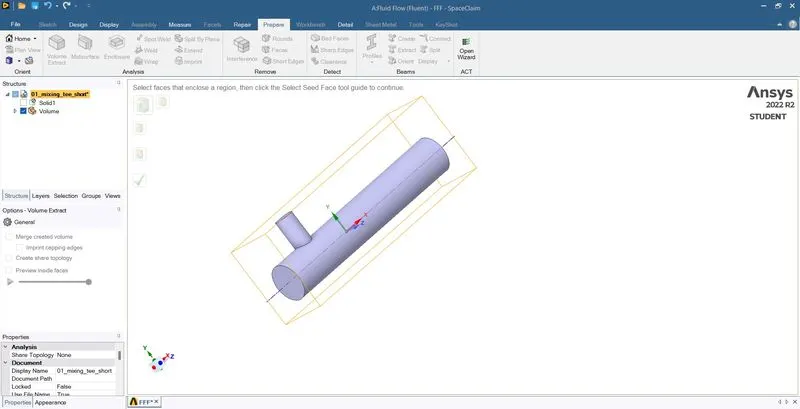
Both the solid and the volume will appear, for this mixing Tee problem consider only the fluid volume , if incase conduction heat transfer is carried solid model can be considerd. By right clicking the solid model on the task bar and make suppress it for physics.
3, close the model window, open mesh the extract volume wil import there directly, work space mesh right click , generate mesh (automatically it will create mesh).
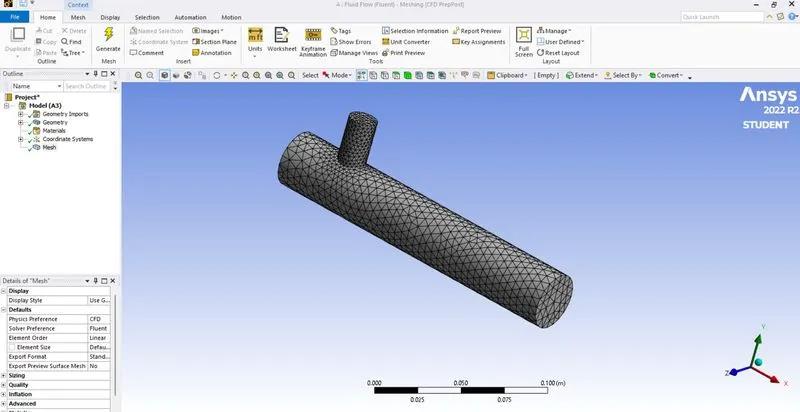
In details of the mesh the cell count , number of nodes , target length , inflation details are present so that it can be altered based on the needs.
5, naming as inlet and outlet was given , finally mesh has to be updated by right click. close and open setup.
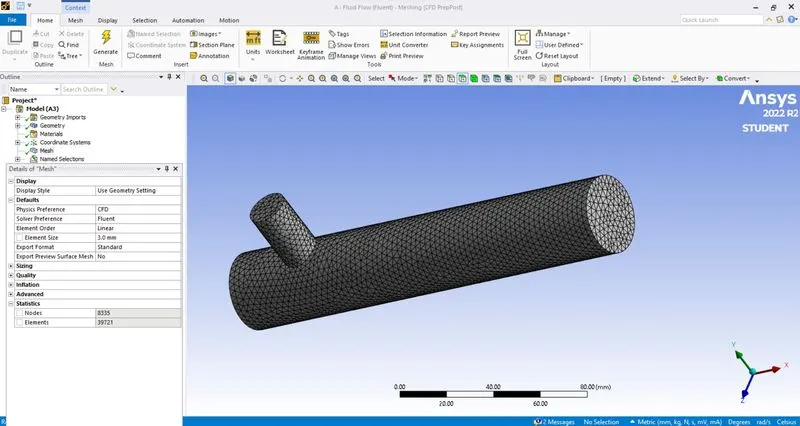
Select faces in the work space and select the faces of the model and name it ( inlet x, inlet y, outlet , wall, wall1).
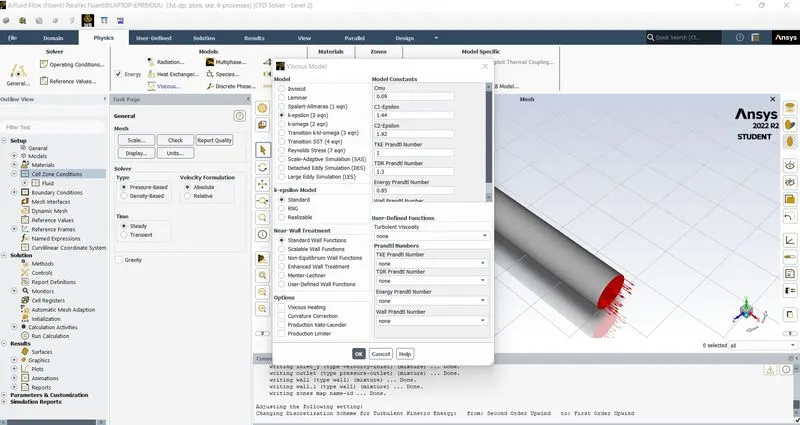
6, Close the mesh window, open the setup --> Go to Physics --> Enable energy equations --> Viscous model --> K EPSILON model enable.
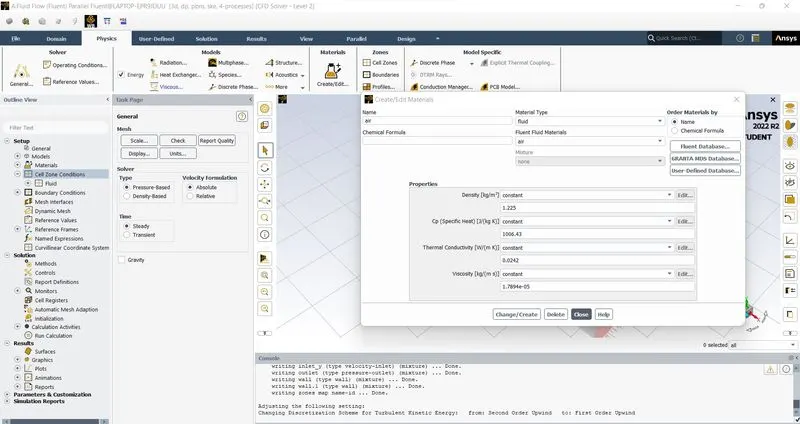
7, Materials --> check the materials --> check for fluid --> if needed altering the materials is possible.
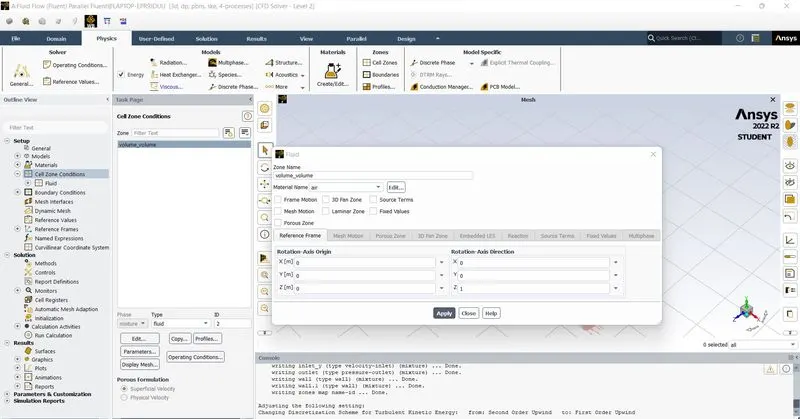
8, Cell zone --> fluid type and material can be checked.
9, Boundary condition has to set [ Inlet x --> temperature (36 °C)--> velocity (3 ms^-2) --> fluid type as velocity inlet ] [Inlet y --> temperature (19°C)--> velocity(6 ms^-2) --> fluid type --> as velocity inlet] [Outlet --> pressure outlet ].
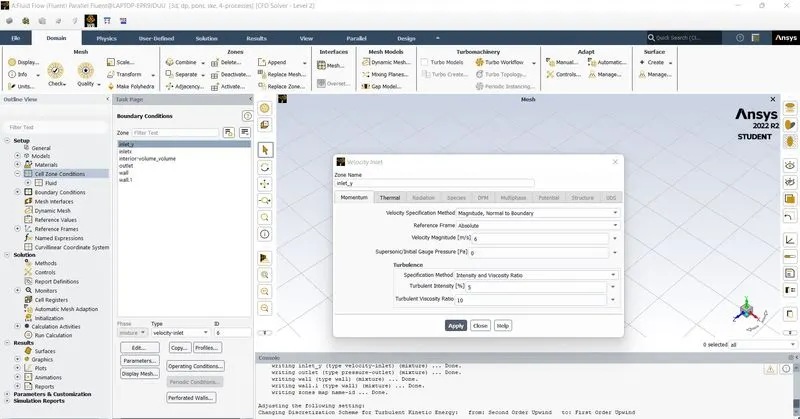
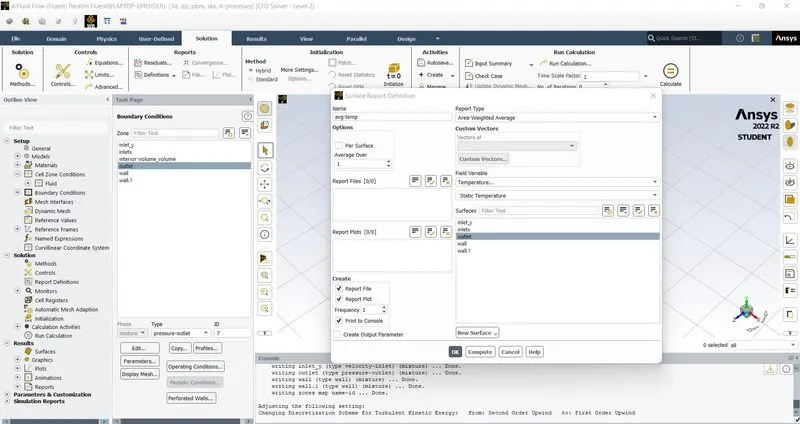
10,Close the setup --> open the solutions --> defnitions --> new --> area weighted average --> Name change --> type temperature --> surface is outlet --> print to console --> ok
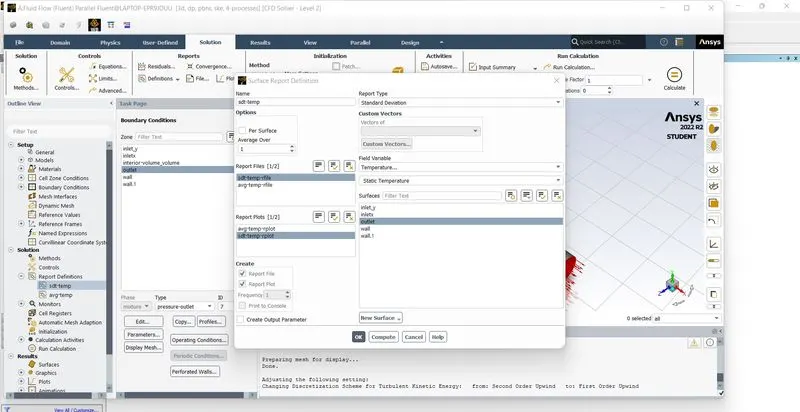
11,Defnitions --> new --> Standard deviation --> Name change --> type temperature --> surface is outlet --> print to console --> ok
12, Initiallize --> No of iterations given for 150 nos --> followed by 150 nos --> totally 300 times to find the convergence --> calculate --> Plot will appear --> save it.
Average area weighted plot --> standard deviation plot --> residual plot.
13, Reports --> Surface integral --> calculate weights --> mass flow rate .
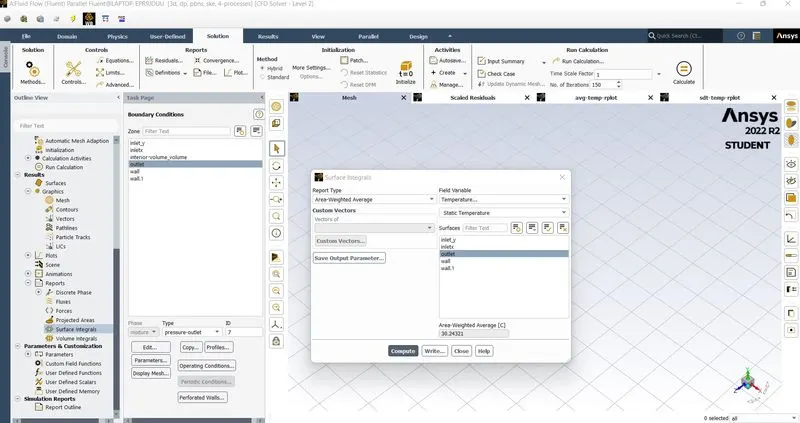
14, Closue solutions --> Open results --> wire frame model will appear.
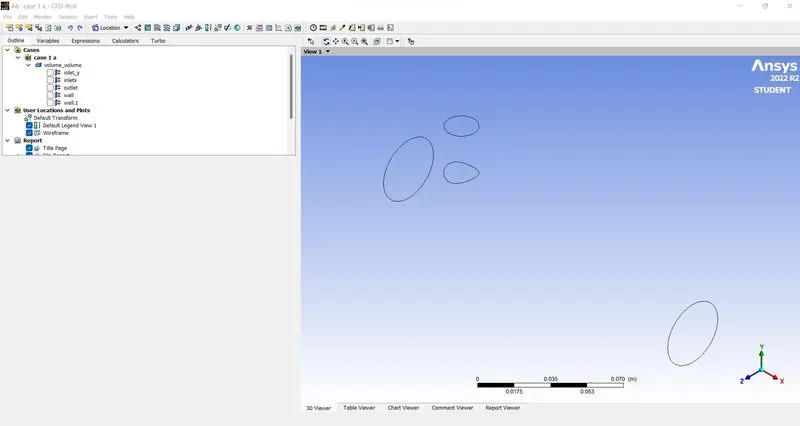
15, Locations --> Plane --> xy --> apply.
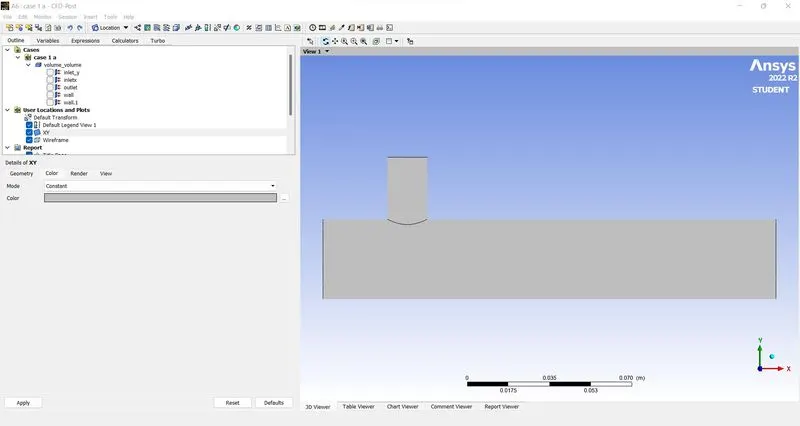
contour plot --> colour --> variable --> temperature or velocity --> along and across the pipe is created .
select vector plot also created --> variable --> temperature or velocity --> apply along and across the length is created.
NOW XY PLANE plot -- > location --> line --> cut --> chart --> name --> x axis parameter --> y axis parameter --> apply --> two different plot obtained.
Case i (b):Mixing Short Tee with the Momentum Ratio 4.
Duplicate the fluent and change the setup of temperature and velocity details of the INLETS.
All the steps remain same --> only the change is in step 9
Step 9 --> Boundary condition has to set [ Inlet x --> temperature (36 °C)--> velocity (3 ms^-2) --> fluid type as velocity inlet ] [Inlet y --> temperature (19°C)--> velocity(12 ms^-2) --> fluid type --> as velocity inlet] [Outlet --> pressure outlet ]
The same graphs are plotted
- Average weighted tempertature
- Standard deviation
- Residuals
- Contour Plots
- Vector plots
- xy plots for temperature and velocity.
Case ii (a) : Mixing Long Tee with the momentum ratio of 2.
Now import the new long tee model and follow the procedure as like short tee and the results are taken.
Similarly
Case ii (b) :
Duplicate the file made for Long Tee with momentum ratio 2 and change Setup of the boundary conditions.
Similar Graphs are taken from the results and validated.
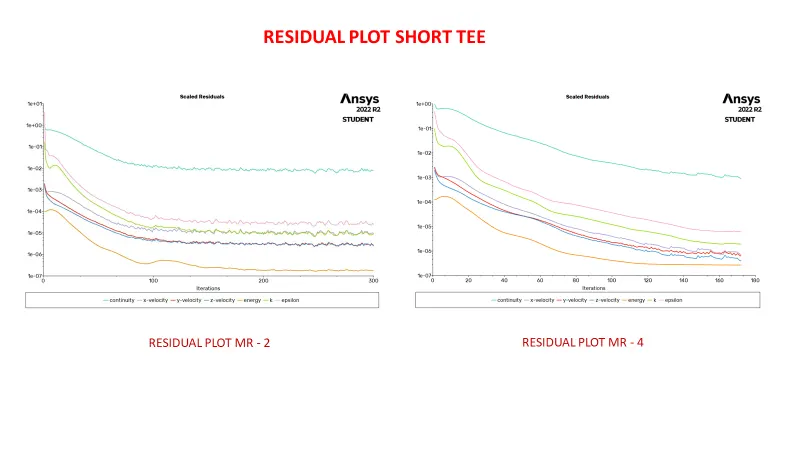
RESIDUAL PLOTS :
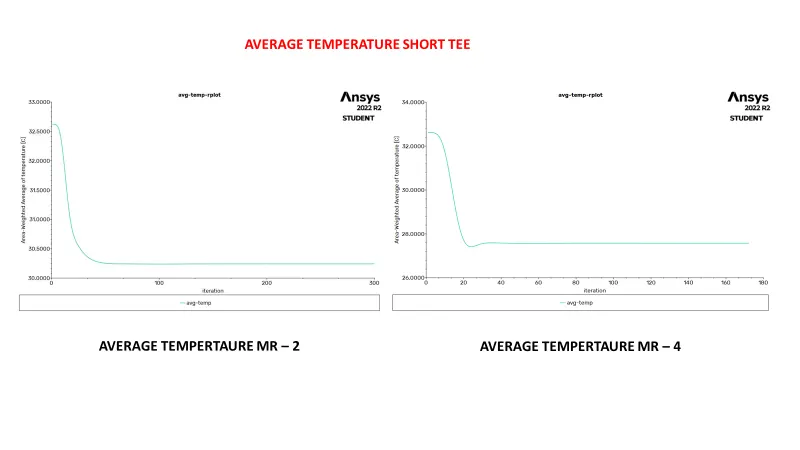
AVERAGE TEMPERATURE PLOT:
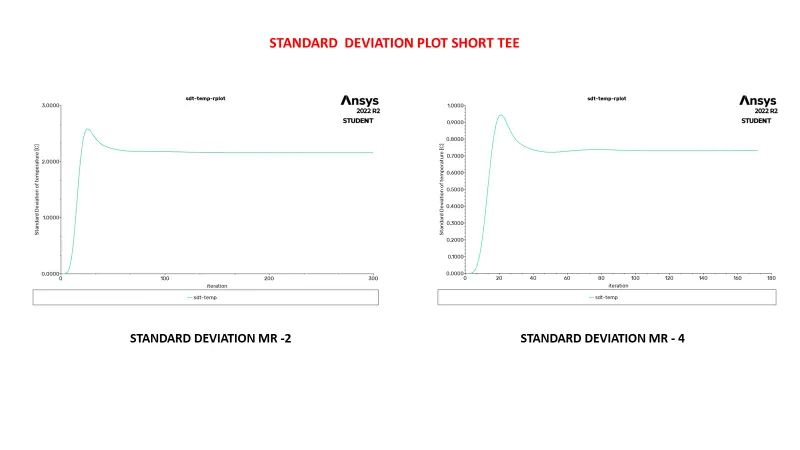
STANDARD DEVIATION PLOT:
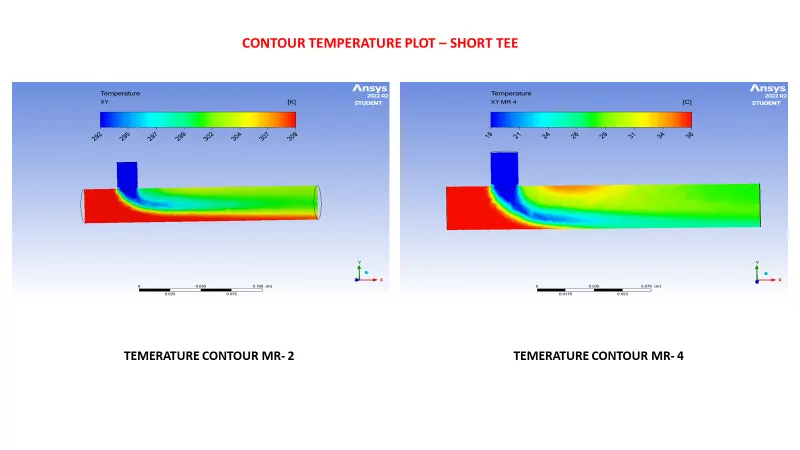
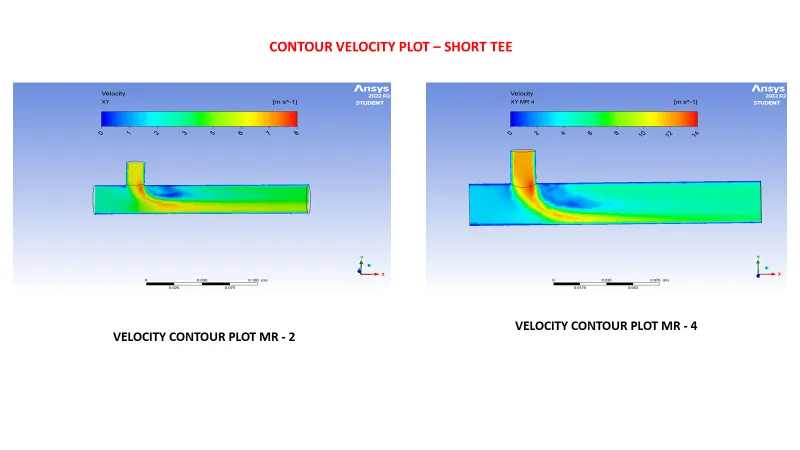
CONTOUR PLOT:
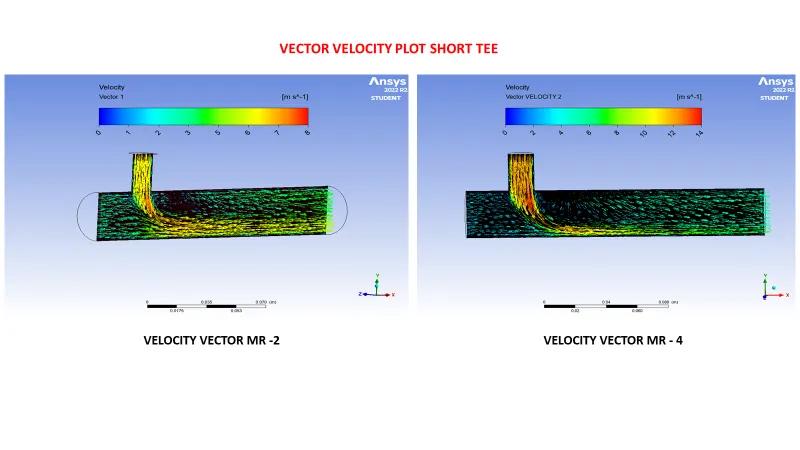
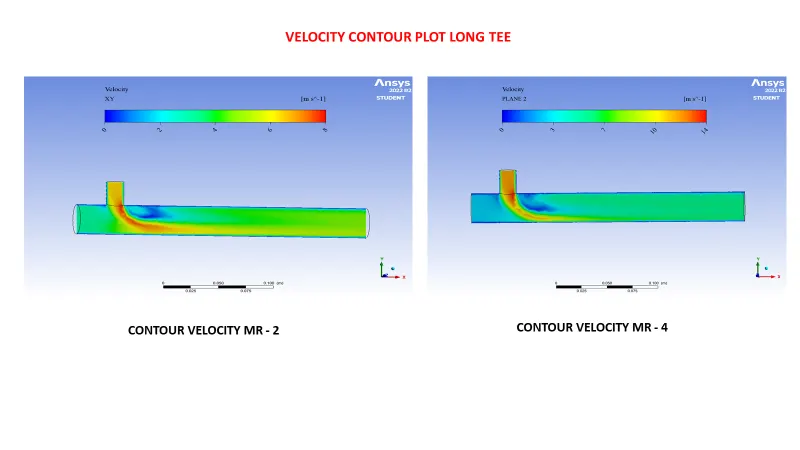
VECTOR PLOT :
XY PLOT :
RESIDUAL PLOTS :
AVERAGE TEMPERATURE PLOT:
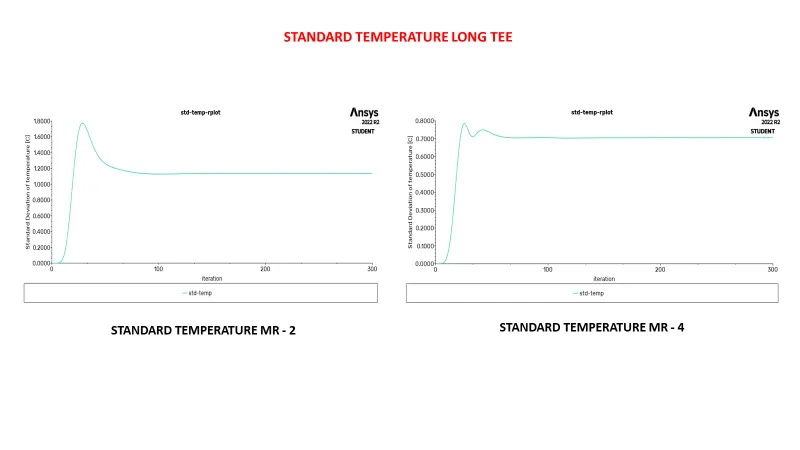
STANDARD DEVIATION PLOT:
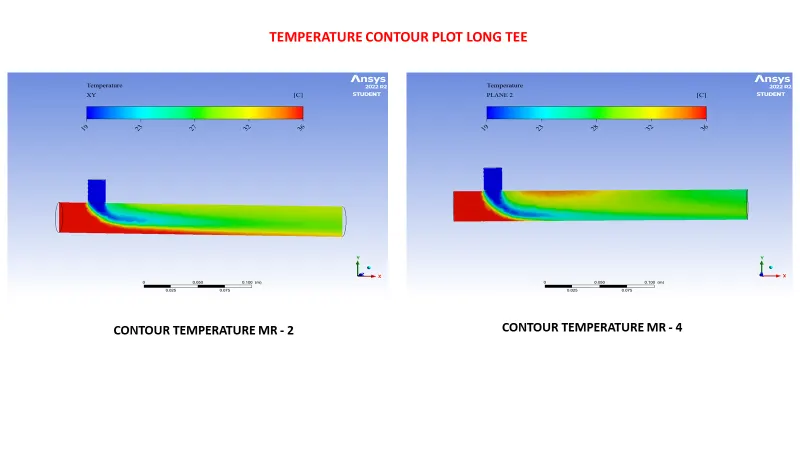
CONTOUR PLOT:
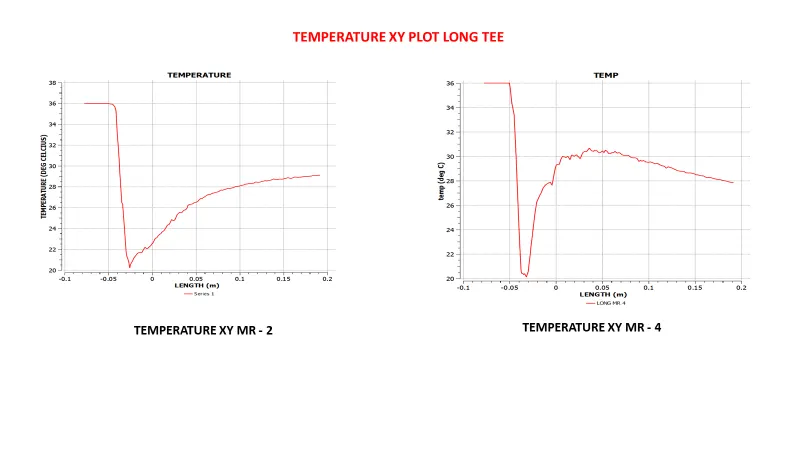
XY PLOT :
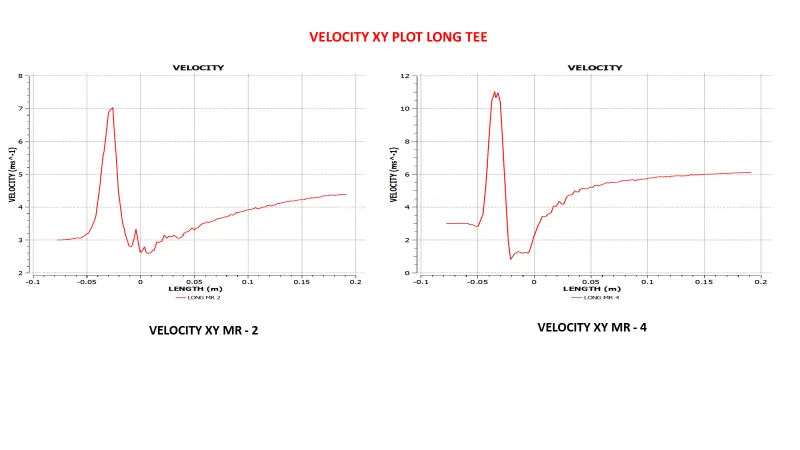
INFERENCE:
Short Tee:
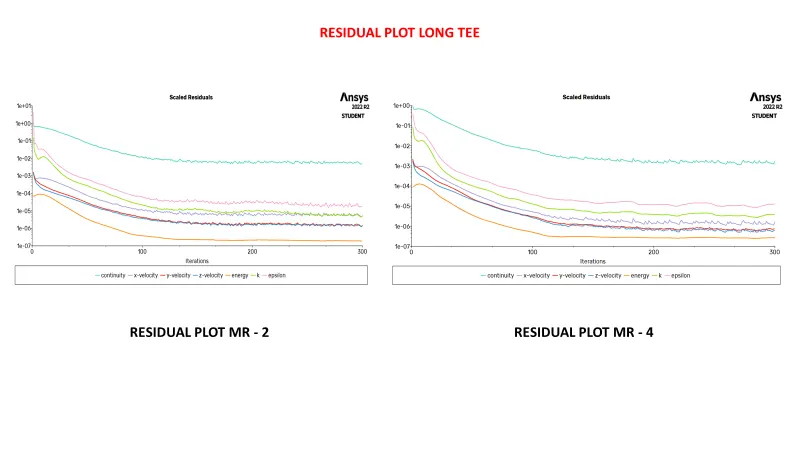
From Residual plot ,
The convergence in MR 4 is converged at 170 th iterations where as the convergence is slightly varies in MR 2 even if the itertion extends for 300.
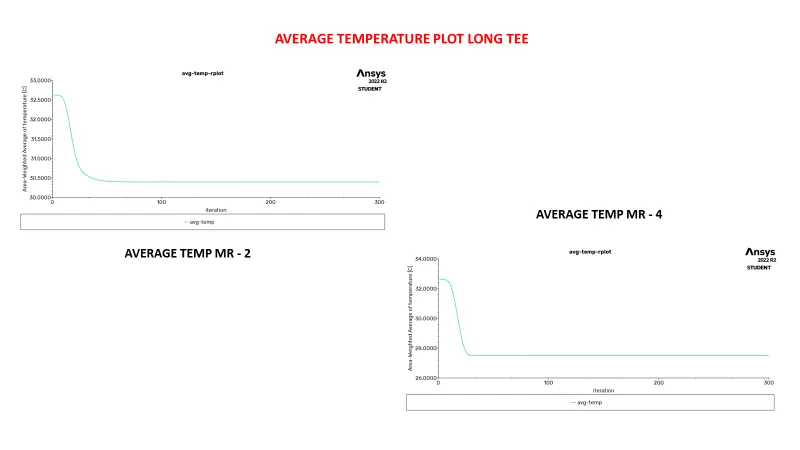
From the Avg temp and Standard plot ,
Due to increase in the velocity of the cold fluid the convergence take bounce in MR 4 where as bounce is not viewed in case of MR 4.
From Contour plot ,
It clearly reflects the convergence is high at MR 4 where as the hot fluid accumulation is there at MR 2.
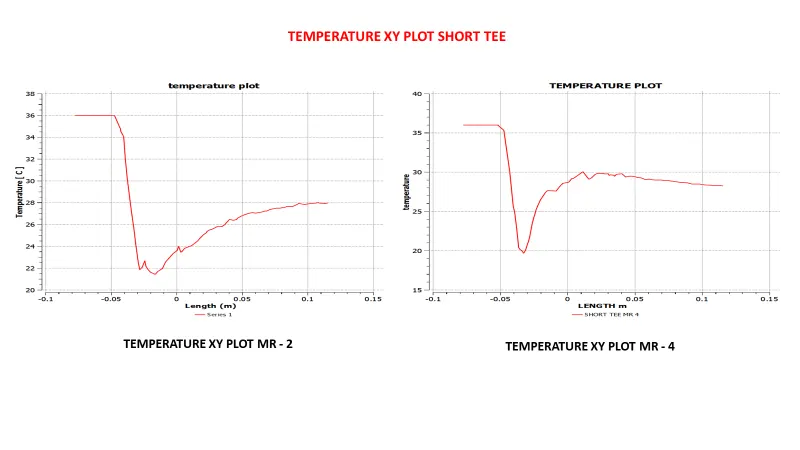
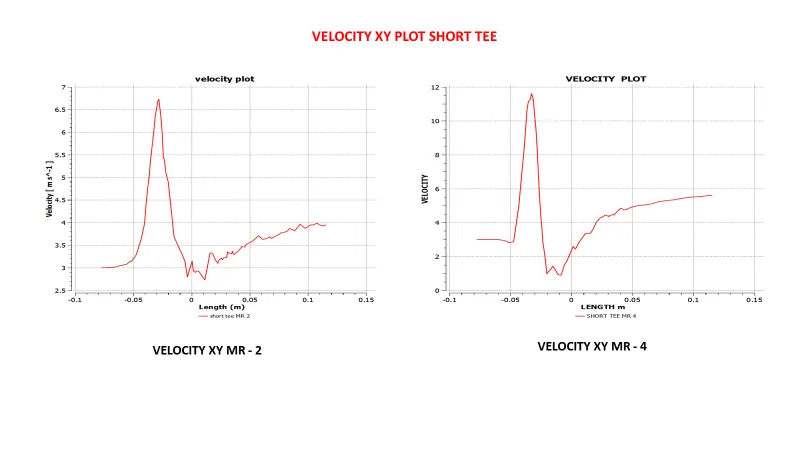
From xy plot,
XY plot also shows that convergence takes place fine in MR 4 where as steap raise happens at MR 2.
Long Tee:
From Residual plot ,
It clearly shows that convergence is negligble at both the MR .
From the Avg temp and Standard plot ,
Velocity plays the major role while the length is inceased rather than temperature mixture is high.
From Contour plot ,
Convergence is high as MR 4 as like short tee.
From xy plot,
The convergence has it dome shape , where it takes a time to get high mixing effectiveness.
Comparison reports:
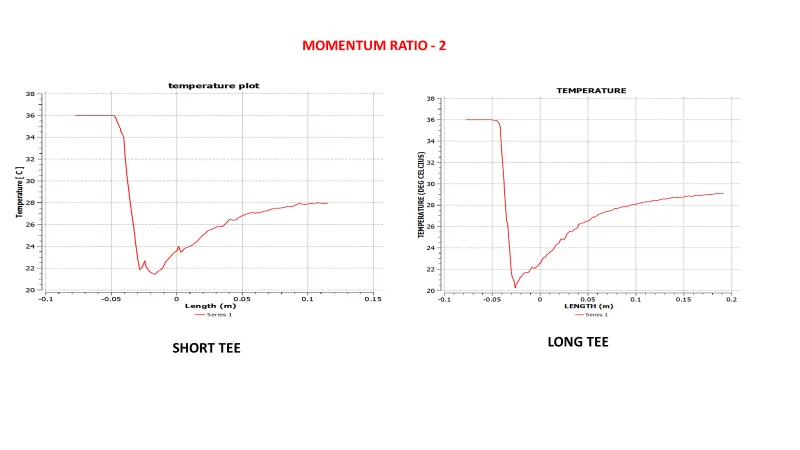
On temperature plot it shows that short tee converge at temp of 28 °C where as long tee has above 28 °C(29.5°C approx)
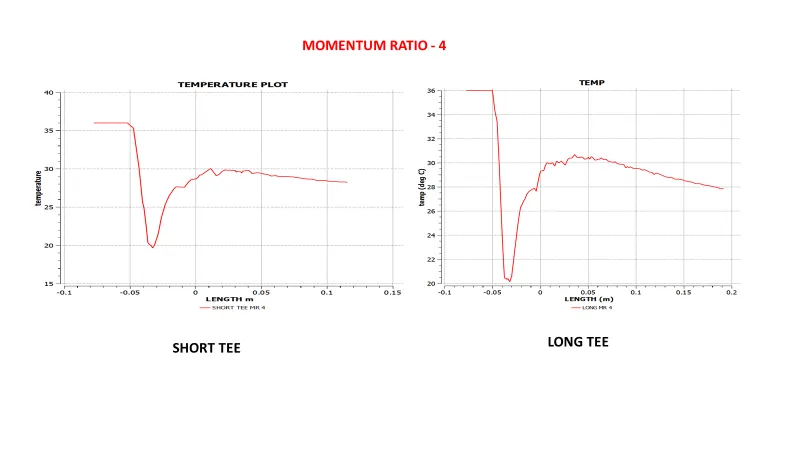
When velocity increases the sudden drop down of temperature is 19°C for short tee where as it is 21°C for long tee and the convergence takes time with better mixing effect at long tee MR 4.
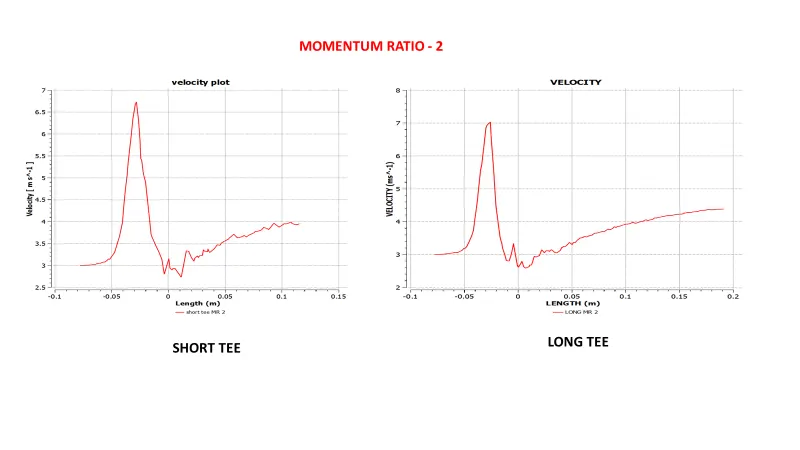
Velocity have a steap increase in short tee where as velocity increases gradually in long tee which gives high mixing efficiency.
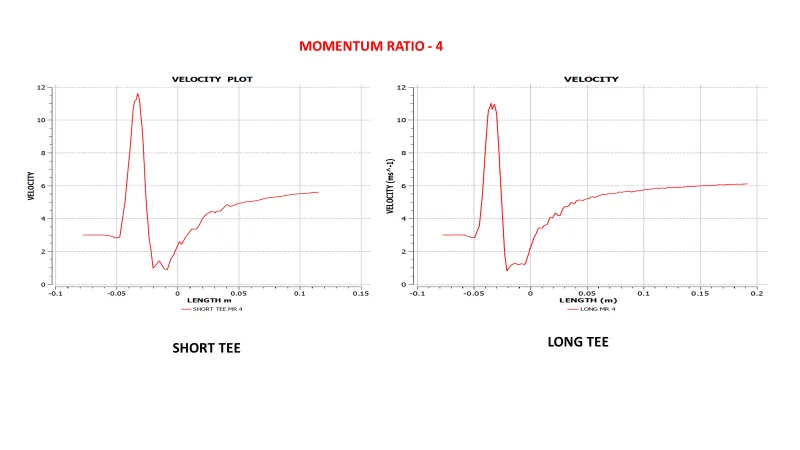
While increase in cold fluid velocity the long curve has 6m/s of convergence where as short has below 6 m/s.
Conclusion :
when comparing between short tee and long tee ---> long tee gives the high mixing efficiency .
when comparing the momentum ratio of long tee ---> MOMENTUM RATIO 4 gives high mixing effectiveness.
LINK :
https://drive.google.com/file/d/1iOphCp0ZBwLHLd0TaDpWgcwRSH2irMH8/view?usp=sharing