Week 1- Mixing Tee
Aim: For this challenge, we have created two versions of the mixing tee. One of them is longer than the other.
Your job is to set up steady-state simulations to compare the mixing effectiveness when hot inlet temperature is 360C & the Cold inlet is at 190C.
Use the k-epsilon and k-omega SST model for the first case and based on your judgment use the more suitable model for further cases. Giving the reason for choosing a suitable model is compulsory.
- Case 1
- Short mixing tee with a hot inlet velocity of 3m/s.
- Momentum ratio of 2, 4.
- Case 2
- Long mixing tee with a hot inlet velocity of 3m/s.
- Momentum ratio of 2, 4.
Momentum ratio = velocity at cold inlet / velocity at hot inlet
In a table, compare the following values from the 2 cases.
- Cell count
- Average outlet temperature
- Number of iterations for convergence
Reference Formulas:-
Tmixture = mh*Th+mc*Tc/mh+mc
Procedure:
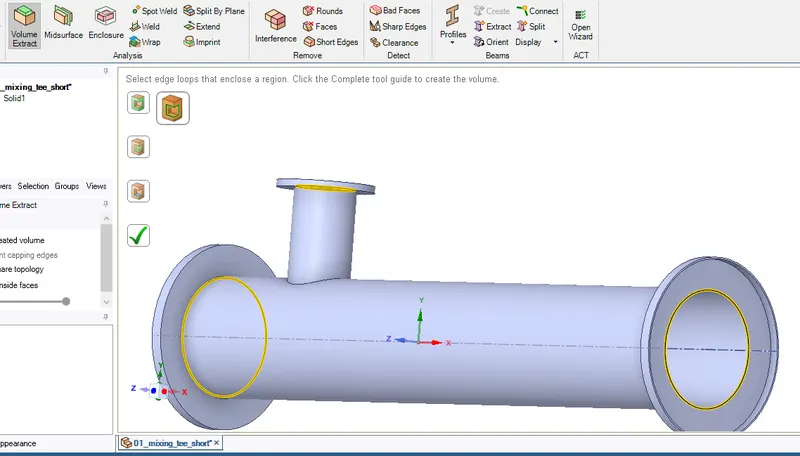
1. Step one import the model in Spaceclaim and trim the edges using Volume Extract command after that surpress the solid.
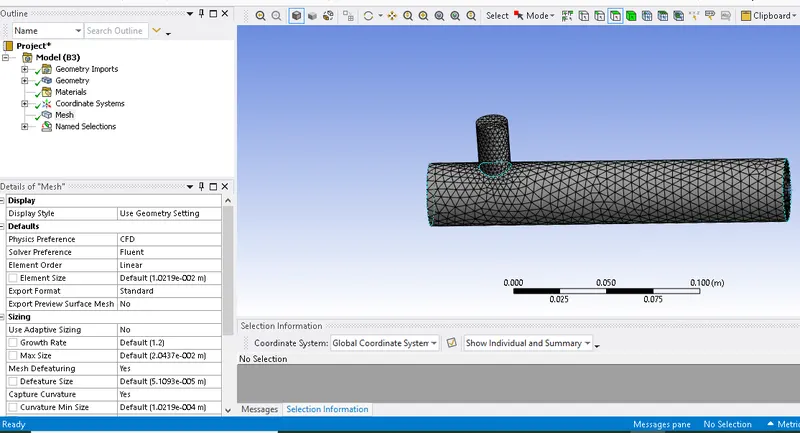
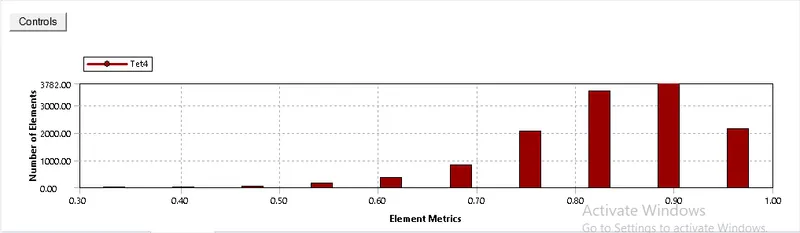
2. After that import the model mesh module and provide name selection to different face after that generate mesh.
3. Next step is import model in setup and provide boundaries condition to model and generate iteration as per requirement.
4. Last step is to import the Model in CFD fluent and study the result of the respectively.
What is mixing tee?
Mixing tee is basically used for mixing two different flow streams to form the gradients of the combined flow streams
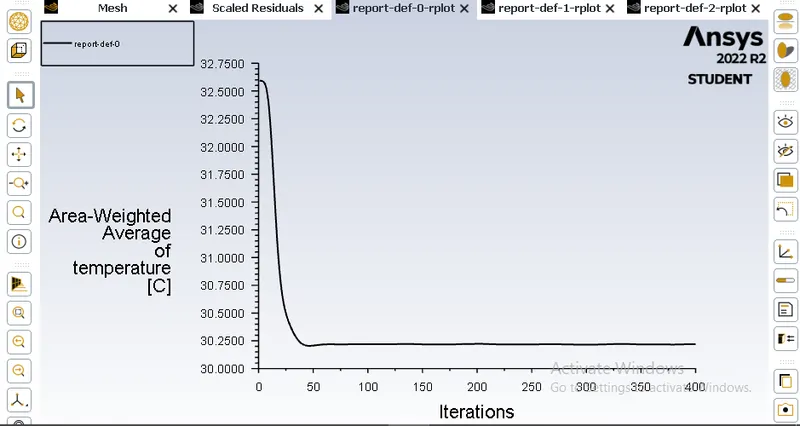
Case 1.1 short tee
hot inlet temp = 36 C
Cold inlet temp = 19 C
Momentum = 2
hot inlet velocity = 3 m/s
cold inlet velocity = 6 m/s
In Case 1.1 we study for k-epsilon and k-omega SST
Geometry setup

Mesh Generation
Boundaries condition y-inlet,x-inlet,output,wall.
Setup and Solution
| Setup | k-epsilon | k-omega SST |
| Velocity | Absolute | Absolute |
| Time | Steady | Steady |
| Viscous-model | k-epsilon,Realizable,standard | k-omega,SST model |
| Material | Air | Air |
| Cell Zones | Fluid type: Air | Fluid type: Air |
| Boundaries |
Momemtum: 2 x-inlet velocity: 3m/s inlet hot temp: 36 C y-inlet velocity: 6 m/s cold inlet temp: 19C Output: pressure outlet wall:stationery walls |
Momemtum: 2 x-inlet velocity: 3m/s inlet hot temp: 36 C y-inlet velocity: 6 m/s cold inlet temp: 19C Output: pressure outlet wall:stationery walls |
| Iteration | Hybrid | Hybrid |
k-epsilon model:
Residual Plot:
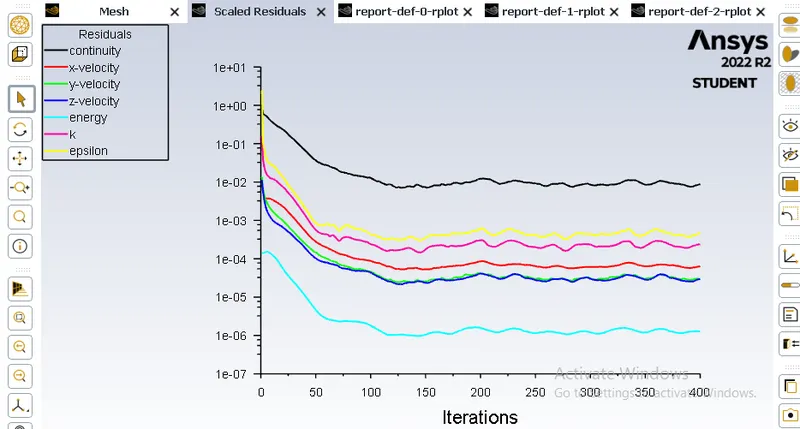
Area-Weighted Average of temp:
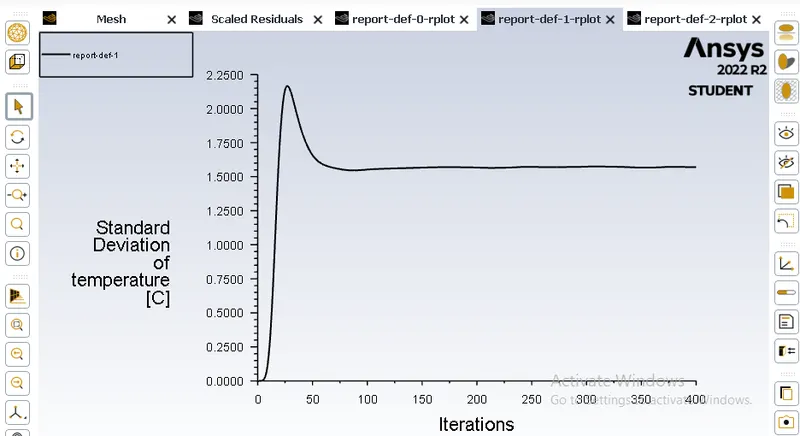
Standard Deviation:
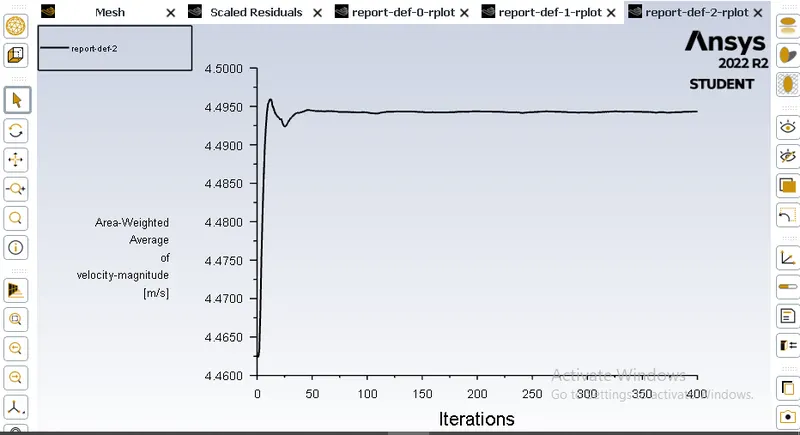
Velocity-Area-Weighted Average of Velocity-Magnitude:
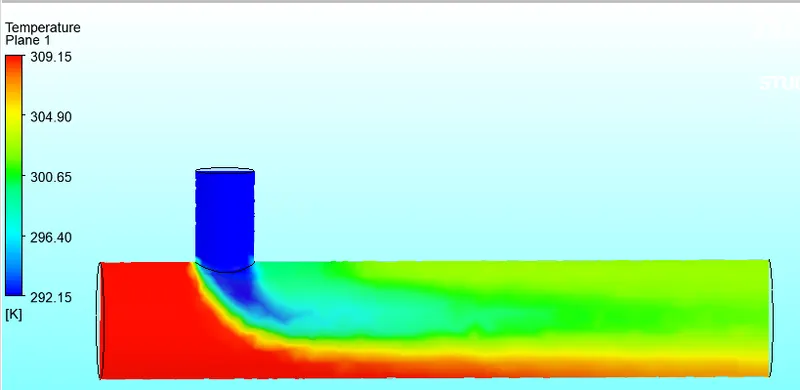
Temperature Contour:
Velocity Contour:
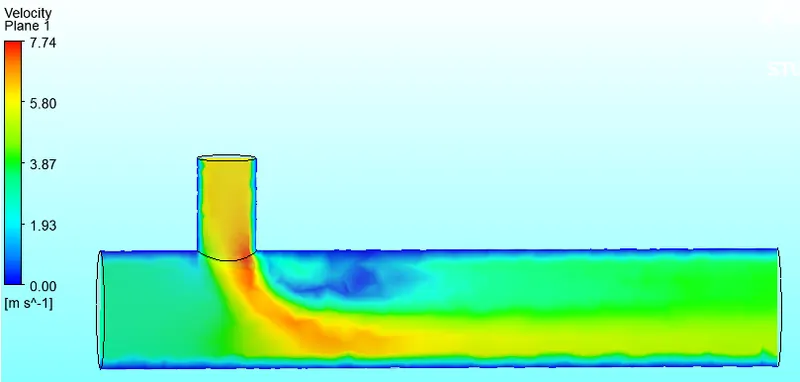
k-omega model:
Residual Plot:
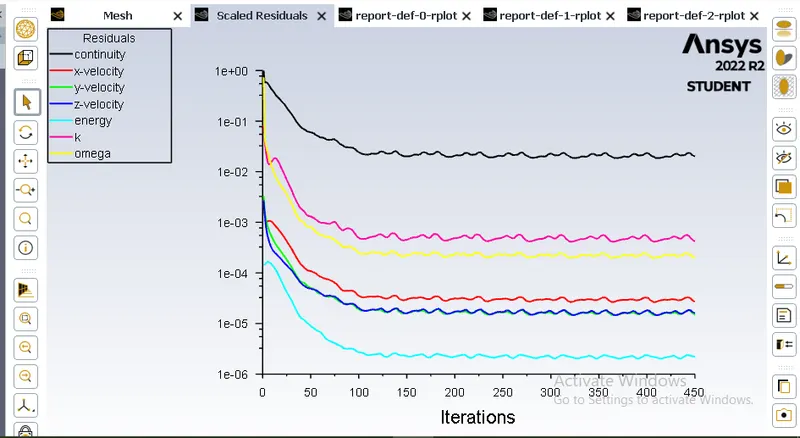
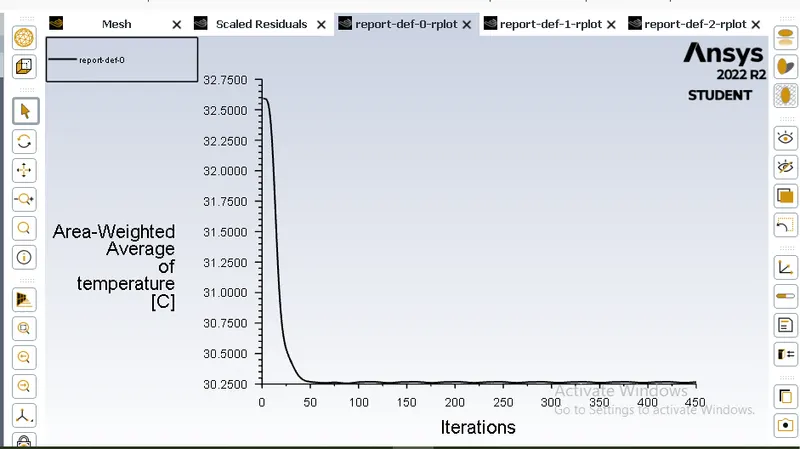
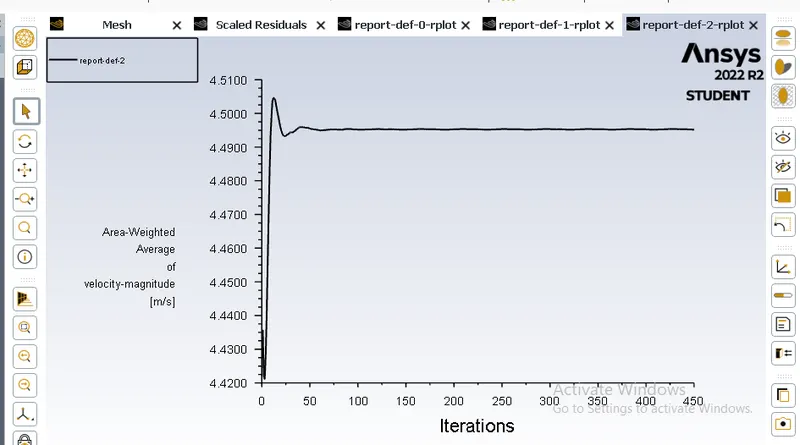
Area-Weighted Average:
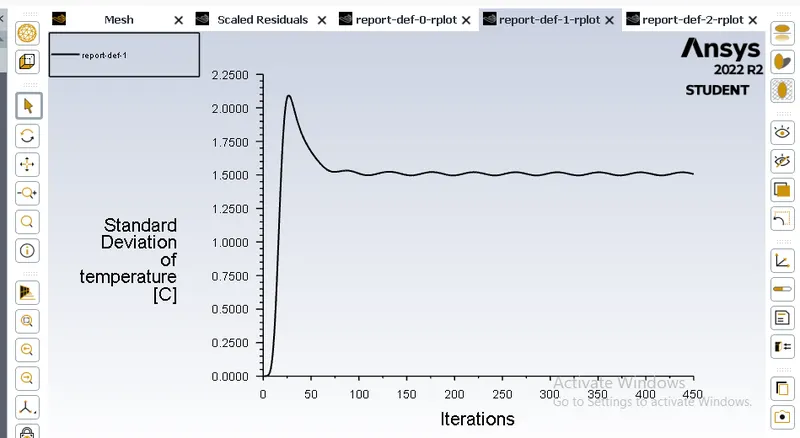
Standard Deviation:
Velocity: Area-Weighted Average:
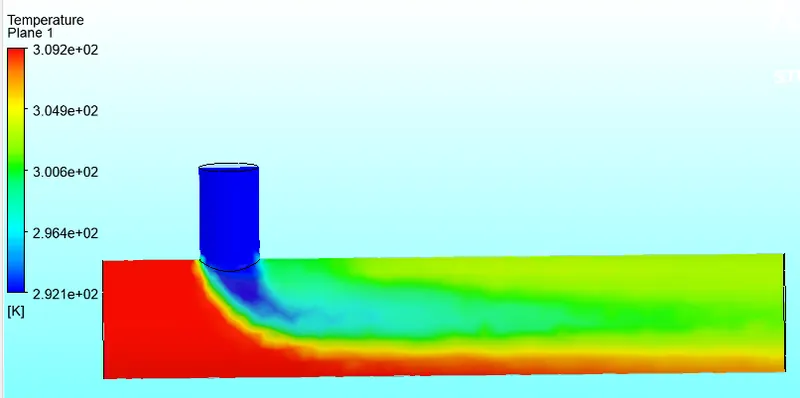
Temperature Contour:
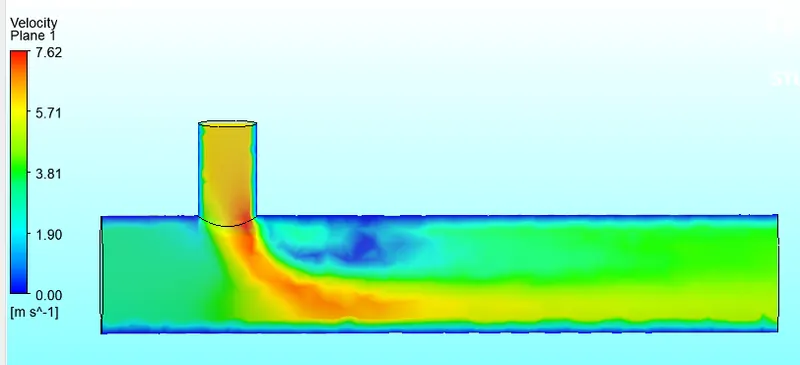
Velocity Contour:
Case 1.2 Short tee
hot inlet temp = 36 C
Cold inlet temp = 19 C
Momentum = 4
hot inlet velocity = 3 m/s
cold inlet velocity = 12 m/s
In Case 1.2 we study for k-epsilon and k-omega SST
Setup and Solution
| Setup | k-epsilon | k-omega SST |
| Velocity | Absolute | Absolute |
| Time | Steady | Steady |
| Viscous-model | k-epsilon,Realizable,standard | k-omega,SST model |
| Material | Air | Air |
| Cell Zones | Fluid type: Air | Fluid type: Air |
| Boundaries |
Momemtum: 4 x-inlet velocity: 3m/s inlet hot temp: 36 C y-inlet velocity: 12 m/s cold inlet temp: 19 C Output: pressure outlet wall:stationery walls |
Momemtum: 4 x-inlet velocity: 3m/s inlet hot temp: 36 C y-inlet velocity: 12 m/s cold inlet temp: 19 C Output: pressure outlet wall:stationery walls |
| Iteration | Hybrid | Hybrid |
k-epsilon model:
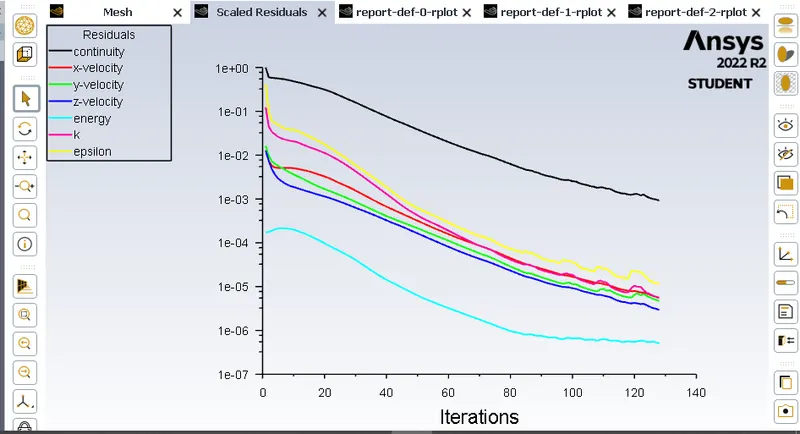
Residual Plot:
Area-Weighted Average:
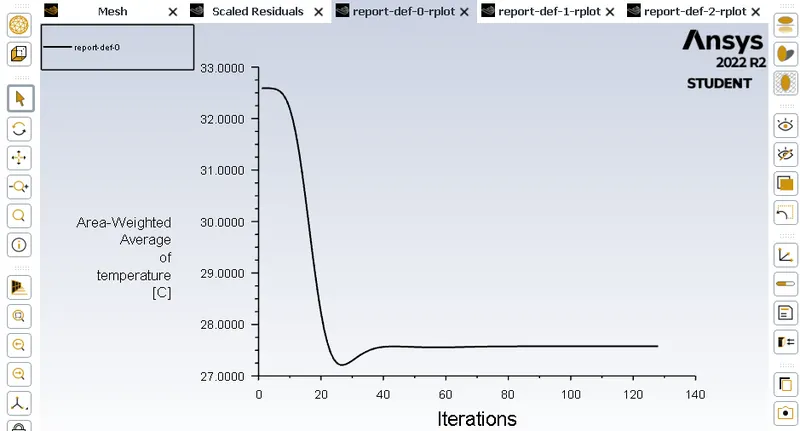
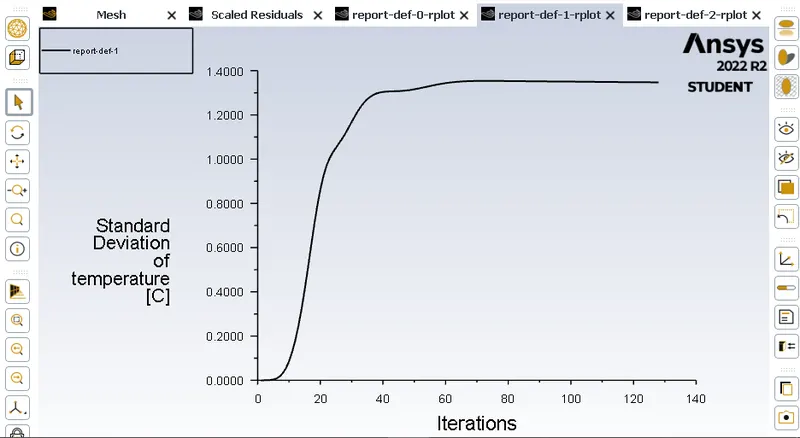
Standard Deviation:
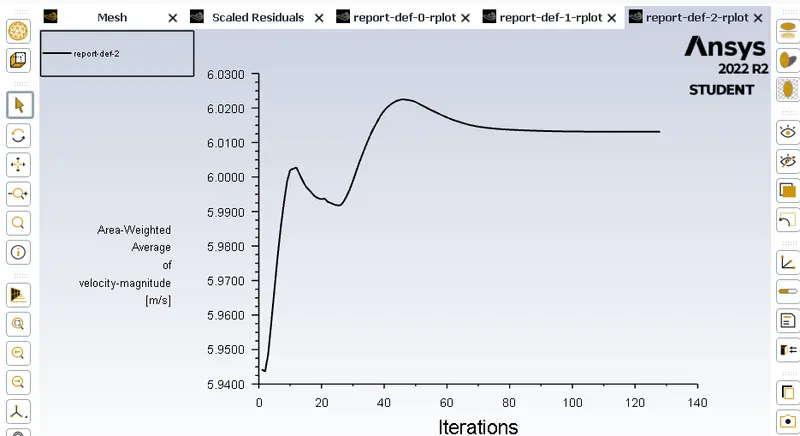
Velocity: Area-Weighted Average:
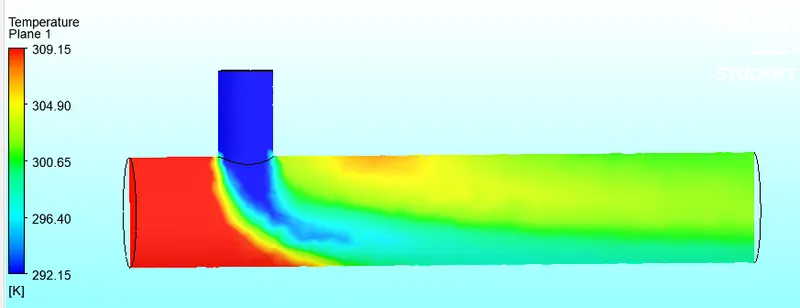
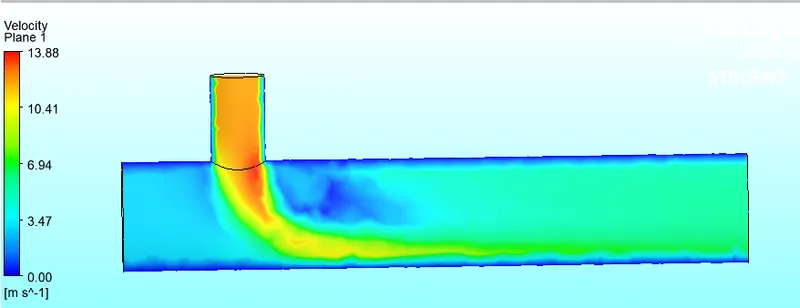
Velocity Contour:
k-omega model:
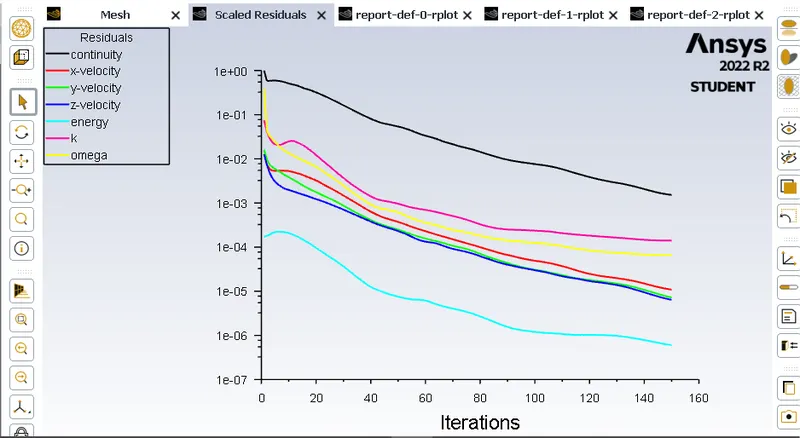
Residual Plot:
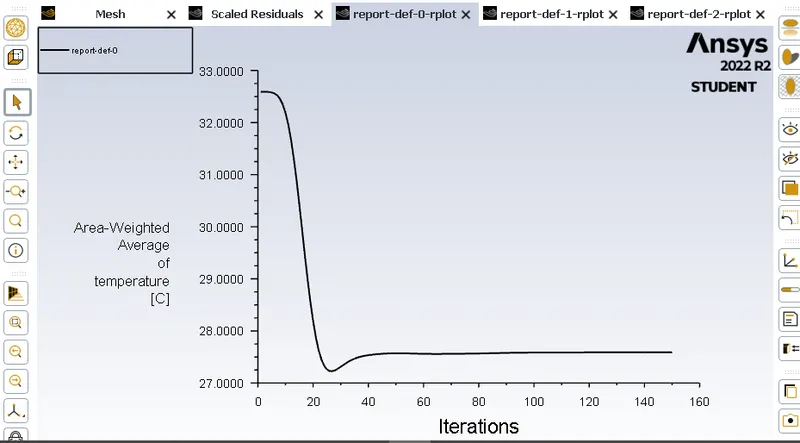
Area-Weighted Average:
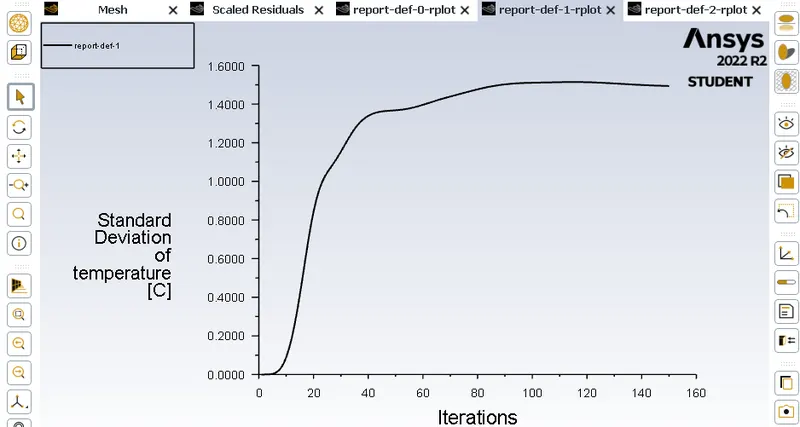
Standard Deviation:
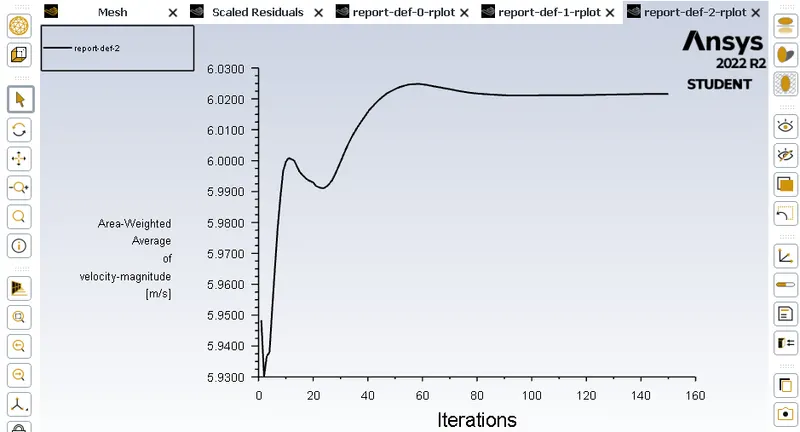
Velocity: Area-Weighted Average:
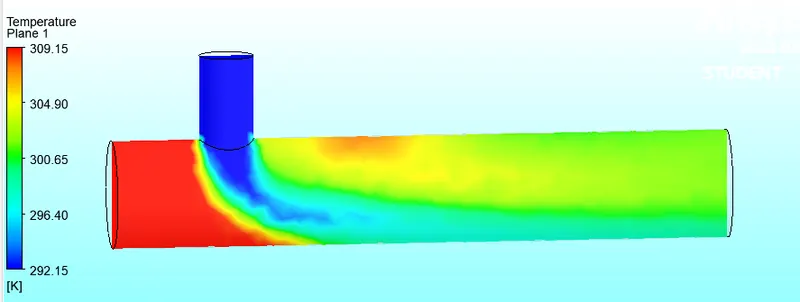
Temperature Contour:
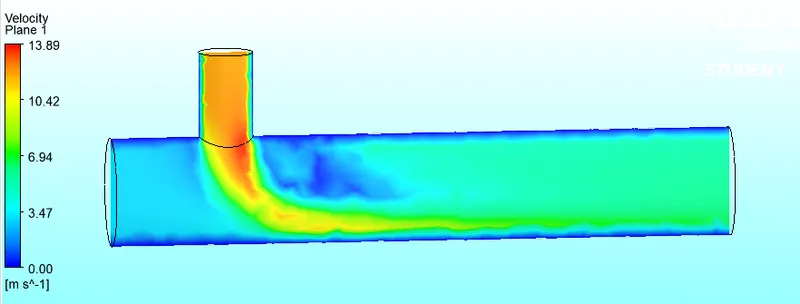
Velocity Contour:
Numerical Solution: Momemtum = 2
Area of hot inlet = 0.00091 m
Area of cold inlet = 0.00025 m
Velocity at hot inlet = 3 m/s
Velocity at cold inlet = 6 m/s
Temperature at hot inlet Th = 36 C
Temperature at cold inlet Tc = 19 C
Density of air (rho) = 1.29 kg/m^3
Mass of hot air mh = rho*A*V=1.29*1000*0.00091*3= 3.5 kg
Mass of cold air mc = rho*A*V=1.29*1000*0.00022*6= 1.7 kg
Tmixture = mh*Th+mc*Tc/mh+mc= 3.5*309+1.7*292/3.5+1.7 = 303.44 K = 30.44 C
Momemtum = 4
Velocity at hot inlet = 3 m/s
Velocity at cold inlet = 12 m/s
Temperature at hot inlet Th = 36 C
Temperature at cold inlet Tc = 19 C
Density of air (rho) = 1.29 kg/m^3
Mass of hot air mh = rho*A*V=1.29*1000*0.00091*3= 3.5 kg
Mass of cold air mc = rho*A*V=1.29*1000*0.00022*12= 3.4 kg
Tmixture = mh*Th+mc*Tc/mh+mc= 3.5*309+3.4*292/3.5+3.4 = 300.62 K = 27.62 C
Case 1.3 Long tee
hot inlet temp = 36 C
Cold inlet temp = 19 C
Momentum = 2
hot inlet velocity = 3 m/s
cold inlet velocity = 6 m/s
In Case 1.3 we study for k-epsilon and k-omega SST
Geometry setup
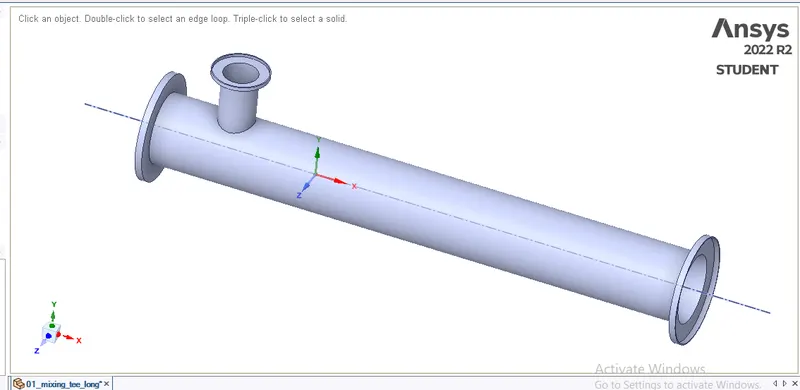
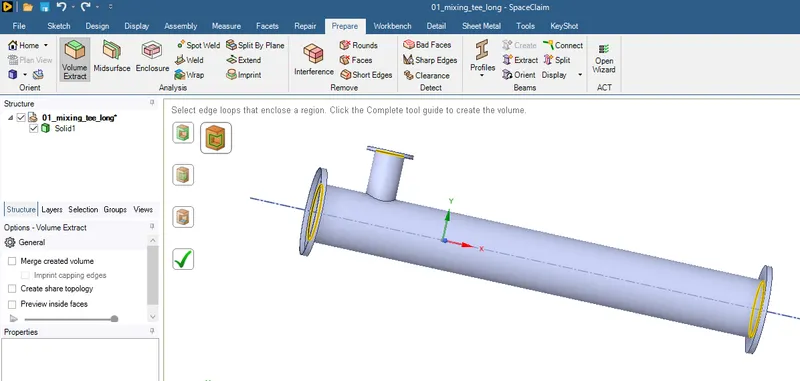
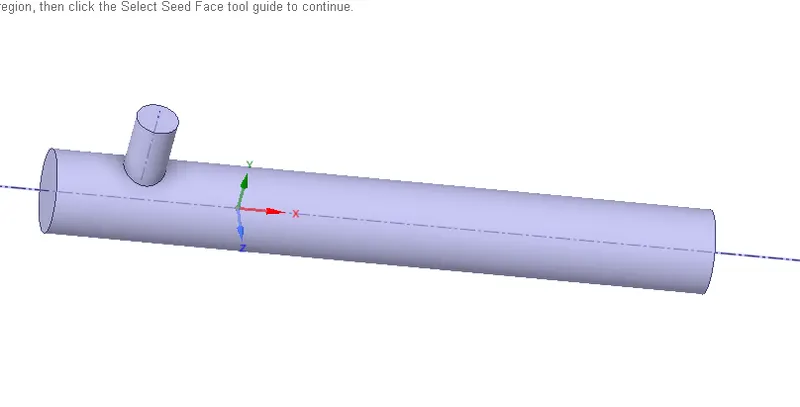
Mesh Generation:
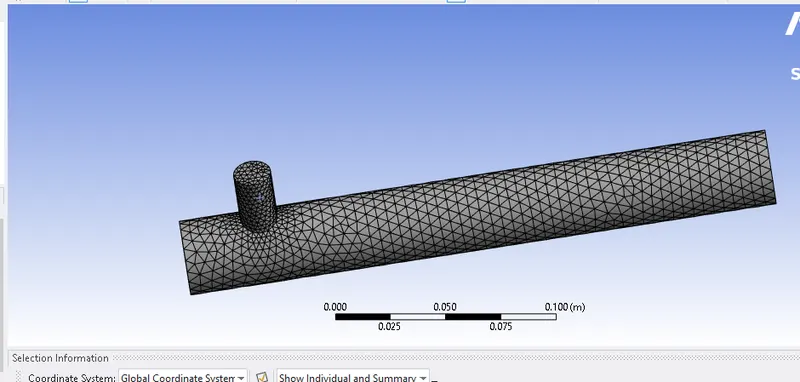
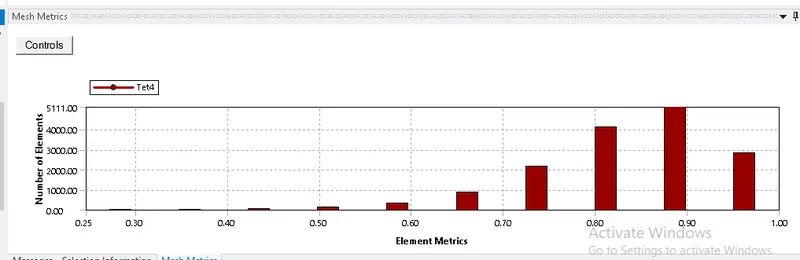
Setup and Solution
| Setup | k-epsilon | k-omega SST |
| Velocity | Absolute | Absolute |
| Time | Steady | Steady |
| Viscous-model | k-epsilon,Realizable,standard | k-omega,SST model |
| Material | Air | Air |
| Cell Zones | Fluid type: Air | Fluid type: Air |
| Boundaries |
Momemtum: 2 x-inlet velocity: 3m/s inlet hot temp: 36 C y-inlet velocity: 6 m/s cold inlet temp: 19C Output: pressure outlet wall:stationery walls |
Momemtum: 2 x-inlet velocity: 3m/s inlet hot temp: 36 C y-inlet velocity: 6 m/s cold inlet temp: 19C Output: pressure outlet wall:stationery walls |
| Iteration | Hybrid | Hybrid |
k-epsilon model:
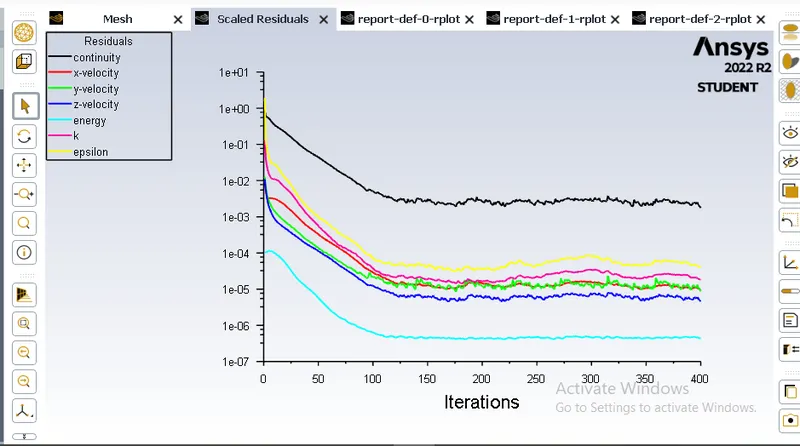
Residual Plot:
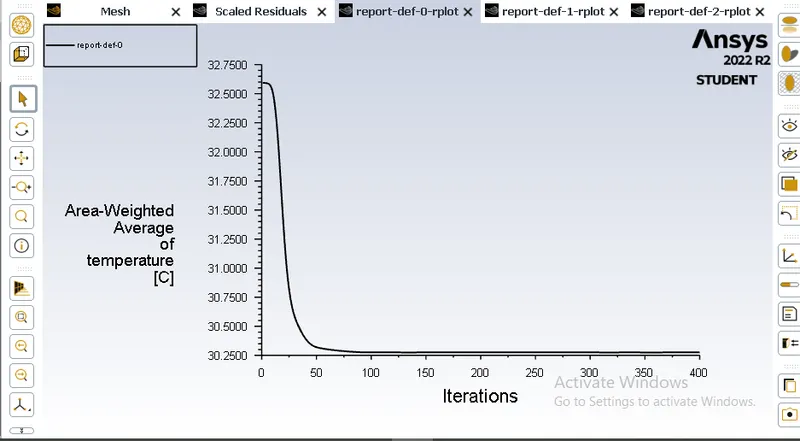
Area-Weighted Average:
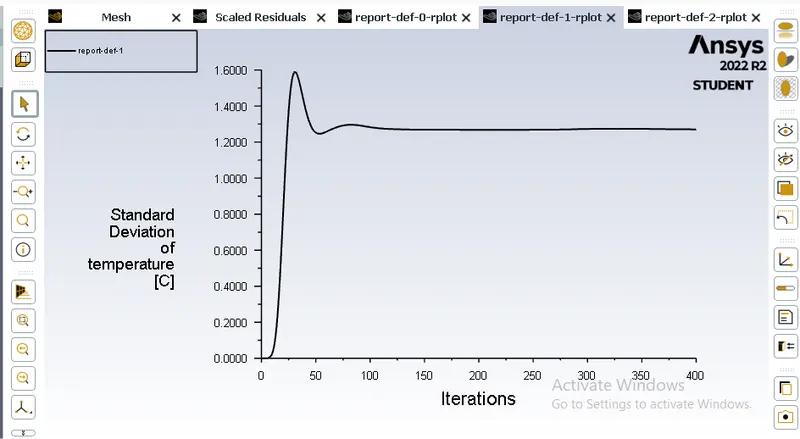
Standard Deviation:
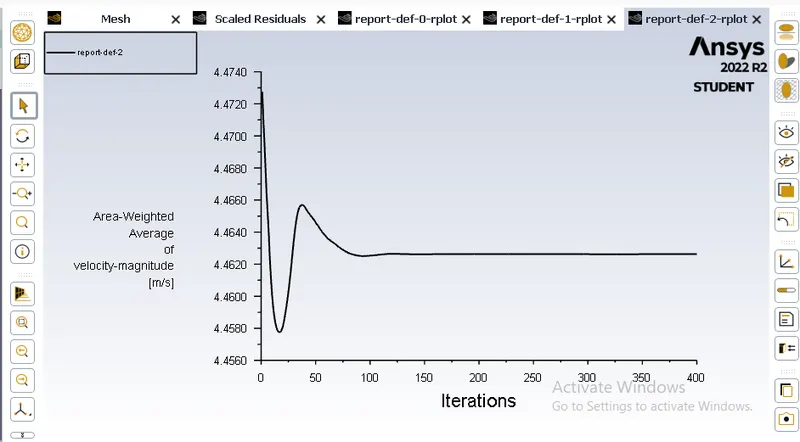
Velocity: Area-Weighted Average:
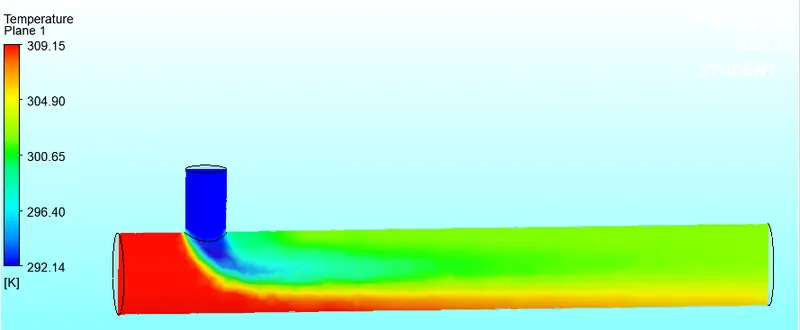
Temperature Contour:
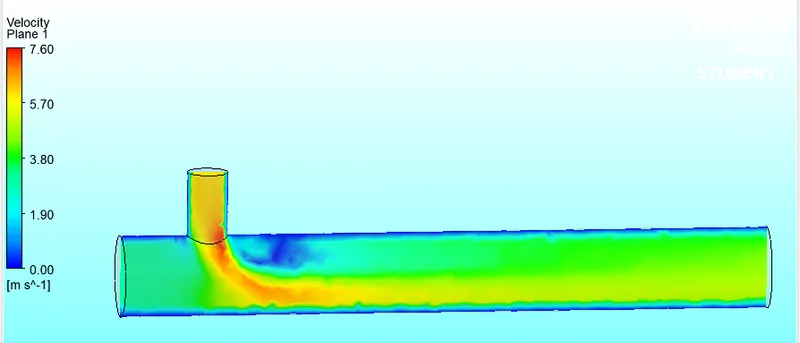
Velocity Contour:
k-omega model:
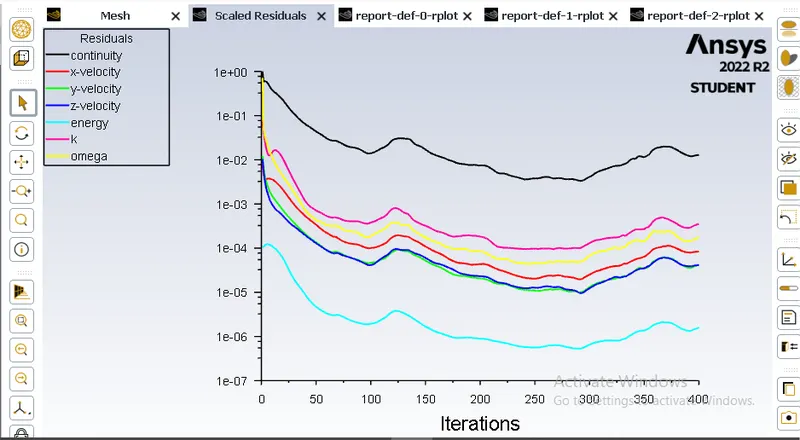
Residual Plot:
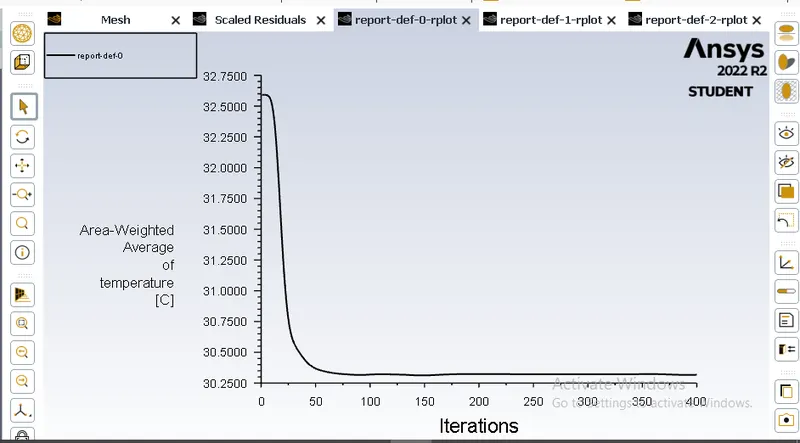
Area-Weighted Average:
Standard Deviation:
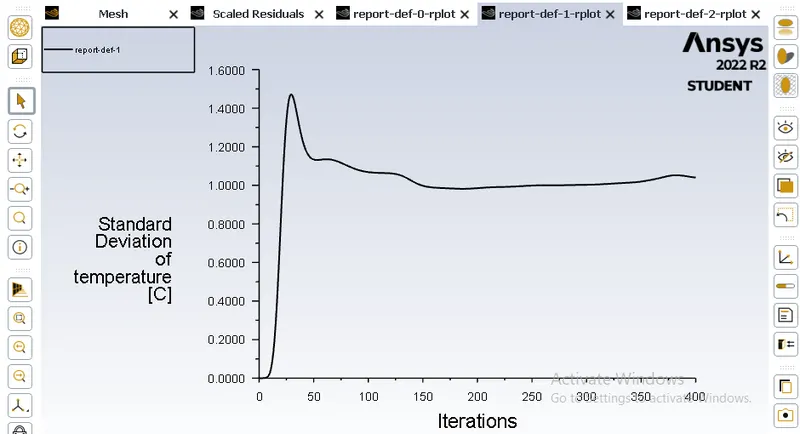
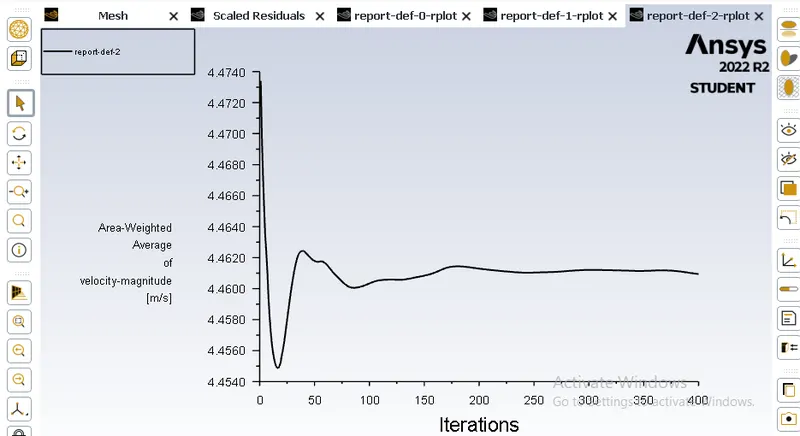
Velocity: Area-Weighted Average:
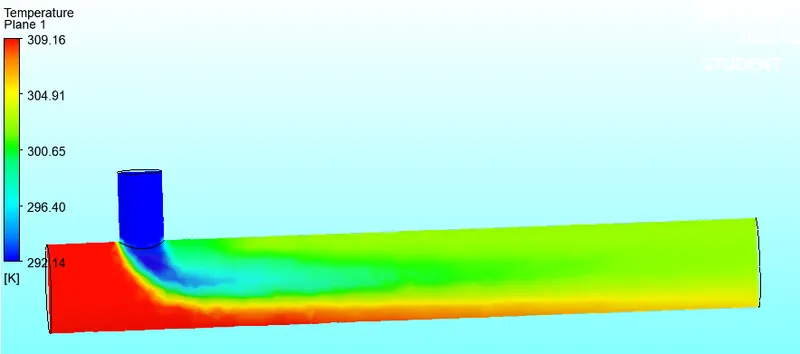
Temperature Contour:
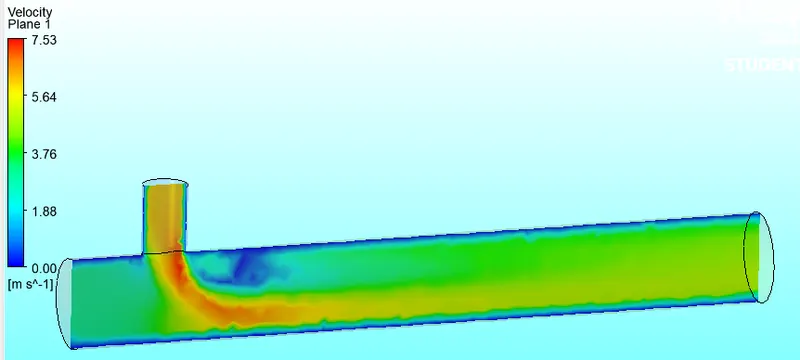
Velocity Contour:
Case 1.4 Long tee
hot inlet temp = 36 C
Cold inlet temp = 19 C
Momentum = 4
hot inlet velocity = 3 m/s
cold inlet velocity = 12 m/s
In Case 1.4 we study for k-epsilon and k-omega SST
Setup and Solution
| Setup | k-epsilon | k-omega SST |
| Velocity | Absolute | Absolute |
| Time | Steady | Steady |
| Viscous-model | k-epsilon,Realizable,standard | k-omega,SST model |
| Material | Air | Air |
| Cell Zones | Fluid type: Air | Fluid type: Air |
| Boundaries |
Momemtum: 4 x-inlet velocity: 3m/s inlet hot temp: 36 C y-inlet velocity: 12 m/s cold inlet temp: 19 C Output: pressure outlet wall:stationery walls |
Momemtum: 4 x-inlet velocity: 3m/s inlet hot temp: 36 C y-inlet velocity: 12 m/s cold inlet temp: 19 C Output: pressure outlet wall:stationery walls |
| Iteration | Hybrid | Hybrid |
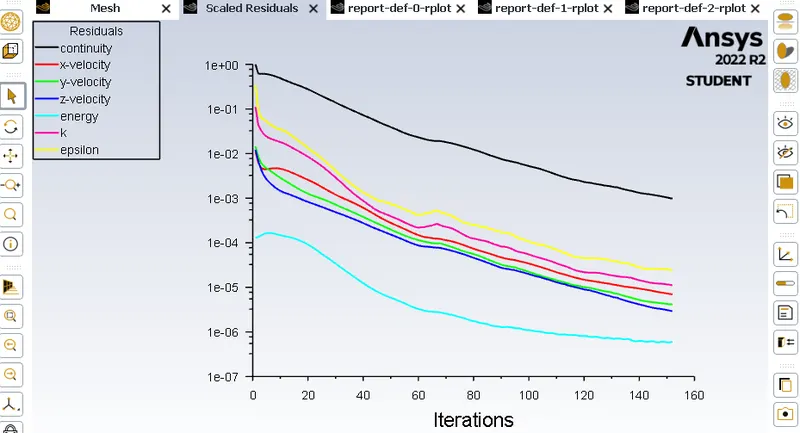
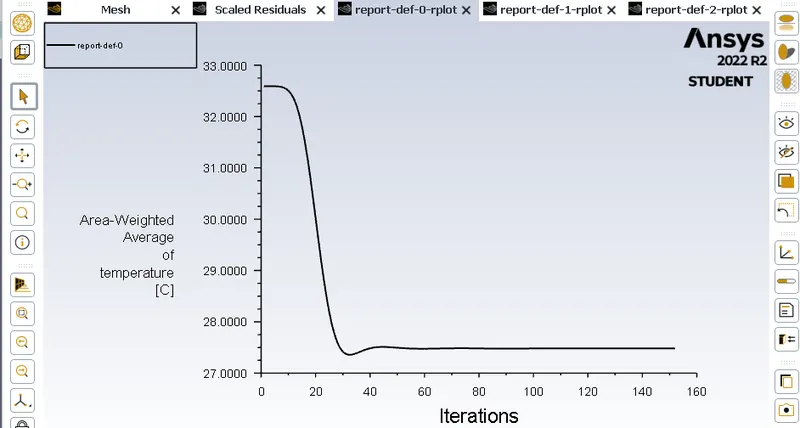
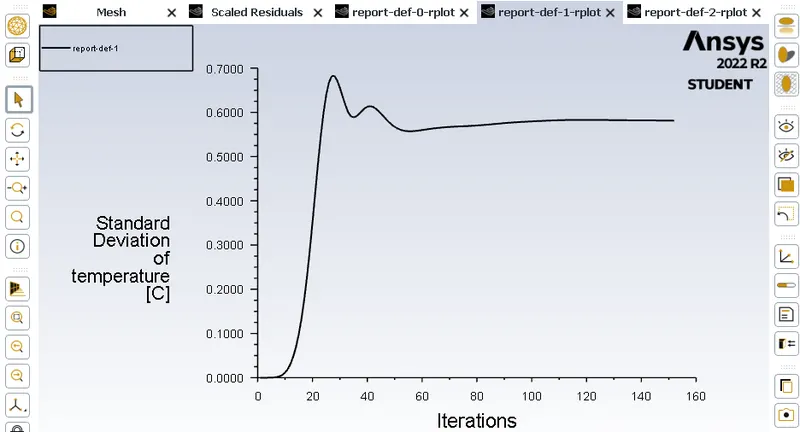
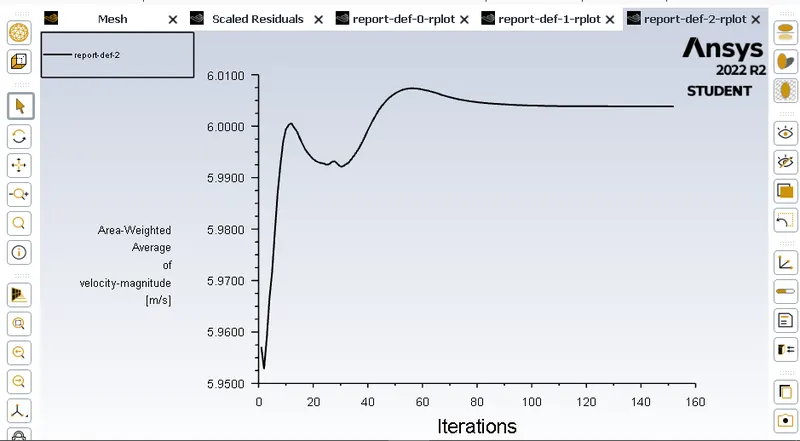
k-epsilon model:
Residual Plot:
Area-Weighted Averagee:
Standard Deviation:
Velocity: Area-Weighted Average:
Temperature Contour:
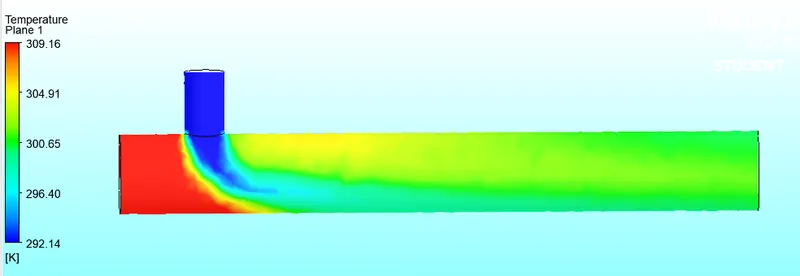
Velocity Contour:
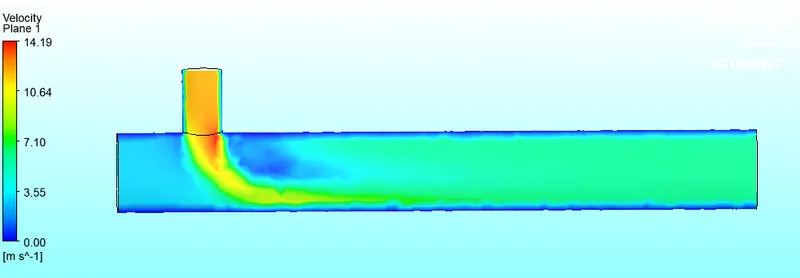
k-omega model:
Residual Plot:
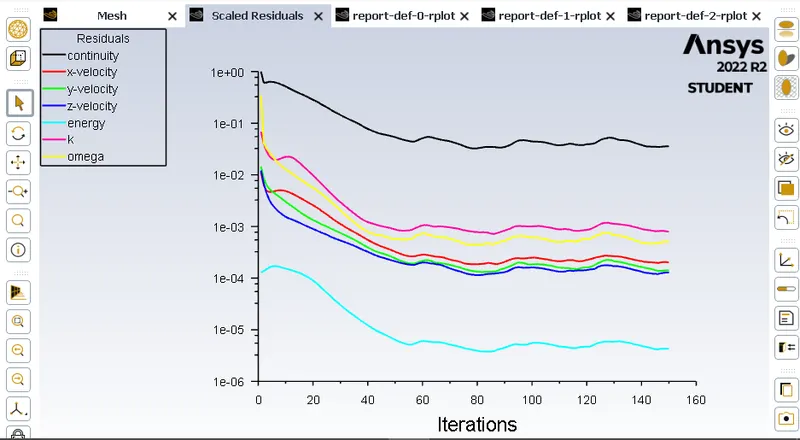
Area-Weighted Average:
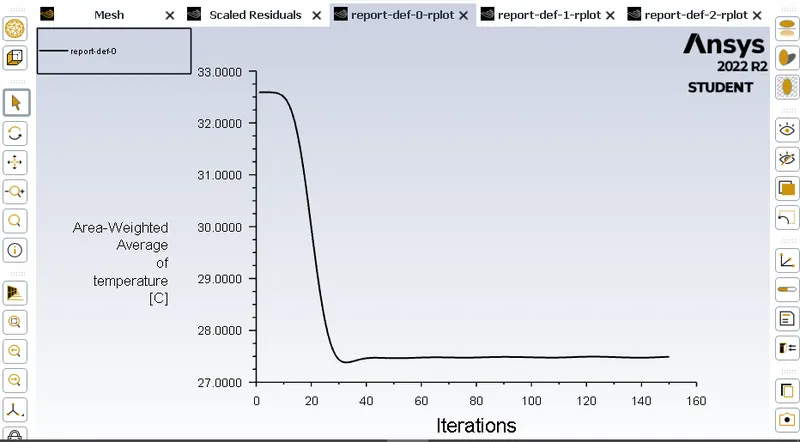
Standard Deviation:
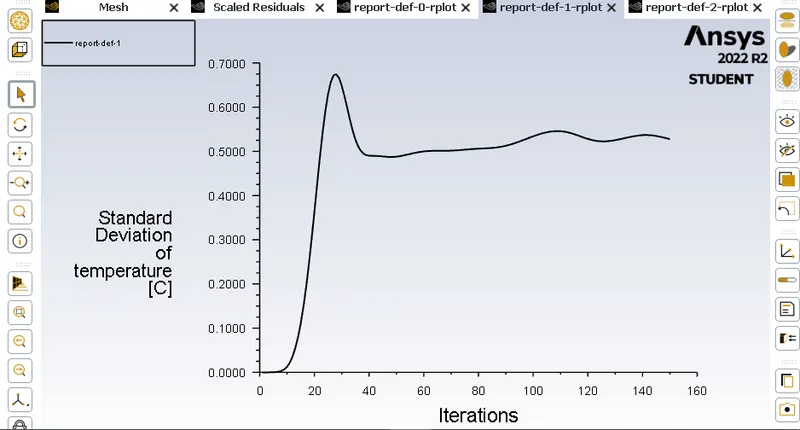
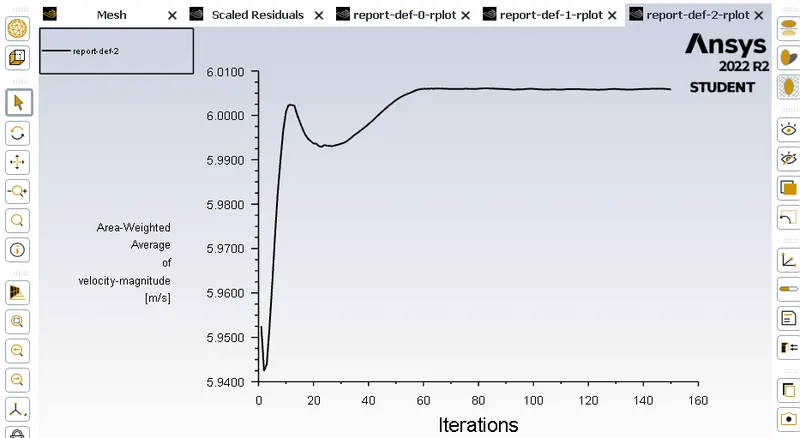
Velocity: Area-Weighted Average:
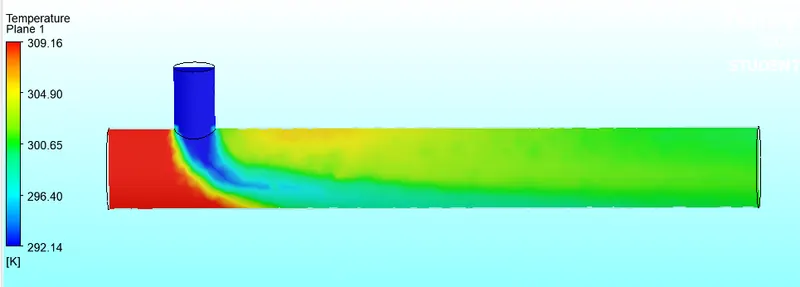
Temperature Contour:
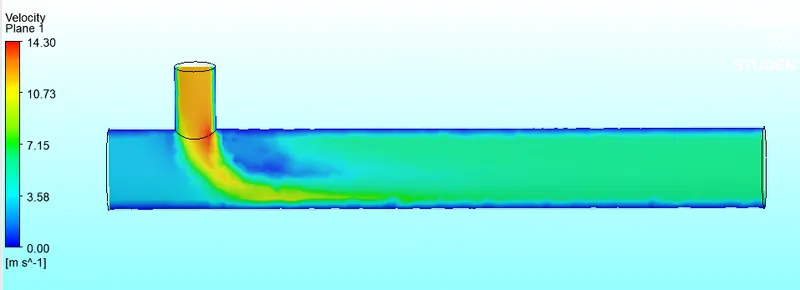
Velocity Contour:
In this table,compare the following values from the cases
| Short tee | M = 2 | M = 4 | Long tee | M = 2 | M = 4 | |
| Cell Count | 3758 | 5111 | ||||
| Average Temperature | 303.44 K | 300.62 K | 303.44 K | 300.62 K | ||
| No of Iteration | 400 | 150 | 400 | 150 |
Conclusion:
1. We sucessfully Mesh the short tee as well as long tee.
2. We successfully solve all the iteration of short tee as well as long tee.
3. We sucessfully plot the temperature and velocity contour of short tee as well as long tee.