Week 1- Mixing Tee
- Case 1
- Short mixing tee with a hot inlet velocity of 3m/s.
- Momentum ratio of 2, 4.
- Case 2
- Long mixing tee with a hot inlet velocity of 3m/s.
- Momentum ratio of 2, 4.
Momentum ratio = velocity at cold inlet / velocity at hot inlet
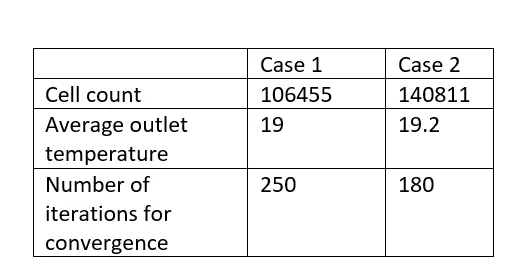
In a table, compare the following values from the 2 cases.
- Cell count
- Average outlet temperature
- Number of iterations for convergence
Solution :
A mixing tee is a device used in many chemical diffusion/mixing processes and in applications such as air conditioners for mixing of fresh and return air. Steady state simulations were performed for a mixing tee of short and long length for three cases with different momentum ratio and mixing effectiveness was observed.
Open Ansys software drag ansa fluent
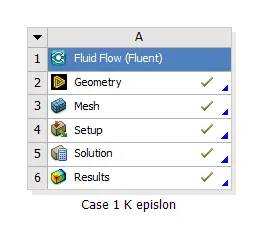
Open Geometry
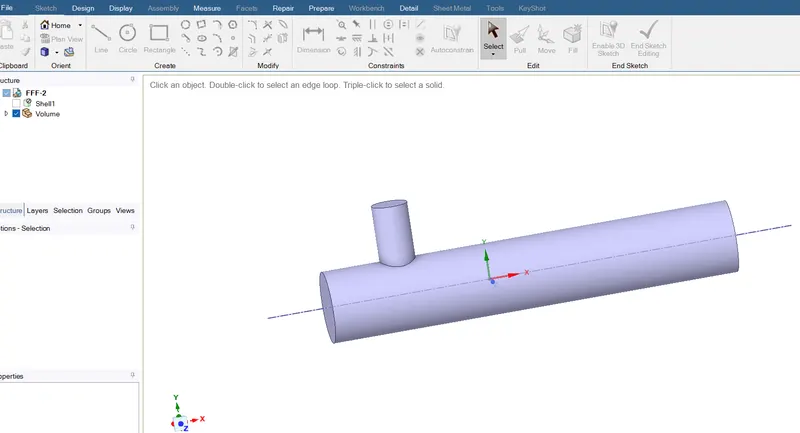
Open STEP file which we had downloded
Disable the shell part and exit Geometry
Open Meshing
Creat edit element size to 0.002m
mark boundrys
generate mesh and cut the geometry into half plan so we can see the simulation of the folw
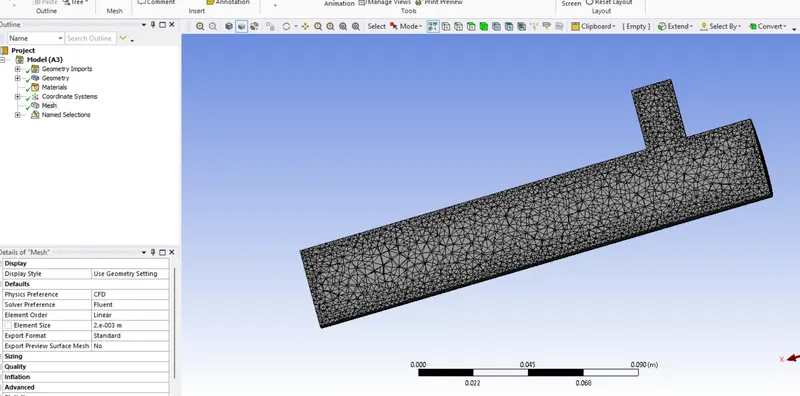
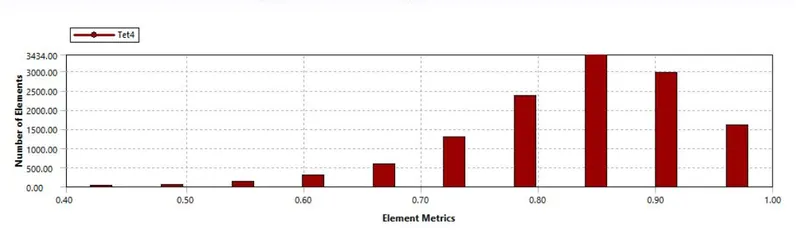
Exit the mesh
Open steup
Check mesh
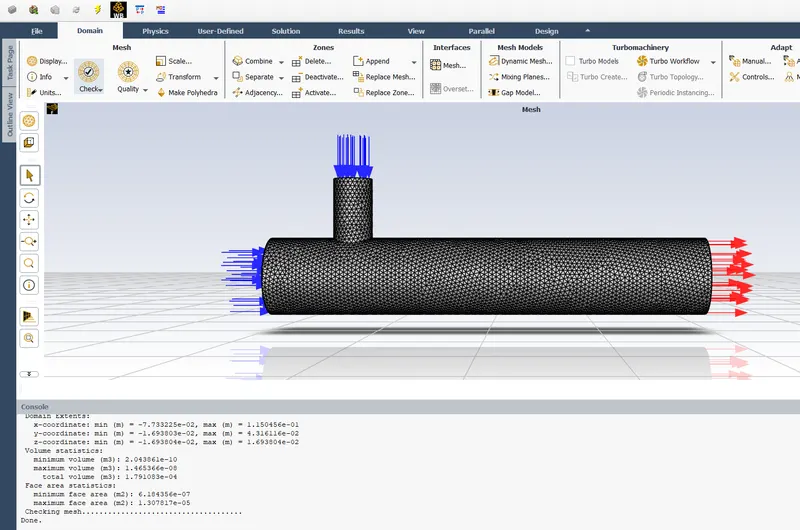
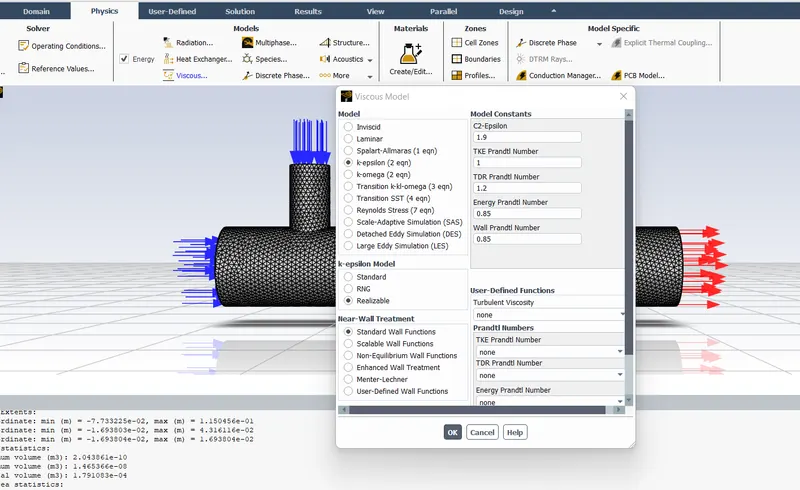
check the energy select the suitable module and change the temprature units to C
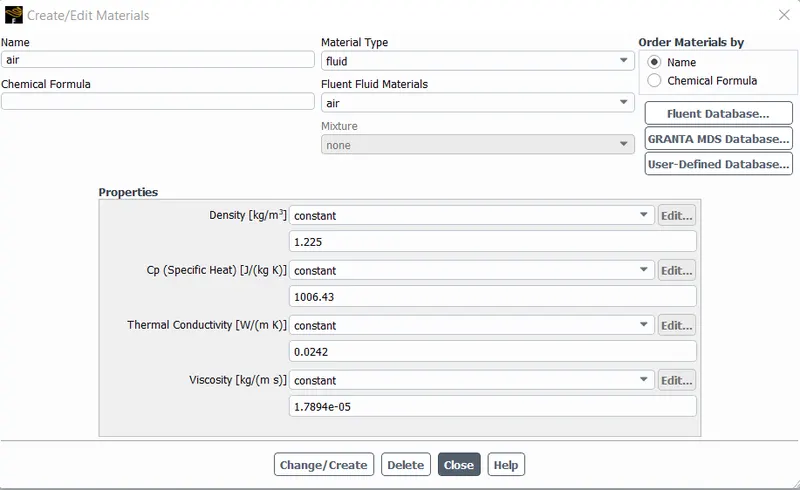
Check the spices once it should be air
Appley the boundry conditions
we have take Momentum ratio of 4 by doing the calcuation we will get the velocity at y direction 12m/s
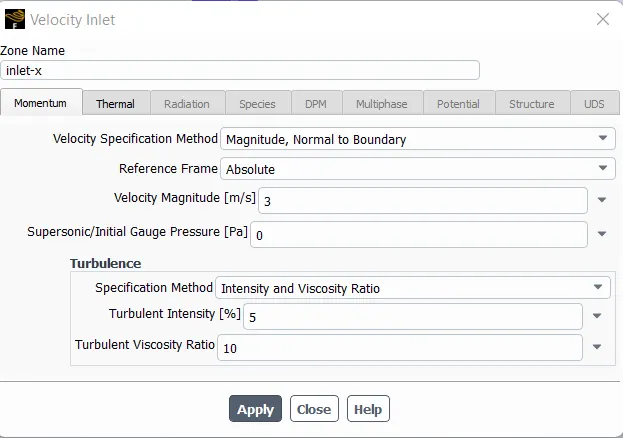
And the temprature will be hot inlet temperature is 360C
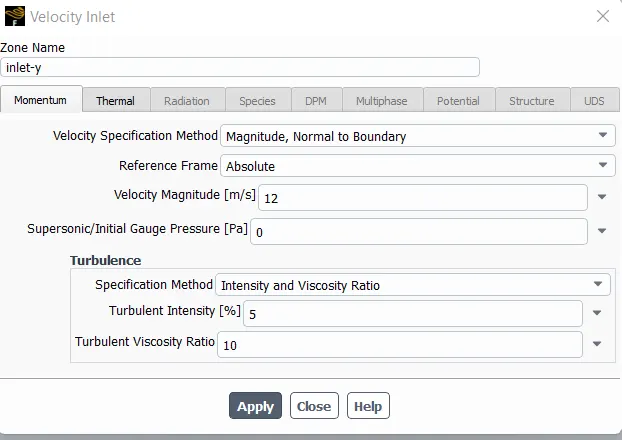
And the temprature will be cold inlet temperature is 190C
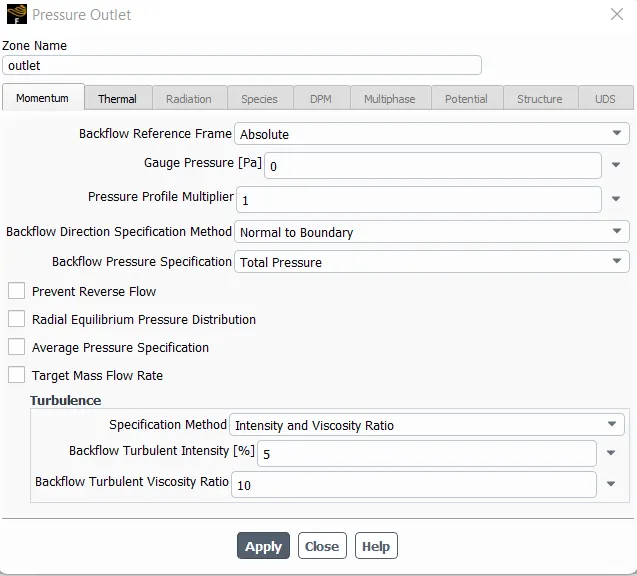
Outlet setup
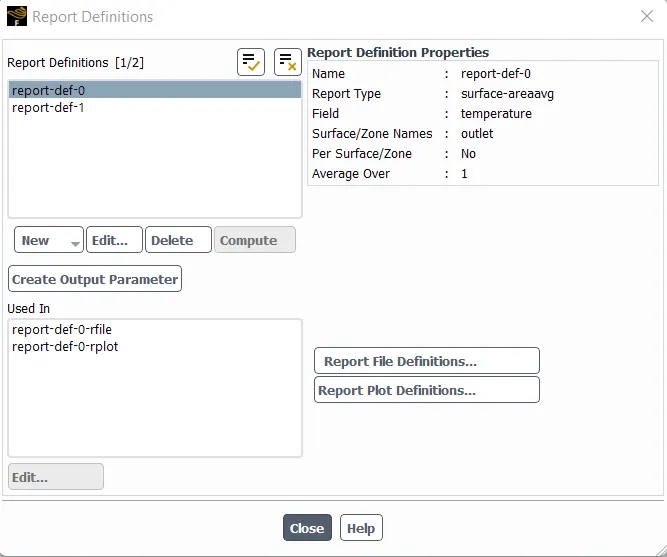
Report definations
Click the
initilize to get the iteration
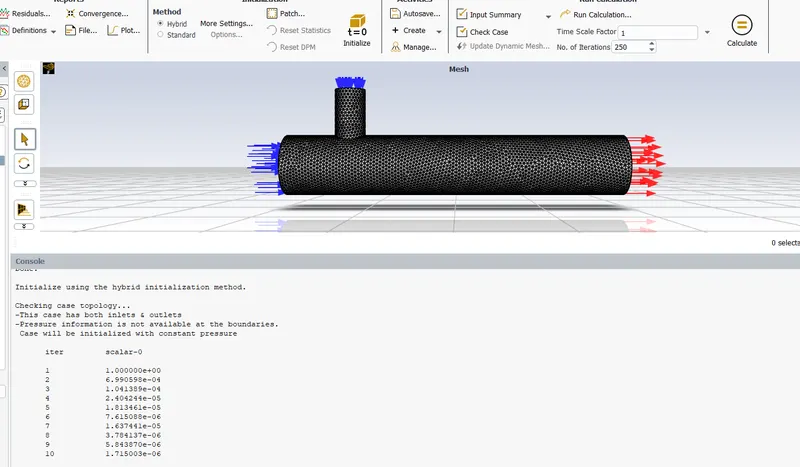
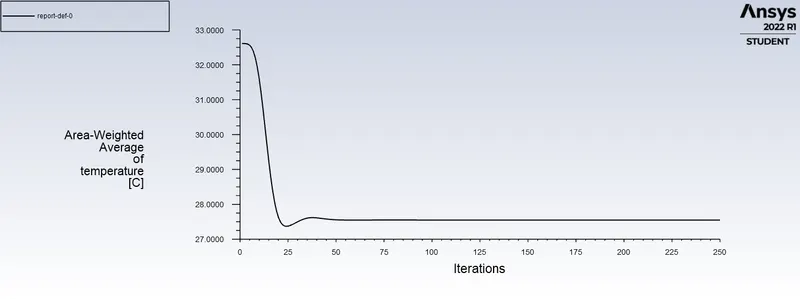
Enter the no of iterations to get the results in my case i have entered 250 iter
PLOTS
Average outlet temperature
Cell count
Now close the setup and open resuts
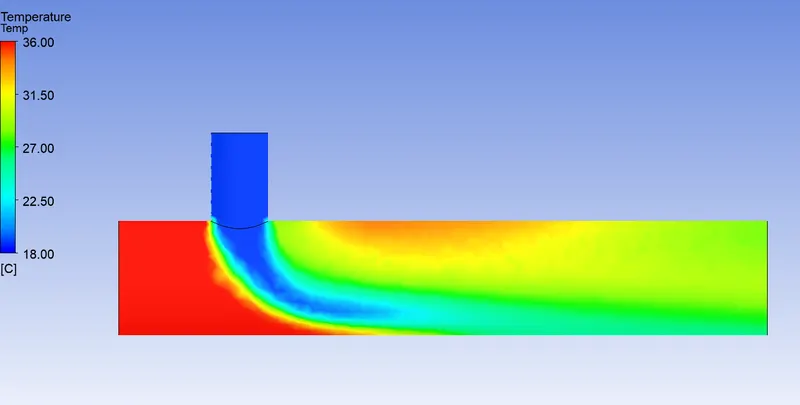
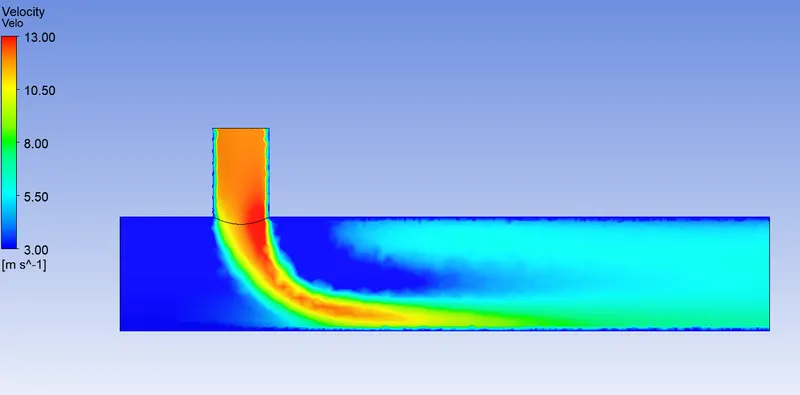
This are the steps to exicuite the Mixing tee problem. The above slimulation is based on K Epsilon
module and k omega with a movenment ration of 4,2.
Now lets see the Case 1 and Case 2 results
In a table, compare the following values from the 2 cases.
Expected results:
For Case 1 and Case 2
In the below attacthed images M means Momentum ratio
Giving the reason for choosing a suitable model is compulsory
Case 1-In this short mixing tee is used, which was mixing two fluid with temperature 19C and 36C. Velocity of hot fluid was 3m/s and cold fluid was 6m/s. we used two different turbulent solvers for it first was realized k-epsilon and second was k-omega SST.
In this case k-epsilon is giving better results because solution was converged after few iterations, whereas after using k-omega model solution was not converged. K-omega is preferred in studying fluid behaviour near wall, but here it is not the case. So, k-epsilon model is recommended to study of fluid far from wall i.e. flow region, in further cases
Mesh independence
A mesh independence (or grid independence) study is something an analyst can perform to determine the dependence of the results on the mesh density.
Compare the results for various runs for different sizing of meshing elements. And in a bid to pass mesh independence results should
In the both case 1&2
we used mesh elenment of 0.002 & 0.003m for Mesh independence.
Discuss the effect of length and momentum ratio on results.
Short lenght with momentum ratio of 2,4.
In the short length mixing tee we have average elenment size of 0.002 to 0.003m
No of elements of 12000 to 17000 approx
Average velocity output of 4.5 to 6.1m
Average Temprature output of 27.5 to 30 C
No of iterations of laying in between of 180 to 250
Long lenght with momentum ratio of 2,4.
In the long length mixing tee we have average elenment size of 0.002 to 0.003m
No of elements of 12000 to 20000 approx
Average velocity output of 4 to 6m
Average Temprature output of 27 to 30 C
No of iterations of laying in between of 250
Conculsion
Finally, in the above cases, it is very important to use a short mixing tee with a momentum ratio of 4 to get precise results but one has to consider the diffusion of flow along the length of the mixing tee, a long mixing tee with momentum will be the greater option.
After obtaining the rough results using coarse mesh simulation successfully we can improve mesh quality and get to final accurate results doing this saves a lot of time which is also extremely helpful for mesh independence test.
*****************************************************************************