Week 1- Mixing Tee
OBJECTIVE
To simulate the flow of air through a mixing tee and to discuss the effect of length and momentum ratio on the results. The cases to be studied are
| Case 1 | Case 2 | Case 3 | Case 4 | |
| Mixing tee type | Short | Short | Long | Long |
| Hot inlet velocity | 3m/s | 3m/s | 3m/s | 3m/s |
| Momentum ratio | 2 | 4 | 2 | 4 |
| Cold inlet velocity | 6m/s | 12m/s | 6m/s | 12m/s |
THEORY
Mixing is a common process in industries to allow heat and/or mass to occur between one or more streams, phases or components. Mixing tee is a mechanism used for mixing effectively two fluid streams into one. These are widely used in HVAC, petrochemical industries etc. where two fluid streams with same or different physical or chemical properties to obtain a stream with desired properties.
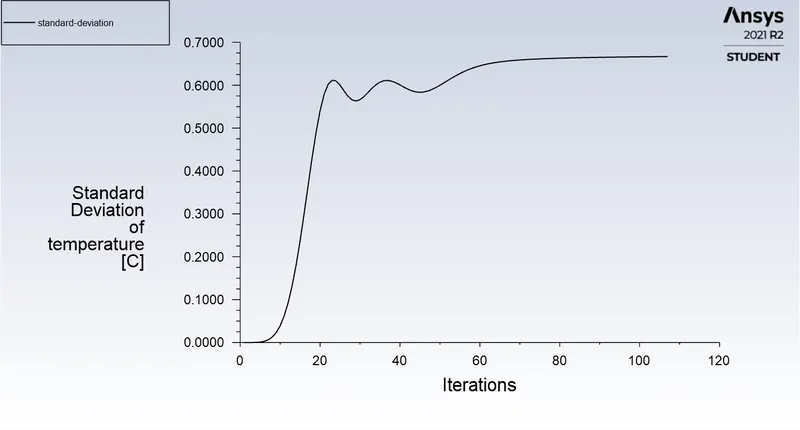
Here hot air flows through the main pipe and is mixed with cold air from the tee. The standard deviation shows the effectiveness of mixing.
Also, Momentum ratio = velocity at cold inlet / velocity at hot inlet
GEOMETRY
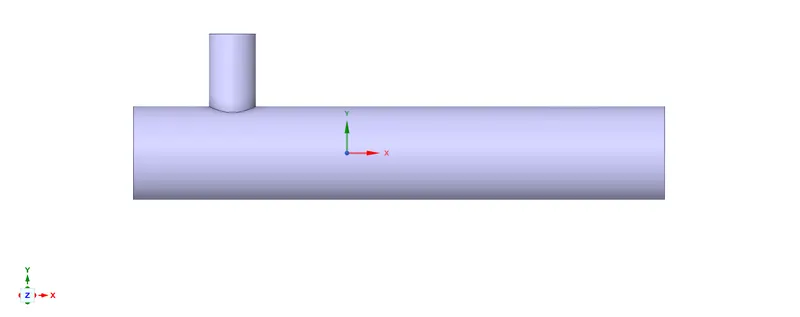
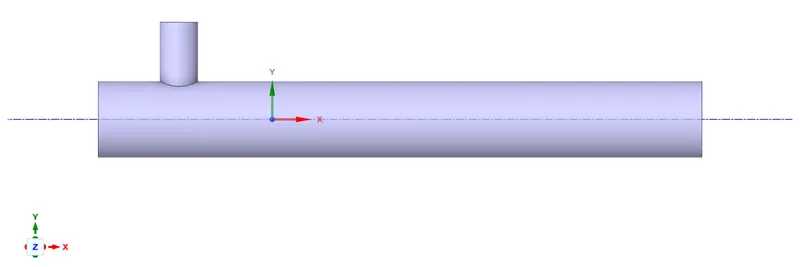
The flow volume is extracted from the CAD model in SpaceClaim. The extracted volumes are represented below
- Short tee
- Long tee
MESH
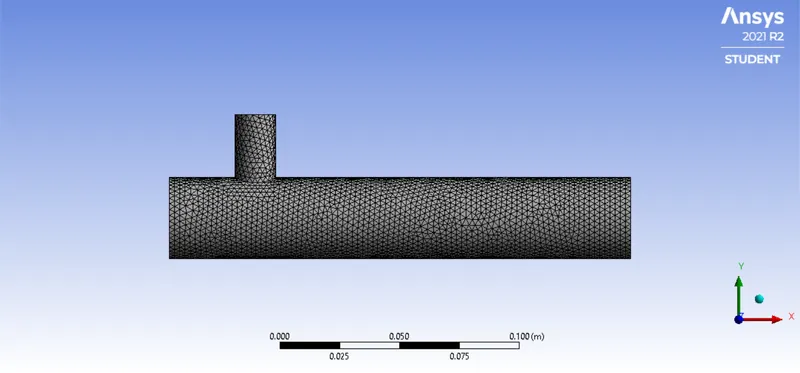
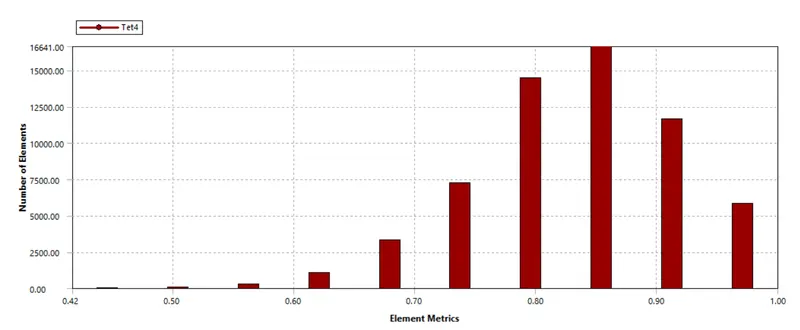
The extracted volumes are given face names and the mesh is generated. The element size given for the mesh is 2.5mm. The mesh generated and the metrics based on the element quality is given below.
- Short tee
- Long tee
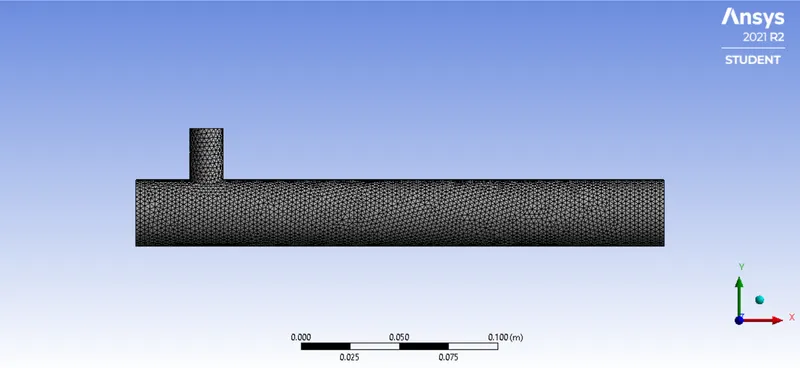
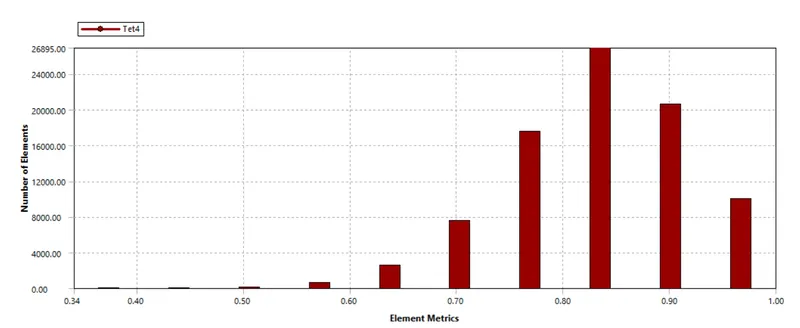
SETUP
- Turbulence model
`k-epsilon` realizable with standard wall function turbulence model has been used. `k-epsilon` models predict well far from the walls whereas `k-omega` models predict near the walls. `k-epsilon` models are used in free flow simulations and the walls have no effect on the change in temperature of the fluid in this project. `:.k-epsilon` model was used in the further simulations.
- Boundary conditions
- Hot inlet temperature= 360C
- Cold inlet temperature= 190C.
- Hot inlet velocity of 3m/s.
- Momentum ratio of 2, 4. Hence cold inlet velocities = 6m/s and 12m/s respectively
- Pressure outlet (atmospheric conditions)
- No slip walls
- Cell zone conditions
- Material: air
- Density: 1.225 `kg`/`m^3`
- Specific heat: 1.006 `kJ`/`kg-K`
- k: 0.0242 `W`/`m-K`
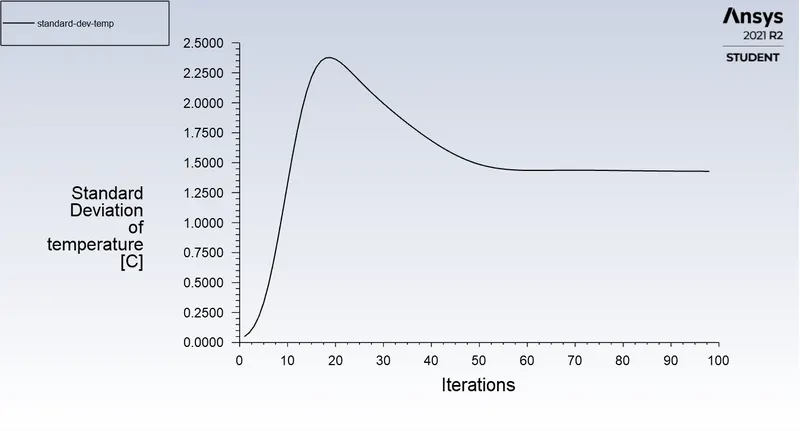
COVERGENCE PLOTS: CASE 1
- Residual plot
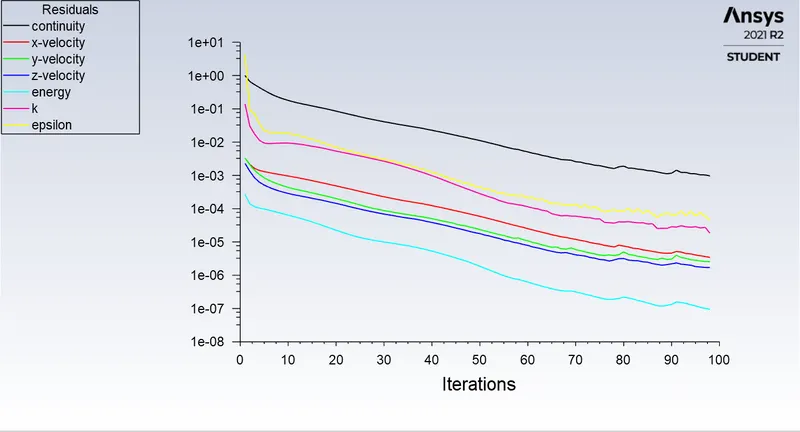
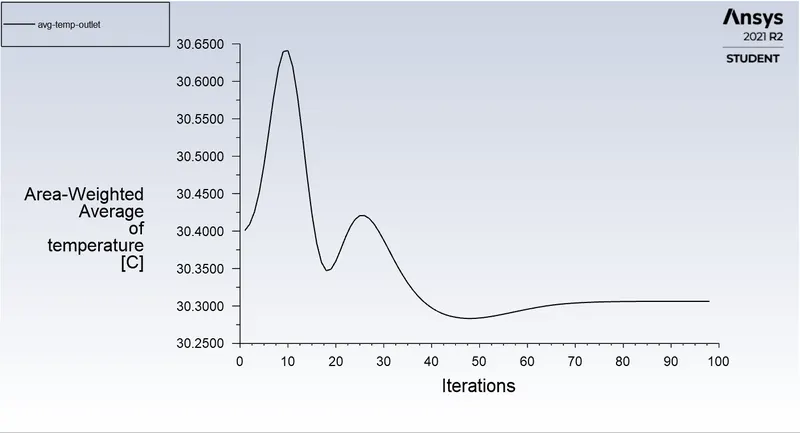
- Average outlet temperature
- Standard deviation of outlet temperature
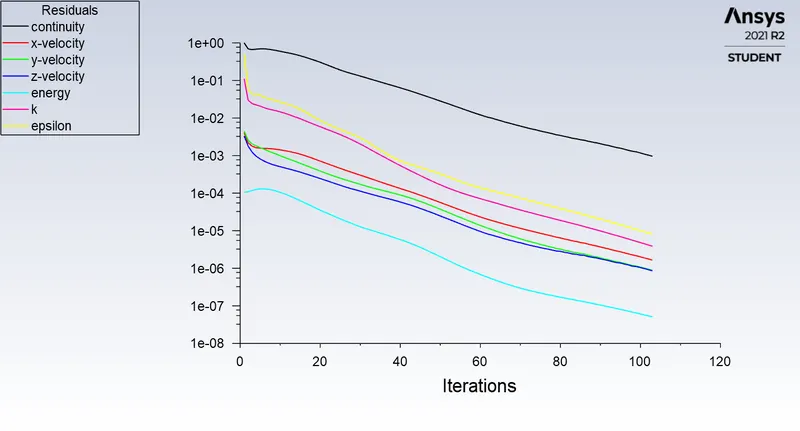
COVERGENCE PLOTS: CASE 2
- Residual plot
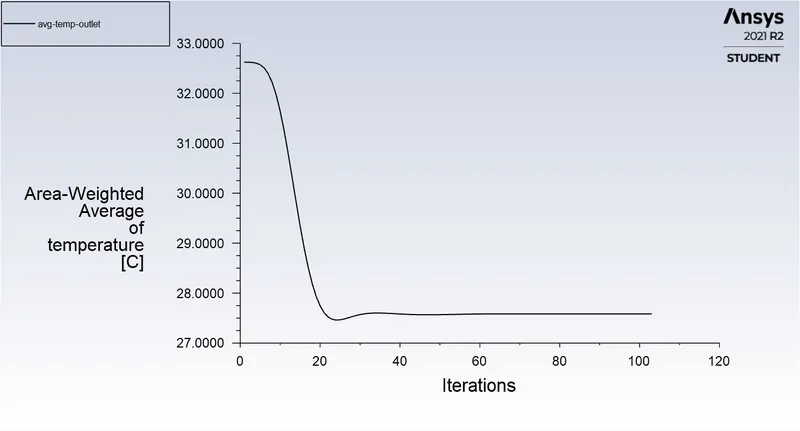
- Average outlet temperature
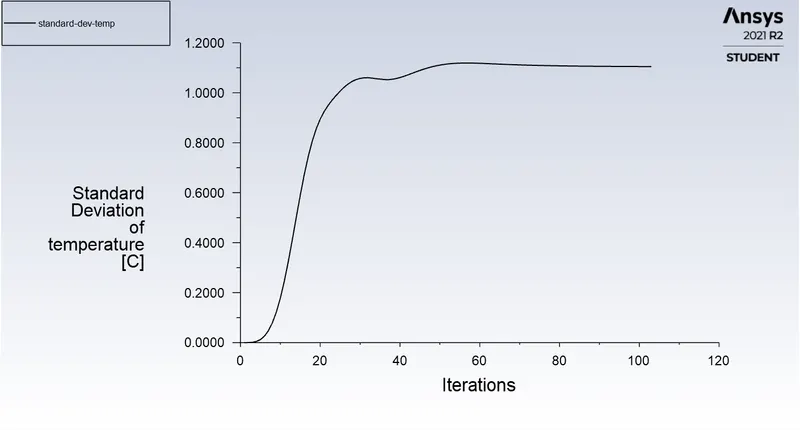
- Standard deviation of outlet temperature
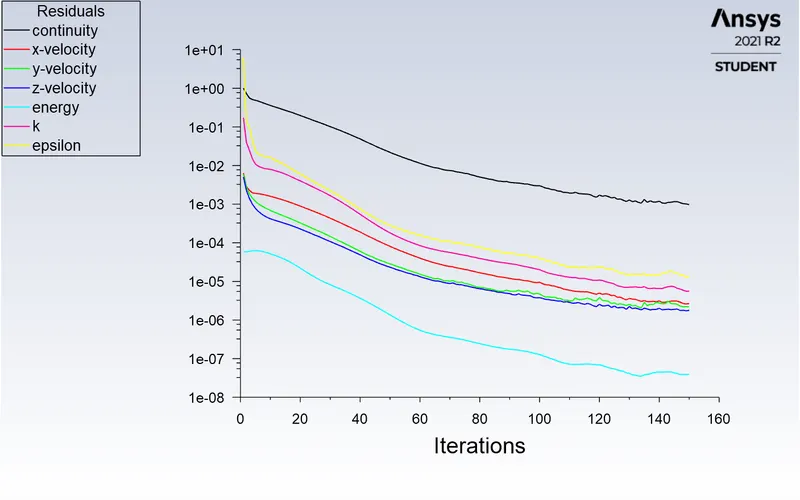
COVERGENCE PLOTS: CASE 3
- Residual plot
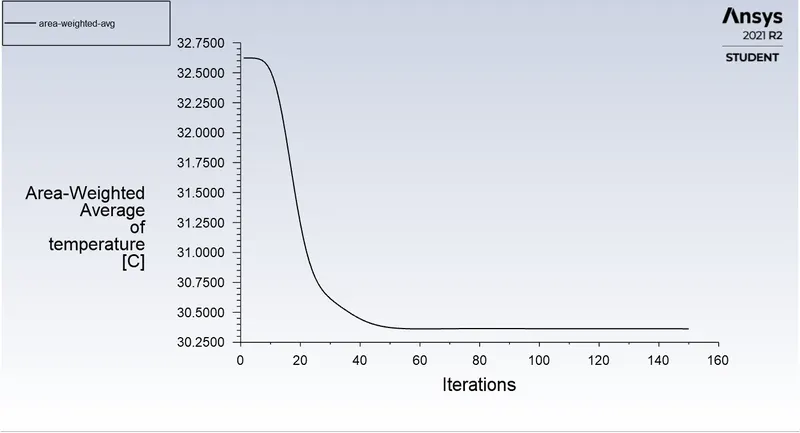
- Average outlet temperature
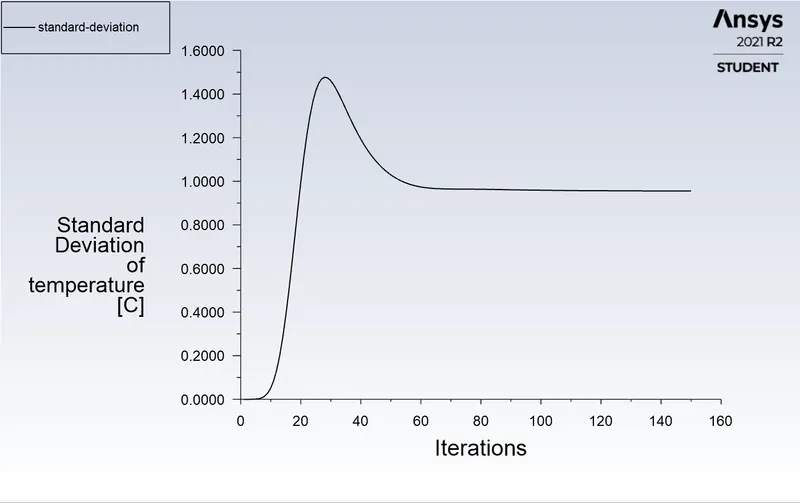
- Standard deviation of outlet temperature
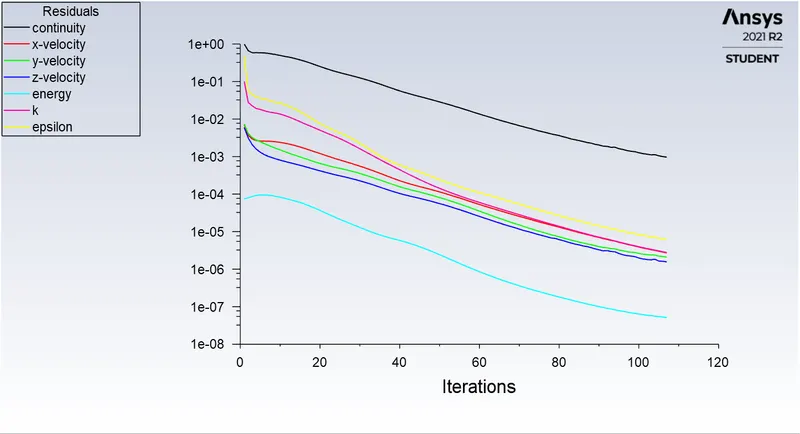
COVERGENCE PLOTS: CASE 4
- Residual plot
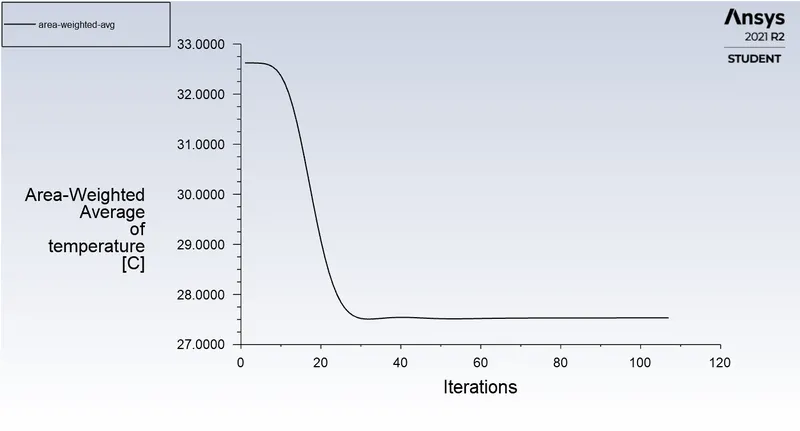
- Average outlet temperature
- Standard deviation of outlet temperature
COMPARISON OF DIFFERENT CASES
| Case 1 | Case 2 | Case 3 | Case 4 | |
| Cell count | 60432 | 60432 | 85669 | 85669 |
| Avg.Outlet temp C |
30.30624 |
27.58391 |
30.362792 |
27.532566 |
| Convergence rate | 98 | 103 | 150 | 107 |
POST- PROCESSING
Post-processing of the results is done in CFD-Post. Different contours, animations regarding the physical parameters like velocity, temperature, pressure, turbulence etc. can be obtained in this stage. Since ANSYS Fluent also has the provision to post process, the same has been used to generate the velocity and temperature contours for different cases.
CONTOURS: CASE 1
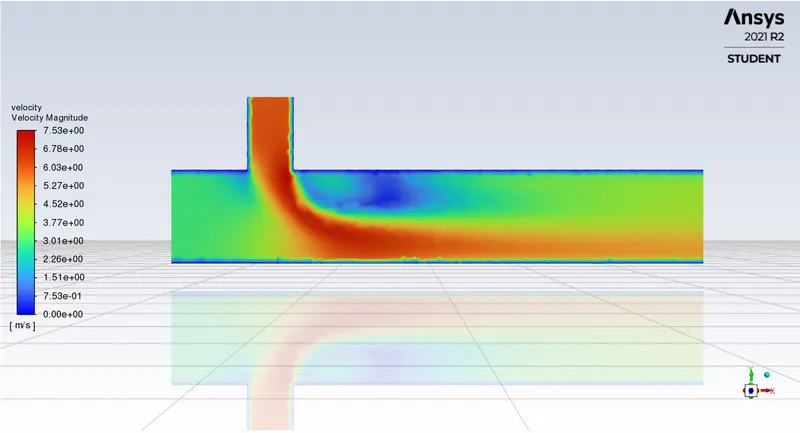
- Velocity contour
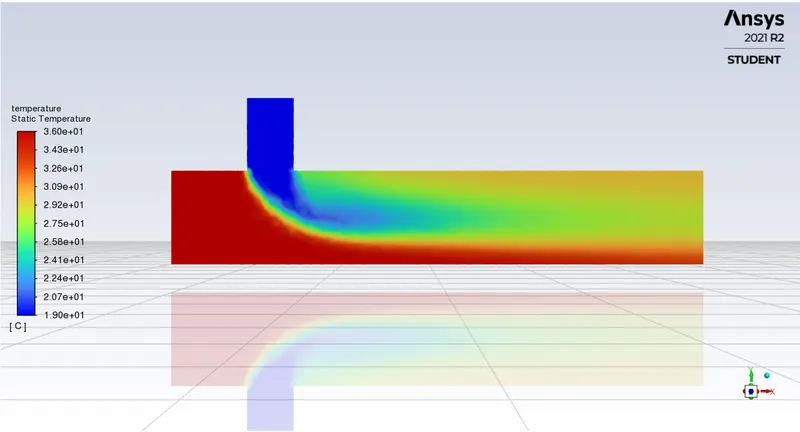
- Temperature contour
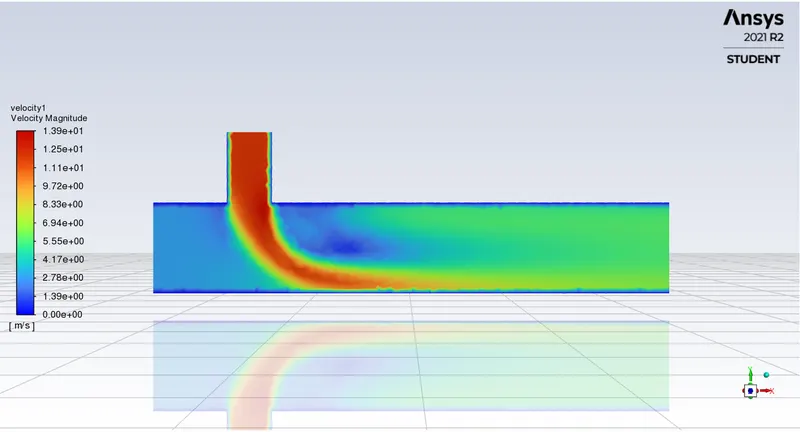
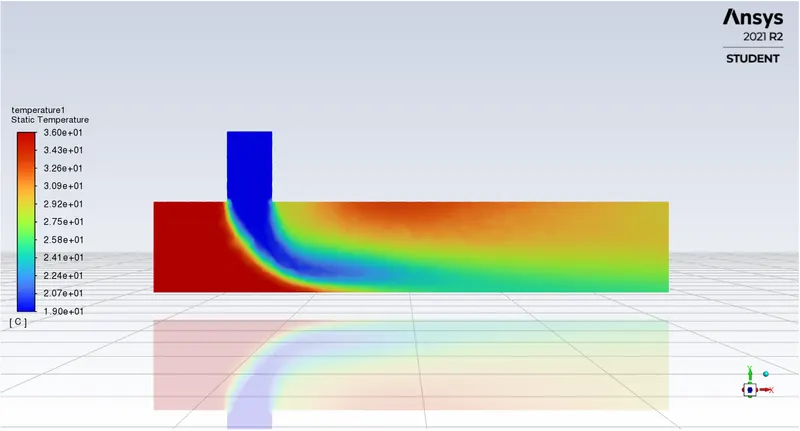
CONTOURS: CASE 2
- Velocity contour
- Temperature contour
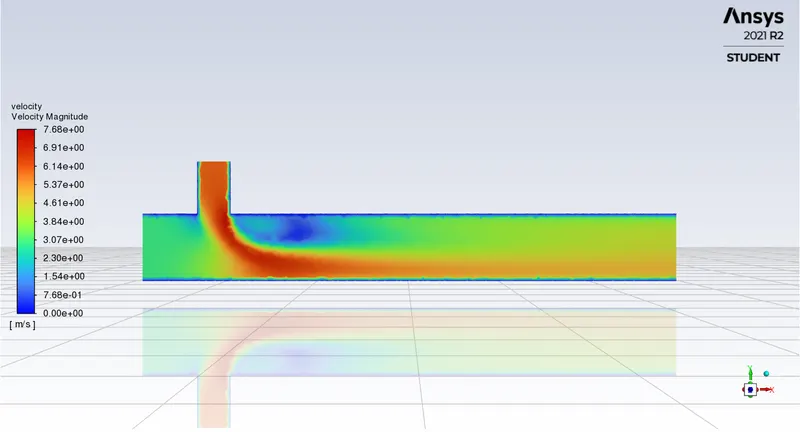
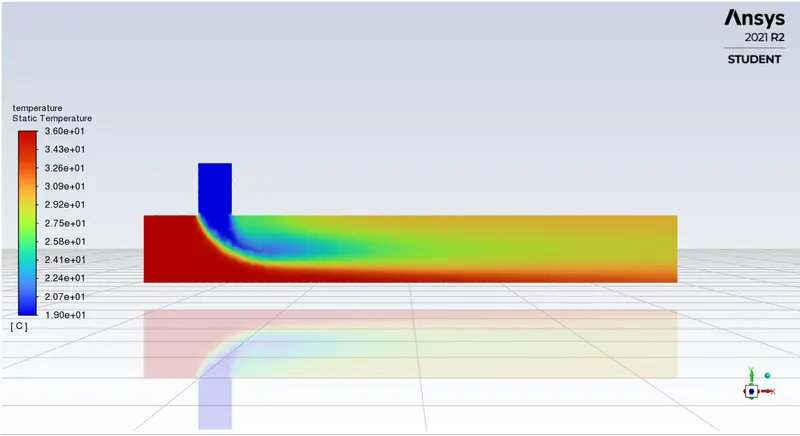
CONTOURS: CASE 3
- Velocity contour
- Temperature contour
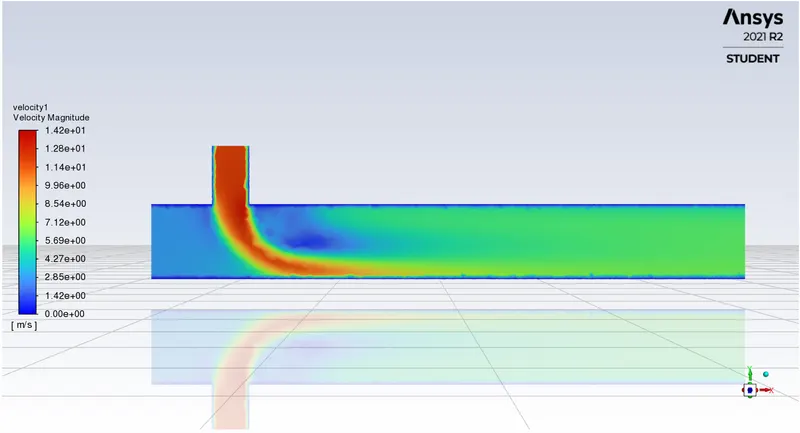
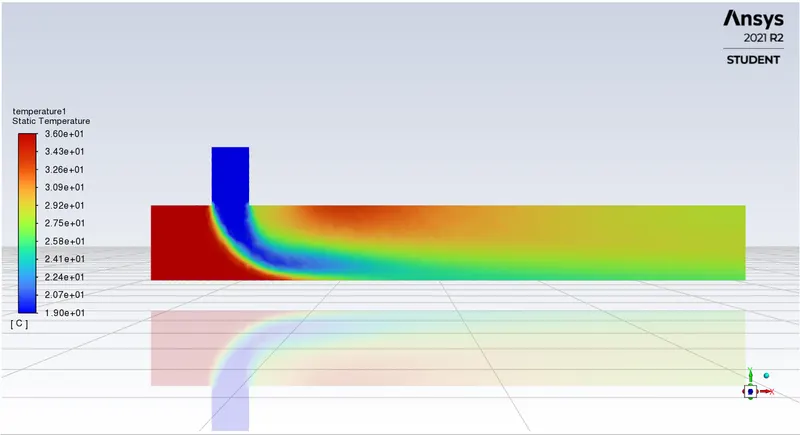
CONTOURS: CASE 4
- Velocity contour
- Temperature contour
INFERENCES
- With increase in momentum ratio, the mixing effectiveness increases and is evident from the drop in fluid temperature at the outlet. The velocity of the cold fluid plays an important role in proper mixing.
- There is not much of a change in the outlet temperatures when the length is increased in similar velocity conditions. The temperature of mixed fluid gets uniformly distributed towards the outlet due the turbulent nature.
- When the length is increased the effectiveness of mixing is improved, lower standard deviations are obtained.
- Hence it is preferable to use longer mixing tees with higher momentum ratios.