Week 1- Mixing Tee
Tee Joints are flow control devices which are used for efficient mixing of two different fluids of various temperatures and velocities into one combined stream as per the requirements. It has two inlets and one outlet which are at 900, hence the name Tee ("T") Joint. Tee joints are mainly used for high pressure applications, nuclear reactor safety, air conditioning etc.
Explaining the modeling approach and way we are solving the problem:
1_creating the geometry using the spaice claim work place

2_setting up the meshing in the mesh workplace
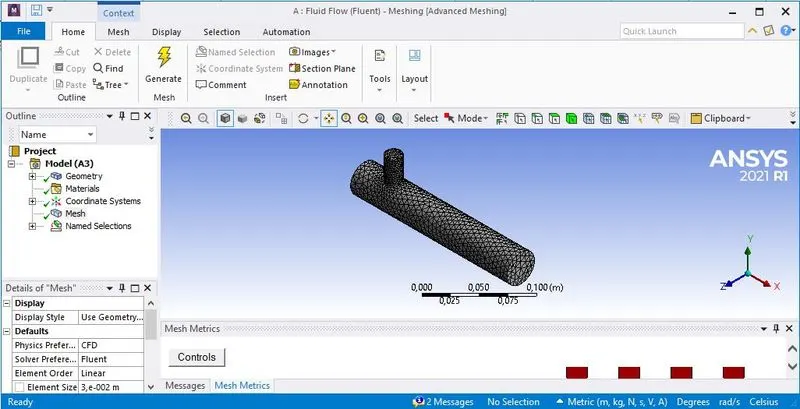
3_setting up Fluent
we proceed as follow for launcher conditions

This is the window where we apply boundaries and fluide nature and model of turbulence when we adjust energy also as results.

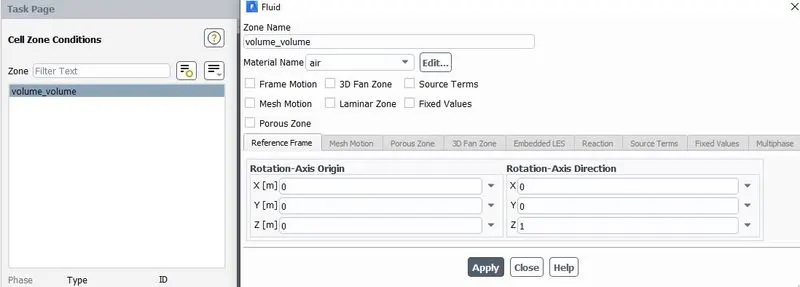
And here we give the numerical requirements:
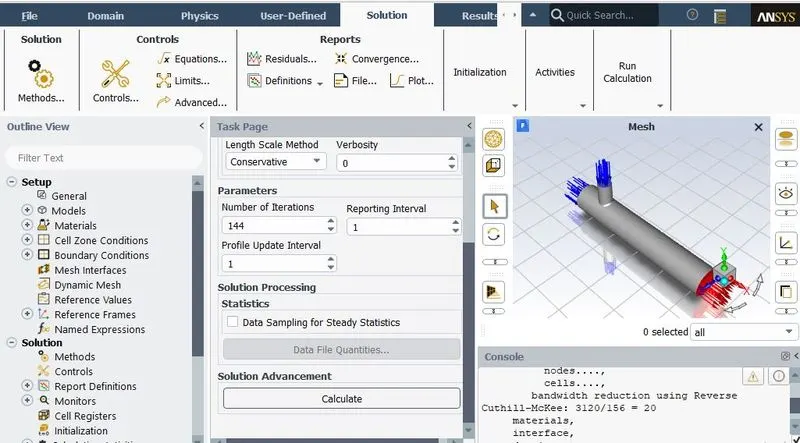
4_setting up CFD POST(where all our post processing is done)
Discussing the geometry, mesh, and solver requirements for the problem:
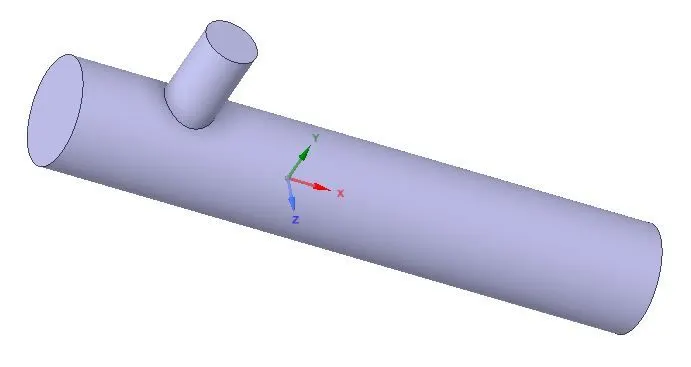
Here is the geometry where we will be applying our CFD analysis:
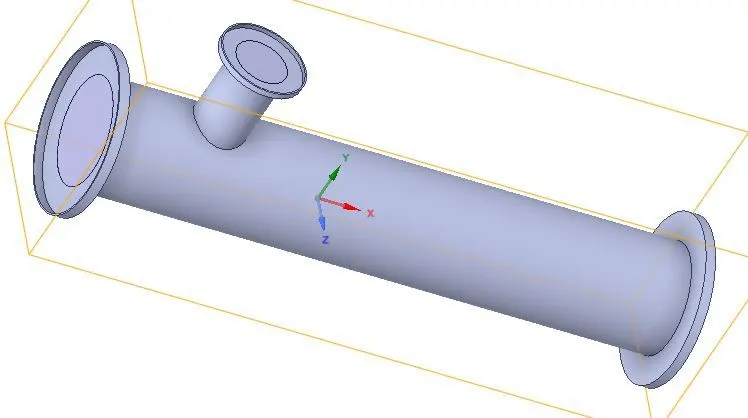
extracted volume:
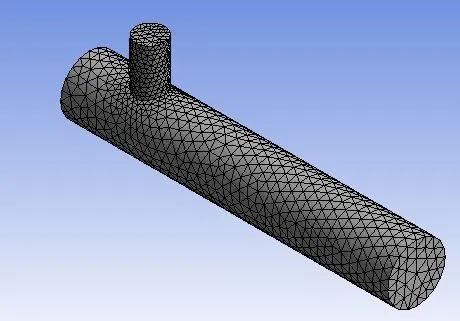
Then the mesh of the empty field inside the model:
case 1 short model:
case 2 long model:
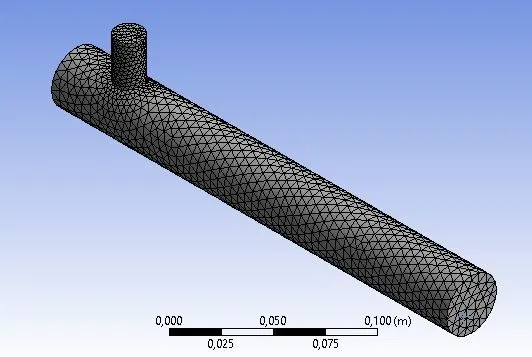
we will setting up a steady-state simulations with air as nature of the fluide.
| case1_mr-2 | case1_mr-4 | case2_mr-2 | case2_mr-4 | |
|
Cell count |
2797 | 2797 | 3432 | 3432 |
|
Average outlet temperature |
29,85°C | 26,85°C | 29,85°C | 26,85°C |
|
Number of iterations for convergence |
70 | 70 | 80 | 80 |
For the case 2 Long mixing tee with a hot inlet velocity of 3m/s and a 2 for momentum ratio we are going to perform which model of turbulence is the most appropriate for our system.
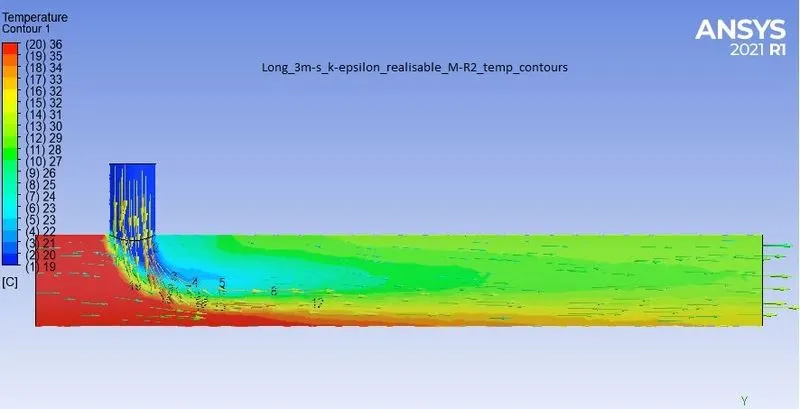
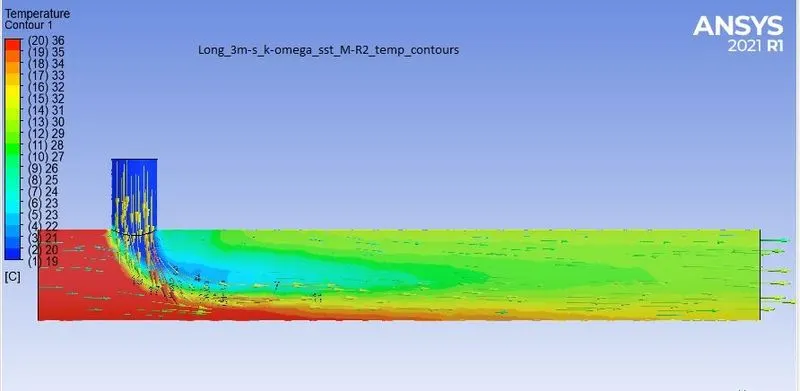
The first figure use the k-epsilon model and the second one use the k-omega_sst model.
we see that in the outlet the disprsion of the temperature is much larger in the k-omega case than the k-epsilon one .
This is what we see clearly in the figures below:
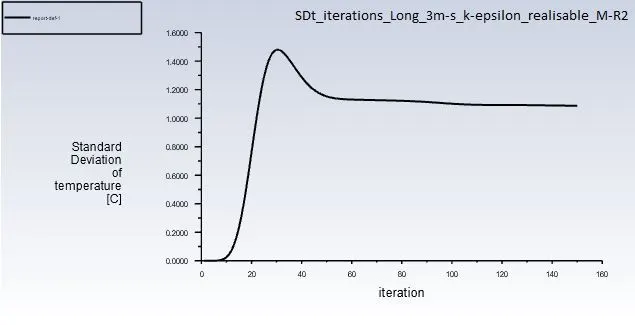
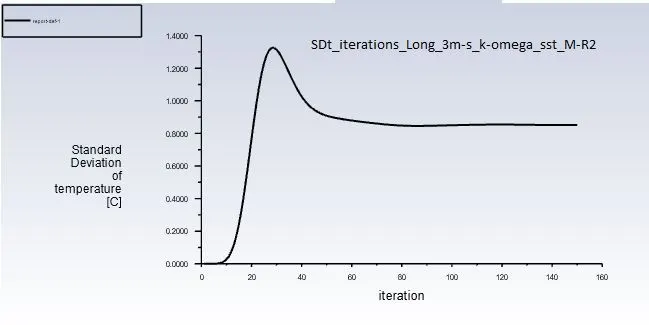
where the convergence of the convergence of the profile of temperature in the outlet has a standard deviation about 0.9 in the case of k-omega_sst model and 1.1 for the case of tk-epsilon model.
But the number of iterations which leads to convergence seems to be the same for both cases.
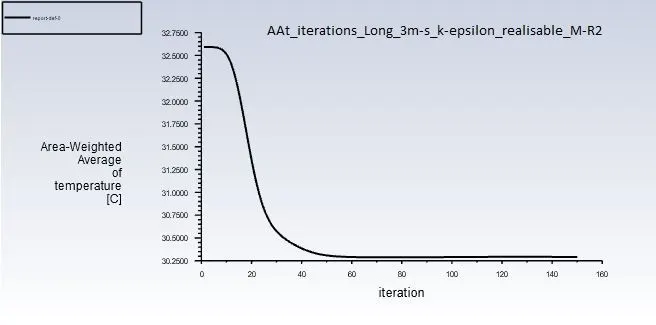
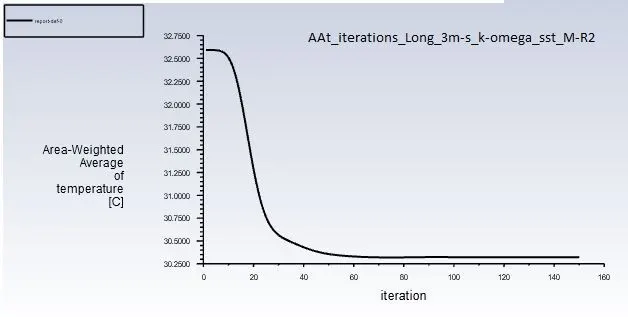
So we will choose the k-omega model for the next simulations .
And for boundaries we have two fiel for inlet an outlet and walls
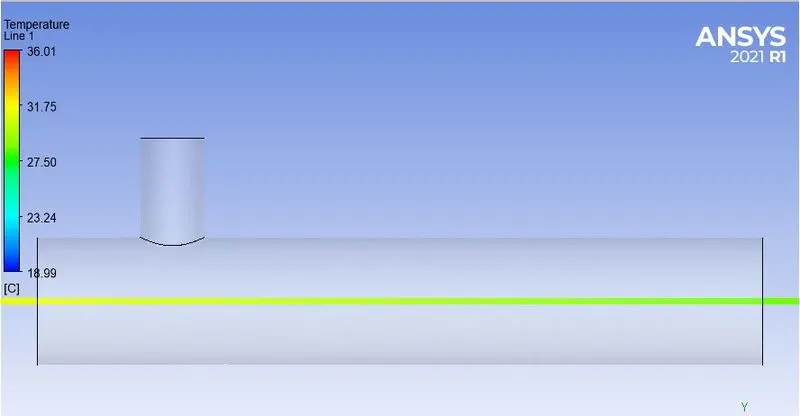
2.Velocity and temperature contour plots on the cut planes along and across the pipe:
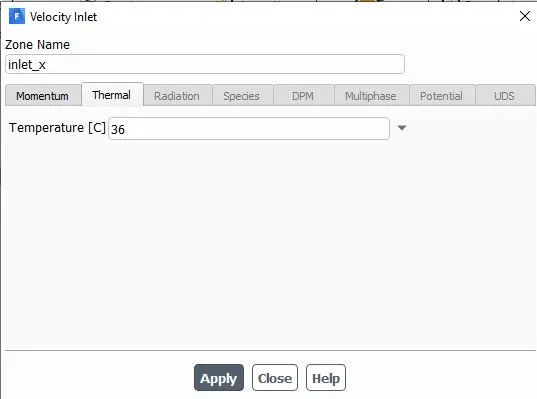
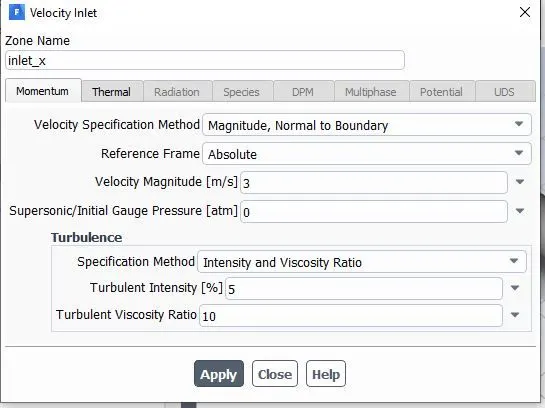
Boundary condition in the inlet x:
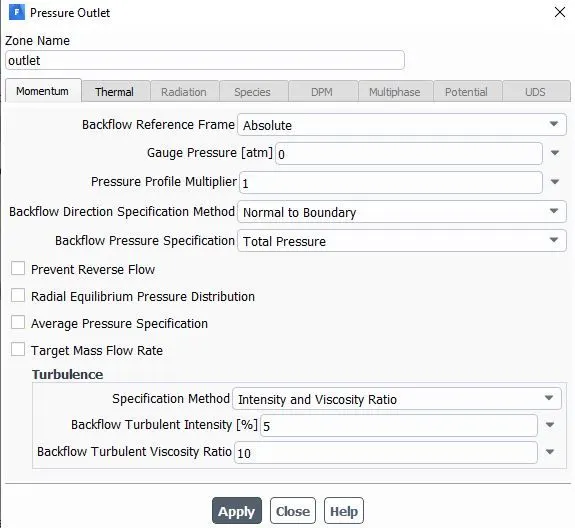
Boundary condition in the outlet x:
Case 1:
- Short mixing tee with a hot inlet velocity of 3m/s and a momentum ratio of 2:
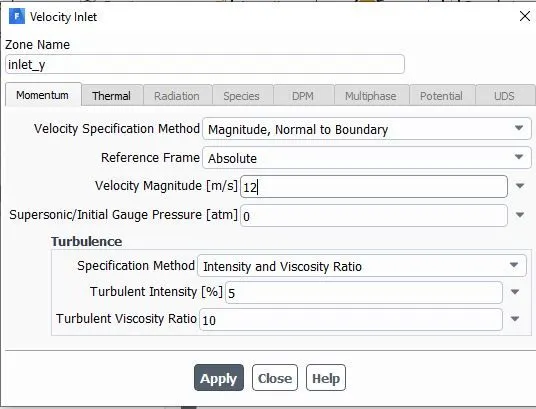
Boundary condition in the inlet y:
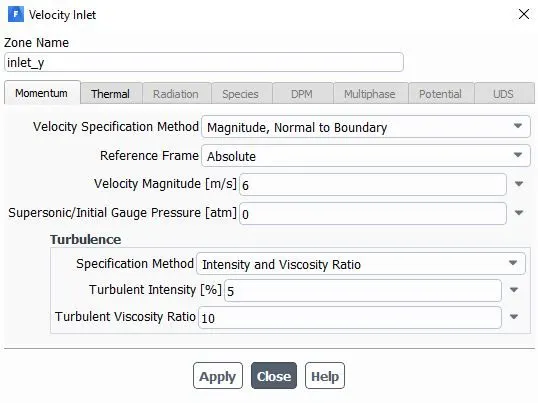
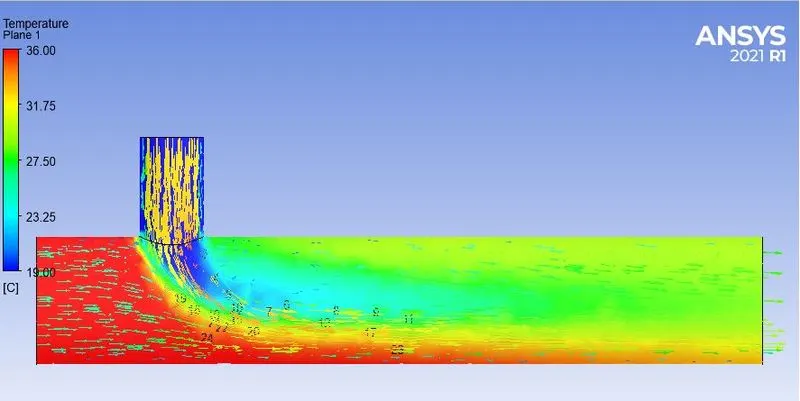
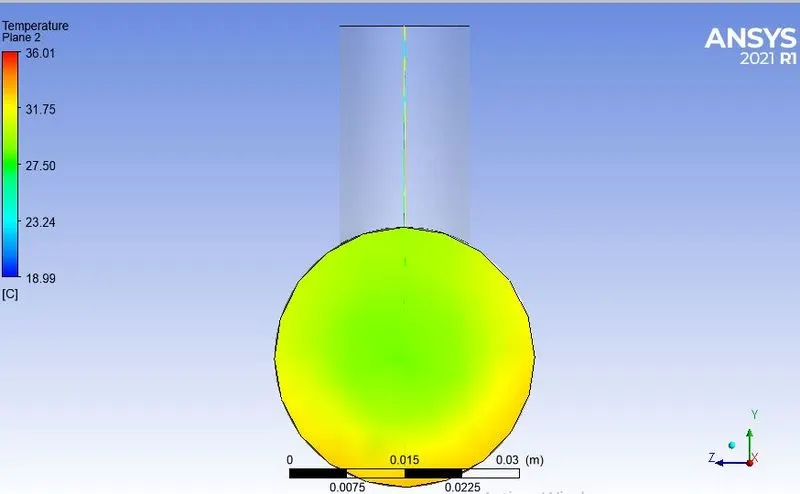
temperature contour plots:
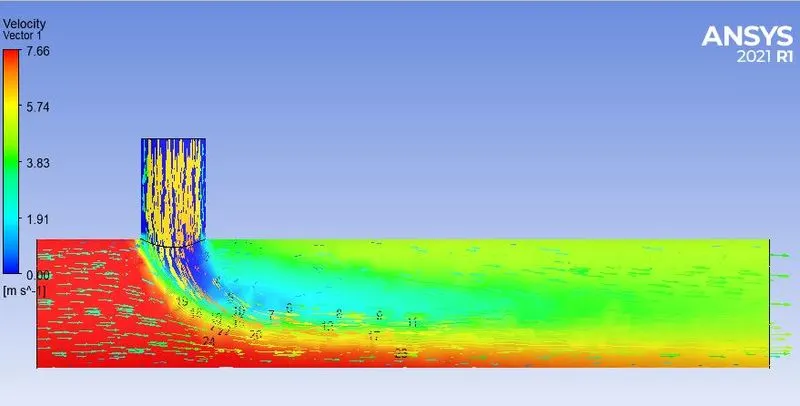
Velocity contour plots:
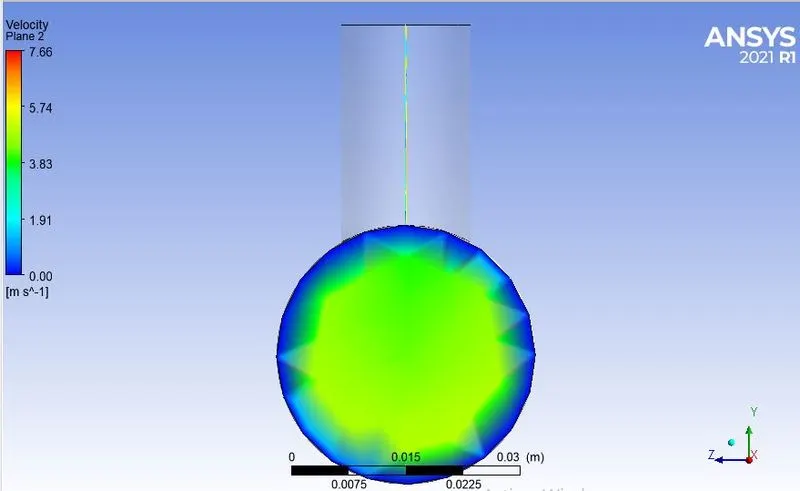
temperature line plot:
velocity line plot:
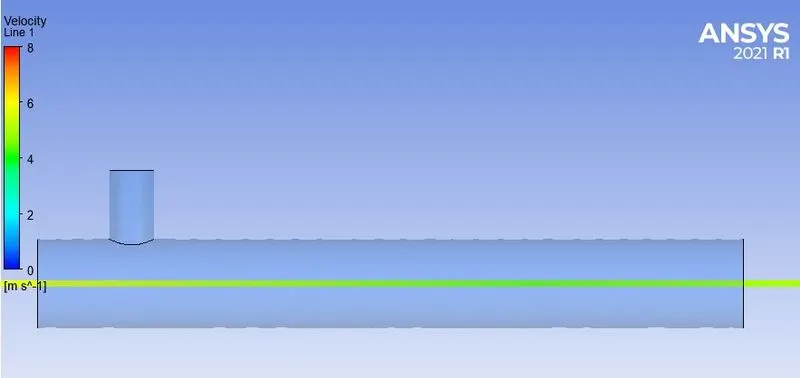
Temperature average and cell count:

303.407K=29,85°C
- Short mixing tee with a hot inlet velocity of 3m/s and a momentum ratio of 4:
Boundary condition in the inlet y:
temperature contour plots:
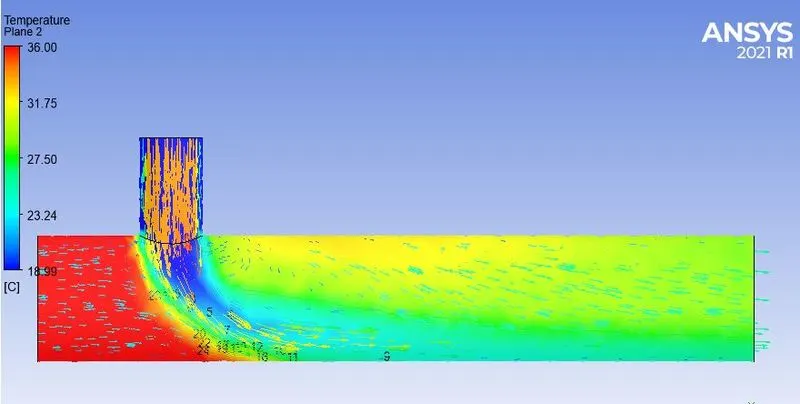
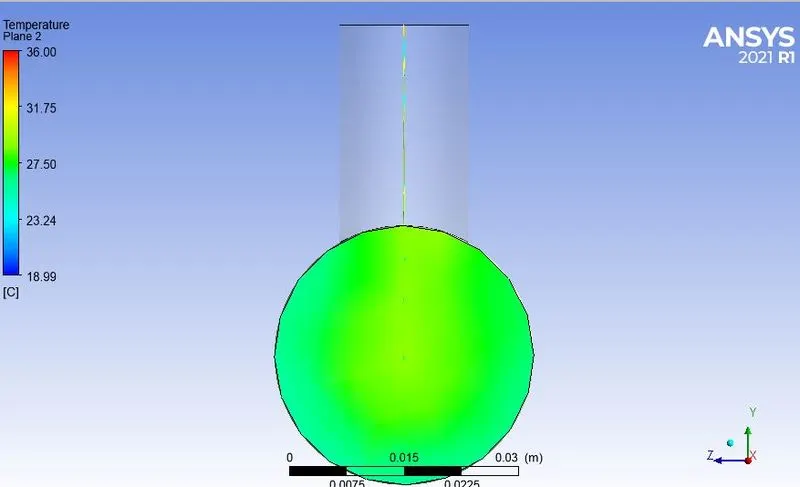
Velocity contour plots:
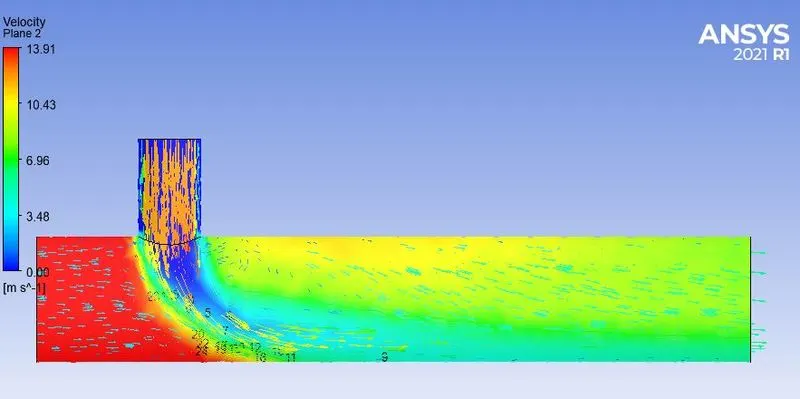
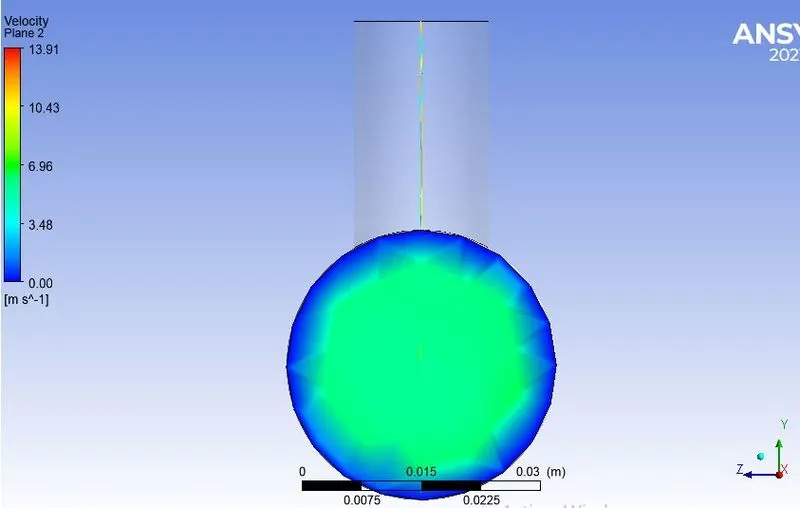
temperature line plot:
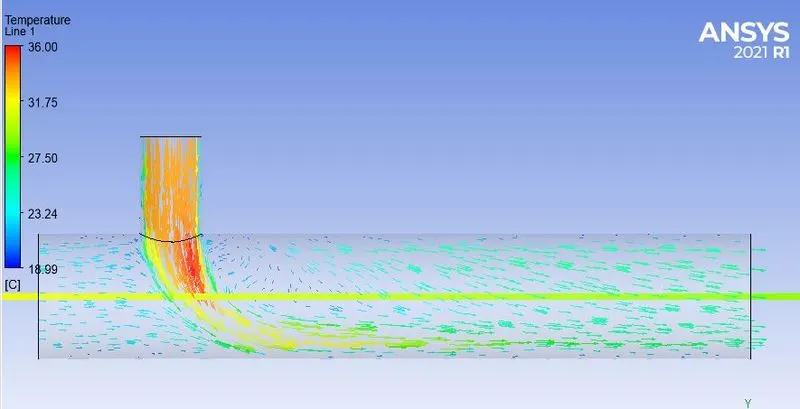
Temperature average and cell count:

300K=26,85°C
Case 2:
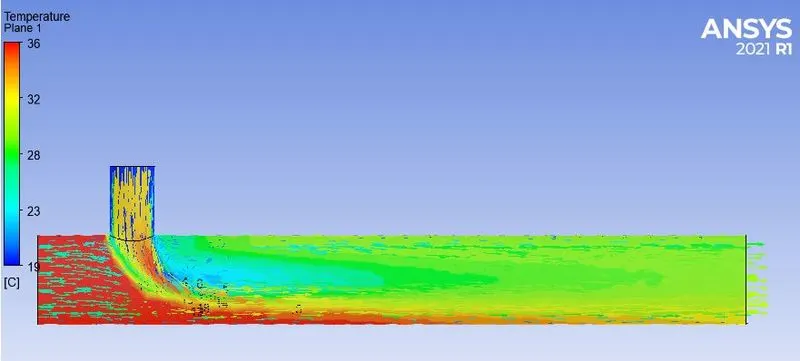
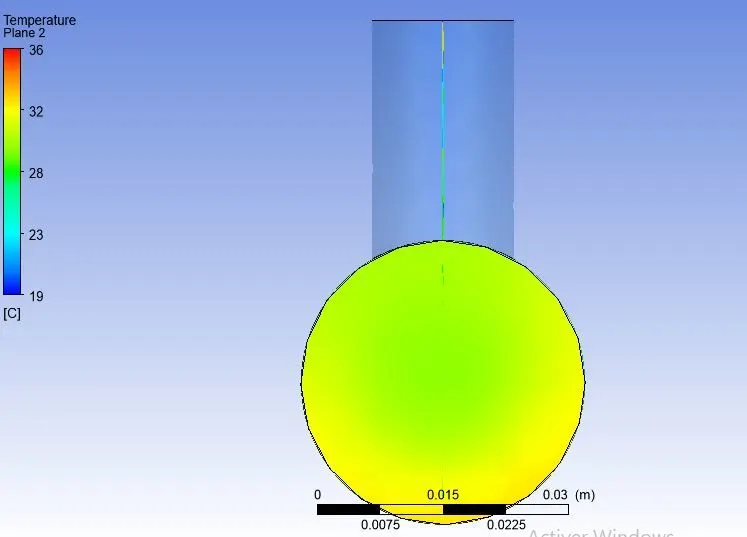
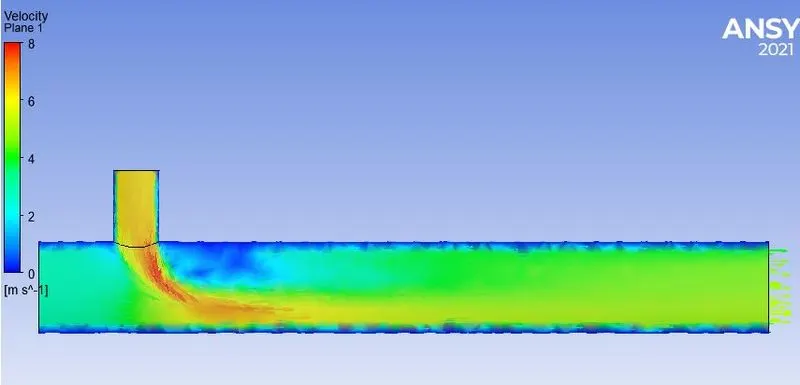
- Long mixing tee with a hot inlet velocity of 3m/s and a momentum ratio of 2:
Boundary condition in the inlet y:
temperature contour plots:
Velocity contour plots:
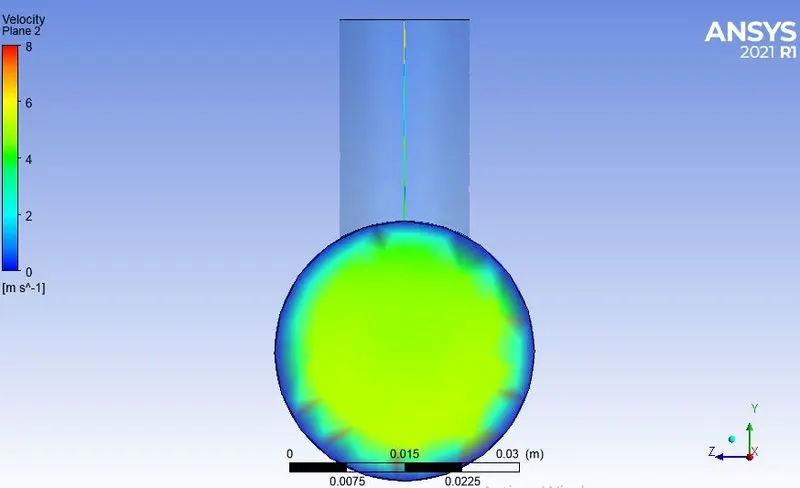
temperature line plot:
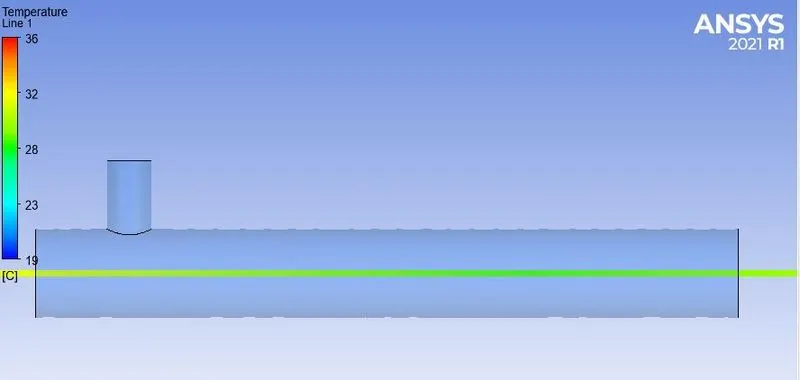
Temperature average and cell count:
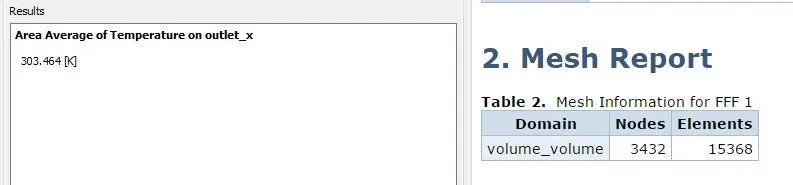
303.464K=29,85°C
- Long mixing tee with a hot inlet velocity of 3m/s and a momentum ratio of 4:
Boundary condition in the inlet y:
temperature contour plots:
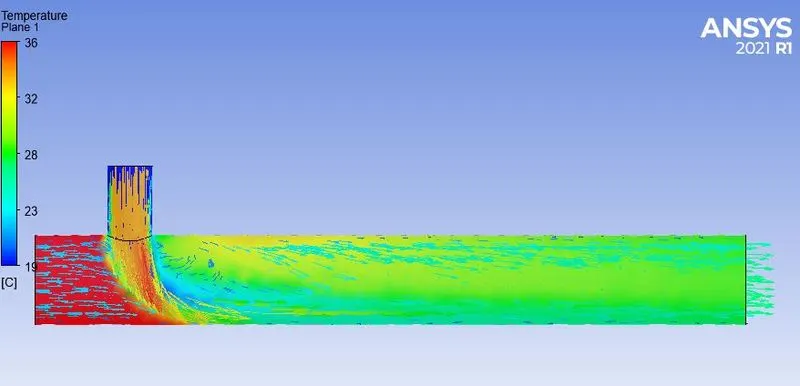
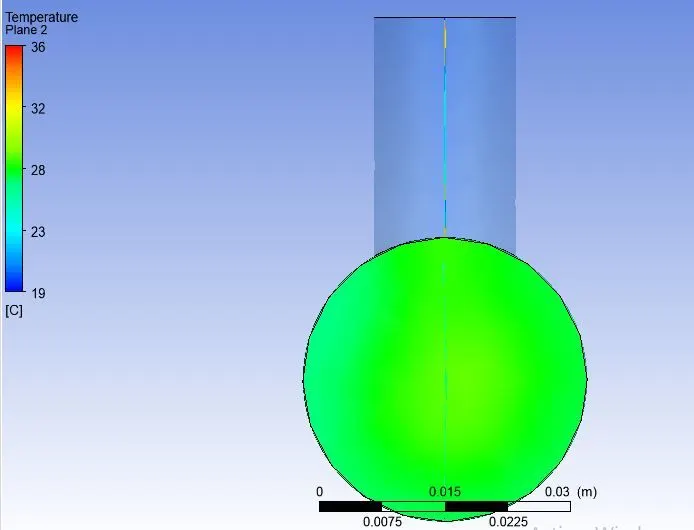
Velocity contour plots:
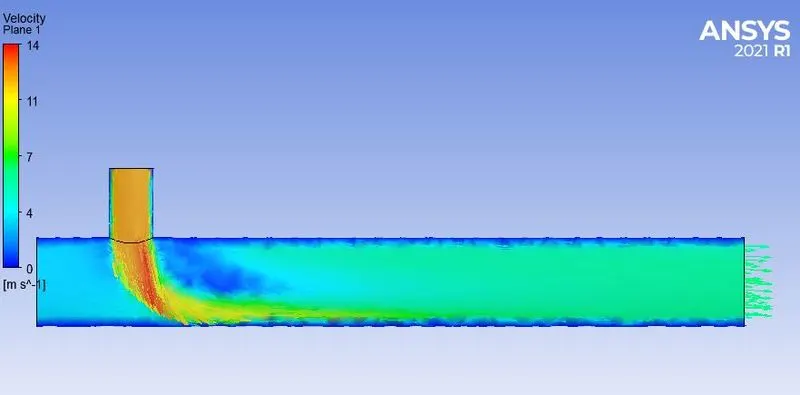
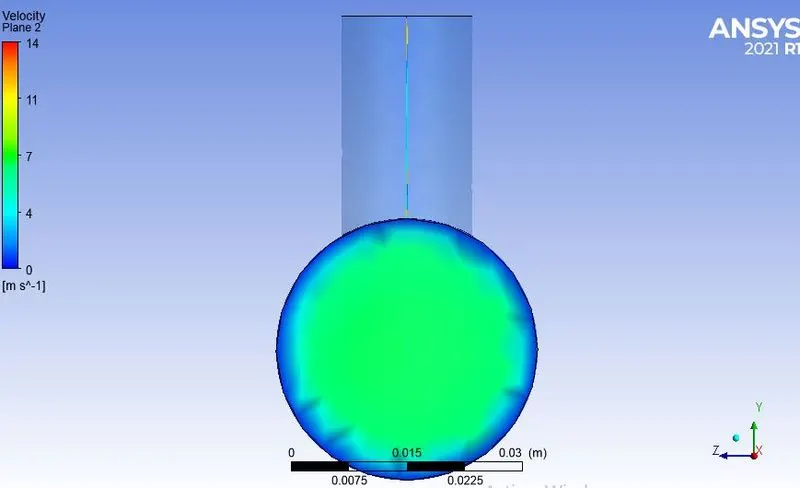
temperature line plot:
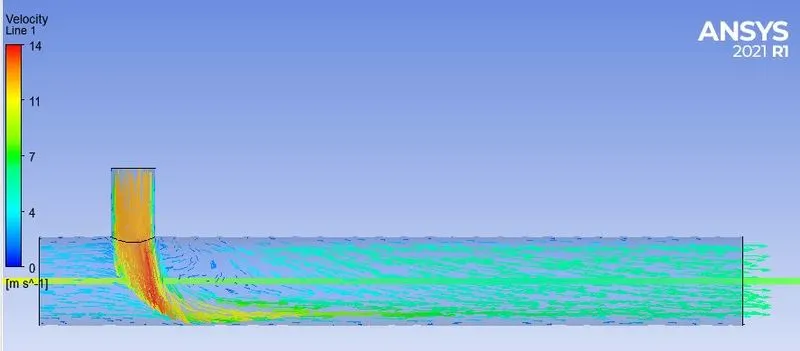
Temperature average and cell count:

300.63K=26,85°C
3.Performing Mesh independent :
for case 1:
for an element size about 1e-02 we got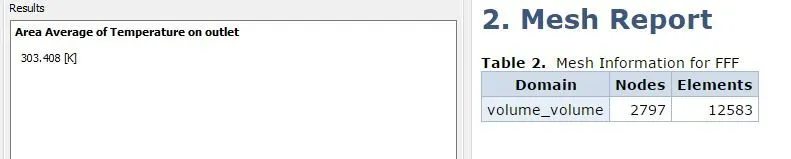
for an element size about 1e-01 we got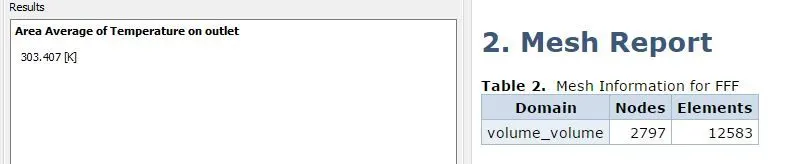
and for an element size about 1e-01 we got
So we can start from an order of 1e-01 and get good results ,because the final result of the average temperature still the same even if we decrease the size of the element.
for case 2:
we will have the same accuracy as we adjust only the longitudinale size of the pipe while the refinment is influenced by the mesh at the interference between the two inlets.
Conclusion:
In the short mixing tee with a momentum ratio 4 we got a temperature which is about 26°C instead of 30°C for the case of a momentum ratio equal to two, and for thr long mixing tee we got almost the same results ,so we don't need to use this kind of mixing tee.