Week 1- Mixing Tee
Aim: To set up steady-state simulations to compare the mixing effectiveness when there are hot inlet and cold inlet.
mixing tee: It is a cost effective way of mixing fluids of different temperatues.This is mostly used in aircondition i.e HAV applications etc.
Two versions of the mixing tee are used in this analysis One of them is longer than the other.
Case 1
- Short mixing tee with a hot inlet velocity of 3m/s.
- Momentum ratio of 2, 4.
Case 2
- Long mixing tee with a hot inlet velocity of 3m/s.
- Momentum ratio of 2, 4.
Momentum ratio = velocity at cold inlet / velocity at hot inlet.
The following results are displayed:
- Velocity and temperature contour plots on the cut planes along and across the pipe.
- Velocity and temperature line plots along and across the length of the pipe.
- Perform Mesh independent study for any one case.
- Discuss the effect of length and momentum ratio on results.
Geometry setup:(Tee used)
In this stage geometry required is inserted and the fluid portion is extracted.
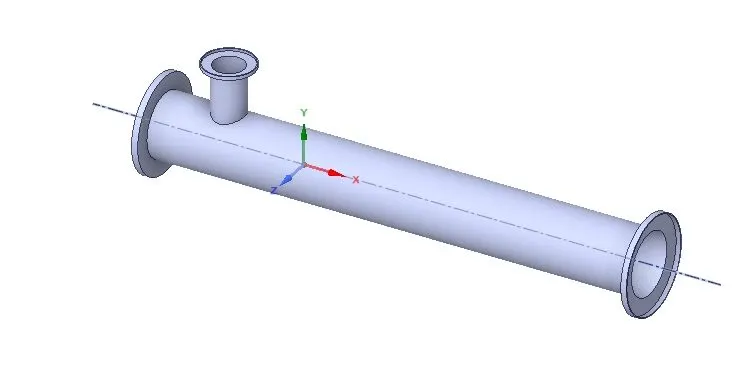
Fluid portion:
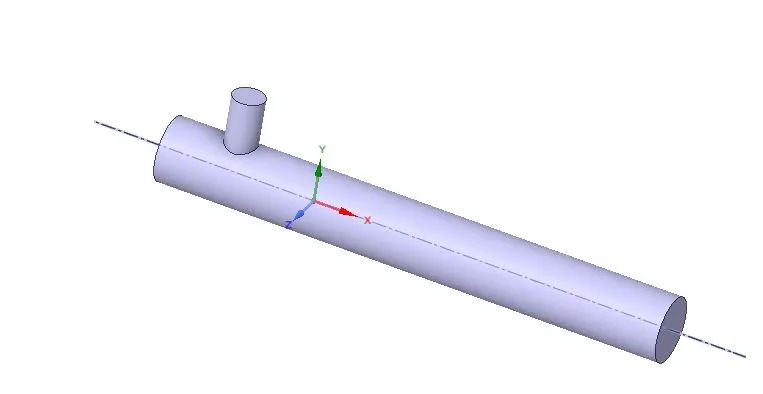
Volume extraction is done.
Mesh:
Meshing is done at this stage
Extraction of fluid portion:
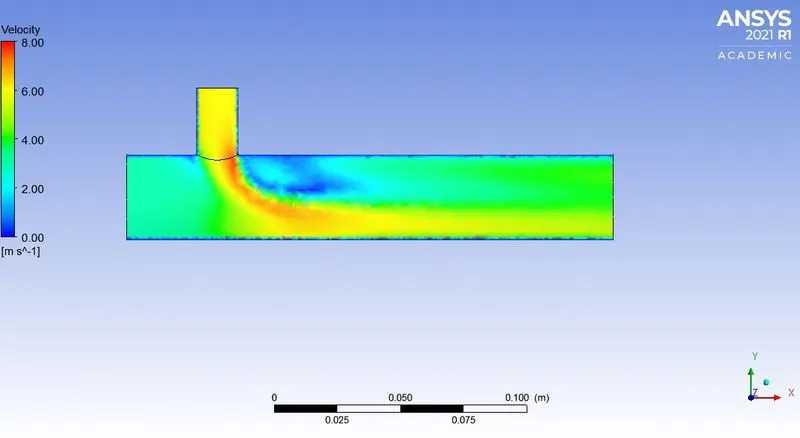
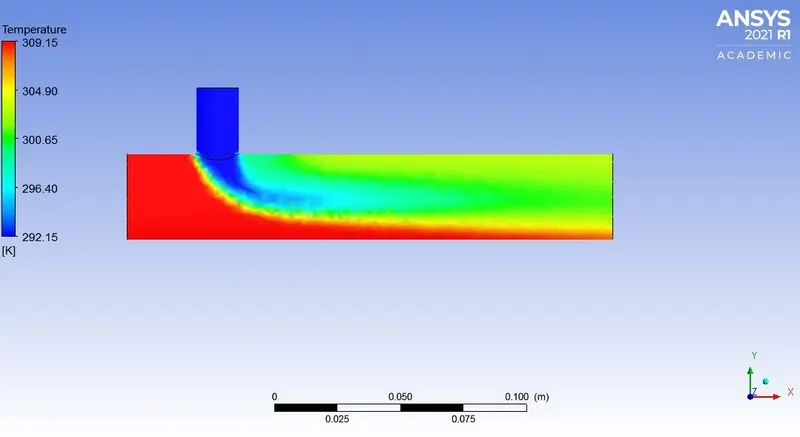
Case 1 Short Tee(Momentum ratio 2):
Meshing (cell size 0.002)
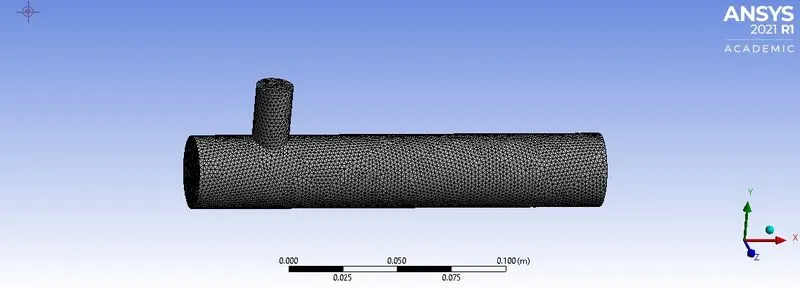
Quality of Mesh:
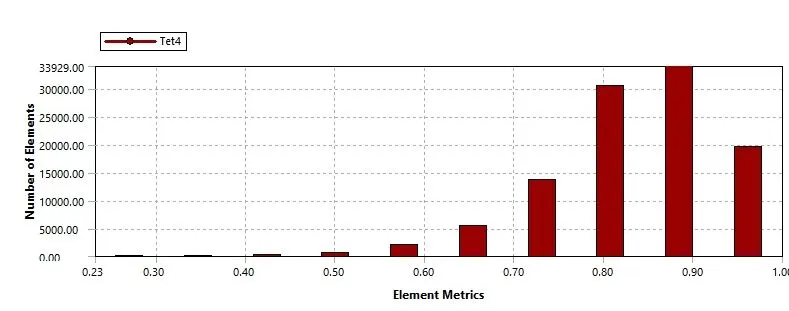
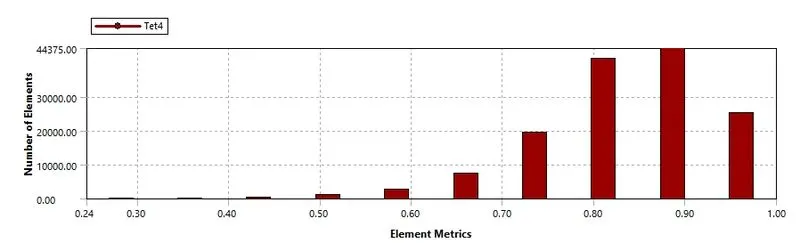
The quality of mesh is good as most of the cells are in the range 0.7 to 1 and the Mesh quality is not less than 5%
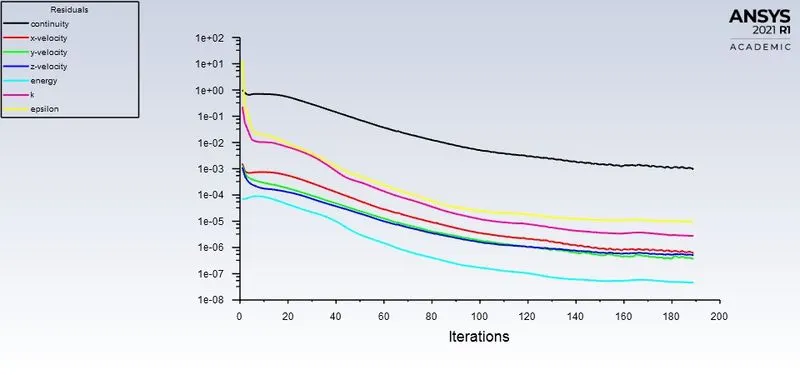
Residuals:
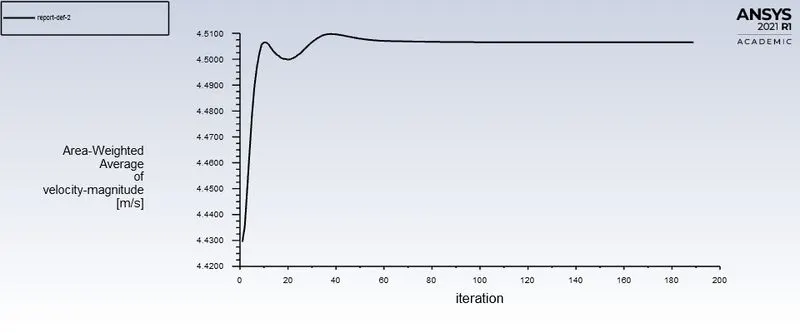
Avg Velocity plot at the outlet:
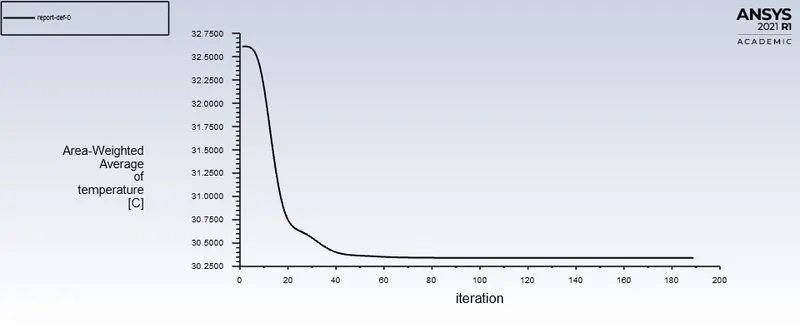
Temperature Plot at the outlet:
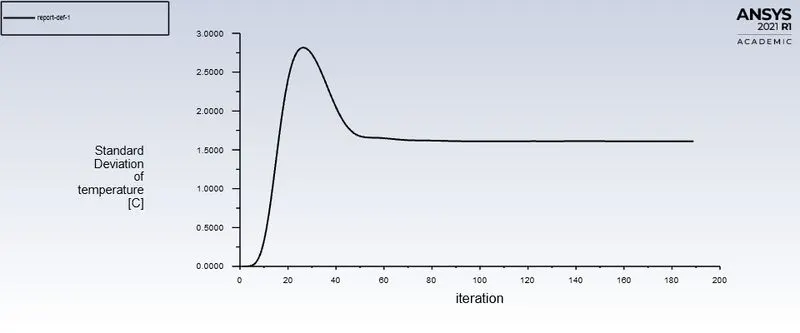
Standard Deviation of Temperature:
Velocity Simulation:
Temperature Simulation:
Case 1 Short Tee(Momentum ratio 4):
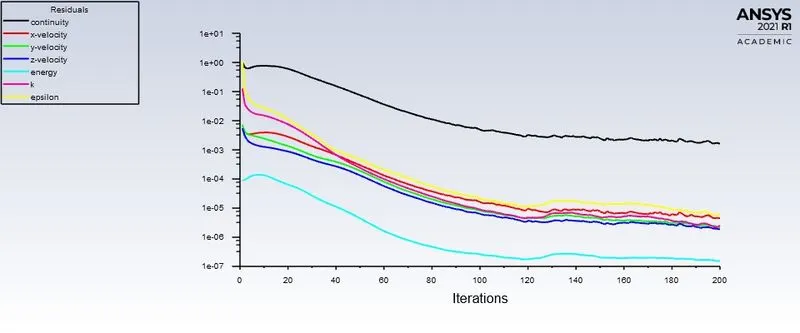
The geometry and the Meshing remains the same only there will be change in the momentum ratio the velocity at the inlet y is increased to 12m/s.
Residulas Plot:
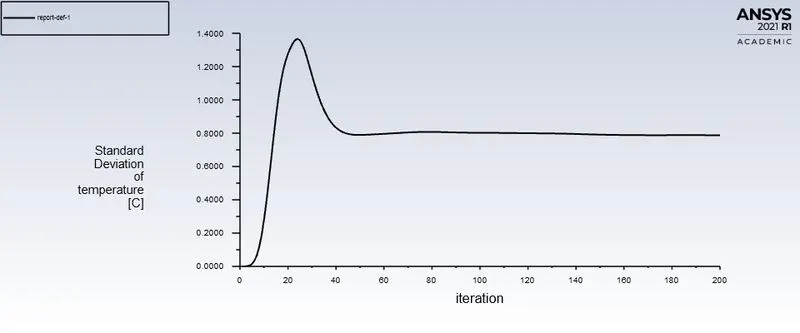
Standard Deviation Of Temperature Plot:
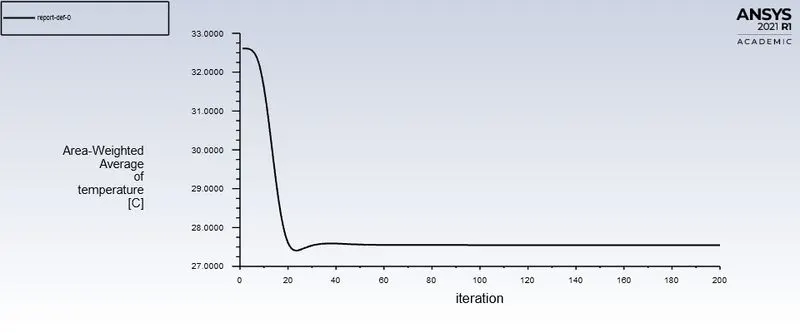
Average temperature plot at the outlet:
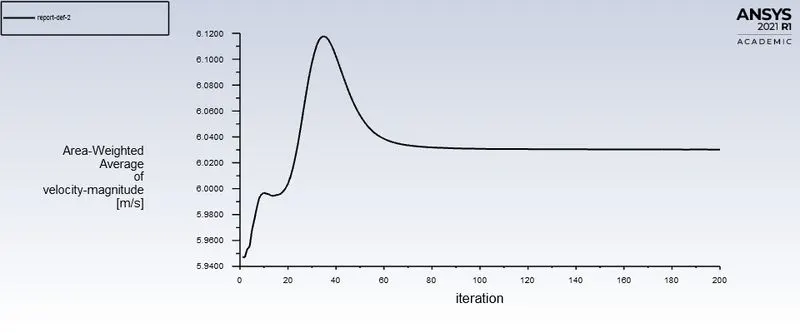
Average velocity at the outlet:
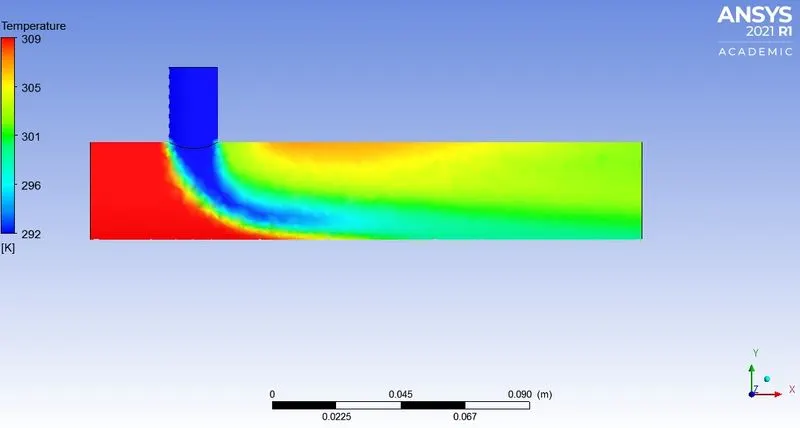
Temperature Contour:
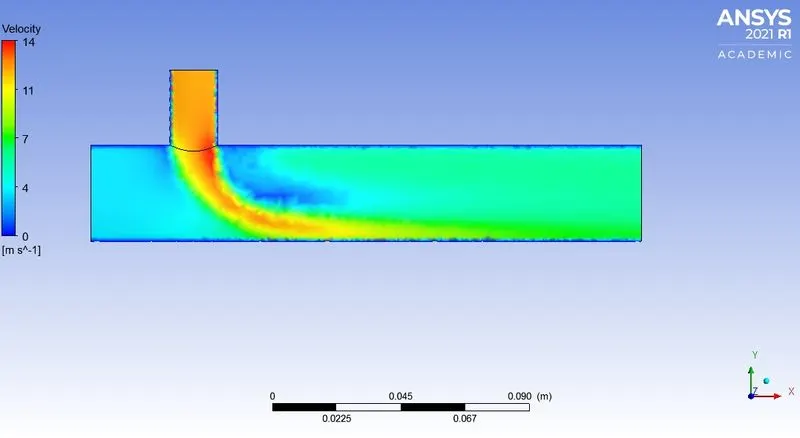
Velocity Contour:
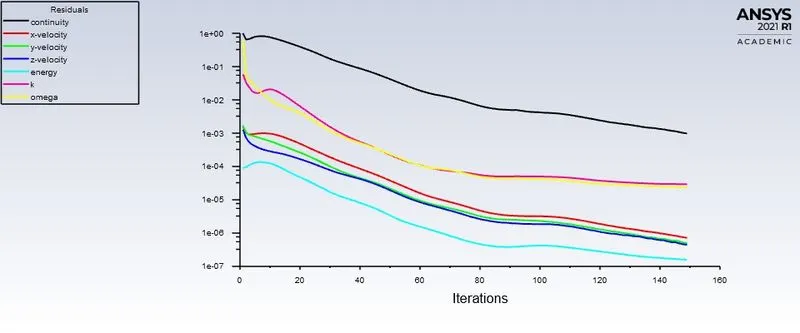
In the following case Omega is used as convergence criteria:
Residuals:
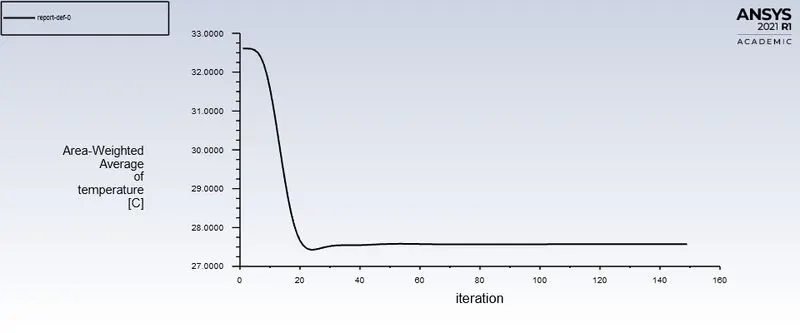
Average Teplerature plot at the outlet:
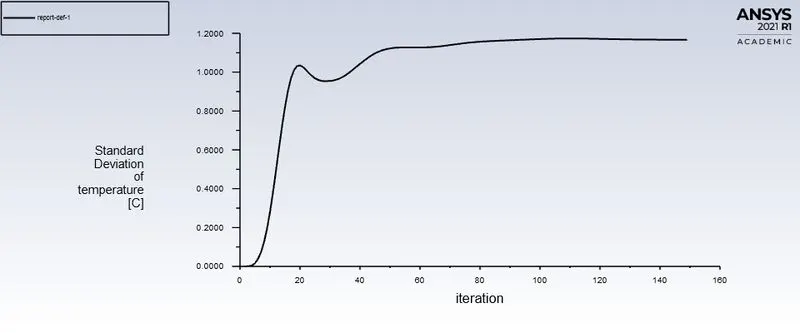
Standard Deviation plot:
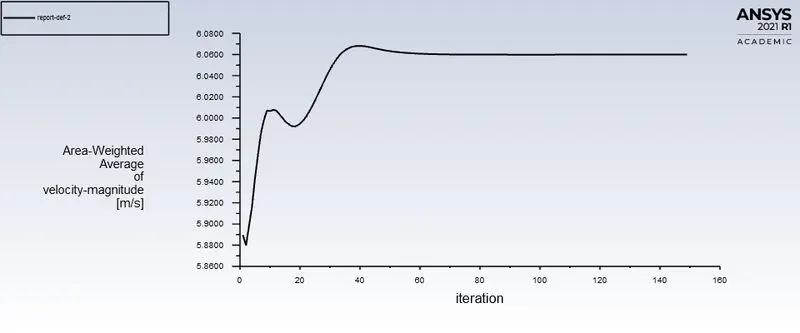
Avg velocity at the outlet:
Velocity and temperature contours:
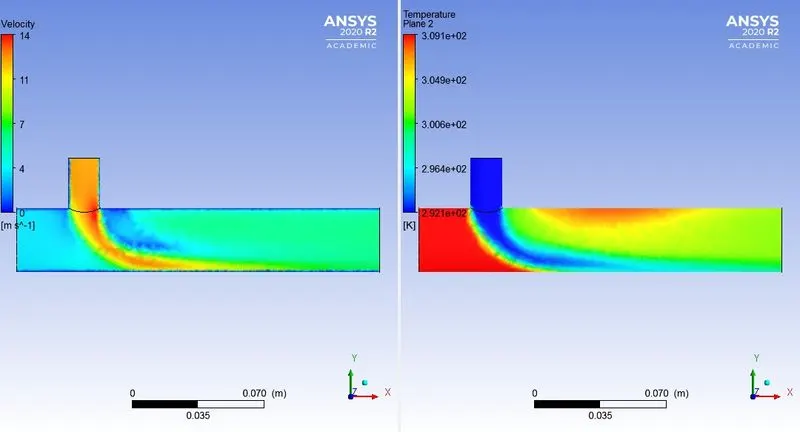
- k- epsilon model predicts well far from the boundaries (wall) and k- omega model predicts well near wall. Even though it depends on Y+.
Case 2 Long Tee(Momentum ratio 2):
Meshing cell size (0.002m)
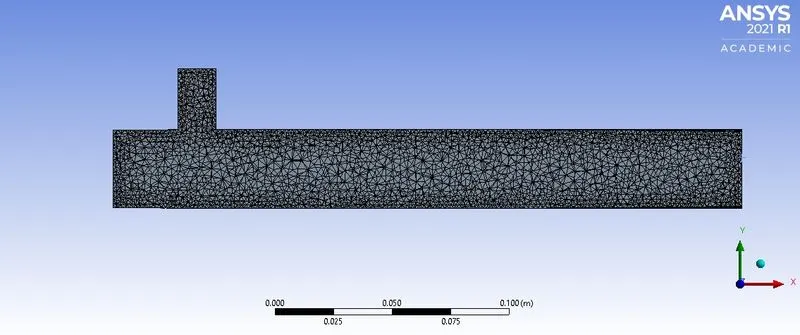
Meshing Quality:
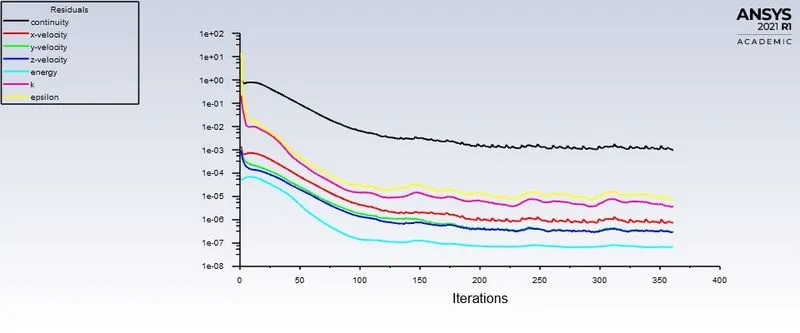
Residuals:
Avg velocity at the outlet:
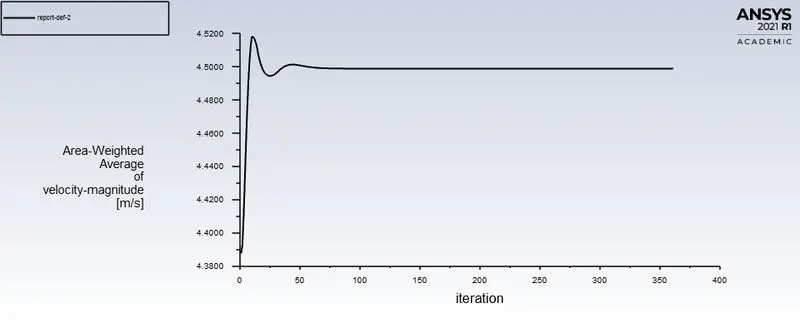
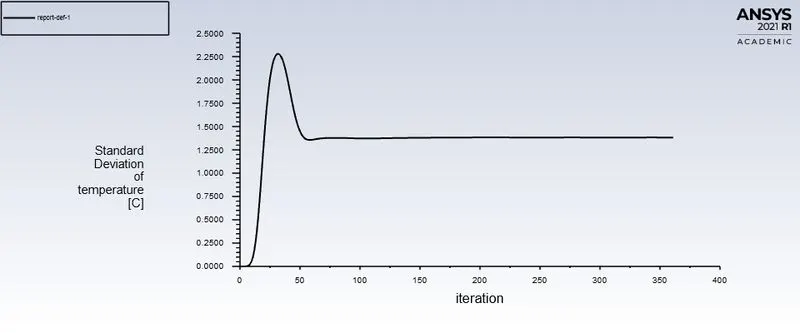
Standard deviation at the outlet:
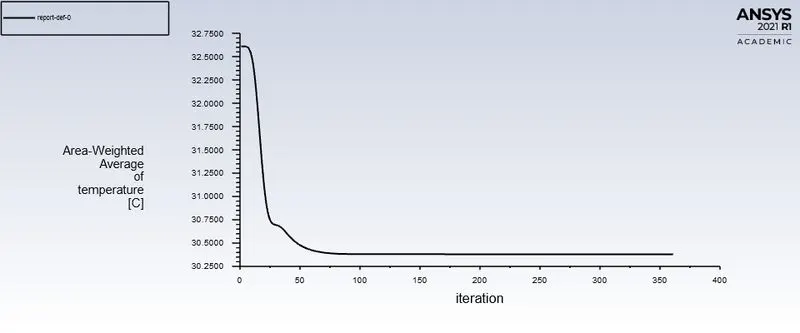
Avg Temperature at the outlet:
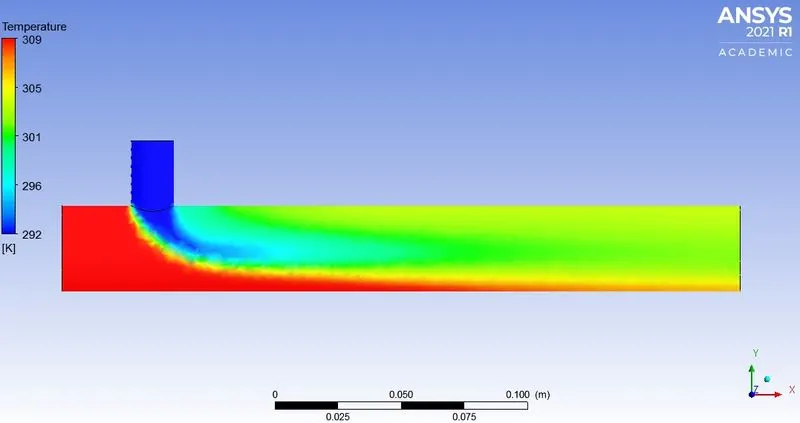
Temperature Contour:
Velocity Contour:
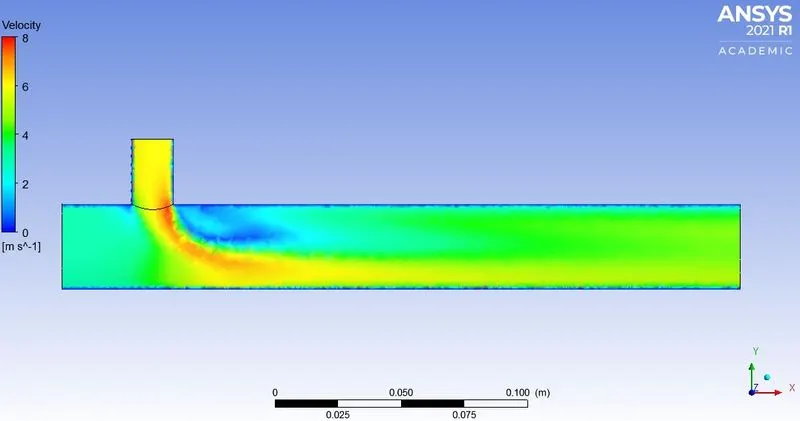
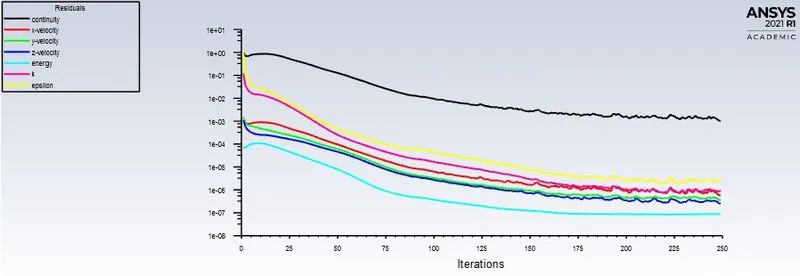
Case 2 Long Tee(Momentum ratio 4):
Residuals:
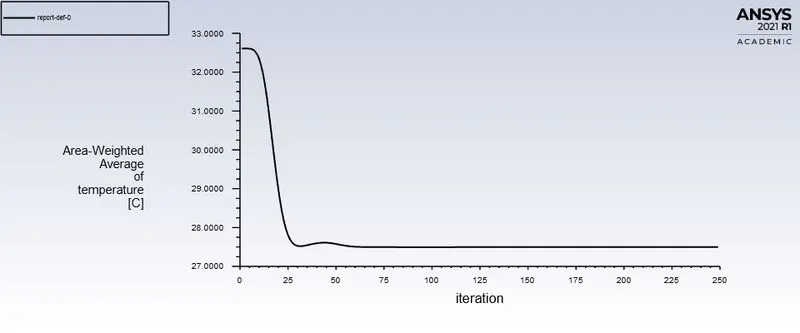
Avg Temperature:
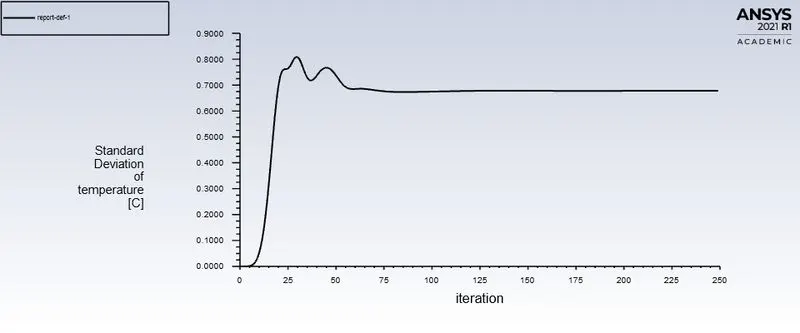
Standard Deviation of Temperature at the outlet:
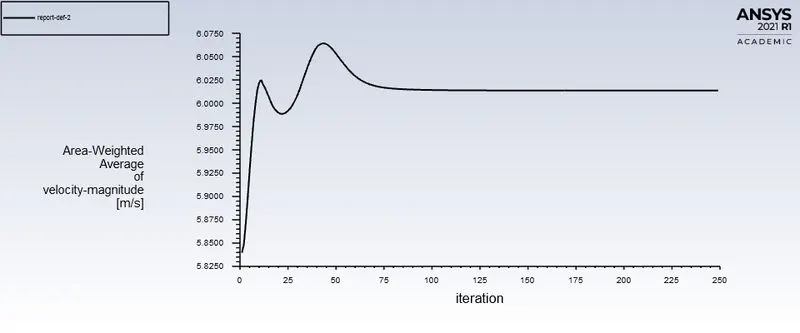
Avg Velocity at the outlet:
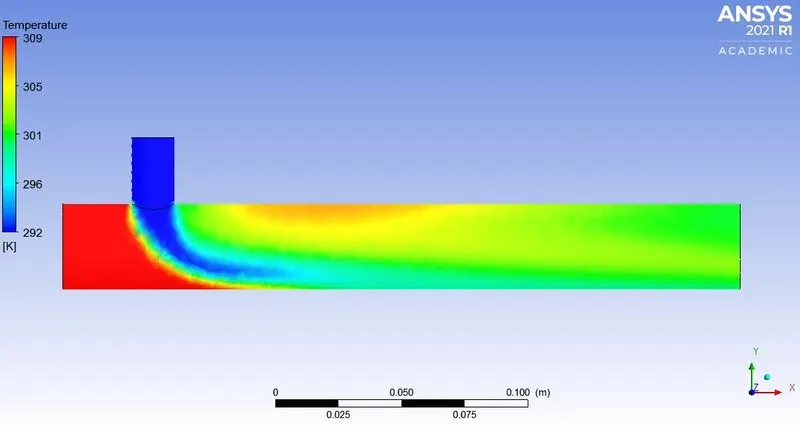
Temperature Contour:
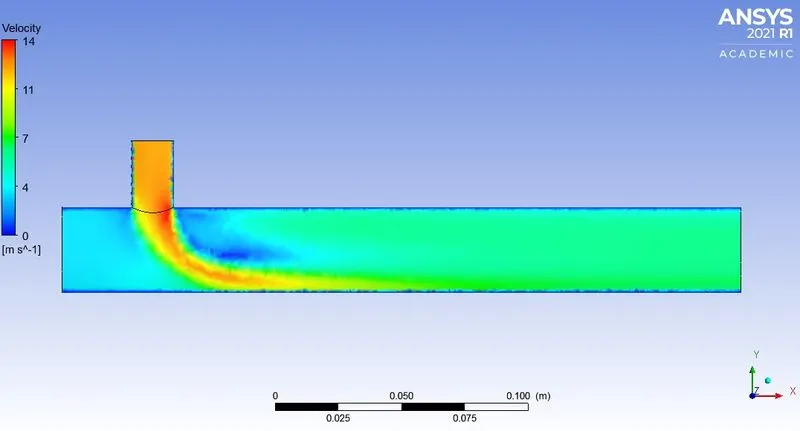
Velocity contour:
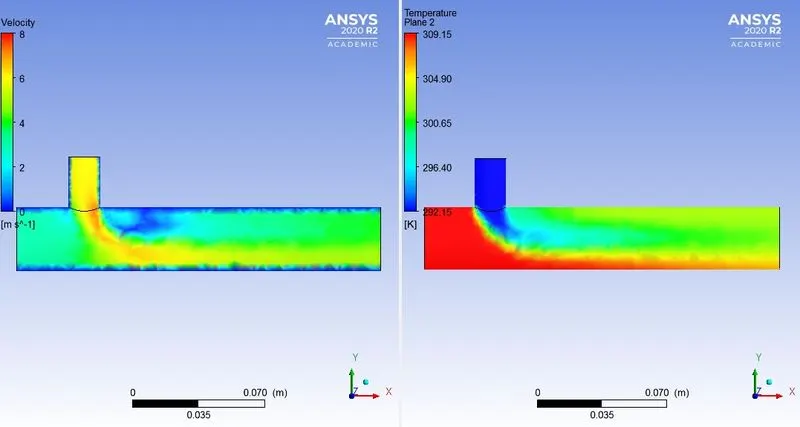
Mesh independant test:
The cell size is 0.04m and total number of cells are 12583. This number of cells is too low to visualize a clean simulation.you can see that the variation of temperature and velocity is not so smooth .It is difficult to judge the simulation well with less number of cells.
Velocity And Temperature Contours:
Conclusion:
- Interesting results are seen after simulating different lengths of Tee's .It is found that there is no significant change in increasing the Length of the T in Efficiency of Mixing.i.e lowering amount of temperature at the outlet qualifies efficiency.
- Surprisingly the increase in velocity of cold air resulted in much better Mixing at the outlet.This is due to the Turbulence created by the fast cold air when met with the hot air at the junction.This is known by looking at the avg temperatures at the outlet of the Tee for different combinations.
- The temperatures at the outlet for long and short tee with same velocity of cold air has very little change in average temperature.
- The efficiency of mixing can also be known from the Standard deviation lower the standard deviation better the mixing efficiency.The standard deviation of the long Tee is less than the short tee.
- It is recommended to increase the cold air velocity and the length of Tee mixing to improve the mixing efficiency .
- k- epsilon model predicts well far from the boundaries (wall) and k- omega model predicts well near wall. Even though it depends on Y+. ... SST model used good mesh at boundary and with wall treated usually works in most cases, but again it is problem specific.
- In this problem we are not worried about the temperature at the walls so we used K-epsilon model in the cases.