Week 1 Challenge
Question 1:-
Truss type reasoning
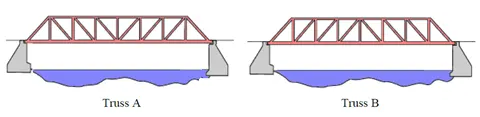
Out of the two through type truss systems shown below, which is the most efficient in carrying gravity load? Reason it out.
Answer:-
Truss A:
- Truss A is also said as Pratt Truss.
- Pratt trusses are normally utilized for span 10 m to 30 m.
- In Pratt truss, diagonal members are in tension for gravity loads.
- This truss is utilized where gravity loads are prevalent.
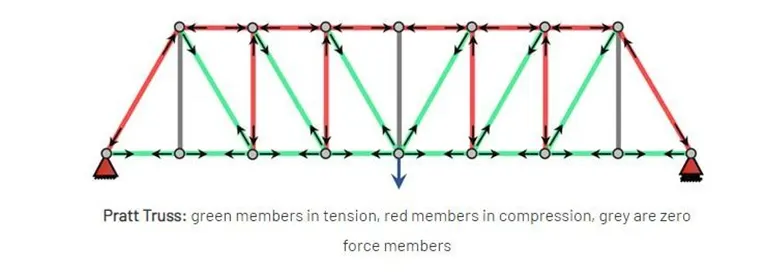
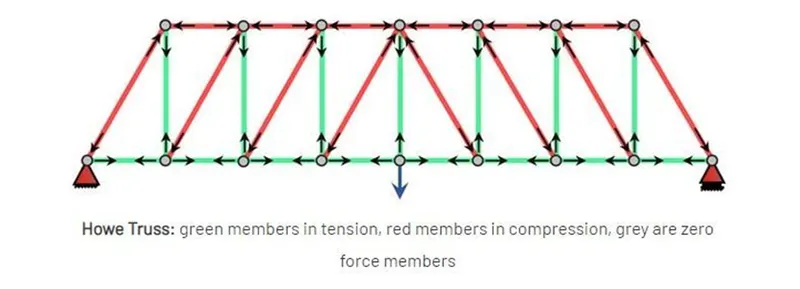
Truss B:
- Truss B is also said as Howe Truss.
- Howe truss is commonly used in light roofing so that the longer diagonal members are in Compression.
- It experiences tension under reversal of stresses due to wind load.
- It is just a converse of Pratt truss. They can be used for 10 m to 30 m span.
Conclusion:
- Hence, Truss A is the most efficient in carrying gravity loads.
Question 2:-
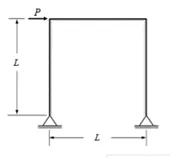
Deflection shape & Bending Moment Drawing (Qualitative approach)
For the beam & Frame below draw deflected shape and bending moment drawing. (Qualitative approach). E & I are constants.
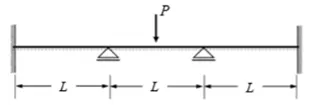
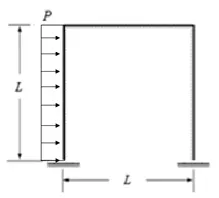
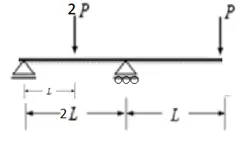
Answer:-
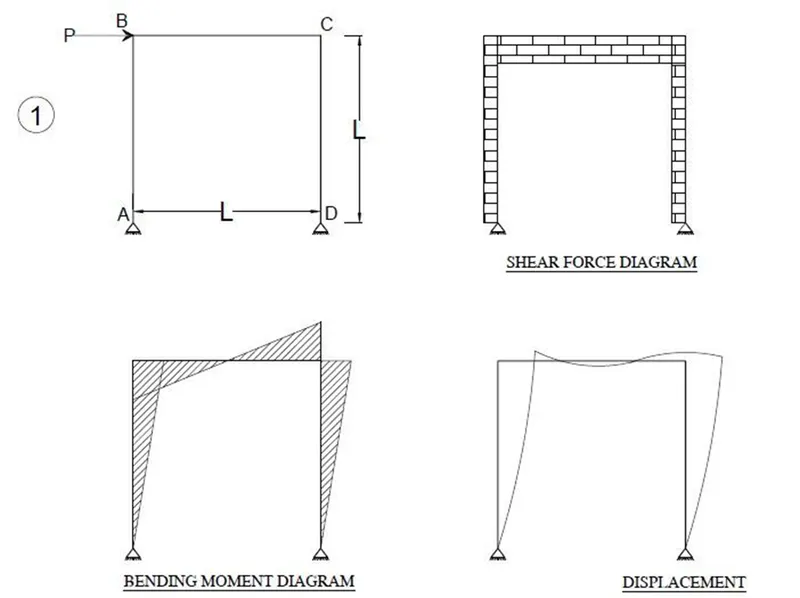
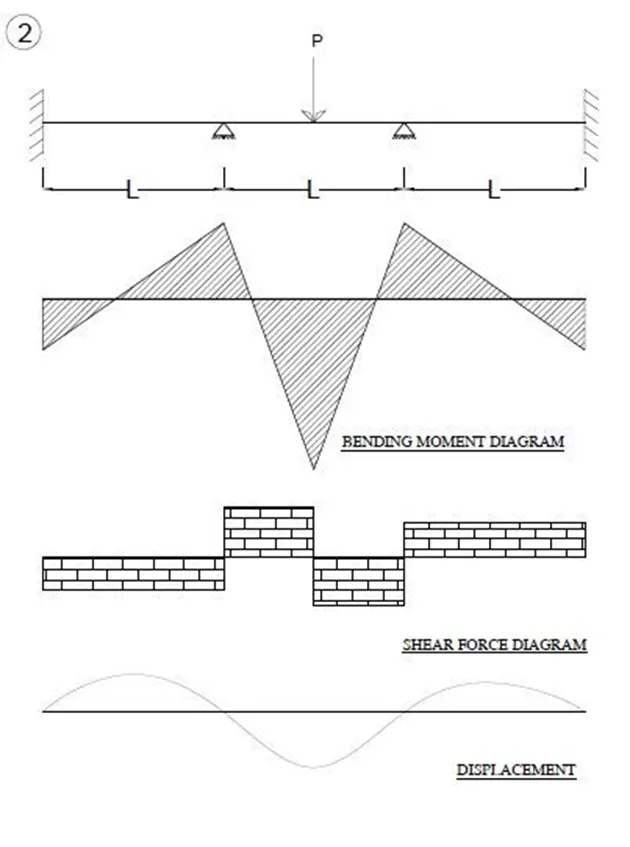
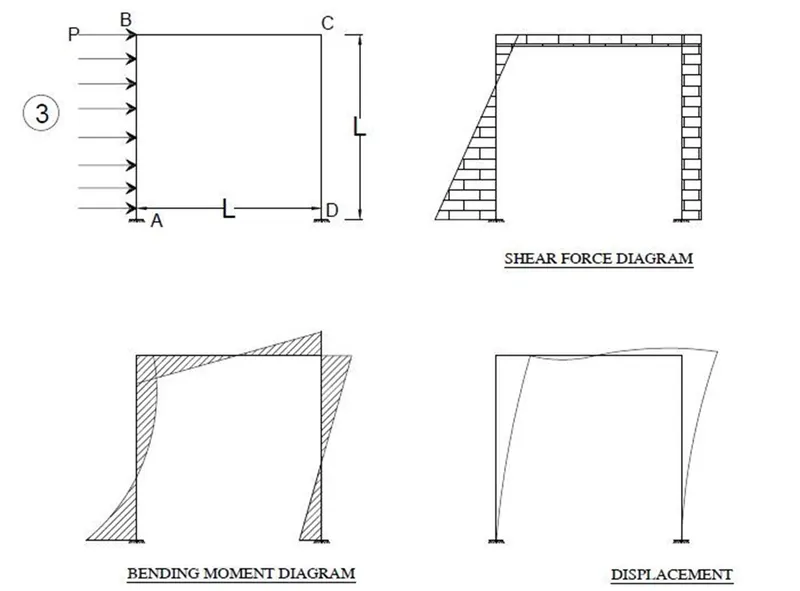
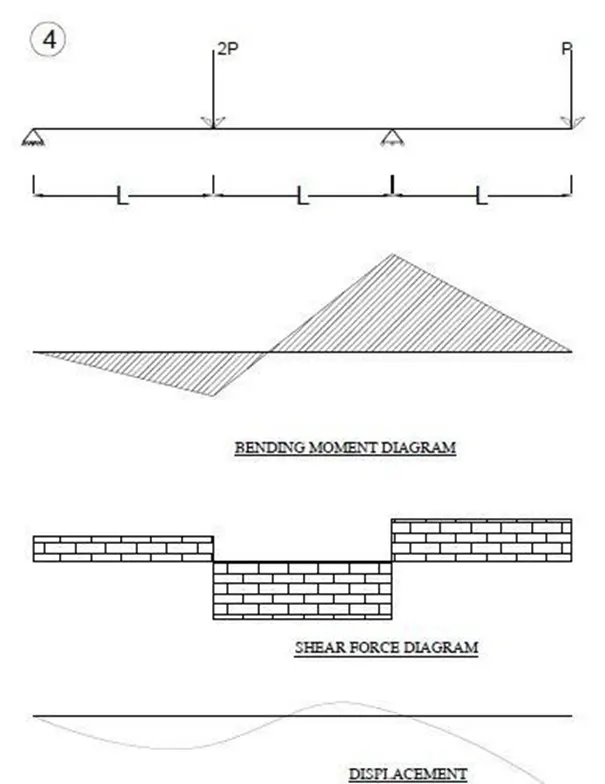
Question 3:-
Determine MOI, Weight, C/S area of sections below
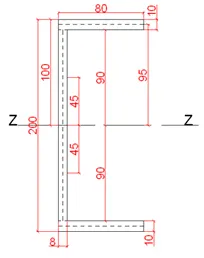
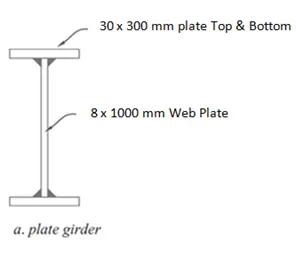
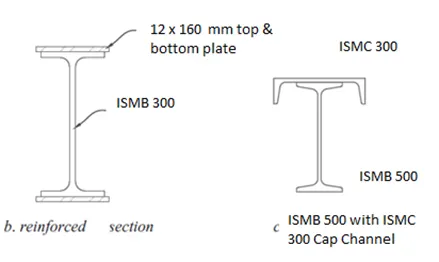
Answer:-
Moment of Inertia along X-Axis = Sum of Ixx of all members in a section.
Moment of Inertia along Y-Axis = Sum of Iyy of all members in a section.
Ixx of all member = bd3 /12 x A(d')2
where,
b is width of member
d is Depth of member
A is Area of member
d' is │Y - y│
y is centroidal axis in y direction of each member
Y is centroidal axis in y direction of Whole member
Iyy of all member = db3 /12 x A(d')2
where,
b is width of member
d is Depth of member
A is Area of member
d' is │X - x│
x is centroidal axis in x direction of each member
X is centroidal axis in x direction of Whole member
Weight of Section = Cross Section x Unit Weight of Steel
Where,
Unit Weight of Steel = 7850 kg/m3
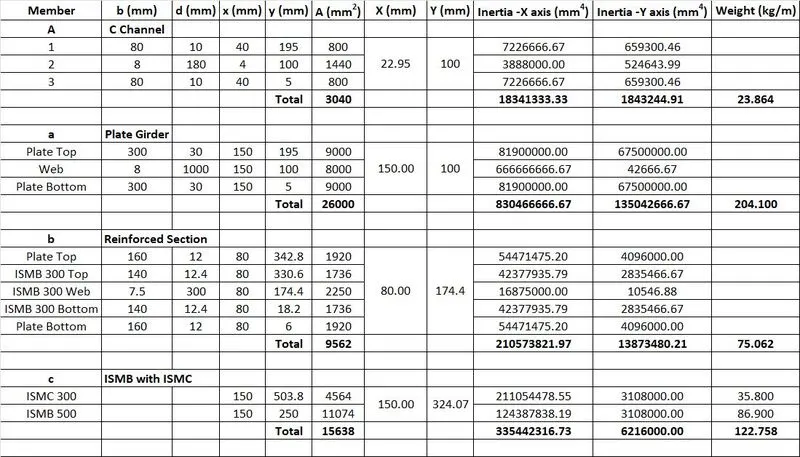
For A. Channel Section,
MOI Along X-Axis = 18.34 x 106 mm4
MOI Along Y-Axis = 1.843 x 106 mm4
Area of Cross Section = 3040 mm2
Weight of Section per meter = 23.864 kg/m
For a. Plate Girder Section,
MOI Along X-Axis = 830.46 x 106 mm4
MOI Along Y-Axis = 135.04 x 106 mm4
Area of Cross Section = 26000 mm2
Weight of Section per meter = 204.100 kg/m
For b. Reinforced Section,
MOI Along X-Axis = 210.57 x 106 mm4
MOI Along Y-Axis = 13.87 x 106 mm4
Area of Cross Section = 9562 mm2
Weight of Section per meter = 75.062 kg/m
For c. ISMB 500 with ISMC 300 Section,
MOI Along X-Axis = 335.44 x 106 mm4
MOI Along Y-Axis = 6.22 x 106 mm4
Area of Cross Section = 15638 mm2
Weight of Section per meter = 122.758 kg/m
Question 4:-
Load calculation problem
For the floor framing below, Calculate the load on interior beam, Exterior beam, Interior Girder and exterior girder having Floor Load of 10kN/m2
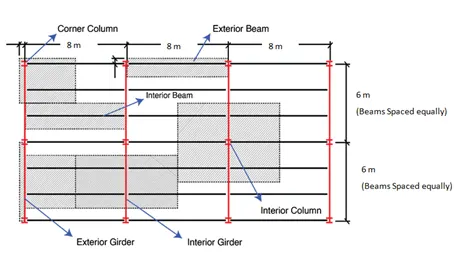
Given Data:
Floor Load - 10kN/m2
Tributary Width of Interior Beam = 1/2 x (2+2) = 2 m.
Tributary Width of Exterior Beam = 1/2 x (0+2) = 1 m.
Tributary Width of Interior Girder = 1/2 x (8+8) = 8 m.
Tributary Width of Exterior Girder = 1/2 x (0+8) = 4 m.
Answer:-
Load on beam = Tributary width x floor load
Load on Interior Beam = 2 x 10 = 20 kN/m.
Load on Exterior Eeam = 1 x 10 = 10 kN/m.
Load on Interior Girder = 8 x 10 = 80 kN/m.
Load on Exterior Girder = 4 x 10 = 40 kN/m
Question 5:-
Expansion joint size determination for temperature stated problem
Assuming a bridge, made of steel, with an initial total length of 2000 m at -20 ºC, calculate the length difference at 40 ºC and its total length.
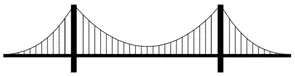
Coefficient of Thermal expansion of steel = 12x10-6/°C
Step 1.
Write down the known parameters of the problem:
L0 = 2000 m
T0 = -20 ºC
Tα = 12x10-6/°C
Step 2.
Calculate the temperature difference
ΔT = T–T0 = 40–(−20)=40+20=60 ºC
Step 3. .
Calculate the length difference
ΔL = α x L0 x ΔT
=12x10-6 x 2000 x 60 = 1.44 m
Step 4.
Calculate the total final length
L = L0 + ΔL
= 2000 + 1.44
L = 2001.44 m