Week 1 Challenge
ans 1).In 1966, General Motors developed the first fuel cell road vehicle, the Chevrolet Electrovan. It had a PEM fuel cell, a range of 120 miles and a top speed of 70 mph. There were only two seats, as the fuel cell stack and large tanks of hydrogen and oxygen took up the rear portion of the van.
the fuel cell itself was invented back in 1839 by Welsh scientist William Robert Grove, the fuel cell wasn't commercially used until the 1960s. As part of Project Gemini -- which took part from 1962-1966 -- NASA used fuel cells to generate power for probes, satellites and space capsules

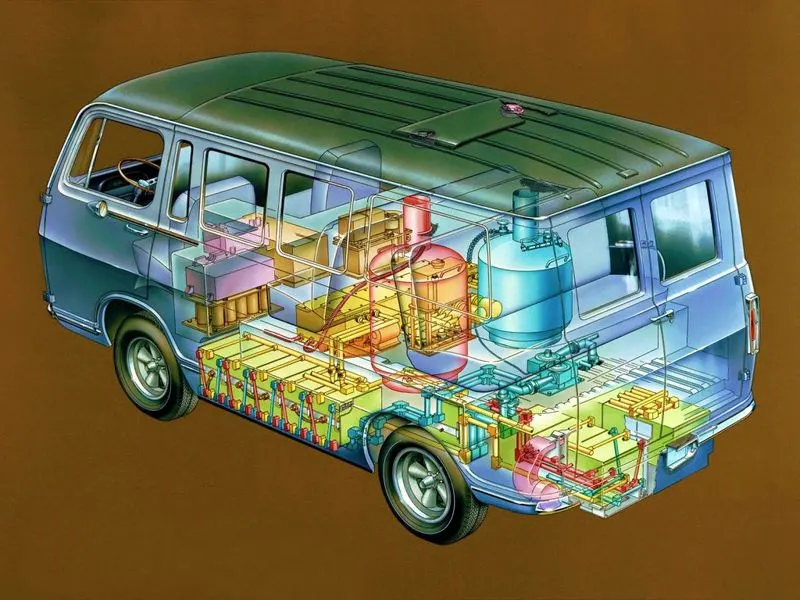
at present cheverolet has come up with its innovation in hydrogen powered cheverolet ZH2
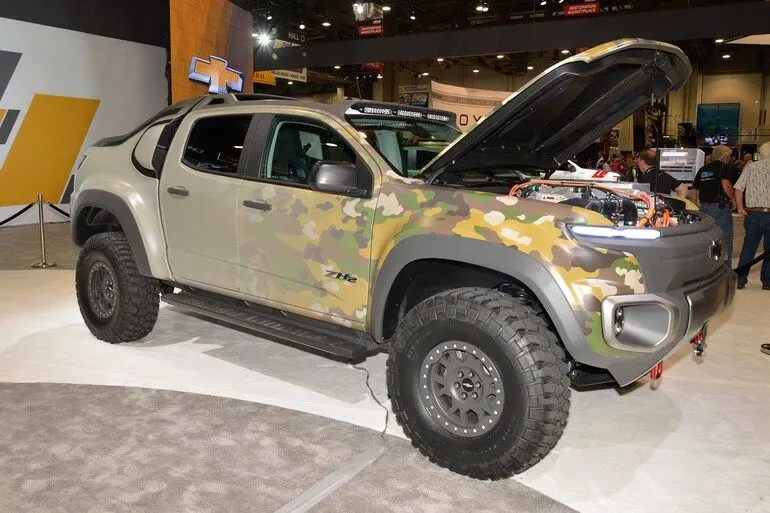
To illustrate how far the company has progressed, Chevy has developed a fuel-cell-powered military truck optimized for hostile territory and setting up forward operating bases that require electric power and water.
Just for good measure, they made the Colorado ZH2 look SEMA cool, perched up on 37-inch tires on 17-inch beadlock wheels that afford 12 inches of ground clearance and aggressive 48-degree approach and 39-degree departure angles.
the fuel cell unit that can export 25 kilowatts of continuous power, 50 kW of peak output
Under the hood is a transversely mounted 94-kW fuel cell powering a 177-hp, 236-lb-ft electric motor that sends power through a transfer case to front and rear axles with electric-locking differentials. This setup is good for a top speed just over 60 mph with a range of 140 miles on 4.2 kilograms of hydrogen
Show the trend of cost in USD per kW of fuel cell production in the past and the prediction of the cost in the future. What are the probable reasons for the improvement?
as per a research paper " the great transformation in energy and transport systems" published by institute of economic reasearch and policy consulting the data provided are as follows:
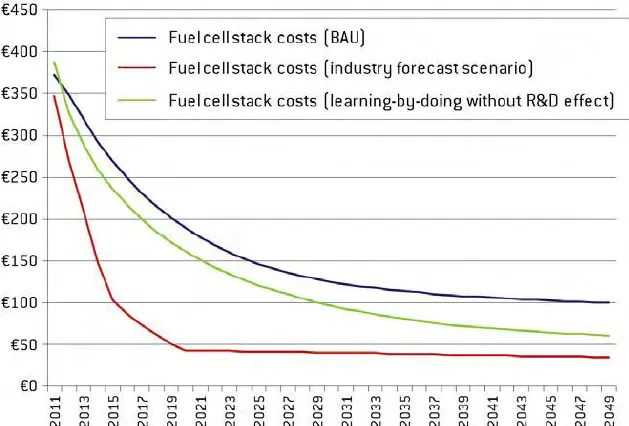
the costs that are predicted areby keeping in mind diffrent sceneriao and effects of cost reduction in fuel cell technology
in the above given graph we can see the kw production cost is at the peak but with the pace of time it kepps on decreasing and resting at around 50 euros which converts to 59 usd
The cost of fuel cell vehicles has been falling dramatically for years. And it will continue to drop within the next decade and beyond. Even with limited production volume, the price of fuel cell vehicles—especially buses— has been reduced by 65% over the past 10 years.
overall there are a hundreds of other elements that have contributed to the overall cost reduction of fuel cell electric vehicles including:
- Reduced price of the hydrogen storage tank
- Reduced price and improved integration of the vehicle’s electric powertrain
- Fuel cell-battery hybridization of the vehicle—combining a smaller fuel cell with lithium batteries, whose price has also been falling etc.