Understanding the concepts on Degrees of Freedom
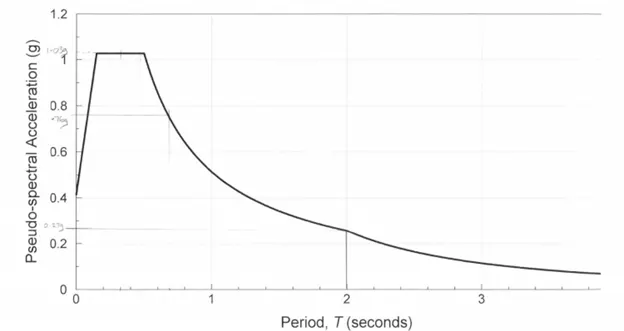
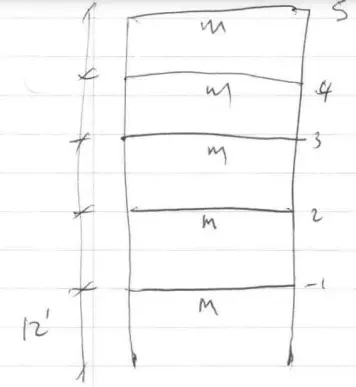
A five storey structure with 5 translational DOF :
i ) GIVEN :
- Each storey has mass ‘m’.
- The eigenvalue problem has been solved.
- The 5 periods of vibration Tn and their corresponding mode shapes, φn has been derived.
ii ) TO FIND :
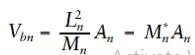
A. ) Ln , Mn and Γn for each of the five modes are to be computed from Equations below.
- Also, calculate the effective modal mass Mn* and the modal mass participating ratio for the 5 modes. The mass matrix will be required to evaluate these parameters.

B. ) Finally, obtain the base shear for each of the 5 modes of vibration and the combined base shear as per SRSS rule. The pseudo acceleration design spectrum to obtain the base shear for each mode is provided below.
C. ) How many modes are to be considered such that a modal mass participating ratio of 90% is obtained?
A . )
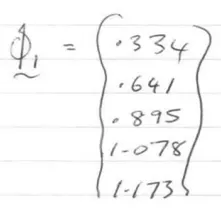
1. The fundamental period of vibration (T1 = 2 seconds) and its associated mode shape:
- Mass matric (m) = `[[m,1,1,1,1],[1,m,1,1,1],[1,1,m,1,1],[1,1,1,m,1],[1,1,1,1,m]]`
- Modified mass matrix (M) = `phi_n^T` . m . `phi_n`
For the first mode, (n=1) = [0.334 0.641 0.895 1.078 1.173] `[[m,1,1,1,1],[1,m,1,1,1],[1,1,m,1,1],[1,1,1,m,1],[1,1,1,1,m]]` `[[0.334],[0.641],[0.895],[1.078],[1.173]]`
`M_1` = `[[0.334m,0.334,0.334,0.334,0.334],[0.641,0.641m,0.641,0.641,0.641],[0.895,0.895,0.895m,0.895,0.895],[1.078,1.078,1.078,1.078m,1.078],[1.173,1.173,1.173,1.173,1.173m]]` `[[0.334],[0.641],[0.895],[1.078],[1.173]]`
`M_1` = `[[0.111556m,0.214094,0.29893,0.360052,0.391782],[0.214094,0.410881m,0.573695,0.690998,0.751893],[0.29893,0.573695,0.801025m,0.96481,1.049835],[0.360052,0.690998,0.96481,1.162084m,1.264498],[0.391782,0.751893,1.049835,1.264498,1.375929m]]`
`M_1` = 0.111556m + 0.410881m + 0.801025m + 1.162084m + 1.375929m
`M_1` = 3.861 m
- Model property (L) = `phi_n^T` . m . `phi_n`
Where `iota` = Influencer vector (Assuming 100% utilization of seismic force) = `[[1],[1],[1],[1],[1]]`
For the first mode, (n=1) = [0.334 0.641 0.895 1.078 1.173] `[[m,1,1,1,1],[1,m,1,1,1],[1,1,m,1,1],[1,1,1,m,1],[1,1,1,1,m]]` `[[1],[1],[1],[1],[1]]`
`L_1` = `[[0.334m,0.334,0.334,0.334,0.334],[0.641,0.641m,0.641,0.641,0.641],[0.895,0.895,0.895m,0.895,0.895],[1.078,1.078,1.078,1.078m,1.078],[1.173,1.173,1.173,1.173,1.173m]]` `[[1],[1],[1],[1],[1]]`
`L_1` = 0.334m + 0.641m + 0.895m + 1.078m + 1.173m
`L_1` = 4.121 m
- Model Participation factor (`Gamma`) = `L/M`
For the first mode = (n=1) `Gamma` = `L_1/M_1`
`Gamma_1` = `4.121/3.861`
`Gamma_1` = 1.067
- Effective model mass (M*) = `L_n^2/M_n`
For the first mode, (n=1) M* = `L_1^2/M_1`
M* = `(4.121 m)^2/3.861 m`
M* = 4.398 m.
- Model mass Participation ratio = `M_n^*/m_j`
Where `m_j` = Total mass of the building = m + m + m + m + m = 5m
Model mass participation ratio of first mode (n=1) = 4.398 m / 5m = 0.88 m
- Base shear (`V_B`) = `M_n^* . A_n`
For the first mode, (n=1) `V_B__1` = 4.398 m x 0.27 g
`V_B__1` = 1.187 mg
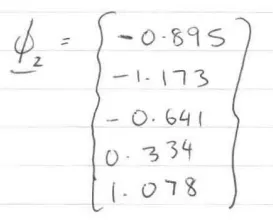
2. The second mode of vibration (T2 = 0.6852 seconds) and its associated mode shape:
- Mass matric (m) = `[[m,1,1,1,1],[1,m,1,1,1],[1,1,m,1,1],[1,1,1,m,1],[1,1,1,1,m]]`
- Modified mass matrix (M) = `phi_n^T` . m . `phi_n`
For the second mode, (n=2) = [-0.895 -1.173 -0.641 0.334 1.078] `[[m,1,1,1,1],[1,m,1,1,1],[1,1,m,1,1],[1,1,1,m,1],[1,1,1,1,m]]` `[[-0.895],[-1.173],[-0.641],[0.334],[1.073]]`
`M_2` = `[[-0.895m,-0.895,-0.895,-0.895,-0.895],[-1.173,-1.173m,-1.173,-1.173,-1.173],[-0.641,-0.641,-0.641m,-0.641,-0.641],[0.334,0.334,0.334,0.334m,0.334],[1.078,1.078,1.078,1.078,1.078m]]` `[[-0.895],[-1.173],[-0.641],[0.334],[1.073]]`
`M_2` = 0.801025m + 1.375929m + 0.410881m + 0.111556m + 1.162084m
`M_2` = 3.861 m
- Model property (L) = `phi_n^T` . m . `phi_n`
Where `iota` = Influencer vector (Assuming 100% utilization of seismic force) = `[[1],[1],[1],[1],[1]]`
For the second mode, (n=2) = [-0.895 -1.173 -0.641 0.334 1.078] `[[m,1,1,1,1],[1,m,1,1,1],[1,1,m,1,1],[1,1,1,m,1],[1,1,1,1,m]]` `[[1],[1],[1],[1],[1]]`
`L_2` = `[[-0.895m,-0.895,-0.895,-0.895,-0.895],[-1.173,-1.173m,-1.173,-1.173,-1.173],[-0.641,-0.641,-0.641m,-0.641,-0.641],[0.334,0.334,0.334,0.334m,0.334],[1.078,1.078,1.078,1.078,1.078m]]` `[[1],[1],[1],[1],[1]]`
`L_2` = -0.895 - 1.173 - 0.641 + 0.334 + 1.078
`L_2` = -1.297 m
- Model Participation factor (`Gamma`) = `L/M`
For the second mode = (n=2) `Gamma` = `L_2/M_2`
`Gamma_2` = `-1.297/3.861`
`Gamma_2` = -0.335
- Effective model mass (M*) = `L_n^2/M_n`
For the second mode, (n=2) M* = `L_2^2/M_2`
M* = `(-1.297 m)^2/3.861 m`
M* = 0.436 m.
- Model mass Participation ratio = `M_n^*/m_j`
Where `m_j` = Total mass of the building = m + m + m + m + m = 5m
Model mass participation ratio of second mode (n=2) = 0.436 m / 5m = 0.09 m
- Base shear (`V_B`) = `M_n^* . A_n`
For the second mode, (n=2) `V_B__2` = 0.436 m x 0.75 g
`V_B__2` = 0.327 mg
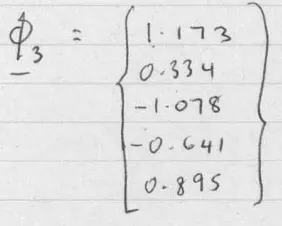
3. The third mode of vibration (T3 = 0.4346 seconds) and its associated mode shape:
- Mass matric (m) = `[[m,1,1,1,1],[1,m,1,1,1],[1,1,m,1,1],[1,1,1,m,1],[1,1,1,1,m]]`
- Modified mass matrix (M) = `phi_n^T` . m . `phi_n`
For the third mode, (n=3) = [1.173 0.334 -1.078 -0.641 0.895 ] `[[m,1,1,1,1],[1,m,1,1,1],[1,1,m,1,1],[1,1,1,m,1],[1,1,1,1,m]]` `[[1.173],[0.334],[-1.078],[-0.641],[0.895]]`
`M_3` = `[[1.173m,1.173,1.173,1.173,1.173],[0.334,0.334m,0.334,0.334,0.334],[-1.078,-1.078,-1.078m,-1.078,-1.078],[-0.641,-0.641,-0.641,-0.641m,-0.641],[0.895,0.895,0.895,0.895,0.895m]]` `[[1.173],[0.334],[-1.078],[-0.641],[0.895]]`
`M_3` = 1.375929m + 0.111556m + 1.162084m + 0.410881m + 0.801025m
`M_3` = 3.861 m
- Model property (L) = `phi_n^T` . m . `phi_n`
Where `iota` = Influencer vector (Assuming 100% utilization of seismic force) = `[[1],[1],[1],[1],[1]]`
For the third mode, (n=3) = [1.173 0.334 -1.078 -0.641 0.895 ] `[[m,1,1,1,1],[1,m,1,1,1],[1,1,m,1,1],[1,1,1,m,1],[1,1,1,1,m]]` `[[1],[1],[1],[1],[1]]`
`L_3` = `[[1.173m,1.173,1.173,1.173,1.173],[0.334,0.334m,0.334,0.334,0.334],[-1.078,-1.078,-1.078m,-1.078,-1.078],[-0.641,-0.641,-0.641,-0.641m,-0.641],[0.895,0.895,0.895,0.895,0.895m]]` `[[1],[1],[1],[1],[1]]`
`L_3` = 1.173 m + 0.334 m - 1.078 m - 0.641 m + 0.895 m
`L_3` = 0.683 m
- Model Participation factor (`Gamma`) = `L/M`
For the third mode = (n=3) `Gamma` = `L_3/M_3`
`Gamma_3` = `0.683/3.861`
`Gamma_3` = 0.177
- Effective model mass (M*) = `L_n^2/M_n`
For the third mode, (n=3) M* = `L_3^2/M_3`
M* = `(0.683 m)^3/3.861 m`
M* = 0.121 m.
- Model mass Participation ratio = `M_n^*/m_j`
Where `m_j` = Total mass of the building = m + m + m + m + m = 5m
Model mass participation ratio of third mode (n=3) = 0.121 m / 5m = 0.02 m
- Base shear (`V_B`) = `M_n^* . A_n`
For the third mode, (n=3) `V_B__3` = 0.121 m x 1.04 g
`V_B__3` = 0.126 mg
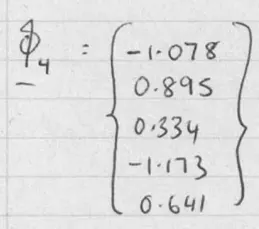
4. The fourth mode of vibration (T4 = 0.3383 seconds) and its associated mode shape:
- Mass matric (m) = `[[m,1,1,1,1],[1,m,1,1,1],[1,1,m,1,1],[1,1,1,m,1],[1,1,1,1,m]]`
- Modified mass matrix (M) = `phi_n^T` . m . `phi_n`
For the fourth mode, (n=4) = [-1.078 0.895 0.334 -1.173 0.641] `[[m,1,1,1,1],[1,m,1,1,1],[1,1,m,1,1],[1,1,1,m,1],[1,1,1,1,m]]` `[[-1.078],[0.895],[0.334],[-1.173],[0.641]]`
`M_4` = `[[-1.078m,-1.078,-1.078,-1.078,-1.078],[0.895,0.895m,0.895,0.895,0.895],[0.334,0.334,0.334m,0.334,0.334],[-1.173,-1.173,-1.173,-1.173m,-1.173],[0.641,0.641,0.641,0.641,0.641m]]` `[[-1.078],[0.895],[0.334],[-1.173],[0.641]]`
`M_4` = 1.162084m + 0.801025m + 0.111556m + 1.375929m + 0.410881m
`M_4` = 3.861 m
- Model property (L) = `phi_n^T` . m . `phi_n`
Where `iota` = Influencer vector (Assuming 100% utilization of seismic force) = `[[1],[1],[1],[1],[1]]`
For the fourth mode, (n=4) = [-1.078 0.895 0.334 -1.173 0.641] `[[m,1,1,1,1],[1,m,1,1,1],[1,1,m,1,1],[1,1,1,m,1],[1,1,1,1,m]]` `[[1],[1],[1],[1],[1]]`
`L_4` = `[[-1.078m,-1.078,-1.078,-1.078,-1.078],[0.895,0.895m,0.895,0.895,0.895],[0.334,0.334,0.334m,0.334,0.334],[-1.173,-1.173,-1.173,-1.173m,-1.173],[0.641,0.641,0.641,0.641,0.641m]]` `[[1],[1],[1],[1],[1]]`
`L_4` = -1.078 + 0.895 + 0.334 - 1.173 + 0.641
`L_4` = -0.381 m
- Model Participation factor (`Gamma`) = `L/M`
For the fourth mode = (n=4) `Gamma` = `L_4/M_4`
`Gamma_4` = `-0.381/3.861`
`Gamma_4` = -0.098
- Effective model mass (M*) = `L_n^2/M_n`
For the fourth mode, (n=4) M* = `L_4^2/M_4`
M* = `(-0.381 m)^2/3.861 m`
M* = 0.038 m.
- Model mass Participation ratio = `M_n^*/m_j`
Where `m_j` = Total mass of the building = m + m + m + m + m = 5m
Model mass participation ratio of fourth mode (n=4) = 0.038 m / 5m = 0.01 m
- Base shear (`V_B`) = `M_n^* . A_n`
For the fourth mode, (n=4) `V_B__4` = 0.038 m x 1.03 g
`V_B__4` = 0.039 mg
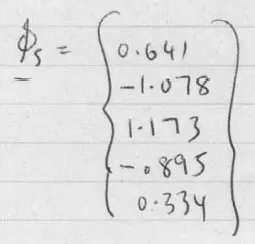
5. The fifth mode of vibration (T4 = 0.2966 seconds) and its associated mode shape:
- Mass matric (m) = `[[m,1,1,1,1],[1,m,1,1,1],[1,1,m,1,1],[1,1,1,m,1],[1,1,1,1,m]]`
- Modified mass matrix (M) = `phi_n^T` . m . `phi_n`
For the fifth mode, (n=5) = [0.641 -1.078 1.173 -0.895 0.334] `[[m,1,1,1,1],[1,m,1,1,1],[1,1,m,1,1],[1,1,1,m,1],[1,1,1,1,m]]` `[[0.641],[-1.078],[1.173],[-0.895],[0.334]]`
`M_5` = `[[0.641m,0.641,0.641,0.641,0.641],[-1.078,-1.078m,-1.078,-1.078,-1.078],[1.173,1.173,1.173m,1.173,1.173],[-0.895,-0.895,-0.895,-0.895m,-0.895],[0.334,0.334,0.334,0.334,0.334m]]` `[[0.641],[-1.078],[1.173],[-0.895],[0.334]]`
`M_5` = 0.410881m + 1.162084m + 1.375929m + + 0.801025m + 0.111556m
`M_5` = 3.861 m
- Model property (L) = `phi_n^T` . m . `phi_n`
Where `iota` = Influencer vector (Assuming 100% utilization of seismic force) = `[[1],[1],[1],[1],[1]]`
For the fifth mode, (n=5) = [0.641 -1.078 1.173 -0.895 0.334] `[[m,1,1,1,1],[1,m,1,1,1],[1,1,m,1,1],[1,1,1,m,1],[1,1,1,1,m]]` `[[1],[1],[1],[1],[1]]`
`L_5` = `[[0.641m,0.641,0.641,0.641,0.641],[-1.078,-1.078m,-1.078,-1.078,-1.078],[1.173,1.173,1.173m,1.173,1.173],[-0.895,-0.895,-0.895,-0.895m,-0.895],[0.334,0.334,0.334,0.334,0.334m]]` `[[1],[1],[1],[1],[1]]`
`L_5` = 0.641m - 1.078m + 1.173m - 0.895m + 0.334m
`L_5` = 0.175 m
- Model Participation factor (`Gamma`) = `L/M`
For the fifth mode = (n=5) `Gamma` = `L_5/M_5`
`Gamma_5` = `0.175/3.861`
`Gamma_5` = 0.045
- Effective model mass (M*) = `L_n^2/M_n`
For the fifth mode, (n=5) M* = `L_5^2/M_5`
M* = `(0.175 m)^2/3.861 m`
M* = 0.008 m.
- Model mass Participation ratio = `M_n^*/m_j`
Where `m_j` = Total mass of the building = m + m + m + m + m = 5m
Model mass participation ratio of fifth mode (n=5) = 0.008 m / 5m = 0.002 m
- Base shear (`V_B`) = `M_n^* . A_n`
For the fifth mode, (n=1) `V_B__5` = 0.008 m x 1 g
`V_B__5` = 0.008 mg
B. ) Average base shear is calculated by the method of square root of sum of square :
`sqrt(Vb1^2+Vb2^2+Vb3^2+Vb4^2+Vb5^2)`
`V_B` = 1.15 mg
C. ) How many modes are to be considered such that a modal mass participating ratio of 90% is obtained?
- Adding first two mode participation ratios, we get 0.88 + 0.09 = 0.97
Note : To Achieve minimum 90% of modal mass participation ratio, first two modes are enough.