Underbody Coating
UNDERBODY COATING
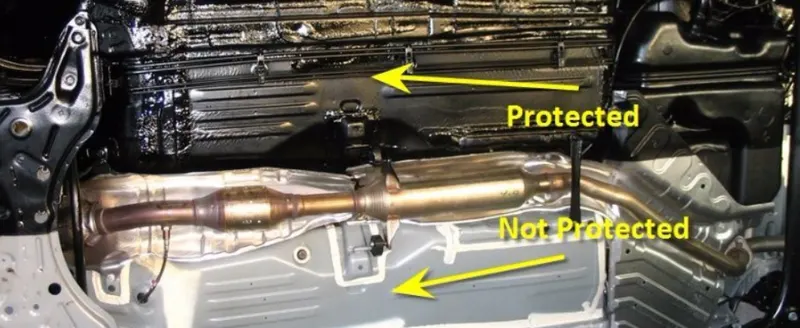
Underbody coating is a process in which dense cladding applied on bottom surface of the vehicle. It helps to protect the vehicle lower surface from rock, gravel, salt, moisture and other corrosive substance. It is generally done as spray or painted on the surface. The thickness of the undercoating normally between 2 to 3 mm.
TYPES OF UNDERBODY COATING
- Rubberised underbody coating
Rubberised underbody coating is rubberised painted substance after dries it is soft rubbery finish generally used for cars. It is easy to apply and dries after.
- Wax or Paraffin based
It is cheapest and quickest method of underbody coating but life of coating is small as compare to others.
- Asphalt based
It provides higher level of protection and it is generally used in heavy vehicles. It has rubberised substance which help to aid in noise reduction. It is unpaintable.
- Polyurethane based
It is easy to apply and also works on sealing up cracks. It required some preparatory like degreasing and applying etching primer to the bare metal. It is paintable.
PROS:
- Anti-corrosive
- Heat insulation
- Anti-chipping
- Minimize NVH
CONS:
- Increase the weight of vehicle
- Apply at regular interval of time
- Unpaintable
- Toxic material