Underbody Coating
UNDER-BODY COATING
- Under-body Coating: -
Underbody coating is a coating of paint or rubber on undercarriage and to the chassis protecting it from rusting. usually, a dense cladding applied uniformly to the undercarriage of the BIW. It is normally sprayed or painted on BIW when the BIW and sealant is ready. Due to coating wear and tear of sealant and chassis is decreases and the life of vehicle is increases
Types of under-body coating: -
- Rubberized Underbody Coating
- Asphalt Based Automotive Undercoating
- Polyurethane Undercoating
- Wax Undercoating
- Rubberized Underbody Coating: -
Rubberized underbody coating is mostly used for under body coating. Thin layer of rubber is applied easily, Rubberized underbody coating is easily available in aerosol spray can and in paint form.
- Asphalt Based Automotive Undercoating: -
This Coating is suited for heavy duty vehicles like lorries, trucks and large vehicles this provides a better protection compared to rubber-based coatings. However, asphalt-based coatings contain little amounts of rubber for sound-insulation purposes. The process of applying this coating is a bit time-consuming though
- Polyurethane Undercoating: -
This coating closes up splits and fractures on the underbody of the vehicle. Its good protector against corrosion and also bonds with the metal.
- Wax Undercoating: -
Wax coating is probably the most rarely used underbody coat. Much like the topcoat wax, underbody wax forms a thin upper layer on all parts of your car’s underbelly. But like topcoat wax, underbody wax will wash away over time. It is therefore need to reapply a fresh coat of wax after every one year. Wax undercoating is also relatively inexpensive and can be sprayed on using a spray canister.
Advantages of Undercoating: -
- Reinforcement If your car comes with stock underbody coating, using another coating on top of it, is not going to hurt.
- Fights Rust It plays an important role in keeping away from corrosion
- Good undercoating not only defends the underbody from corrosion but also protects the engine and transmission as well
- very thick undercoating can soften the noises that reach the cabin. Since the undercoating is often made up of rubber it absorbs some of the rackets.
Disadvantages of Undercoating: -
- the amount of weight added to a vehicle with an undercoating is minimal
- It works mostly best on new cars. If you’ve purchased a used vehicle, then the life of underbody coating is decreases.
- A third-party undercoating service might void your vehicle’s warranty
- An undercoating is not impervious to damage. If you drive your car on bad roads, it completes around 30000 kms then the strongness of coating layer is reduced.
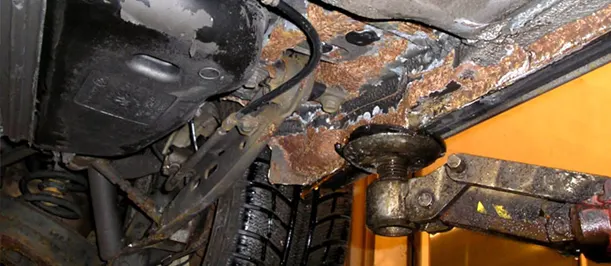
- Before underbody coating if there is a corrosion is present then the coating function is useless, It is less helpful if corrosion is already present.
Here are some images: -
- Rubber Coating
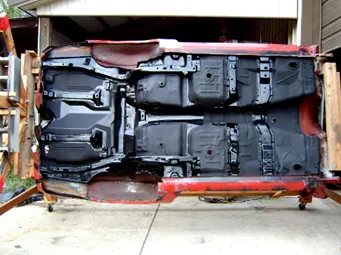
-
Coating with spray: -
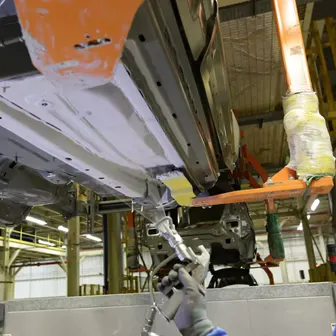
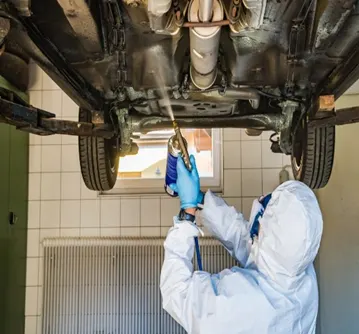
-
Corrosion After couple of year or coating on corrosion area: -