Hood design-Week 2
HOOD DESIGN
Hood is basically cover for engine of vehicle, which is hinged with body of vehicle. Hood can open for maintenance of engine compartment and maintenance of other part like radiator, Battery etc.
Hood is used to decorate the car and add luxurious look. The shape of the bonnet is made aerodynamic in order to minimize the air effect. automotive world the weight optimization plays an important role. In this paper material changes are applied to the bonnet for the same design and finally showing the stiffest bonnet and less weight component.
Hood design Assembly consist of following parts -
- inner panel
- outer panel
- Hinges
- Striker
Inner panel and outer panel are the main component of hood. Emboss are created on inner panel to decrease the air force. Due to inner panel hood make stiffest hood. To connect outer panel inner panel together we use hemming process.
Hinges are used to open and close hood for maintenance.
Striker is used to lock and unlock hood with body of vehicle.
Data to be used hood design:
Hood Thickness Information
- Outer Panel Thickness = 0.75mm
- Inner Panel Thickness = 0.75mm
- Reinforcement Thickness = 1.5mm
Master sketch:
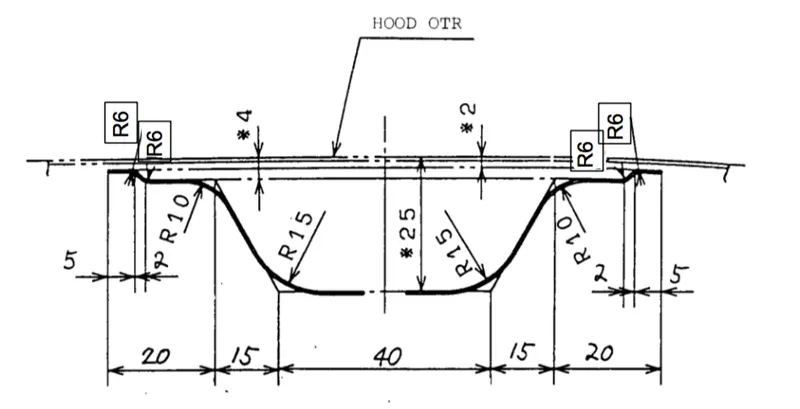
Outer panel:
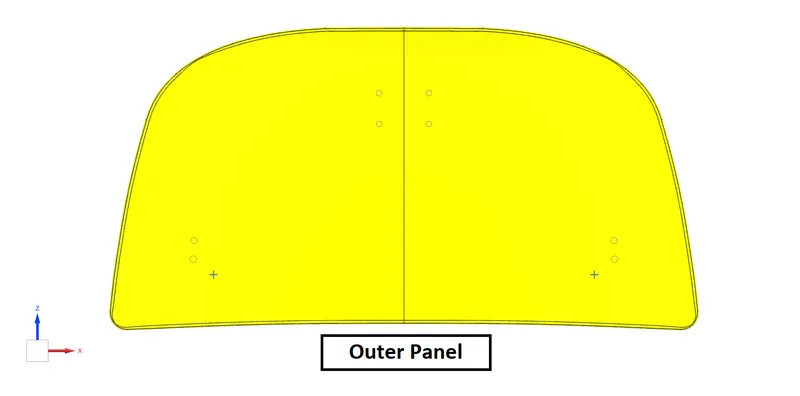
Outer panel used to decorate the car and add luxurious look. The shape of the bonnet is made aerodynamic in order to minimize the air effect.
Inner panel:
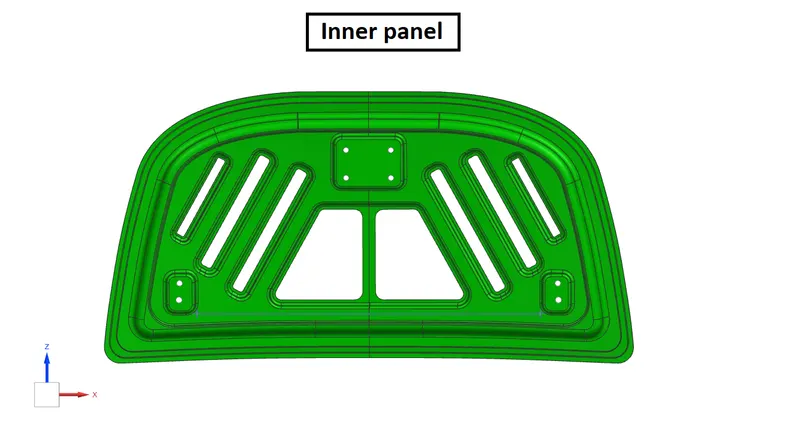
inner panel is useed to make a assembly of Striker And Hinge with hood Also Embosses are created on Inner panel. Due to inner panel hood make stiffest hood.
Hinges:
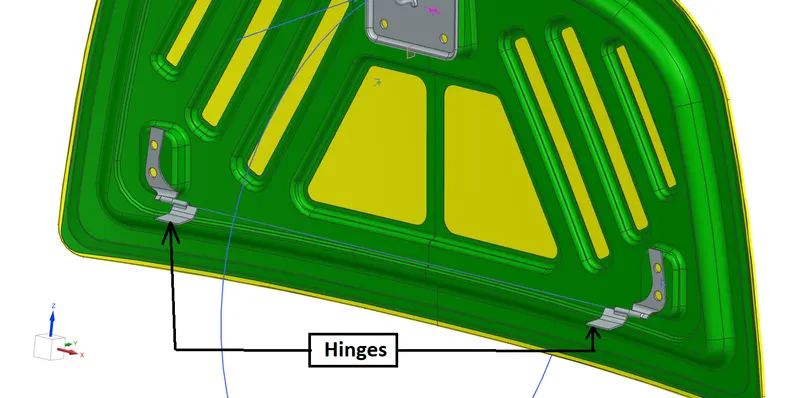
Hines are used to open and close the hood for maintenance of engine. there is rotary motion in hinge Assembly (Hinge part attech to engine compartment and hinge part attech to hood). Both Hinges are mounted in same axies. and the position of hings are found by trajectory of srtiker
Striker:
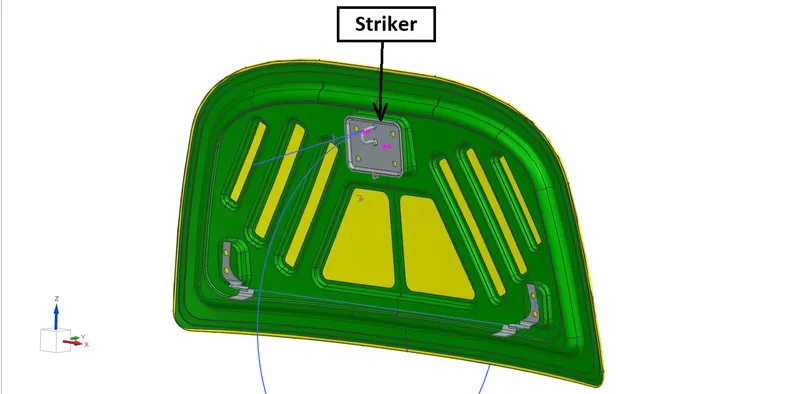
Striker keep the pawl and latch working properly. The striker is a representation of the hood. It is attached to the hood and is what needs to be locked in order to keep the hood itself locked. Srteiker has latch wich is is used to lock the hood with pawl.
Latch trajectory:
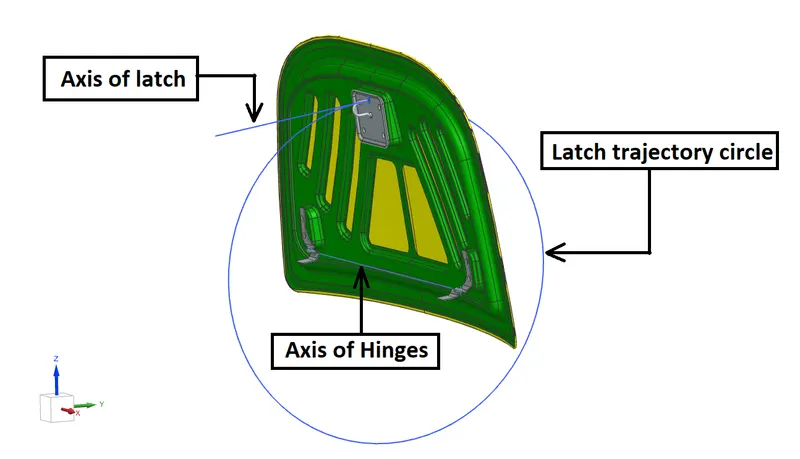
The circle showing in teh above Image is the trajectory of hood opening and closing. If the axis of striker or latch is perpendicular to trajectory circle, then it is known as position of hinges is correct. The radius of trajectory circle is distance between axis of striker or latch and the axis of hinges
Mastic Data:
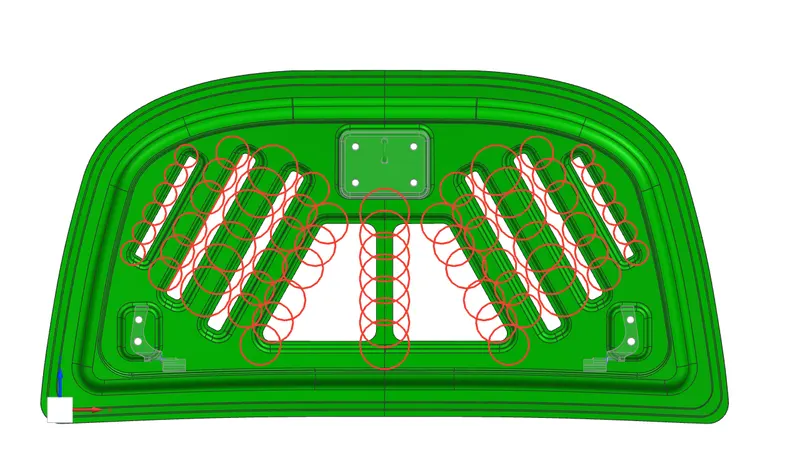
The mastic points are defined on the hood inner panel where the hood can easily deform. They help the hood outer panel to come back to its original shape after it gets deformed. The mastic sealent are usually made up of elastic material like rubber .
The mastic sealent data is use to attach outer pannel and inner panel together
Emboss:
Embossing is a stamping process for producing raised or sunken designs or relief in sheet metal. This process can be made by means of matched male and female roller dies, or by passing sheet or a strip of metal between rolls of the desired pattern.
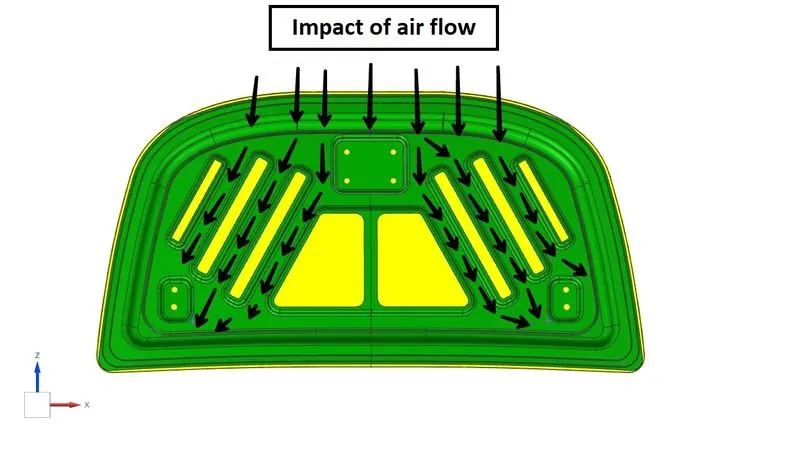
the function of Emboss is to disipet the air force out side the vehicle. the force directon changes towords the hinge. The disipeting air force out the vehicle, it will does not go towords driver cabine direction and due to this the passenger will not affected by the energy of air force. it does not mean it will 100% redues effect of air force. there is no specific criateria for embosses
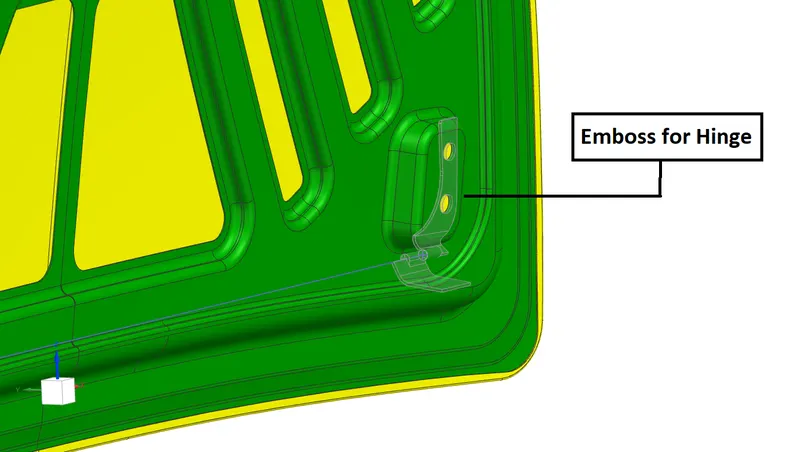
We also made emboss for mounting of hinge assembly Also for mounting of Stiker.
Emboss for Striker -
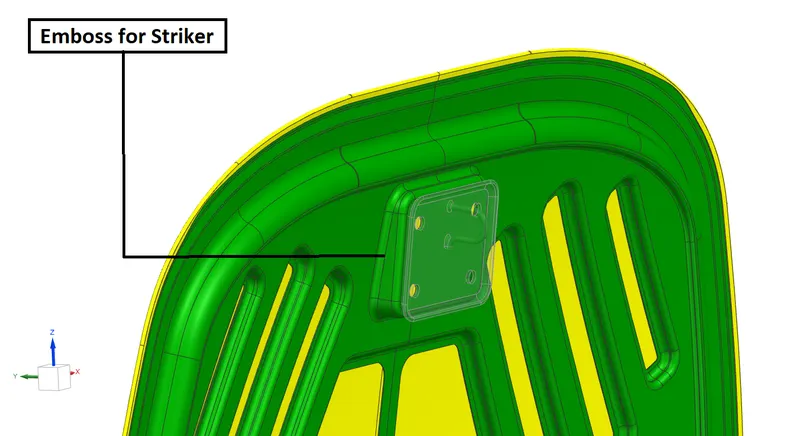
Emboss for Striker -
Impact of air flow from front of the vehicle is disipet through embosses out side of vehicle
Deep Drawing :
Deep Drawing is one of the sheet metal forming processes widely used in automobile, aerospace, electronics and allied industries
Deep drawing is a manufacturing process that is used extensively in the forming of sheet metal into cup or box like structures
Hemming:
Hemming is a sheet metal forming process in which sheets are joined by bending it to 180°. Sheet metal hemming process can be generally classified into two major categories such as conventional hemming and roller hemming process.
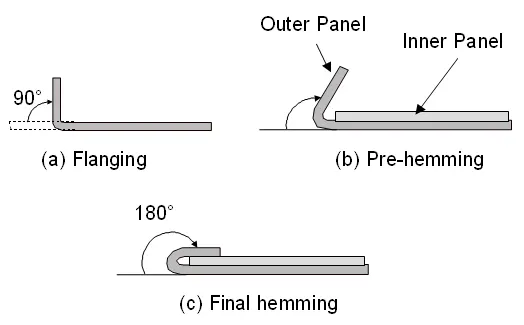
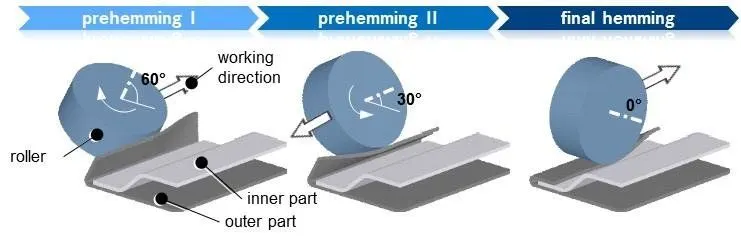
Hem created to joint inner panel and outer panel
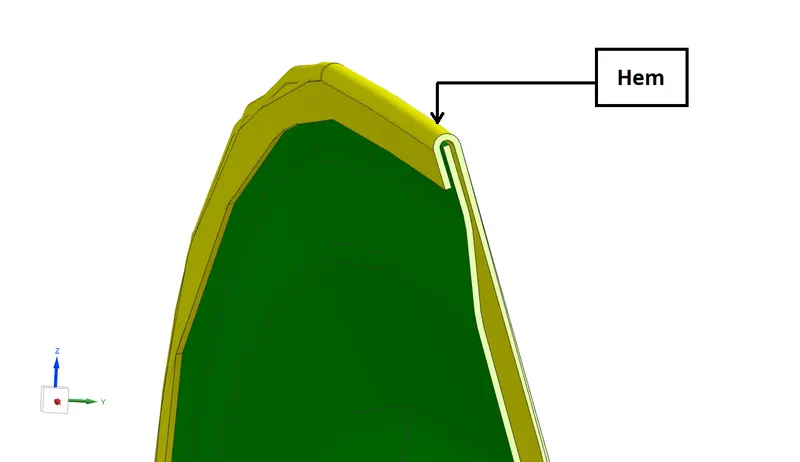
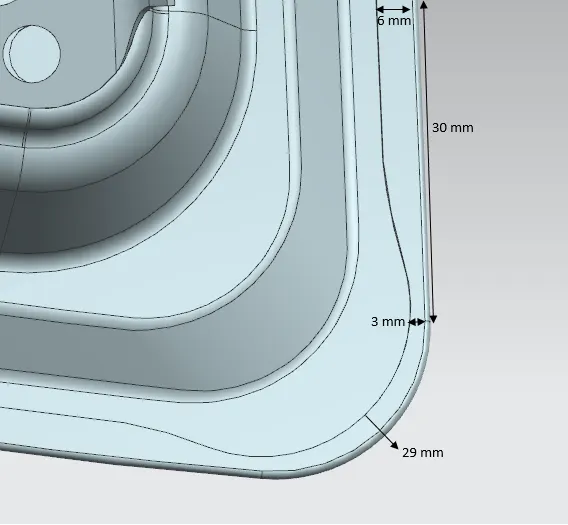
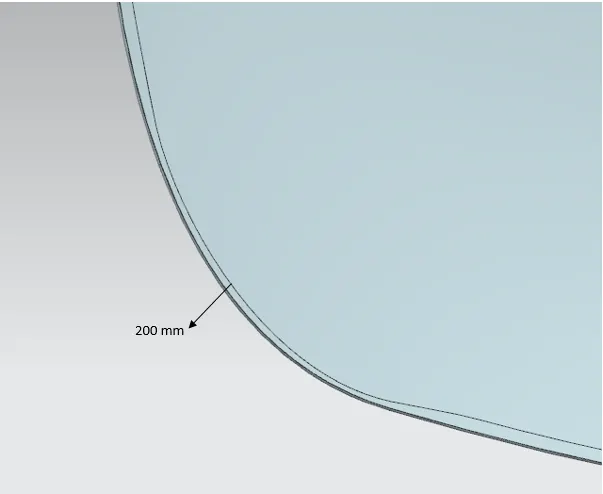
While hemming of sheet Cornner relifs are also consider
The inner pannel, outer panel and aseembly of the inner panel outer panel, hinges , striker is design on NX cAD software.
Drive link of design --
https://drive.google.com/file/d/1DQ7p9AtRbir5H6VlKGxUQzjkAllB5SVO/view?usp=sharing
I added Zip file in Attechment but as backup shareing drive link