Underbody Coating
Report on Underbody Coating:
The metal underbody and frames of automobiles are coated to prevent corrosion, whereas other areas like the roof are not rust-proofed. When not coated to prevent corrosion, the structural metals (or other materials) are primed before applying additional coatings.
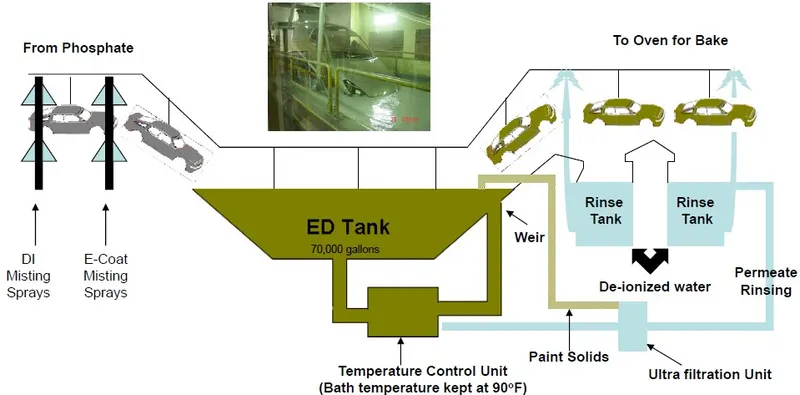
As shown in Figure ED-coating involves dipping automobile bodies into the coating solution and passing an electric current through the body and the liquid ED paint solution. Because of the charged nature of this coating process, the ED paint penetrates into places a spray would not reach. The ED paint is promoted to bond with the metal substrate, and a uniform coating thickness is produced. The result is an insoluble, deposited layer with a very high solids content and firm adherence to the pretreated body.
During operation, a mixture of resin, binder, and a paste containing the pigments is fed into the electrodeposition tank. The automobile body is lowered into the tank, and an electric current is applied. The solution in the tank consists of 80%–90% deionized water and 10%–20% paint solids (consisting of resin, binder, and pigment). The deionized water acts as a carrier for the paint solids, which are under constant agitation.
The resin is the backbone of the final paint film and provides corrosion protection, durability, and toughness. Pigments are used to provide color and gloss. To control paint performance during cathodic E-coating, purging of the paint and regulating the amount of applied voltage is essential. As the coating grows in thickness, it becomes more and more insulating, thereby causing the deposition process to slow. As an automobile body exits the tank, paint solids adhering to the surface but not bound to the surface are rinsed off to recover the ED solids via an ultrafiltration unit to ensure surface smoothness.
Such types of Electrodeposition coating also have some life. After a certain lifespan, it starts to fade. Lifespan depends on the condition of roads and driving behavior. Large impact on the underbody tends to rust and damage the underbody. For that, we can use externally coating to increase life underbody.
In Indian road conditions, a car's underbody is most prone to corrosion. Underbody coating provides long-term protection from corrosion to the car’s underbody. It also protects parts like internal body panels, frame rails, and other inner cavities that are not physically accessible but are prone to corrosion.
Underbody coating is usually a dense cladding applied uniformly to the undercarriage of the automobile. It is normally sprayed or painted on when the car is just out of the dealership and is clean. But even if you are getting the undercoating applied after a couple of years, it’s fine too. This is because it can prevent further damage to the undercarriage.
The main purpose of undercoating is to check rust especially in the body components like frame rails along with other exposed metal parts. Underbody coating can also reduce wear and tear.
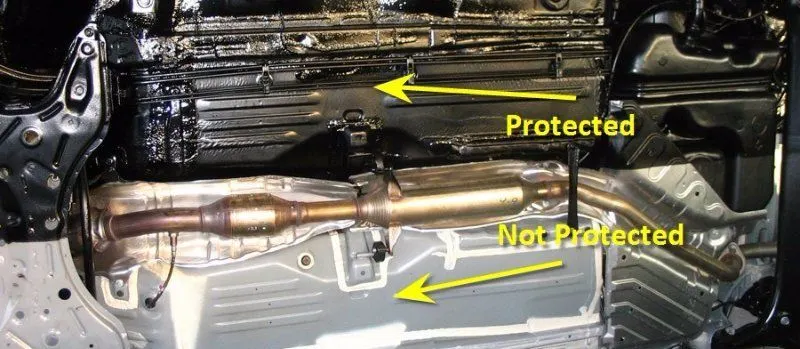
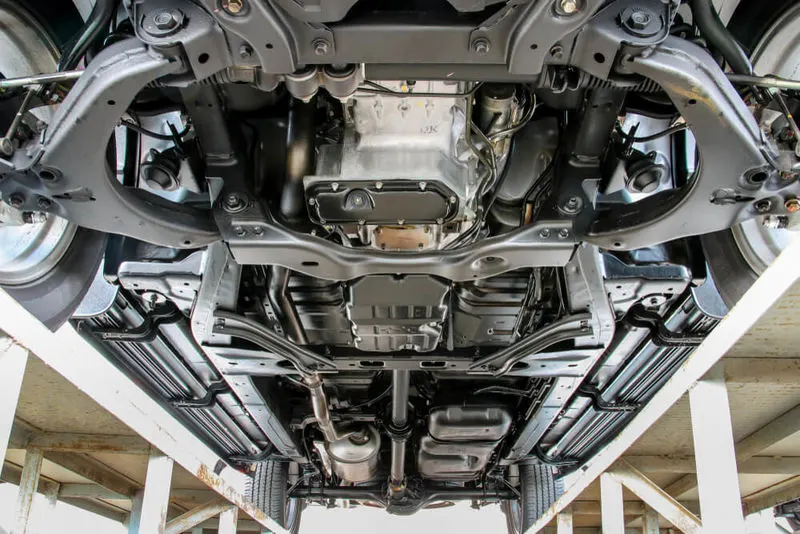
There are several types of underbody coating, such as
1) Wax based underbody coating
2) Rubberized Undercoating
3) Asphalt based underbody coating
4) Polyurethane underbody coating
1) Wax based underbody coating
In this, more or less ephemeral undercoating will wear away in a few months’ time. On the upside, wax-based undercoating puts up a big fight against moisture. It is also the most affordable option out there. It creates a rust-proof layer that protects it from moisture and corrosion for about one year.
2) Rubberized Undercoating
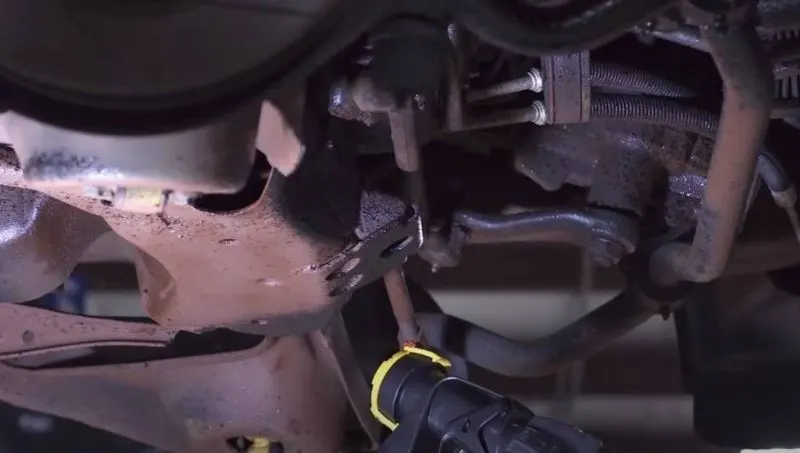
This is generally thought of as the best underbody coating for a car. It preserves the underbody well, protecting it from scratches. Applying this to the undercarriage is not much of a hassle either. In addition to your undercarriage, rubberized undercoating is also safe to use on wheel wells and quarter panels, and dries to a soft rubbery finish that prevents further rust, damage, or moisture seeps.
3) Asphalt based underbody coating
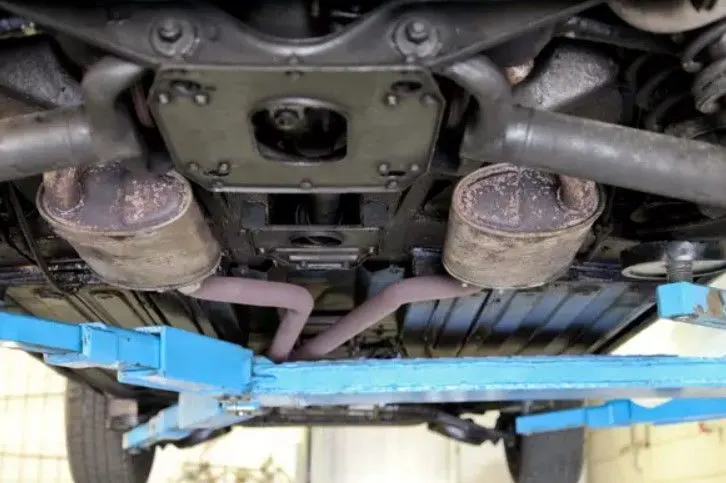
Asphalt-based undercoating generally contains a little bit of rubberized material that sets up firmly and also helps soften noise. Generally sold in five-gallon containers, this type of undercoating also needs more cure time than the other three, and is NOT paintable, making it best to use only for undercarriages.
4) Polyurethane underbody coating
Oftentimes, polyurethane undercoating will come in canisters ready to preload into an application gun. This type of sealant works by seeping into all cracks and seams, displacing salt and moisture and oozing around rusty areas to bond with and protect the unoxidized metal. It also sands quickly in case you'll need to perform bodywork and can be painted over.
On the flip side, this type of car undercoating generally requires a little bit more surface prep work before applying to sand, and applying an etching primer to bare metals before using is generally recommended. This type of coating is easier and quicker to apply.
There are some popular vendors who manufacture underbody coatings such as-
- 3M
- Elvi Bardahl
- Horizon
- Wuerth, etc.
Benefits of Underbody Coating-
- Minimizes Sound: It minimizes the sound from underneath the car resulting a noiseless, smooth driving experience.
- Heat Insulation: It insulates the interior of the car from extreme temperatures from beneath the vehicle providing a comfortable cabin experience.
- Anti-chipping property: If any stone hits the coating it does not get chipped away hence protects the underbody from exposure to water.
Cons of Underbody Coating-
- It is very costly to do underbody coating.
- Undercoating will not help you if corrosion already exists and the corrosion needs to be removed first before it can be applied.