Underbody Coating
AUTOMOTIVE UNDERBODY COATING
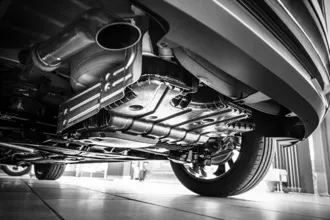
Underbody parts in an automobile are the mostly exposed areas to the different road conditions. The condition of the terrain surface and the environment will hugely impact the material at the car underbody. The parts at the bottom side of a car are mostly exposed and have higher chance for getting corroded or damaged early.
Therefore proper coatings the necessary to protect the underbody from corrosion and chipping.
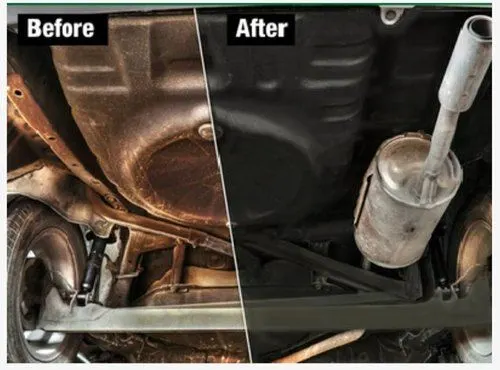
Undercoating is the sprayed application of a wax or rubber-based composite onto the entire underside of the vehicle. It's designed to create a rust-proof layer between the underside of the vehicle and the water, ice, and salt of the road.
Undercoating provides a more comprehensive protective layer for your vehicle. This includes the floorboards, wheel wells, and frame. Even if your car's underside isn't actually visible, it is still exposed to potential damage when you go out driving. Things like dirt, debris, mud, and salt are kicked up from the road and get into the nooks and crannies of your vehicle's undercarriage. So in addition to protecting against rust and corrosion, it also provides additional protection from the nastiness the road coughs up.
Historically, a bitumen-based compound was used, but after approximately a decade, this becomes brittle and water can become trapped between the underseal and body metal, counterproductively creating a more favourable environment for rust than if no underseal was applied at all.
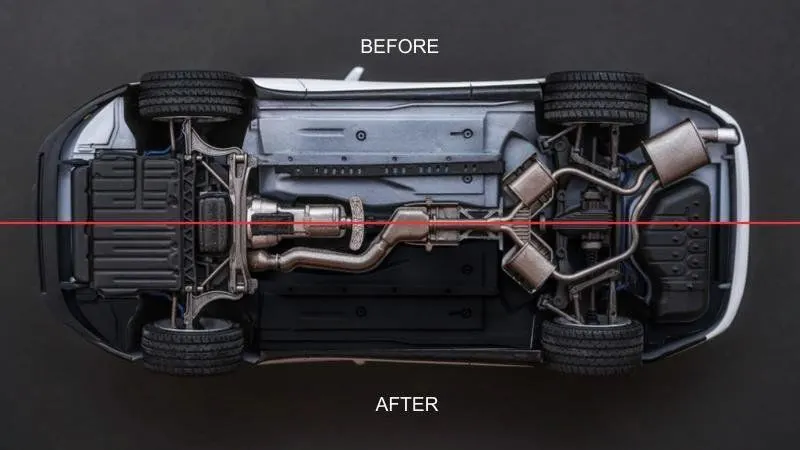
Vehicles for sale in some territories are not undersealed, because the climate is not sufficiently aggressive to warrant it. If such a vehicle is subsequently imported into a country with high rainfall, cold winters, and where salting of the roads is common, application of underseal is strongly recommended to ensure the vehicle has a long life.
Layers of underbody coating:-
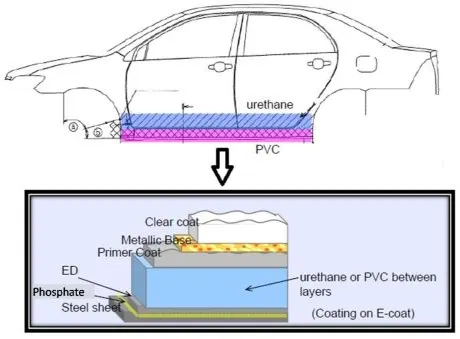
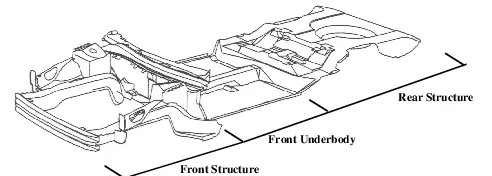
Figure shows the detailed Structure of underbody coating provided by most of the manufacturers. It comes as a series of material deposition processes layer by layer. base coatings are provided using Electro chemical processes. and the top layers are coated by sprayers either manually or using automated systems.
Different procedures of undercoating:-
Other than the coating provided by the OEM, there are also aftermarket coating products available based on the specific conditions of the vehicle usage.
From the factory perspective, The coating process is done through the following processes:-
1. Pre treatment:- It is the preperation stages for the BIW componenents before coating. Pre treatment involves different sets of cleaning processes to prepare the structure. As we know, the BIW components are products of stamping multiple part bodies. This processes remains the dirt or oil based substances on the structure. these needs to be cleaned with proper dissolvers before coating and some form of primer is applied on to the surface. A phosphate treatment is applied to the inert layer of metal phosphate, providing resistance to corrosion spread.
2. Electrodeposition(ED):- The method of applying primers using the electrodeposition coating process has become quite common in the automobile industry. The electrodeposition coating method fits well into the coating process in the automobile industry either as an in-line processing method or as an off-line system.
Bodies or parts to be coated are fully immersed in the electrodeposition bath. The electrodeposition paint formulated proper materials provides a uniform coating over all electrically conductive surfaces in the given coating time.
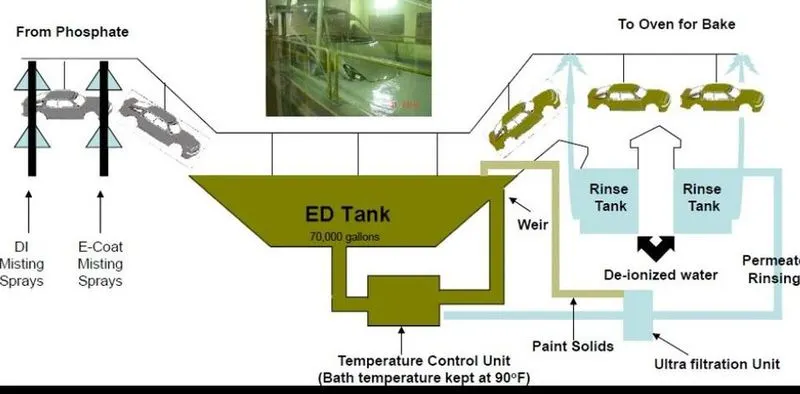
Figure shows the ED method using a large 70,000 gallon tank that applies the coating.
3. Undercoating:- Even after the ED, it is necessary to provide few outer coatings to the surface for protection and aesthetic appearance. This includes primer coats and clear coats. In premium segment OEM's, the systems are fully automated were others use manual spray painting methods.
Other than the factory coatings, External aftermarket coatings can be given by the customers depending on the need. Those are
- Rubberised underbody coating
- Wax based coats
- Asphalt based automotive undercoats
- Polyurethene underbody coats
Advantages of underbody coatings:-
- Protects the under body panels and mechanical parts from corrosion
- Absorbs noise from underbody thereby maximizing the comfortable noiseless experience.
- Increases life or car
- providing heat insulation between interior and external atmosphere
- Coating gives the ability of anti- chipping whereas small solid objects will not make sufficient damages to the surface of underbody.