Underbody Coating
scope
Detail report on car coating/ painting process in the industry.
Analyzing the automotive painting process in the factory
If we want to successfully perform any surface treatment repairing process, we must first understand how the manufacturer is applying the coats and preparing the piece/vehicle in order to achieve its final result.
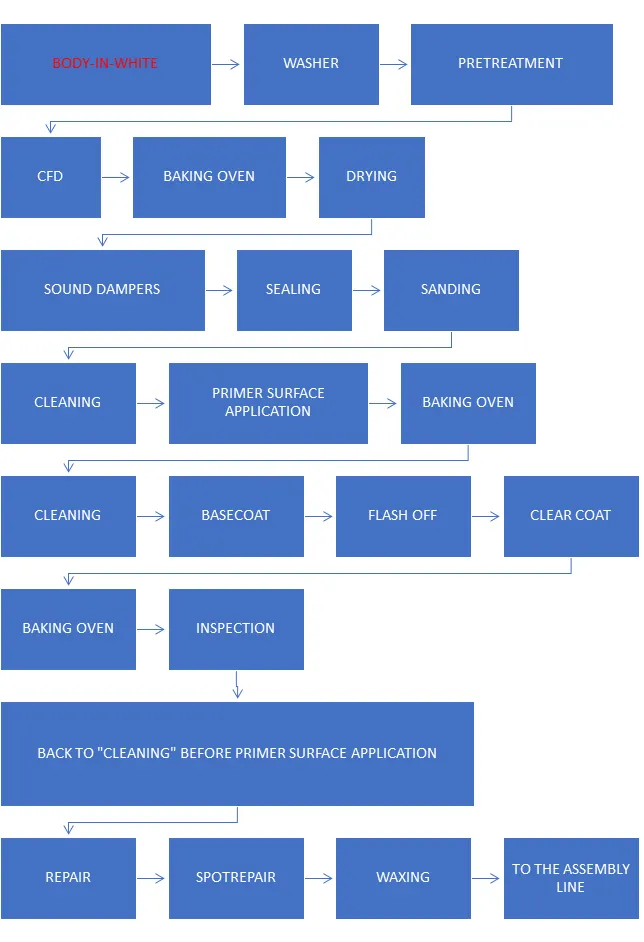
Basically, the body is washed, degreased, electrodipped in zinc phosphate, oven baked, sanded, sealed, dried, cleaned (with chemicals), primered, baked, painted, baked, clear coated, baked and then inspected for faults (which are repaired). All high-volume manufacturers have fully automated lines that take between 14-18 hours to finish a single body.
Even if the paint process may be different among manufacturer & sectors, the main process looks something like this:
The result is layers of carefully laid out coats, all of which put together is only slightly thicker than the average human hair.
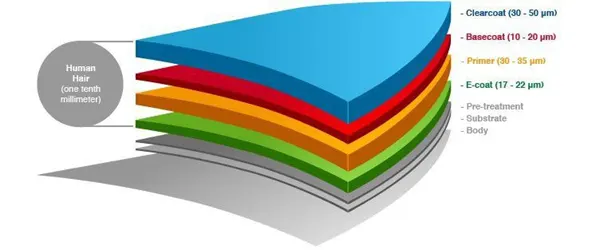
Cathodic e-coating gives the car body a primer coat. It protects the car from corrosion , especially the cavities of the body that cannot be reached easily by spray application.
Primer: evens out any irregularities of the underlying layer. It can be sanded easily and provides a smooth surface.
basecoat: gives the main color to the piece, therefore it plays a significant role in establishing the final visual impression.
Clearcoat: seals everything else and is applied last. It protects the car from external elements like snow, UV radiation, dirt, etc…