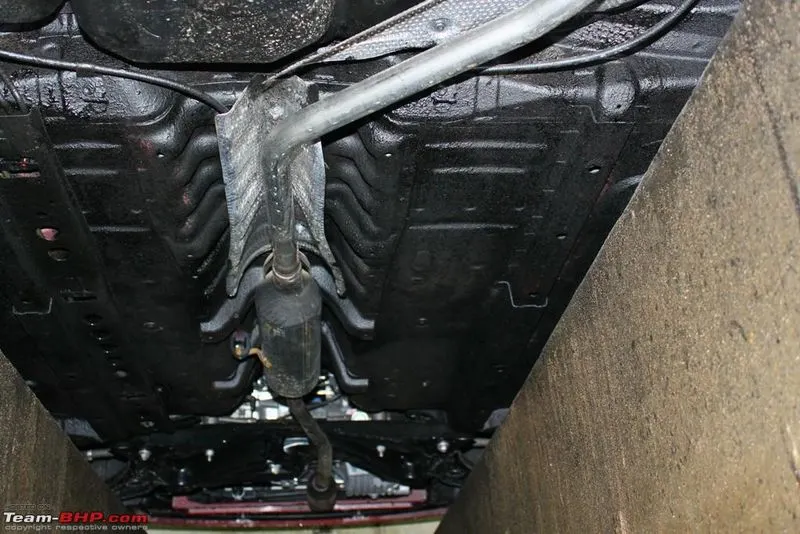
Underbody Coating
Underbody coating is usually a dense cladding (often based on rubber) applied uniformly to the undercarriage of the automobile. It is normally sprayed or painted on when the car is just out of the dealership and is clean. But even if you are getting the undercoating applied after a couple of years, it’s fine too. This is because it can prevent further damage to the undercarriage.
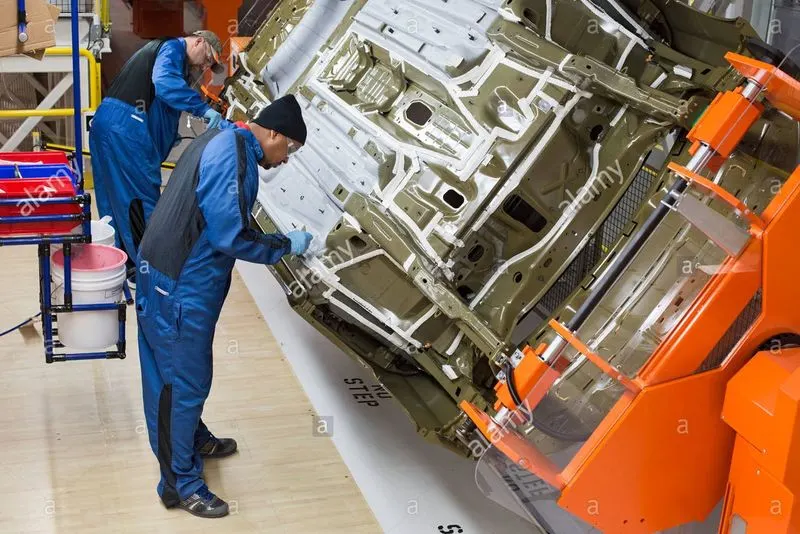
The main purpose of undercoating is to check rust especially in the body components like frame rails along with other exposed metal parts. Underbody coating can also reduce wear and tear.
Types of under coatings:
- Bitumen under coating
- Wax based Undercaoting
- Resin basedundercoating
- Bitumen-based: These car underbody coatings provide hard-wearing protection against stone chip damage and corrosion. They also have sound-deadening properties. Suitable across many substrates, but cannot be painted over. Can be applied by brush or spray, high build, and good for very tough conditions such as off-road.
- Wax-based: An excellent anti rust coating suitable for all substrates. The wax is applied soft and cures hard, either by brush or spray, and can be layered thickly. It cannot be top coated.
- Resin-based: Polyurethanes and rubber coating are popular because their elastomeric properties provide long-term stone chip damage and corrosion protection as well as sound deadening effects. These also have the benefit of being suitable for a wide range of substrates and they can be painted over. Can be spray-applied, high build, and particularly good for salted roads.
Advantaged of coating
Protect from rust:
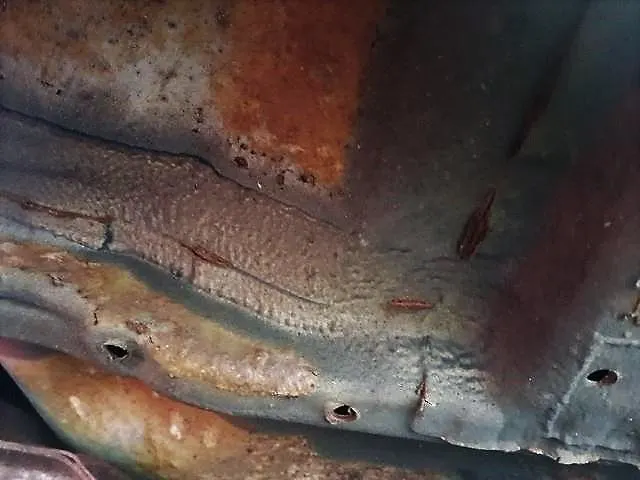
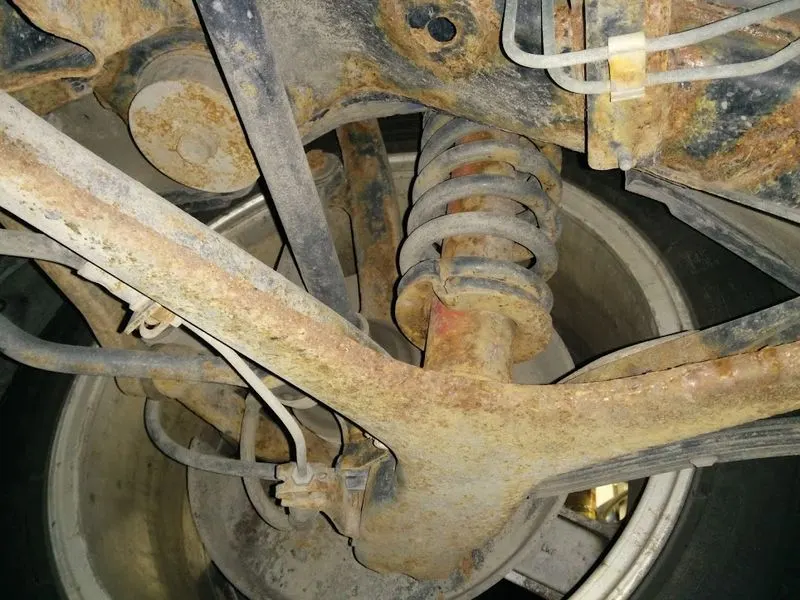
It plays an important role in keeping corrosion at bay. Underbody coating can come in handy especially if you live near the sea, where there is too much humidity, and rusting is just one of those everyday things. You should also seriously consider undercoating if you reside in a place where it snows in winter.
Absorbs Noise :
Believe it or not, very thick undercoating can soften the noises that reach the cabin. Since the undercoating is often made up of rubber it absorbs some of the rackets. The occupants of the car could spare themselves of the road noises – at least up to a certain extend.
Reinforcement :
If your car comes with stock underbody coating, using another coating on top of it, is not going to hurt. It will offer additional reinforcement, protecting the underbody from water, road debris, gravel and small pebbles. There would also be a lesser chance for the factory coat to flake away.
Prolongs car life :
Good undercoating not only defends the underbody from corrosion but also protects the engine and transmission as well! Less rusting coupled with slower wear and tear can surely add years to the lifespan of your vehicle. There would be fewer dents, dings and scratches on the undercarriage for you to fret about.
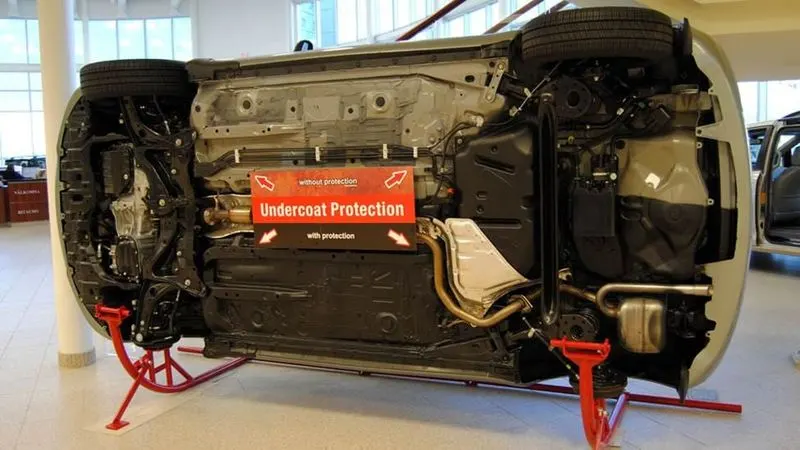
So anything in the world has bth advantage and disadvantage, so in the same wy Underbody coating also has disadvantage.
- It will not effect much with already corroded parts.
- It is sujestable to new cars, instead of used cars will have lot of mud and rust.
- Need to recoat once the life span of coating expires.
- Additional cost caoting will lead to warenty, as of vehicle.
- It add additional weight to the vehicle.
This is some brief about the Underbody coating.
These are some referance images.
Vehicle Before Under body coating
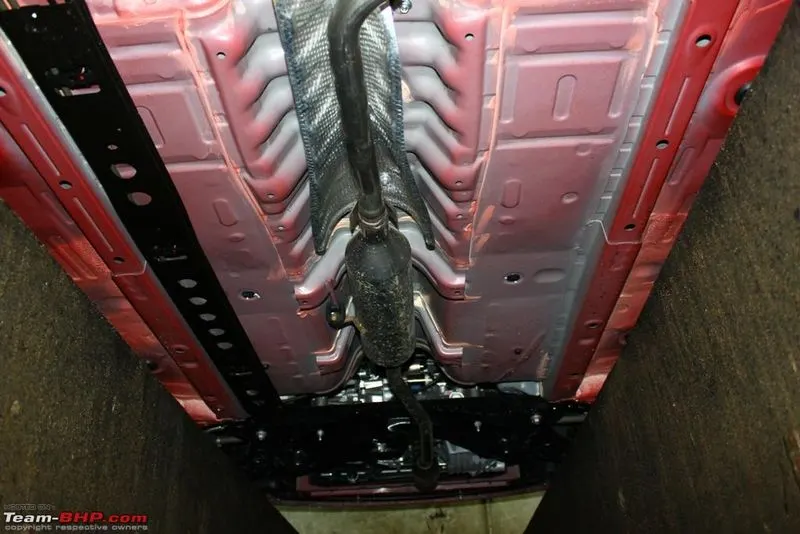
Vehicle after Underbody coating