Underbody Coating
AIM - To explain the underbody coating describing the types, purposes, and pros and cons.
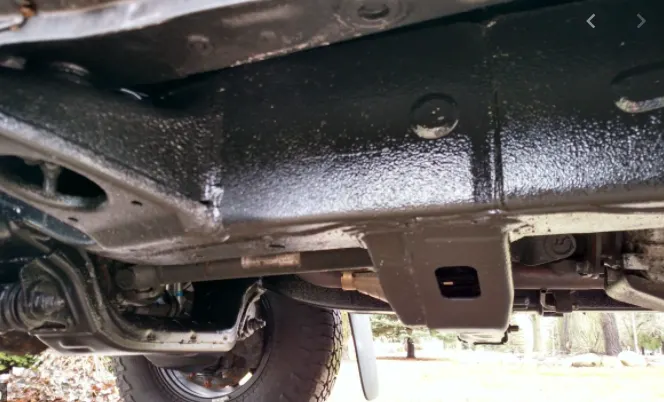
UNDERBODY COATING - A car’s underbody is exposed to the most wear and tear caused by muddy water, potholed roads, stones, and other obstacles on the road. Because it’s not in plain sight, we often do not see the damage. "underbody coating" means any coating labeled and formulated for application to wheel wells, the inside of door panels or fenders, the underside of a trunk or hood, or the underside of the motor vehicle so as to protect from various conditions.
First, the car underbody is washed and degreased. Then, the Protective Coat is applied with Body Schutz Gold Gun or Undershield gun The Body Schutz/Undershield is a hard coating on the underbody of the car, that is fast-drying, paintable, rubberized, non-toxic, and chip-resistant. It also minimizes sound from underneath the vehicle and insulates against the heat and cold.
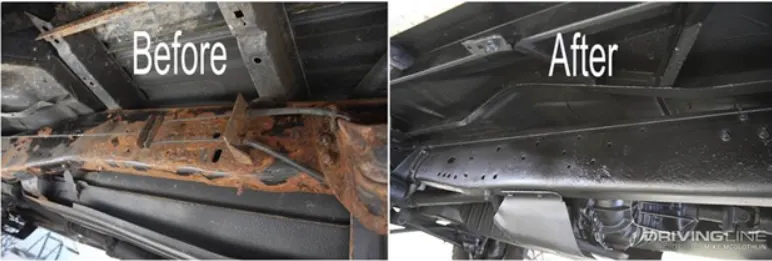
The Underbody coating protects the car underbody from rust, increasing the longevity of the car and thus enhancing its resale value.
The types of underbody coating are as follows:
1) Rubberized undercoating - Rubberized undercoating is easy to apply and offers sound cushioning as well as protection from dust, moisture, and dings or dents.
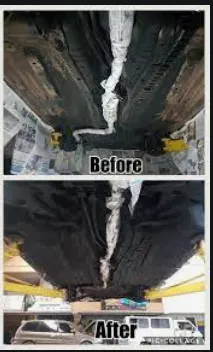
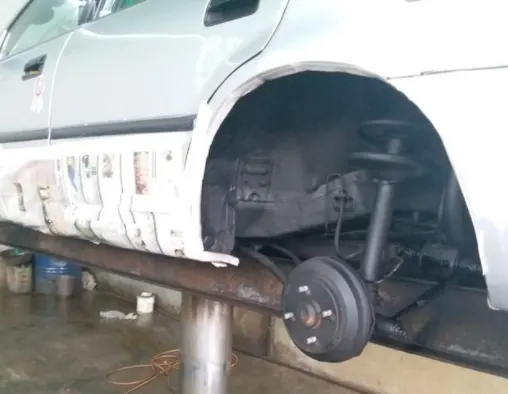
In addition to your undercarriage, rubberized undercoating is also safe to use on wheel wells and quarter panels, and dries to a soft rubbery finish that prevents further rust, damage, or moisture seeps. The coating can be painted over and, if necessary for bodywork, can be easily removed with an undercoating removal spray.
Overall, the rubberized coating is generally the best option for protecting your vehicle's undercarriage, as it provides the simplest and best protective measures against rust and moisture.
2) Polyurethane underbody coating - This type of vehicle undercoating is a little bit quicker and easier to apply.
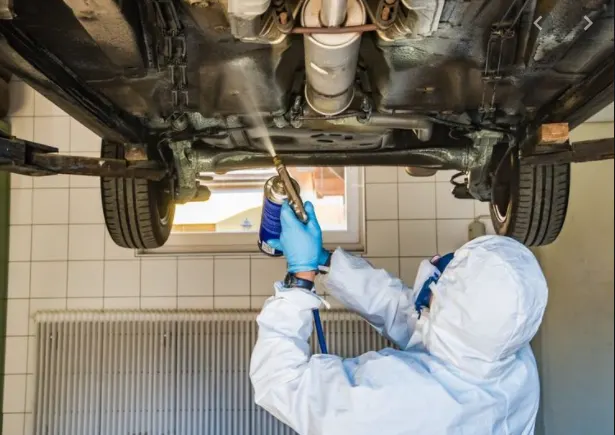
Oftentimes, polyurethane undercoating will come in canisters ready to preload into an application gun. This type of sealant works by seeping into all cracks and seams, displacing salt and moisture, and oozing around rusty areas to bond with and protect the unoxidized metal. It also sands quickly in case you'll need to perform bodywork and can be painted over.
3) Wax or paraffin-based undercoating - A paraffin-based undercoating will be the cheapest and quickest option available with which to protect the undercarriage of your vehicle. However, keep in mind that it will wear off quicker than other types of undercoating and will need to be stripped and reapplied at least once every year.
Wax-based undercoatings never truly harden. During application, they drip or flow into seams and cracks to provide protective properties. They are usually available in a spray gun canister or in an aerosol can and offer at least a base protection in moderately humid climates.
4) Asphalt-based undercoating - Asphalt-based undercoating generally contains a little bit of rubberized material that sets up firmly and also helps soften noise. Generally sold in five-gallon containers, this type of undercoating also needs more cure time than the other three, and is NOT paintable, making it best to use only for the undercarriage. For large trucks and heavy machinery, asphalt-based undercoating provides a bit of extra durability against rocks, chips, and moisture.
The pros and cons of underbody coating are as follows:
PROS: - 1) Provides an extra layer of protection - In most cases, new cars, SUV’s and trucks come with good protection underneath. But, if you are living in cold climates or coastal areas, having a coated underpart is a great advantage. It provides your car with an extra layer of protection from rust and corrosion. While driving your car, road debris will come into contact with the undercoating instead of underneath metal components.
2) Extend the lifetime of the vehicle - If the undercoating is applied properly, it can extend the lifetime of your vehicle for a significant amount of time. Vehicle undercoating gives your car rust prevention power and makes your ride safe and functional. When you don’t apply it to your vehicle, then quick rust is the outcome, which will lead to corrosion eventually.
3) Reduces internal noise - No one likes to have a noisy ride on their vehicles. Sometimes roads with heavy traffic cause unbearable noise pollution outside. Once your car is undercoated, it can reduce the interior noise inside of your vehicle and comparatively provide you with a more peaceful ride.
4) Self-applied facility - It is always preferable to go for professional touch for any kind of technical maintenance. But if your budget is tight, you need not worry about it much. With your basic car maintenance skills, you can do the job for yourself. When you go for professional help to undercoat your vehicle, it might cost you around 1500$. On the contrary, you can cover up the whole within 100$-150$ if you do the job for yourself. This self-applied facility doesn’t come with smooth finishing like a professional one, but it surely worth the money.
CONS: - 1) Less effective if corrosion already exists - Once there is rust underneath, vehicle undercoating won’t give you many effective results. Though the coating will be covering the damage that already took place, the rust inside will continue its job to lead to corrosion. Undercoating slows down the process, but you must remove the rust first before coating.
2) Works well on new vehicles - If your car is already old enough or you bought a used one, then undercoating wouldn’t be a good choice. As coating the underneath of a used or old car requires the removal of all the residue, it will cost you more which is definitely not the best idea. So, it’s better to apply coating on new cars as they offer premium protection.
3) Not impervious to damage - An undercoating doesn’t always mean protection for a fixed amount of time. Based on your road trips and the things you have to drive against, the lifespan of your coating can be minimal. If you are bound to drive on dirty areas, gravel roads, it can reduce the quality of this protective layer earlier than expected.
4) Extra weight - underbody coating results in increased weight of the vehicle that will affect the performance of the vehicle.
CONCLUSION - The explanation of underbody coating has been completed successfully.