Underbody Coating
Under-body Coating:
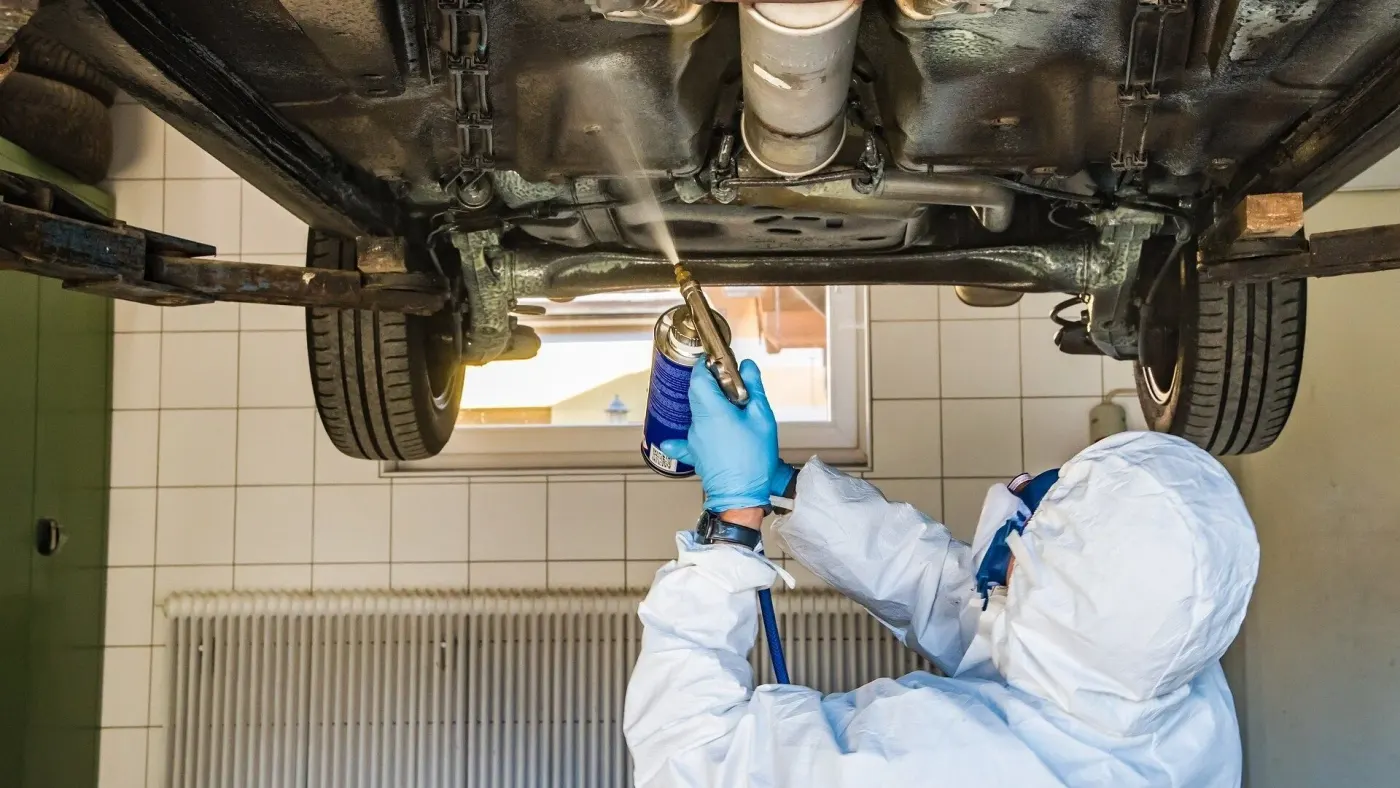
Underbody coating is a protective layer or coating applied to the underside of a vehicle to protect it from corrosion, damage, and wear caused by various environmental factors. It is designed to shield the vehicle's undercarriage, including the frame, chassis, floor pans, suspension components, and other vulnerable parts, from moisture, road debris, salt, chemicals, and other elements encountered during driving.
Purpose:
-
Underbody coating acts as a barrier between the vehicle's undercarriage and these harmful elements. It typically consists of a specialized protective material that adheres to the metal surfaces, forming a durable and resilient layer. The coating provides a physical barrier, preventing direct contact between the metal components and corrosive agents, thereby reducing the risk of rust and corrosion.
-
Apart from corrosion protection, underbody coatings may also offer other benefits, such as impact resistance, noise reduction, and thermal insulation. Some coatings have sound-deadening properties, helping to reduce road noise and vibrations, resulting in a quieter and more comfortable driving experience. Additionally, certain coatings provide insulation against heat and cold, enhancing the overall comfort inside the vehicle.
There are different types of underbody coatings available, each offering unique properties and benefits. The most common types include:
-
Bitumen-Based Coating: Bitumen or asphalt-based coatings are known for their excellent corrosion protection. They form a thick, rubberized layer that adheres to the undercarriage, sealing it from moisture and other corrosive agents. Bitumen coatings are particularly effective in areas with high salt content or harsh weather conditions.
-
Rubberized Coating: Rubber-based coatings provide superior impact resistance and protection against abrasion. They are flexible and have good sound deadening properties, reducing road noise and vibrations. Rubberized coatings are often used in off-road vehicles or for those that frequently encounter rough terrain.
-
Wax-Based Coating: Wax-based coatings offer a transparent layer of protection on the undercarriage. They are easy to apply and adhere well to the metal surfaces. Wax coatings provide reliable resistance against moisture and certain chemicals. However, they may require periodic reapplication to maintain their effectiveness.
-
Polyurethane Coating: Polyurethane coatings provide a strong and durable protective layer. They offer excellent abrasion resistance, impact protection, and resistance to chemicals and UV rays. Polyurethane coatings are commonly used in commercial vehicles and heavy-duty applications.
-
Oil-Based Coating: Oil-based coatings are typically made from rust inhibitors and penetrating oils. They penetrate the metal surfaces, creating a protective barrier against moisture and corrosion. Oil-based coatings are known for their excellent penetration capabilities, reaching into hard-to-reach areas.
Pros of Under-Body Coating:
-
Corrosion Protection: Under-body coatings form a protective layer that shields the vehicle's undercarriage from rust and corrosion caused by moisture, salt, and chemicals.
-
Impact Resistance: The coating acts as a barrier against road debris, stones, and other objects, reducing the risk of damage to vital components such as fuel lines, brake lines, and suspension parts.
-
Noise Reduction: Some under-body coatings, such as rubberized ones, provide sound deadening properties, minimizing road noise and enhancing passenger comfort.
-
Extended Vehicle Lifespan: By preventing corrosion and damage, under-body coatings can help extend the lifespan of a vehicle, preserving its value and reducing repair costs.
Cons of Under-Body Coating:
-
Application Challenges: Applying under-body coating can be a time-consuming and labor-intensive process. It requires thorough cleaning and preparation of the undercarriage to ensure proper adhesion.
-
Potential Weight Increase: Certain types of under-body coatings, particularly those that form a thick layer, may add weight to the vehicle, which can slightly affect fuel efficiency and performance.
-
Maintenance and Reapplication: Over time, under-body coatings may wear off or become damaged, requiring periodic reapplication to maintain their protective properties.
-
Cost: Under-body coating can add to the overall cost of vehicle maintenance. The cost varies depending on the type of coating, application method, and professional service if chosen.
In conclusion, under-body coating provides essential protection to a vehicle's undercarriage, guarding against corrosion, damage, and wear. It serves to prolong the vehicle's lifespan, enhance safety, and improve comfort. The selection of the appropriate type of under-body coating should consider factors such as the vehicle's intended use, climate conditions, and personal preferences. Regular maintenance and periodic inspection are crucial to ensuring the ongoing protection of the vehicle's undercarriage.