Underbody Coating
AIM:- To prepare a report about Under-Body Coating and its purpose and its pros and cons.
UNDER-BODY COATING
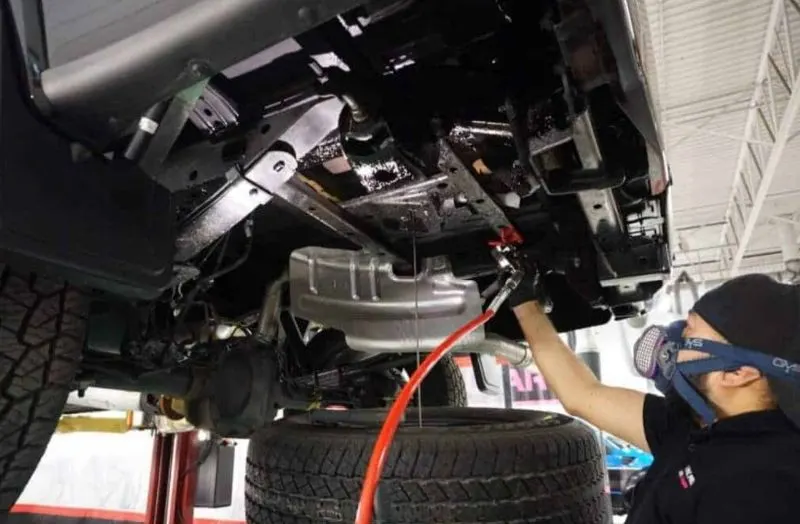
- Underbody coating is a thick covering (usually composed of rubber) that is applied consistently to the underneath of a vehicle. When the car is brand new and clean, it is frequently sprayed or painted on.
- Underbody coating is a thick durable coating added to an automobile's underbody or chassis to guard against impact damage from tiny stones, which would quickly erode regular paint, enabling corrosion to commence.
- Underbody coating protects the car's underbody against corrosion over time. It also protects elements that are not visually accessible but are prone to corrosion, such as interior body panels, frame rails, and other inner cavities.
- The primary goal of undercoating is to prevent corrosion, particularly in body components such as frame rails and other exposed metal pieces. Underbody coating can also help to decrease wear and tear.
TYPES OF UNDERBODY COATING
- Rubberized Underbody Coating
- Wax Based on Underbody Coating
- Asphalt Based Automotive Undercoating
- Polyurethane Underbody Coating
1. Rubberized Underbody Coating
Rubberized undercoating creates a textured surface that resists chipping, abrasion, corrosion, and weathering. It allows for a one-coat build-up with no leaking, running, or drooping. It shields the undercarriage of automobiles, trucks, vans, and recreational vehicles against corrosion and abrasion. The coating can also be used to protect wheel wells, quarter panels, fenders, door skins, the underside of the hood and trunk lid, floor pans, and other areas. The rubberized undercoating also helps to deaden noise, resulting in a more comfortable and quieter ride. The spray provides a textured black surface that is resistant to chipping, abrasion, external corrosion, and weathering. It dries in one coat with no leaking, running, or drooping. Rubberized undercoating should be applied to your vehicle for long-term protection of the undercarriage. Rubberized undercoating forms a protective layer that keeps dust, filth, and moisture from corroding the metal components. This additional protection is a low-cost technique that might potentially increase a vehicle's service life.
2. Wax Based on Underbody Coating
Wax Underbody Coating Spray is a solvent-free anticorrosive agent based on wax, polymers, and anticorrosive additives. The product is precise and has high sag resistance. It dries quickly and provides a tight water-protecting coating even in thin layers. The dried film exhibits excellent adhesion and anticorrosive qualities. Wax Underbody Coating Spray is generally used on wax-coated car underbodies and, more specifically, for the secondary treatment of all protective coatings such as PVC, PVC/wax, bitumen/rubber, and rubber/resins.
3. Asphalt Based Automotive Undercoating
Asphalt-based undercoating has certain advantages over wax-based undercoating. They both adhere well to most surfaces and perform well in terms of sealing off moisture, road chemicals, and oxygen. However, the biggest advantage of asphalt undercoating is that it is less costly. They last up to 5 years and dry to a Firm to Hard coating. Because asphalt-based undercoating requires a greater film thickness, you will need to apply more product to the surface to preserve it than if you use wax-based undercoating. Furthermore, asphalt-based treatments need greater surface preparation since they can actually seal in rust and moisture, causing it to proliferate. Finally, asphalt-based materials dry up with time, resulting in fissures in the covering surface.
4. Polyurethane Underbody Coating
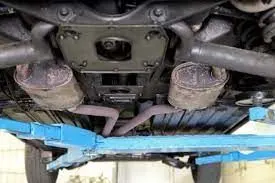
A polyurethane-based sealer is another choice for undercoating your car. This form of car undercoating is faster and easier to apply. Polyurethane undercoating is frequently supplied in canisters that are preloaded into an application gun. This form of sealant bonds with and protects unoxidized metal by seeping into all cracks and seams, displacing salt and moisture, and oozing around rusty regions. It also sands rapidly and may be painted over if bodywork is required. On the other hand, this sort of automotive undercoating usually necessitates a little more surface prep work before application, such as sanding and applying an etching primer to exposed metals.
Process of the Underbody Coating
- The vehicle is raised onto a lift, and the underbody is examined for faults.
- The underbody is cleaned to remove dirt and oil.
- Critical components, such as the silencer, are coated in a film to prevent the coating from adhering to them.
- The rest of the underbody is equally spray painted.
- The silencer film is removed and coated with zinc coating.
- The final examination is performed to search for problems.
Pro's of Underbody Coating
1. Fights rust
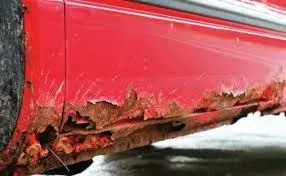
It has a significant function in preventing corrosion. Underbody coating can be useful, especially near the sea, where humidity is high, and corrosion is a common occurrence. It should also be taken seriously as a site where it snows in the winter.
2. Car life
Good undercoating not only protects the underbody from corrosion but also the engine and gearbox! Less corrosion, along with less wear and tear, may easily add years to your vehicle's lifespan. There would be fewer dents, dings, and scrapes to worry about on the undercarriage.
3. Absorbs noise
Whether you realise it or not, thick undercoating can reduce sounds that enter the cabin. The undercoating, which is often made of rubber, absorbs some of the racket's energy. The occupants of the automobile may, to some extent, escape the road noises. So, if you want a quiet ride and a nice experience, acquiring an underbody covering is always a smart option.
4. Reinforcement
If the automobile already has a factory underbody coating, adding another coating on top of it won't damage it. It will give support to the underbody, protecting it against water, road debris, gravel, and tiny stones. The factory coat would also be less likely to peel away.
Con's of Underbody Coating
A used vehicle may already have residue on the floor, as well as rust and corrosion stains. Undercoating will not assist if there is existing corrosion, and the rust must be removed before it can be applied, which might be costly for the user.
Conclusion
We learned about undercoating, its many types, advantages and disadvantages, and how it is required for automobiles.