Underbody Coating
Under Body Coating and its Purposes:
- Under Body Coating in automotive will helps to prevent corrossion and acts as a protection to the automotive body belly.
- It is a long term protection on the body, A car’s underbody is exposed to the most wear and tear caused by muddy water, potholed roads, stones and other obstacles on the road. Because it’s not in plain sight, we often do not see the damage.
- Mostly some of the automotive companies try to reduce the cost of the vehicle,so they give lesser importance to these under body coatings,Generally when a customer try to buy an car will look for safety,design,specifications,Engine capacity,mileage,but they wont look for any coatings,after a period of time with out any coatings under the body will form rust,corrossion and leads to risk the life of passenger.
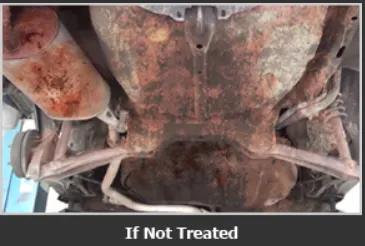
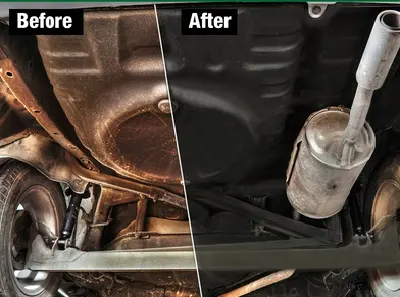
- The Above image shows an difference on the coated and uncoated bodies.
Types of Under-Body Coating:
- Water Based Undercoats
- Petroleum Based Undercoats
- Asphalt Based Undercoats
- polyurethane Undercoats
- Wax or paraffin based Undercoats
1) Water Based Undercoats:
- It is most popular for the manual procedure.These undercoating are thin set and take short time to dry. This coating can be done in automotive shops.The disadvantage of water-based undercoating is that it should be repeated frequently.
2) Petroleum Based Undercoats:
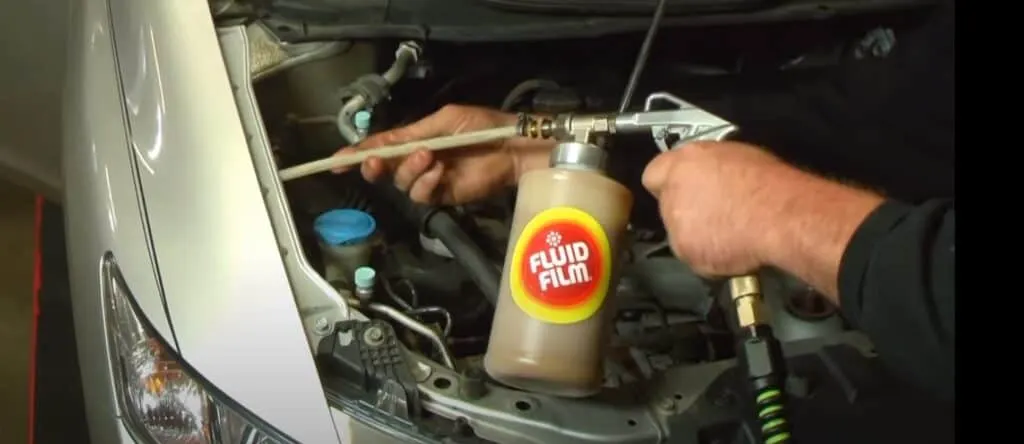
- Petroleum-based undercoating is made from oil and they have greater deflective abilities for road salts and chips. The petroleum base helps repel ice and water better than water-based undercoating.This type of undercoating also needs to be replaced once in a year.
3) Asphalt Based Undercoats:
- It is the strongest undercoating available and it is used in military vehicles and on all-terrain. Asphalt-based undercoating will last long and is the best option for vehicles which endure heavy road use.
- Asphalt-based undercoating is the thickest coating which has the most damage-resistant properties. It contains a little bit of rubberized material that sets up firmly and also helps soften noise.This type of undercoating also needs more cure time.
4) Polyurethane Undercoats:
-
This type of undercoating is a little bit quicker and easier to apply.
-
This type of coatings works by seeping into all cracks and seams, displacing salt and moisture and Leak around rusty areas to bond with and protect unoxidized metal.
-
On the flipside, this type of car undercoating generally requires a little bit more surface work before applying, Sanding and applying an etching primer to bare metals before using are generally recommended.
5) Wax or paraffin based Undercoats:
-
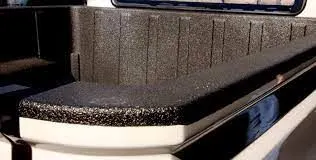
A paraffin-based undercoating is the cheapest and quickest option available with which to protect the undercarriage of your vehicle.
-
It will need to be stripped and reapplied at least once every year.It will wear off quicker than other types of undercoating.
- During application, they drip or flow into seams and cracks to provide protective properties. They are usually available in a spray gun or in an aerosol.
Pros of Underbody Coating:
- It Minimizes interior Sound or act as an sound insulation and gives smooth driving performance.
- It act as a Heat Insulation.
- Anti-chipping property helps to prevent the damage cause by stones,mud during driving.
- Easy Maintenance and increase the life of Vehicle.
Cons of Underbody Coating:
- High Cost,Cost of underbody coating is expensive.
- Risk of damage during application,If the coating is spread to the acting joints,suspension,brakes it will reduce the function of the parts,So High care is required during the application.
- Periodic checkup and service is required and min 1 year replacement should be done(Based upon Coating).