Underbody Coating
There are several types of coatings that are commonly applied to the Body in White (BIW) of a car. These coatings serve various purposes such as protection, aesthetics, and functionality. Here are some of the types of coatings used on the BIW of a car:
-
E-Coat (Electrocoat): E-Coat is an electrodeposition coating process where an electrically charged paint is applied to the car's body panels. This process ensures a uniform and corrosion-resistant coating, providing excellent protection to the metal surface. E-Coat is often used as a primer layer before applying other types of coatings.
-
Primer: Primers are applied to the car's body panels after the E-Coat process. They provide adhesion, corrosion resistance, and improve the paint's durability. Primers also help to fill in any imperfections on the surface, ensuring a smoother final finish.
- Under Body Coatings: Under body coatings are apllied to specific areas in car undercarriage. These coatings provide extra protection against rust and corrosion caused by exposure to moisture, salt, and road debris.
-
Basecoat: The basecoat is the colored layer of paint that provides the car's desired appearance. It contains pigments and dyes that give the car its color. Basecoats also provide some protection against UV radiation.
-
Clearcoat: Clearcoat is a transparent layer applied on top of the basecoat. It provides gloss and depth to the car's finish while offering protection against UV rays, weathering, and minor scratches. Clearcoat also enhances the color and appearance of the basecoat.
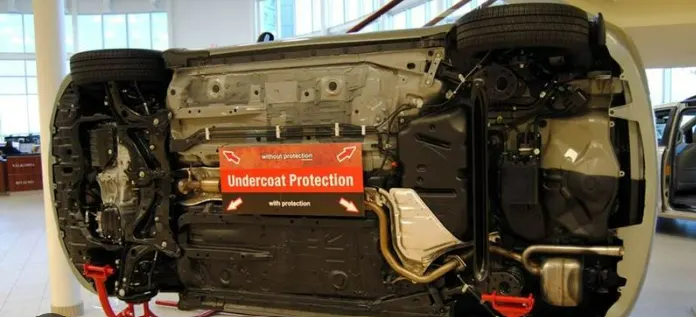
Advantages of Car Underbody Coating:
-
Rust Prevention: The underbody of a car is exposed to moisture, water, salt, and other corrosive substances on the road. The coating acts as a barrier, preventing these elements from coming into direct contact with the metal, thus reducing the risk of rust and corrosion.
-
Sound Dampening: Applying an underbody coating can help reduce road noise and vibrations. The coating absorbs and dampens sound, resulting in a quieter and more comfortable ride.
-
Impact Resistance: The coating provides a protective layer that can withstand small impacts, such as stones, debris, and minor scrapes, minimizing the risk of damage to the undercarriage.
-
Chemical Protection: Underbody coatings can protect the vehicle from chemicals, oil, and fuel spills that may occur on the road or during maintenance.
Types of Car Underbody Coatings:
-
Rubberized Undercoating: This type of coating is made from a blend of rubber polymers and solvents. It forms a durable, flexible, and water-resistant layer that offers good protection against rust, corrosion, and impact. Rubberized undercoating also provides sound deadening properties.
-
Asphalt-based Undercoating: Asphalt-based coatings are made from a mix of asphalt, solvents, and fillers. They provide excellent protection against rust and have good sound deadening properties. However, they may not be as flexible as rubberized undercoating.
-
Wax-Based Undercoating: Wax-based coatings offer a temporary layer of protection. They are typically applied as a spray or a thick liquid that dries to form a wax-like layer. While they offer some rust prevention, they are not as durable as rubberized or asphalt-based coatings and may need to be reapplied more frequently.
- Polyurethane Coating - Its ia quicker and easy to apply. It comes in canister and can be easily loaded in a gun.
Process of Applying Car Underbody Coating:
-
Cleaning: The undercarriage is thoroughly cleaned to remove dirt, dust, and any existing coatings or rust. This step may involve pressure washing or using specialized cleaning agents.
-
Drying: After cleaning, the undercarriage is dried completely to ensure the coating adheres properly.
-
Masking: Areas that should not be coated, such as exhaust pipes, sensors, and moving parts, are masked off to prevent the coating from interfering with their functionality.
-
Application: The chosen underbody coating is applied using a spray gun, brush, or roller. Multiple coats may be applied to ensure adequate coverage.
-
Drying and Curing: The coating is then allowed to dry & cure as per instructions.
Cons of underbody coating:
-
Difficult maintenance and inspection: It can be challenging to check and maintain the components underneath once the underbody coating is applied.
-
Limited effectiveness on existing rust: Underbody coating is better for preventing rust rather than treating existing rust.
-
Weight increase: Some underbody coatings may add a little weight to the vehicle, which could affect fuel efficiency or performance.
-
Periodic reapplication: The coating may wear off over time and need to be reapplied to maintain its effectiveness.