Underbody Coating
Under-Body coating
The underbody coating is a thick, rubberized paint that forms a 2-3 mm thick coating along the underside of the car. There is also a thinner clear coat underbody coating which is like a lacquer that coats the entire underside of the car. Rust-preventive coating material is also injected into crevices such as the bottom of doors and door sills, to protect them from rust.
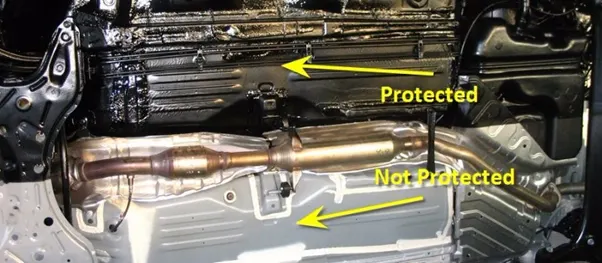
Advantages of underbody coating:
Rust Prevention
Salt water tends to corrode cars really badly. A layer of coating can prevent any damage from salt water to the underbody. On bad roads, flying stones and pebbles can chip off the paint and leave the metal exposed. Using an underbody coating offers extra protection.
Sound insulation
The thicker underbody coatings used on cars also act as effective sound dampeners. They can reduce road noise and tyre noise and make the cabin seem quieter – due to the sound absorptive nature of rubberized paints.
Easy maintenance
It makes the car easier to clean by just hosing the underside down. Most underbody coats come with a five-year warranty, which is the lifetime of such a coating.
Disadvantages of underbody coating:
High cost
Rubberized Underbody coating is very expensive as compared to normal paint.
Risk of damage during application
Care must be taken while applying underbody coating. This thick rubberized paint if not applied properly, can get into moving mechanical parts and cause premature failure. They can also hinder smooth movement of suspension components, if applied incorrectly.