Underbody Coating
Under-Body Coating:
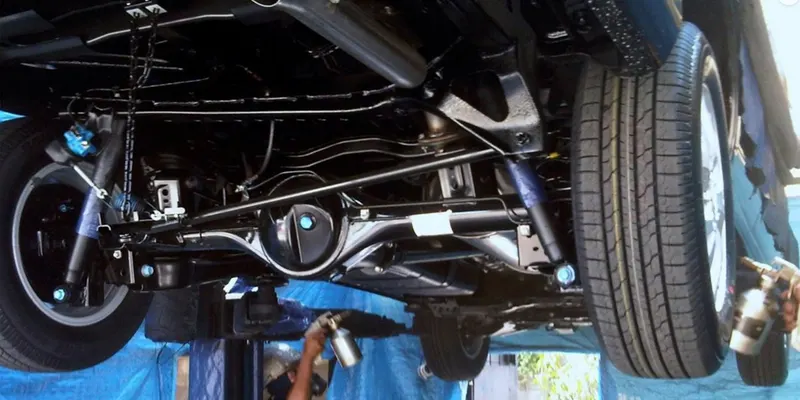
Under-body coating is a specialized coating process( cladding process) of thick layered corrosion resistant material apllied or sprayed to prevent or protect the underside of the body( here we will refer to cars) from corrosion and physical damages that are caused by various environmental factors( water, salt and reactable chemical agents). The thick material coating is applied or sprayed in such way that it is uniformly applied to the undercariiage of the vehicle.
The surface that gets the coating is thorughly cleaned ensuring all the foreign material like dust, debris, dirt particles are removed completely prior applying the coating, the areas prone to rust or already having a rust condition will be repaired prior to the coating process. the coating material is technically a thick layered material rubber-like substance durable in nature and acting as protective layer between road anf the undercarriage of the vehicle body.
Types of caoting process:
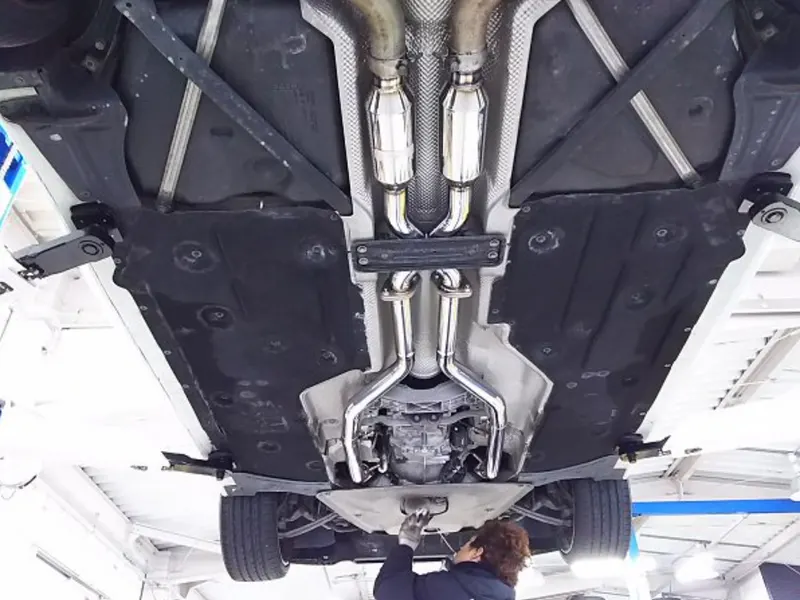
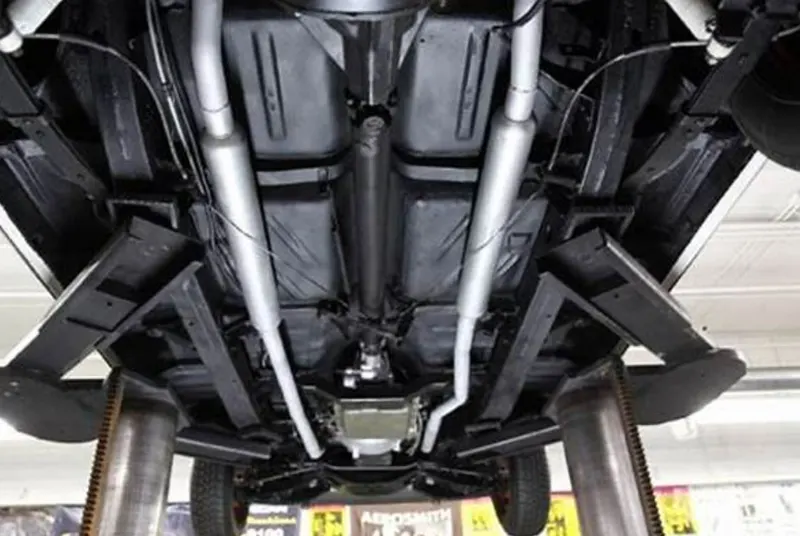
Type 1-Rubberized Underbody coating:
A thick rubber based coating sprayed to the underbody of the vehicle.
It creates a proetctive barrier acting like a shield that prevents the underbody area from salt,moisture and certain corrosive substance to access or reaching it.
Rubber-based coating not only prevents from rust, but it also acts as a sound- cushoining( noise abosrbant) reducing the impact of noise.
Type 2- Polyurethane Undercoating:
It is also one of types of underbody coat which can applied bit quicker and easy to apply. It will be readily avialble in canister that can be preloaeded in to spray guns, polyurethane coating is applied as it can seep in through the the crak surfaces & seams easily. It adheres well to the metal surface forming a hard rubbery finish, PU coating comes in differnet formulations that can be utilised based on specific requirements. Some can be directly sprayed in to metal surface thorughly while few are specialized for rust proof surfaces, PU coating are abrasion resitance that prevents vehicle underbody from various physical damages caused by uneven road conditions.
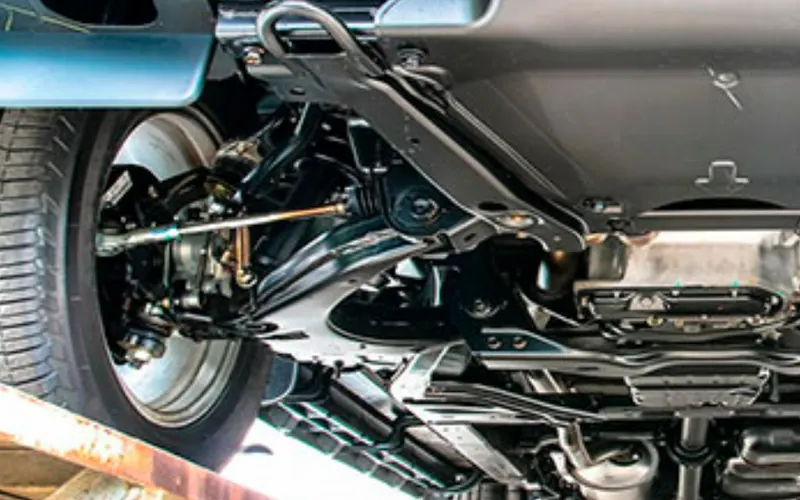
Type 3- Wax or Paraffin-Based Undercoatings:
Wax based underbody caotings are used specifically for attaining a glossy finish and wax based coat acts as a barrier preventing the underbody from mositure and corrosive substances, It is like a base protection coating process, the only disadvantage of the wax based coating is it easily wears out, so atleast once in a year it has to be re-applied.
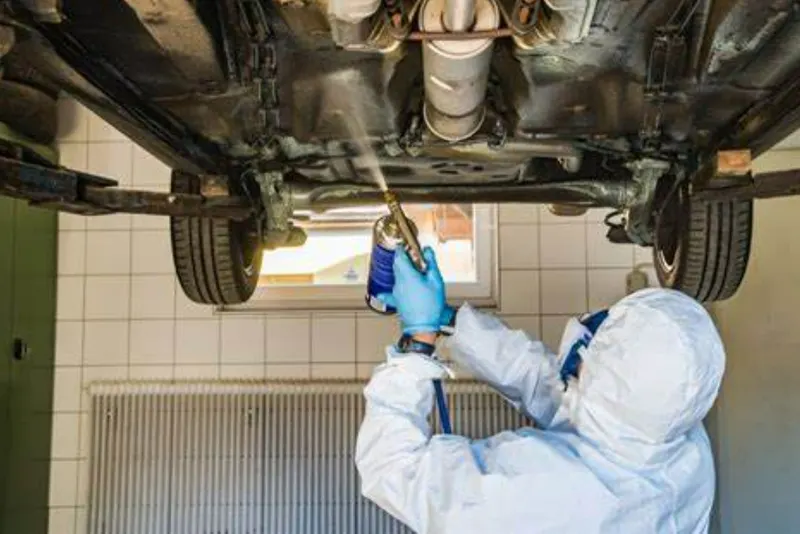
Type 4- Ceramic Undercoating:
Ceramic underbody coat is a new practice/process or method of underbody coat that is usually comprises of nano-particles which is sprayed on to the underbody of the vehicle, its is extraordinarly hydrphoibic in nature which doesn't allow water to stick to the metal sruface acting as strog barrier to water. It is strong, durable barrier against moisture and otehr corrosive substances. ceramic underbody coats are quite expensive but considered to be more effective and long lasting than any other coating process.
Advantages of Underbody coating:
Expands the life span of car by proetcting from corrosion( rust) and physical damages from uneven road conditions, environmental conditions such as mositure, dirts etc.
Acting as sound abosrbant( Sound cushoining), hence reducingthe impact of road noise entering into the cabin.
AS it abosrbs the sound and dampers the vibrations, we get a smooth and overall driving experience is improved
Underbody coatings are usually referred as rust fighting agents as their main purpsoe is to act as a barrier preventing rust.
Underbody coating improvesthe vehicle's undercarriage durability by protecting it from phyisical damage caused by rocks, debris, and other hazards on the road. The coating can absorb impacts and prevent scratches, dings, and other forms of damage, which can help to extend the life of the undercarriage.
The resale value of the car tends to be bit higher compared to non-underbody coated vehicles.
Disadvantages:
Cost: More expensive and it depends the way if it's more proessionally applied and varies from material to material, also depends on area and size of the vehicle.
Time consuming: It undergoes sequential process such as cleaning, preparation of underbody for cating process, it is more challenging if the metal surface is already exposed to rust or physical damages etc.
Limited protection: Some coatings are not reliable or long lasting, if they worn out after a period of time , it will no longer protect the underbody metal surface unless it is reapllied in that surface, so it'sa repetitive process for atelast once in a year.
Example: Wax Based coating
Difficulty of application: the underbody coat process requires specialized equipment and knowledge to apply thoroughly on the metal surfaces. It will be a challenging task for a DIYer to get the coating to adhere properly, which may lead to uneven coverage and less effective protection.