Underbody Coating
What is Under-body coating?
- Underbody coating is a thick cladding (typically made of rubber) that is placed uniformly to the car’s underside.
- When the automobile is fresh off the lot and spotless, it is usually sprayed or painted on.
- But it’s acceptable if you apply the undercoating after a couple of years.
- This is because it might protect the undercarriage from additional harm.
-
In Indian road conditions, a cars underbody is most prone to corrosion..
- Not only in indian road conditions where you go the corrosion takes place the only process to avoid the corrosion is "UNDER-BODY COATING".
-
Underbody coating provides long term protection from corrosion to car’s underbody.
-
It also protects parts like internal body panels, frame rails and other inner cavities that are not physically accessible but are prone to corrosion.
- The underbody coating that is most commonly used on cars in India and supplied by companies such as 3M is a thick.
Types of Under-body coating process:
Basically there are four-types of under-body coatings.
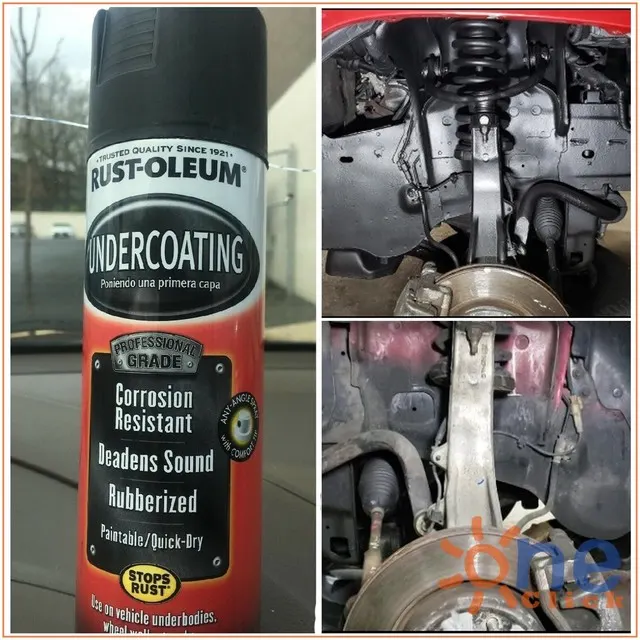
- Rubberized under-body coating.
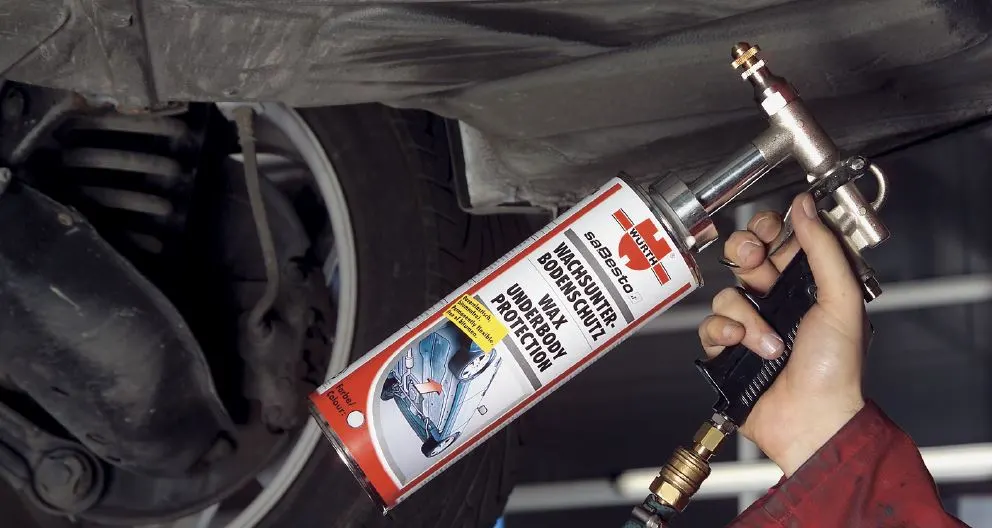
- Wax-based under-body coating.
- Asphalt based Automotive under-body coating.
- Polyurethane under-body coating.
Rubberized under-body coating:
- This is widely considered to be the best underbody coating for your car.
- It protects the underbody from scratches and keeps it properly.
- It’s also not difficult to apply this to the undercarriage.
- This can be done at the authorized service center or by the local repair shop at a reasonable price.
- Rubberized coating is ideal if you want to keep the road noise to a minimum and rust and corrosion away.
Wax-based under-body coating:
- This transitory undercoating will, on the whole, fade away after a few months.
- On the plus side, wax-based undercoating is resistant to dampness.
- It is also the most cost-effective alternative.
Asphalt based automotive Under body coating:
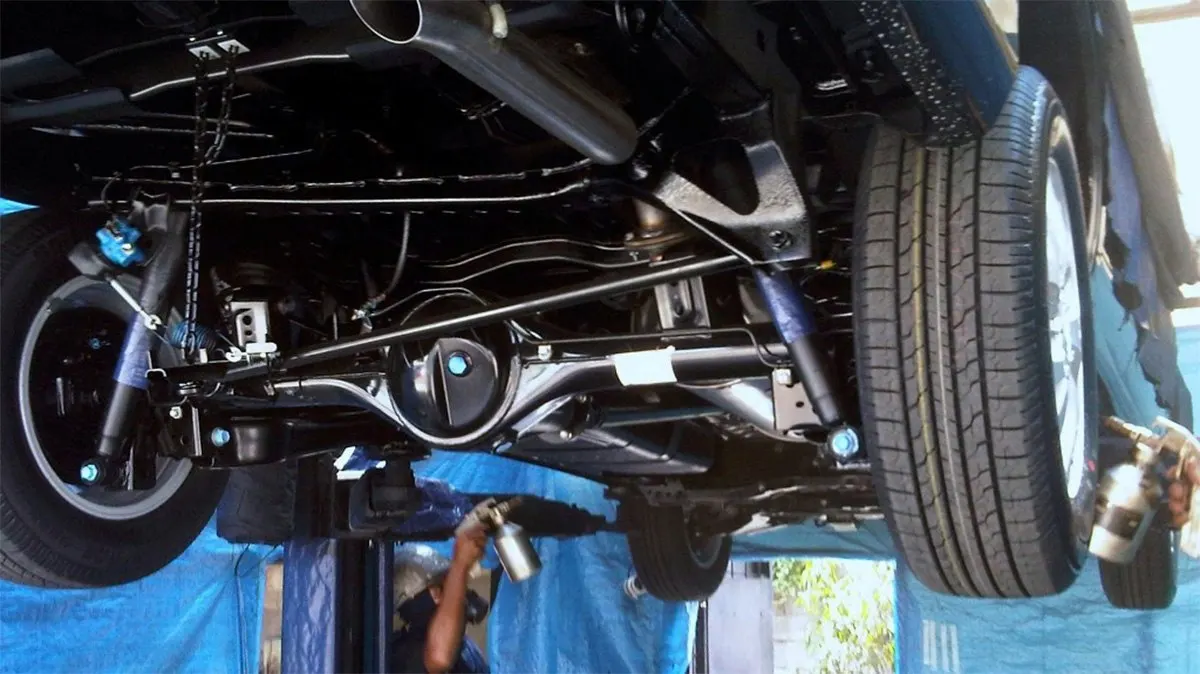
- Suitable for lorries, trucks, and other heavy vehicles.
- In comparison to rubber-based coatings, this gives a higher level of protection.
- Asphalt-based coatings, on the other hand, incorporate a small quantity of rubber for sound insulation.
- The application of this coating, however, takes some time.
Polyurethane under-body coating:
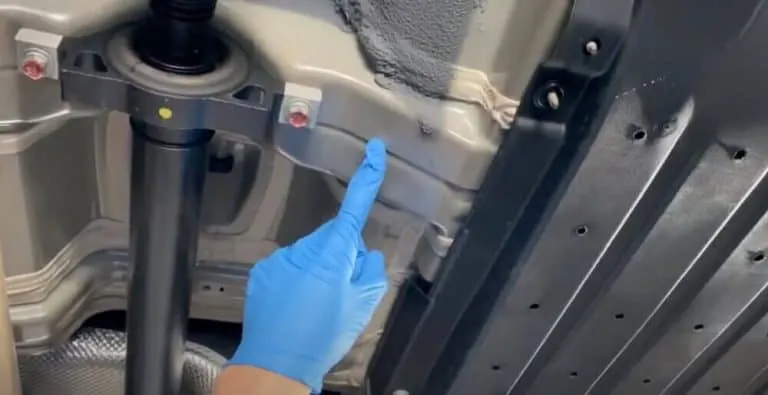
- This covering seals breaks and fractures in the vehicle’s underbody.
- It provides strong corrosion resistance and also binds to the metal.
- Unlike an asphalt-based coating, the polyurethane coating may be painted over.
Under-body costing pros and cons:
That is why a vehicle undercoating provides you with the safety and functionality you need over a long-term basis. Here are the pros and cons of having an undercoating installed to consider if you’re thinking about having this service performed on your vehicle. Undercoating and rust-proofing are examples of offering protection and care to the underbelly of your vehicle. Even if you live in a warm climate where salt or ice-melting chemicals are not used on roadways,It is essential to protect against corrosion and rust on the underside of the car, truck, or SUV.
Pros:
- It provides a layer of protection aganist corrosion.
- It will extends the life of your vehicle.
- It can be applied in damaged areas.
- It can be self-applied.
- There are multiple methods of under-coating to be used.
- The service might help with the cost of your insurence.
- It may help to reduce the interior noise.
Cons:
- It is less helpful if the corrosion is already present.
- It works best on new cars.
- Most vehicles make it five years before corrosion begin to show.
- A third party coating might avoid your vehicle's warranty.
- It adds weight to the vehicle.
- An under-body coating is not impervious to damage.
Rust Prevention:
- Ideally any additional underbody coating should be applied when the car is brand new and clean.
- Car manufacturers use thick paints and sealants for the underbody, but adding an underbody coat especially in coastal cities is useful.
- Salt water tends to corrode cars really badly.
- On bad roads, flying stones and pebbles can chip off the original underbody coating and leave the metal exposed.
- Using an aftermarket underbody coating offer extra protection.