Underbody Coating
AIM:-
In this project , I’m going to work on the underbody coating process, types, advantage & dis advantages
What is underbody coating ?
Underbody coating provides long term protection from corrosion to car's underbody. It also protects parts like internal body panels, frame rails, and other inner cavities that are not physically accessible but are prone to corrosion
Coatings are the best way to keep a variety of surfaces safe. It can not only stand up to the processing materialbut also prevent standard corrosion that may occur simply because of the material the machine is made from. They keep surfaces clean.
Rubberized undercoating is easy to apply, and generally offers the best protective coating for your car's undercarriage. It cushions surfaces against moisture, rust, dings, and dents. Rubberized undercoating is safe to use on quarter panels and wheel wells and dries with a soft rubbery finish.
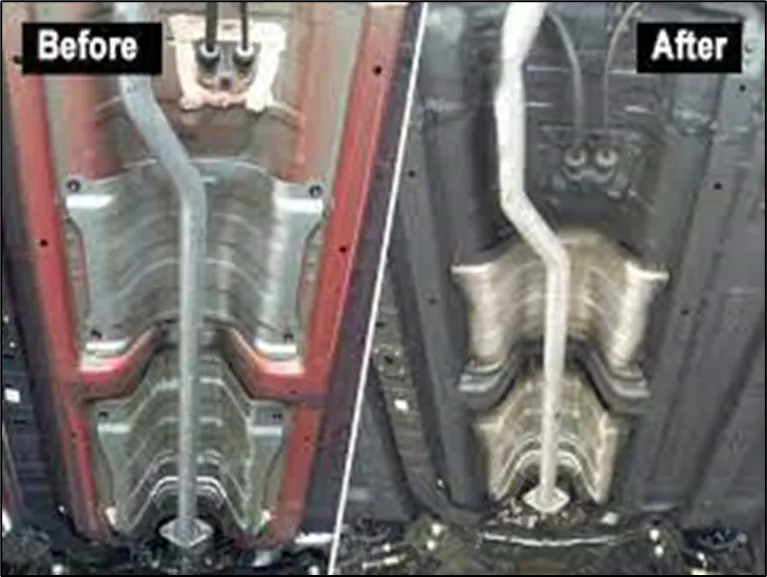
UNDERBODY COATING PROCESS:-
Modern automotive coating methods conssit of five main steps. They include the following,
- Pretreatment: removes and cleans excess metal and forms an appropriate surface structure enabling bonding of a corrosion protection layer.
- The next step is electrodeposition (ED) of the anti-corrosion or rust prevention layer.
- A sealer like Poly Vinyl Chloride (PVC) is applied for anti-corrosion, elimination of water leaks, and minimization of chipping and vibrational noise.
- A primer is then applied to promote adhesion between the surface and the basecoat; it also imparts a smoother surface for subsequent layers and has anti-chipping properties.
- Finally, the topcoats that include a basecoat and clearcoat are applied; they provide surface properties that are sought after, including color, appearance, gloss, smoothness, and weather resistance.
The areas of an automobile depicted in Fig1 show where these five steps of coating and other additional coatings are used. As can be realized when examining this figure, a significant number of specific coatings and materials are needed in addition to the above-listed steps to manufacture a salable automobile.
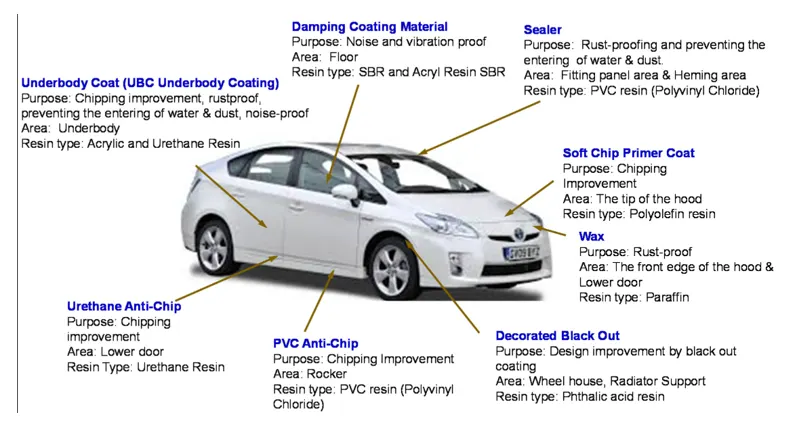
Figure 1. Summary of coating tasks for specific areas
For the external surfaces of an automobile to be easily visualized, the five main steps of coating produce a layered structure depicted in Fig 2. These coatings are applied in a particular order and have different material and protection or finishing functionalities; also, each layer relates to the others and imparts a desired balance of properties
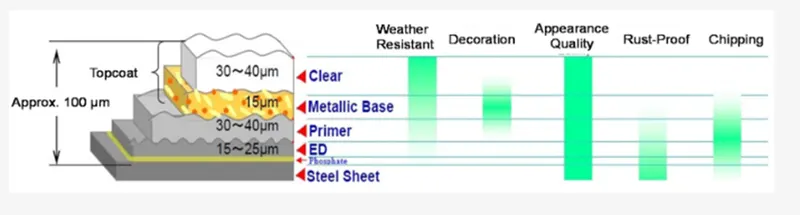
Figure 2. Automotive coating layers, their thicknesses and purposes for an exterior surface.
TYPE OF UNDERBODY COATING:-
- Wax or Paraffin-based Undercoating
It is the preferred undercarriage coating for cars often driven on highways and normal roads. Sometimes referred to as wax-based undercoating, it provides sufficient guard for cars in fairly moist regions.
- Rubberized Undercoating
Ideal for cars driven in rough terrain, as its name suggests, this undercarriage coating involves applying a rubber agent to the underbelly to protect and cushion it against dents, dust, and moisture.
It can also be applied around wheel wells and quarter panels. Considered the best option for standard vehicles when it comes to the different types of undercoating.
- Polyurethane Undercoating
Uses a polyurethane-based sealant that comes in canisters ready to be loaded into a spray gun and sprayed to guard the undercarriage of your vehicle.
The polyurethane used in this product is a high-quality and durable material that is perfect for any weather condition. It is ideal for standard vehicles.
- Asphalt-Based Undercoating
Unlike the rubberized, wax/paraffin-based, and Polyutherane undercoatings, this type is made of asphalt and generally also contains some rubberized material that sets up firmly and helps soften noise from the engine.
It reportedly has the most damage-resistant properties. Although asphalt-based undercoating is ideal for trucks, military, and all-terrain vehicles, it will also help protect your car, truck, motorcycle, and heavy machinery from the elements.
It last long and is best for endurance vehicles that have to undergo heavy road use.
When it comes to large trucks, heavy machinery, military, and all-terrain vehicles, asphalt-based undercoating provides added durability against rocks, chips, and moisture. It’s usually available from professional service shops.
Advantages of Underboady coating
- UndercoaUndercoating gives an extra layer of protection against rust and corrosion, protecting your car.
- ting will eventually wear out, but you can get years of protection from it. Even vehicles in warmer climates gain protection as debris is repelled and kept away from eating at the vehicle.
- It can be self-applied.
- It minimizes the sound from underneath the car.
- It insulates the interior of the car from the extreme temperature from beneath the vehicle.
- The coating does not chip away when hit by stones
Disadvantages of Underboady coating
- Undercoating will not help you if corrosion already exists and the corrosion needs to be removed first before it can be applied, which can be expensive for you.
- It must be reapplied every 3 to 5 years for the best results
- It adds weight to the vehicle.