Underbody Coating
Underbody coating, also known as undercoating, is a protective coating applied to the underside and the chassis of a vehicle to protect it from rust, corrosion, and road debris. The coating is typically made of a rubber or plastic material and is applied to the frame, floor pans, and other exposed metal parts of a vehicle. It helps to prevent rust. Rust can weaken the frame and other important structural components, making the vehicle less safe to drive and reducing its overall lifespan. which can cause structural damage to a vehicle over time and can also reduce road noise and vibration. Underbody coating is often applied at the factory during the vehicle assembly process, but it can also be applied after-market by an auto body shop which can cost more if done by a professional.
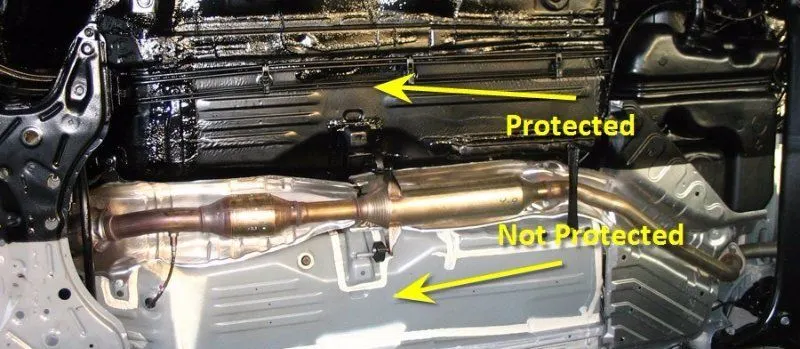
Use of Underbody Coating:-
1)Preventing Corrosion - The Major reason for the application of the underbody coating is as a precaution against rust assimilation on the surface of the body which can compromise the safety aspects of the car making it more prone to structural deterioration. In such cases, the car will be more vulnerable to getting ripped under accidental conditions.
2)Heat Insulation - The coating not only provides protection but heat protection as well the compounds in the coating contain heat-resisting capabilities, which in turn keep the car stays cool from the inside.
3)Protection from road debris - While driving on the roadways the granules and stone particles hit beneath the car sometimes at high speeds also, So, as the thick layering also acts as a guard for the metal surface which cannot be scratched.
How Underbody coating is done?
A Car goes through various types of layers of coating with different procedures, before going into the underbody coating. In a sequence of
- Pretreatment
- Electrodeposition
- Underbody Coating / Rustproof material
- Primer
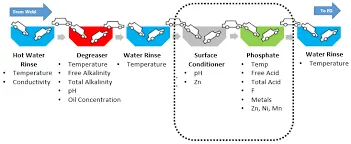
1. Pretreatment is the procedure of preparing the BIW of the car for subsequent layering of the metal surface. Three primary immersion processes - degreasing, conditioning, and phosphating - remove residual steam process oil and welding residue on the body surface. Pretreatment helps the primer intact the metal. Phosphating applies an inert layer of metal phosphate that provides resistance to corrosion propagation. Degreasing solutions contain alkaline salts and surfactants and may contain caustic soda and sodium carbonate. Surfactants are a type of detergent used to emulsify oils and lubricants in BIW. A surface modifier that creates nucleation sites for phosphate crystal growth. The number of crystalline nuclei on the metal surface is increased, improving the binding mechanism for subsequent phosphate sequences. Finally, liquid phosphate, nitrate, zinc, and hydrogen ions are soaked. The free acid etches the steel surface, releasing hydrogen and depositing metal phosphate ions on the surface in the form of crystals.
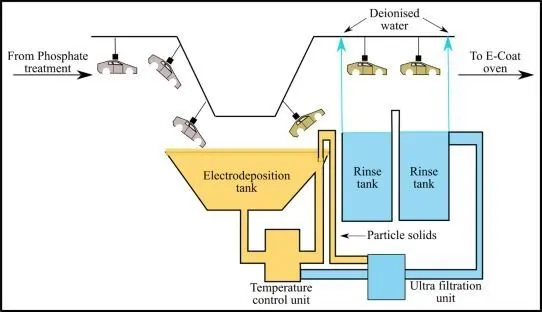
2. In electrodeposition coating, the car body is immersed in a coating solution and an electric current is passed through the body and the ED coating solution. The electrostatic nature of this coating process allows ED paints to penetrate where the spray cannot reach. While doing the operation, a paste mixture containing resin, binder, and pigment is fed into the ED tank. Lower the car body into the tank and apply current. The solution in the tank is 80-90% deionized water and 10-20% paint solids. Resin is the backbone of the final coating, providing corrosion protection, durability, and toughness. Pigments are used to add color and shine. After electrodeposition coating, the car body is placed in a baking furnace and heated and held at 160°C for 10 minutes to harden the film and maximize its performance characteristics. Oven temperature and heating time mainly improve the chipping resistance and adhesion of the film to the body. Corrosion inhibitors are less susceptible to these conditions. Since surface roughness affects the smoothness and shine of the topcoat, the surface is usually sanded to remove or eliminate imperfections before the bodywork enters the next painting step. A common challenge in current electronic coating processes is water spots contaminating the coated surface. If there are water stains, they should be removed by sanding. Therefore, deionized water should be used well and its conductivity should be monitored regularly. Alternatively, the operator adds surfactant or ultrafiltrate to the water rinse zone to remove or treat water stains.
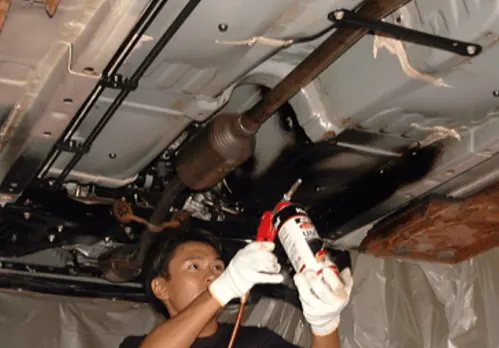
3. Underbody coating is then initiated by sealing using PVC. PVC or urethane is applied to the lower door panels and sill areas to protect against stone chips and shows the cross-section of this layer in relation to other coatings on the body panels. In this third step of his, it is also common to apply a soft tip primer coat which improves chipping resistance. A high-resilience resin is sandwiched between the ED layer and the primer layer at the front end of the bonnet where chipping is likely to occur. The third stage also applies a relatively matte black pigment called a blackout coating to the radiator mounts, wheel housings, and underside of the rear of the vehicle.
4. Final Step before going for the paint job primer coating is done. It can be water-borne, solvent-borne, or powder. The primer fills and smoothes minor imperfections and scratches that may be created during prior steps and by the intermediate sanding or grinding used to remove small imperfections. It also provides additional protection against corrosion and maximizes adhesion between it and the E-coat and basecoat; thereby, the primer increases paint durability. Primer coating operations in an automobile assembly plant are usually implemented in three stages: Interior coating, Exterior coating, and then cutting in an oven. Manual spray painting is used for the interior coating of the doors, engine compartment, and luggage or trunk space. Some of the areas are not sprayed with basecoat. It is important that the primer color matches the base coat to be able to impart uniform coating appearances between interior and exterior coats.
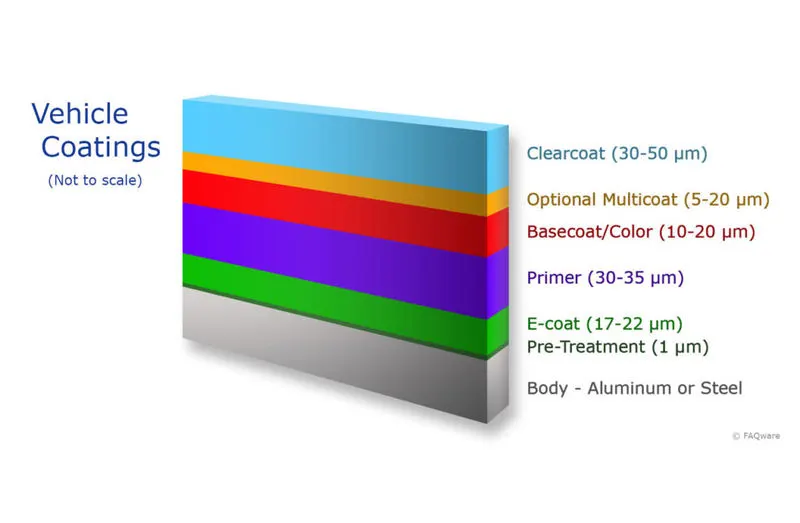
Visual Representation of Usual thickness of the layers:-
There are several types of underbody coating available, each with its own unique properties and benefits. Some of the most common types include:
- Wax-based coatings: These are the most basic type of underbody coating and are typically the cheapest. They offer moderate protection against rust and corrosion, but they tend to wear off quickly and need to be reapplied regularly.
- Oil-based coatings: These coatings are more durable than wax-based coatings and provide better protection against rust and corrosion. They are also more resistant to wear and tear and tend to last longer.
- Rubberized coatings: These coatings are made from a mixture of rubber and other materials, and they provide excellent protection against rust and corrosion. They are also very durable and tend to last for several years.
- Spray-on coatings: These are the most popular type of underbody coating and are easy to apply. They provide excellent protection against rust and corrosion and are very durable. They are also resistant to wear and tear and tend to last for several years.
Pros of Under-Body coating include: - Protects the undercarriage from rust and corrosion, which can lead to structural damage and reduced vehicle lifespan.
- Reduces road noise and vibration for a more comfortable ride.
- Can improve fuel efficiency by reducing drag and wind resistance.
- Can improve the appearance of the vehicle by covering up rust and other unsightly damage.
Cons of Under-Body coating include: - It can be expensive to apply, especially if done by a professional.
- The coating may wear off over time, requiring reapplication.
- Some coatings may be harmful to the environment and should be applied with care.
- Some coatings may not be compatible with certain types of paint or other finishes, so it is important to choose the right type of coating for your vehicle.
Overall, underbody coating is an effective way to protect your vehicle from rust and corrosion and extend its lifespan. However, it is important to choose the right type of coating and have it applied properly to get the best results.