Underbody Coating
AIM- Write a one-pager about Under-Body Coating and its purpose, its types in detail, and its pros and cons.
INTRODUCTION-
A car’s underbody is exposed to the most wear and tear caused by muddy water, potholed roads, stones and other obstacles on the road. Because it’s not in plain sight, we often do not see the damage.
In Indian road conditions, a car’s underbody is most prone to corrosion. Underbody coating provides long term protection from corrosion to car’s underbody. It also protects parts like internal body panels, frame rails and other inner cavities that are not physically accessible but are prone to corrosion.
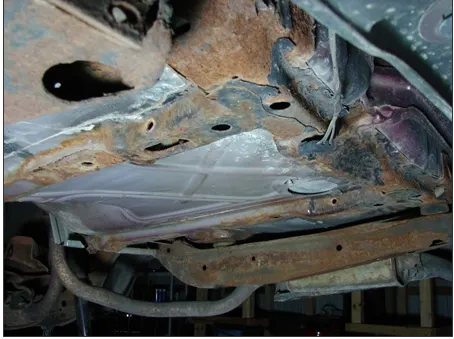
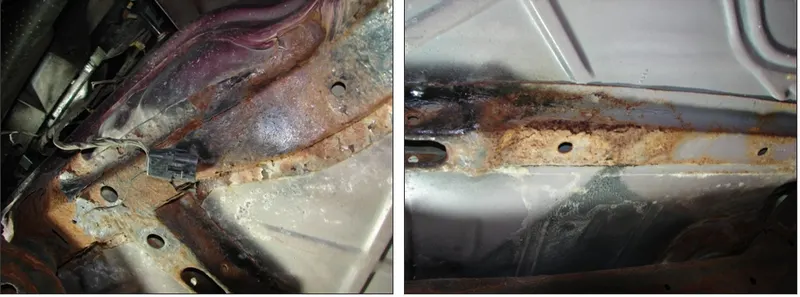
Under body protective coating is used to protect the vehicle chassis from external environment, to ensure the integrity and safety of car. The use of underbody coating plays a very important role in the service life of the vehicle. In general, it is required to spray such a protective coating in the manufacturing of the new car. Due to the highly competitiveness of new car sales, car producers have pressure to reduce the manufacturing cost, so that they reduce or even completely eliminate the use of under body coating where it is not to be easily seem by car owners. As a consequence, our car service life will be greatly reduced.
Many car owners know to regularly maintenance the vehicle by changing the engine oil and having the paint polished, but little attention has been paid to the bottom of the car. There are many cars whose surface looks glossy, while the under body’s already rusting.
PURPOSE OF UNDERBODY COATING
Protection against corrosion
The main reason for getting an underbody coating is to prevent rusting and corrosion. This is not only required during the monsoon season but also in hot and humid climatic conditions. The coating is also a must if you tend to live in coastal regions where the humidity in these areas speeds up the process of corrosion. This can be eliminated by asking your car service professional to apply a rubberised anti-rusting coat on your car’s underbelly.
Protection of vital car components
The car underneath holds vital components like the silencer, engine, and numerous other wires and small engine components for different purposes in the car. The car’s underneath cannot simply be led to corrosion and further damage due to the car being driven during any weather condition. To avoid further major issues, the antirust coating is a must for the underbody. This is again extremely important if you’re living in an all-year monsoon season or moderately high rainy regions as underbody coating is highly necessary for these situations.
Car’s resale value might be affected if not taken care of
Just ensuring your car looks outside and inside is not enough. One must take great care of the underbody as well as the resale value would be greatly affected due to high corrosion. It should not be left uncared for which would lead to permanent damage and huge loss and might not be taken for resale. Therefore, regular inspection of the car’s underbody must be carried out in order to retain the car’s value.
Reduces NVH(Noise Vibration Harshness) levels
Being in a country where not all roads are smooth enough and are filled with potholes, stones, debris, and uneven road levelling, the underbody coating prevents and absorbs all noise created by the contact of the surface of the road and the car by minimising this.
Car underbody coating prevents paint from chipping
When your car travels at high speed on a highway, the small stones and debris hit your car’s underbody in this process and may lead to chipping of the underbody paint. Hence, it is advisable to have a thick layer of underbody coating to prevent paint from chipping.
Thus, you must get your car’s underbody coating done from time to time to ensure the above factors do not affect your car. Here at Pitstop, we offer underbody inspection and coating services hassle-free. We also highly recommend getting underbody coating not just for the monsoon season, but for any season throughout the year.
EXTERNAL INFLUENCE
External environment, such as the baking from the hot road in summer, the road’s anti-frozen gent in winter, raining water and the salty water in the atmosphere, will attach the under body of a car. Particular in coast areas, the wind from the sea will bring more salt to the air, which will accelerate the corrosion and reduce the service life of a car. While the under body is covered by the thick and tight layers, it would act as a strong barrier to prevent these external substances attaching the metal sheet.
TYPES OF UNDERBODY COATING-
Now let us look at the various kinds of automotive underbody coating you can go for, for your vehicle.
-
Rubberized Underbody Coating
This is generally thought of as the best underbody coating for your car. It preserves the underbody well, protecting it from scratches. Applying this to the undercarriage is not much of a hassle either.
-
Wax Based Underbody Coating
This – more or less – ephemeral undercoating will wear away in a few months’ time. On the upside, wax-based undercoating puts up a big fight against moisture. It is also the most affordable option out there.
-
Asphalt Based Automotive Undercoating
Best suited for lorries, trucks and large vehicles this provides a greater degree of protection compared to rubber-based coatings. However, asphalt-based coatings contain little amounts of rubber for sound-insulation purposes. The process of applying this coating is a bit time-consuming though.
-
Polyurethane Underbody Coating
This coating closes up splits and fractures on the underbody of the vehicle. It offers up good protection against corrosion and also bonds with the metal. Unlike in the case of asphalt-based coating, you can paint over the polyurethane coating.
PROCESS OF UNDERBODY COATING-
-
When it comes to updating your vehicle or using any sort of coating, remove the rust completely first and then proceed. Rust removal is easily achieved by sandblasting or sanding, depending on the area and the extent of the rust.
-
Once you've removed the rust and prepped your undercarriage for coating, give it a quick rinse and let it dry to ensure you aren't further trapping any contaminants on your vehicle's underbelly. Using a degreaser to clean the metal first is also recommended.
-
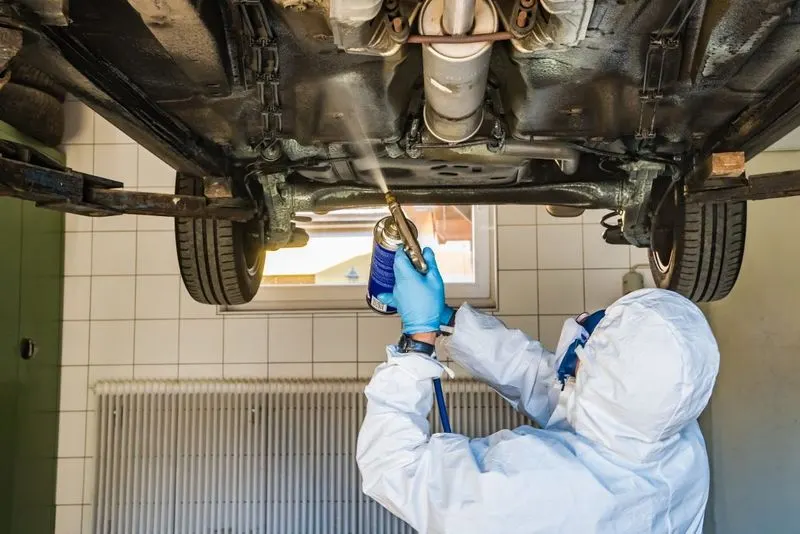
Most undercoating is generally applied with a spray gun. A disposable spray gun will work best; once the undercoating hardens, it becomes very difficult to clean the gun even with a lot of thinner. A Schutz disposable spray gun is the best option.
-
No matter what type of vehicle undercoating you've selected, two coats will provide the optimum protection. Allow ample dry time between coats.
-
Let the undercoating cure completely (usually overnight) before driving your vehicle on the road.
Pros of Undercoating:
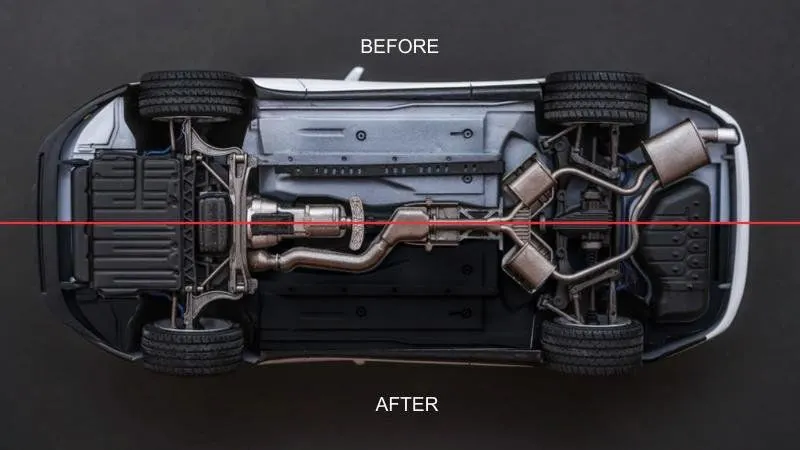
- Fights Rust: It plays an important role in keeping corrosion at bay. Underbody coating can come in handy especially if you live near the sea, where there is too much humidity, and rusting is just one of those everyday things. You should also seriously consider undercoating if you reside in a place where it snows in winter.
-
Absorbs Noise:
Believe it or not, very thick undercoating can soften the noises that reach the cabin. Since the undercoating is often made up of rubber it absorbs some of the rackets. The occupants of the car could spare themselves of the road noises – at least up to a certain extend.
-
Reinforcement:
If your car comes with stock underbody coating, using another coating on top of it, is not going to hurt. It will offer additional reinforcement, protecting the underbody from water, road debris, gravel and small pebbles. There would also be a lesser chance for the factory coat to flake away.
- Prolong Car’s Life: Good undercoating not only defends the underbody from corrosion but also protects the engine and transmission as well! Less rusting coupled with slower wear and tear can surely add years to the lifespan of your vehicle. There would be fewer dents, dings and scratches on the undercarriage for you to fret about.
- There are multiple undercoating methods which can be used:
There are four different undercoating methods that are commonly used on vehicles which require this service. The electronic method is used when rust is present to stop its corrosive effect, which is a method that receives mixed reviews. A standard undercoating method applies a tar-like substance to the exposed components of the vehicle underbelly. A dripless oil spray applies a waxy substance that fills in the entire body of the vehicle, which hardens when it dries.
Then there is the drip-oil method, which may cause dripping for up to 48 hours when applied. From a c
Cons of Undercoating:
- When examining the vehicle undercoating pros and cons, you do want to look at potential downsides to getting undercoating.
- Undercoating will work best on new vehicles that have not been exposed to road conditions.
- A used vehicle may already have residue on the bottom of the car or even have spots of rust and corrosion.
- Undercoating will not help you if corrosion already exists and the corrosion needs to be removed first before it can be applied, which can be expensive for you.