Underbody Coating
UNDERBODY COATING
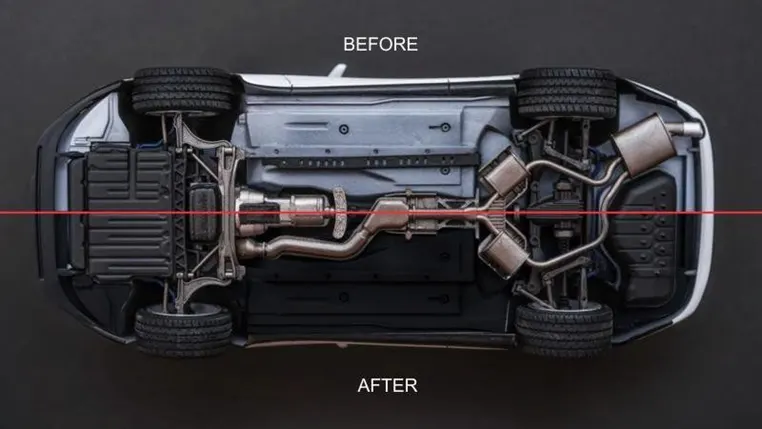
Underbody coating provides long term protection from corrosion to car's underbody. It also protects parts like internal body panels, frame rails and other inner cavities that are not physically accessible but are prone to corrosion. Underbody coating is usually a dense cladding (often based on rubber) applied uniformly to the undercarriage of the automobile. It is normally sprayed or painted on when the car is just out of the dealership and is clean.
The underbody coating that is most commonly used on cars in India is a thick, rubberized paint that forms a 2-3 mm thick coating all along the underside of the car when sprayed on. In general, it is required to apply such a protective coating in the manufacturing of a new car. (Depending on the Manufacturer the thickness of these stock coatings vary).
You also get a thinner clear coat underbody coating which is like a lacquer that coats the entire underside of the car. Some even inject rust-preventive coating material into crevices such as the bottom of doors and door sills, to protect them from rust.
The resistance of the Underbody towards corrosion & erosion also depends upon the thickness of these coats.
Purpose of underbody coating-
- Prevention from chipping
Road debris constantly hit your car under body while driving. In some cases, the under body might be scratched by uneven road damaging the protective coating on the metal sheet and leaving the bare metal exposed to the air, which results in corrosion when in contact with the moisture in the air. If not promptly getting anti-rust treatment, then the rust will soon spread to large areas. Under body coating is a thick elastic layer which could not be easily damaged by stone chipping or scratch, therefore could basically protect the metal sheet of the under body.
- Prevents corrosion
Environmntal factors like heat,moisture, atmospheric salts will affect the under body of a car. Particular in coastal areas, the wind from the sea will bring more salt to the air, which will accelerate the corrosion and reduce the service life of a car. When the under body is covered with thick and tight layers, it would act as a strong barrior to prevent these external substances affecting the metal sheet.
- Sound and Vibation insulation
The thick underbody coatings used on cars also act as effective sound and vibration dampeners. They can reduce road noise and tyre noise and make the cabin seem quieter – due to the sound absorptive nature of rubberized paints.
TYPES OF UNDEBODY COATING
- Electronic method
Using a weak electric current, this small device can stop the corroding effects of rust.
You can have these electronic devices installed at the dealership, or save some money and buy them from a source outside of the dealership.
The reviews on these devices are mixed, as this is a virtually new technology.
- Undercoating
This method involves spraying a tar-based substance on the exposed parts of a vehicle's underbody.
The tar-like undercoating acts as a barrier once it hardens, keeping out moisture, salt, and other substances.
This undercoating works best when applied to the undercarriage of a new vehicle. It also requires expert application, or it can crack, letting in moisture.
- Dripless oil spray
A wax-like substance applied to the entire body of the vehicle, it hardens once it has dried.
One of the downsides of dripless oil sprays is that you need to have holes drilled into the body of the car at specific points to make it effective.
The spray also has a high viscosity, meaning that it does not always get into all of the nooks and crannies of your vehicle.
- Drip oil spray
This is the most commonly recommended rust protection.
Drip oil sprays tend to continue to drip once applied until they dry. This dripping can last anywhere up to 48 hours after application.
Unlike the dripless varieties, the more watery nature of drip oil sprays means it gets into more areas on your vehicle, though you still need to have holes drilled in your vehicle's fenders, doors, and other areas to make sure that it gets to all the areas it needs to.
TYPES OF UNDERBODY PAINT
A car underbody coating can be factory-applied or aftermarket. Most commonly these coatings are one of the three types:
- Resin-based
Polyurethanes and rubber coating are popular because their elastomeric properties provide long-term stone chip damage and corrosion protection as well as sound deadening effects. These also have the benefit of being suitable for a wide range of substrates and they can be painted over. Can be spray-applied, high build, and particularly good for areas of possible salt exposure.
- Wax-based
An excellent anti rust coating suitable for all substrates. The wax is applied soft and cures hard, either by brush or spray, and can be layered thickly. It cannot be top coated.
- Bitumen-based
These underbody paint systems provide hard-wearing protection against stone chip damage and corrosion. They also have sound-deadening properties. Suitable across many substrates, but cannot be painted over.
ADVANTAGES
- It provides a layer of protection against corrosion.
When an undercoating is properly applied to a vehicle, then you’ll be providing the underbelly with a layer of protection against rust and corrosion. Instead of contacting the metal components of the vehicle, the debris encounters the undercoating, which then proactively repels the dangerous items away. Although an undercoating will eventually wear out, it can provide years of protection against premature corrosion.
- It will extend the life of your vehicle.
A proper undercoating extends the life of your vehicle because of its rust-stopping power. Corrosion does more than affect the integrity of the metals in your vehicle. It can get into your metal wires and cables, affecting any component which is comprised of steel or aluminium. Even your transmission and engine have exposure to rust when there isn’t a vehicle undercoating applied.
- It can be applied to damaged areas.
Over time, the underbelly of your vehicle is going to develop nicks, chips, and scratches because of the debris you encounter while driving. Unlike older forms of undercoating, which included the use of asphalt and animal fat, modern products provide a real layer of protection because it can morph into the various areas of small damage.
A modern undercoating is usually wax-based, which creates a living barrier that your vehicle can use to promote a self-healing experience.
- It can be self-applied.
Rustproofing works best when you have this service professionally applied to your vehicle. If money is tight, however, and you have some basic car maintenance skills, then you can do the work yourself.
If this service is applied at the dealership, it may cost up to $1,500, depending on the make and model of your vehicle. Some dealers include it in a package of services that are priced even higher. When you do the job yourself, then the cost can be less than $100 for cars and under $150 for trucks and SUVs.
Just keep in mind that you’re going to be creating a bit of a mess while applying a DIY undercoat.
- There are multiple undercoating methods which can be used.
There are four different undercoating methods that are commonly used on vehicles which require this service. The electronic method is used when rust is present to stop its corrosive effect, which is a method that receives mixed reviews. A standard undercoating method applies a tar-like substance to the exposed components of the vehicle underbelly. A dripless oil spray applies a waxy substance that fills in the entire body of the vehicle, which hardens when it dries.
Then there is the drip-oil method, which may cause dripping for up to 48 hours when applied. From a cost perspective, it is this final option that is most often applied at the dealership.
- The service might help with the cost of your insurance.
Vehicular insurance is based on risk. If you reduce the risks of a claim by giving your vehicle a proactive service, of which an undercoating applies, then it may lower your overall premiums. States which see high levels of corrosiveness, such as Hawaii, typically see the steepest discounts with this advantage. Northern and coastal states in the U.S. might also see this benefit.
Although the premium decrease won’t offset the cost of the service, a discount of 3% to 7% may be available for some owners.
- It may help to reduce interior noise.
When you’re driving, the sounds of the road can be soothing if they aren’t too loud. For lightweight vehicles, the noise pollution can be overwhelming to the driver in some situations. Applying a layer of undercoating creates a barrier against the sound, which creates an interior that is quieter. After the service is performed, many drivers notice that audio levels are noticeably lower inside their vehicle.
DISADVANTAGES
- It won’t do anything about the corrosion which is already present.
For an undercoating to be effective, it must be in place before the underbelly of your car begins to rust. If you apply it over corrosion, you won’t be making an improvement. It will look better… until the rust breaks its way through the layer of undercoating you’ve applied. If you have rust present, then it must be removed, with the metal repaired, before the undercoating is applied for best results.
- It works best on new cars.
If you’ve purchased a used vehicle, then the cost of preparing the underbelly for an undercoating might be more than the value of the car. You must remove all the residue from the bottom before it can be applied. Failing to do so will seal in the debris that is present already, which can lead to more problems. The best time to have an undercoating applied is when a vehicle is purchased new because it offers a superior level of protection then.
- Most vehicles make it five years before corrosion begins to show.
For vehicle owners who purchase something new every 3 to 5 years, then rustproofing may not be a good use of your cash. Although an undercoating does add value to a used car, that only applies when the rustproofing product used provides a transferrable lifetime warranty. Most vehicles that are on the road today are able to make it five years before any corrosion begins to show. It may be 7 to 10 years before the functionality of the vehicle is negatively impacted by the lack of an undercoating.
If you wash your vehicle regularly, especially during the winter months, then you might be able to save the time and money required for this service.
- A third-party undercoating service might void your vehicle’s warranty.
Some new cars no longer need the undercoating service provided because the structure of the vehicle has it built-in already. If you hire a third-party provider to apply an undercoating, you could void the corrosion-perforation warranty that is factory-provided. Most vehicles today that leave the factory floor are all provided with included rust-proofing.
If you are purchasing a used vehicle, an undercoating to a clean underbelly could extend the life of the vehicle and give it more value. For new vehicle purchases, you should ask the dealer what rustproofing options are included before paying for a separate undercoating option. Ask for documentation of what is provided instead of taking the word of the salesperson or the service personnel.
Many dealers have language in their terms and conditions that only written agreements are binding.
- It adds weight to the vehicle.
Although the amount of weight added to a vehicle with an undercoating is minimal (between 10 to 20 pounds for most vehicles), there is an element of fuel economy to consider. When your vehicle weighs more, the distance you can travel on a single tank of fuel is reduced. The undercoating might reduce your efficiency by up to one mile per gallon, which creates an additional fuel cost over time that is worth considering.
- An undercoating is not impervious to damage.
An undercoating can provide a hardened layer of protection against dirt and debris that may cause corrosion. Depending on where you drive, however, the lifespan of this product may be minimal. If you drive your vehicle on gravel roads or dirty areas frequently, you reduce the integrity of the protective layer.
You might find that your undercoating begins to chip off in as little as 25,000 miles because of this issue. Driving in a salty environment is not the only threat to the integrity of this product.
- It must be reapplied every 3 to 5 years for best results.
The only way for an undercoating to provide ongoing protection for your vehicle is to have the service repeated frequently. Most owners can have a new layer applied in about 5 years without worrying about their underbelly being compromised. In salty or destructive environments, however, you may need to have a new undercoating applied every 3 years for best results.
The pros and cons of a vehicle undercoating offer a complex opportunity to protect some new and used cars, but not all new vehicles require it. You must perform your own due diligence on a vehicle you’re wanting to purchase to decide if this service is right for you. And, if cost is an issue, it is possible to apply your own undercoating, though such an action might void an active warranty.
- Protects Against Rust & Corrosion
The primary objective of getting underbody coating done is preventing metal components that are exposed on the bottom side of the car to damage from corrosion. You can shut out the Adverse effects of corrosion on your car by simply applying a rubberised anti-rust coating all over the belly of your car.