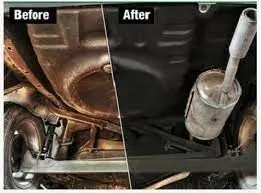
Underbody Coating
Under Body Coating : the coating which is done under the body of a vehicle called under body coating, this is the most important thing to do coating for all the vehicles.
Coating: the coating should be done with some paints called Rubberized Undercoating and Polyurethane Underbody Coating are used and some other type of paints which are avilable in market
How the coating is applied ? : we can use any type of paint guns which gives more pressure blower like spary guns
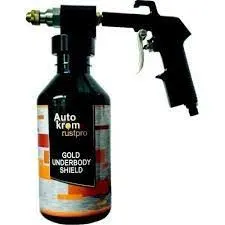
Different Types of Vehicle Undercoating:
Rubberized Undercoating
is easy to apply and offers sound-cushioning as well as protection from dust, moisture, and dings or dents.
In addition to your undercarriage, rubberized undercoating is also safe to use on wheel wells and quarter panels, and dries to a soft rubbery finish that prevents further rust, damage, or moisture seeps. The coating can be painted over and, if necessary for bodywork, can be easily removed with an undercoating removal spray.
Overall, this coating is generally the best option for protecting your vehicle's undercarriage, as it provides the simplest and best protective measures against rust and moisture.
Polyurethane Undercoating
The other option for undercoating your vehicle is to use a polyurethane, This type of vehicle undercoating is a little bit quicker and easier to apply.
Oftentimes, polyurethane undercoating will come in ready to preload into an application gun. This type of sealant works by seeping into all cracks and seams, displacing salt and moisture and oozing around rusty areas to bond with and protect unoxidized metal. It also sands quickly in case you'll need to perform bodywork and can be painted over.
On the flipside, this type of car undercoating generally requires a little bit more surface prep work before applying -- sanding and applying an etching primer to bare metals before using are generally recommended.
The thickness of underbody Coating : the underbody coating is most commonly used in all type of automotives, and the thickness is formed after coating is 2-3mm of thickness
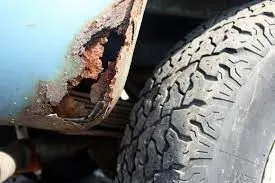
Why should we apply under body coating : if we dont apply any coating under the body of vehicle, it leads to form some type of corrision and rust due to oxidation and gets some breakages on the frame rails, so, we apply Underbody coating and its provides long term protection from corrosion to car's underbody. It also protects parts like internal body panels, frame rails and other inner cavities that are not physically accessible but are prone to corrosion.
while driving a car on roads the mud or sand or some rock are going to brushes the car, and mainly in rainy season the mud and other dust will get attached to underbody and it wont get removed untill we wash the underbody with some water. in that caseses the underbody paints are going to be work.
Underbody coating is a special coating given to the underbody of an automobile. The primary reason the coating is applied is to prevent and reduce corrosion/rusting of the surface, which occurs due to oxidation of the metal. It is also necessary to apply this coating to reduce damage caused by the flying debris from the tyres onto the surface. This coating can be specified by the customer to be applied onto the surface during the manufacturing process or can be applied separately after the vehicle is recieved.
Pros and Cons of using an underbody coating:
Pros:
i) Rust Prevention: Underbody coating ideally should be applied when the car comes out new from the factory, when there are no dust particles present. This will result in a good adhesive coating to prevent rusting of the underbody surface and also extending the life of the parts. It becomes extremely important to apply this coating when the vehicle is to be driven close to coastal areas.
ii) Protection against debris: It is one of the primary reasons for applying an underbody coating. During its lifetime, a vehicle travels over debris the entire time, and this is especially true for Indian roads. These debris fly off from the tyres and hit the underbody, and can possibly damage the underbody components which can get expensive. By giving a sufficient coating the longevity of the sufrace can be increased.
iii) Sound reduction: Applying thick layers of covering can reduce the sound within the cabin upto a certain degree. Rubberized paint can reduce the noise from the tyres, the road and the debris.
iv) Easier maintenance of the vehicle: By giving a uniform coating, the underbody is well protected from moisture, which means that for cleaning the underbody water can be used. A good coating can ensure that water does not enter the components and start rusting prematurely. The coating also prevents retention of water within the parts, which can lead to creation of slush.
Cons:
i)High cost: The cost of underbody coating has reduced over the years, but it is still expensive. The option of applying a coat at the dealership can get quite expensive, since dealerships will look forward to making profits and hence increasing the price for an underbody coating..
ii)Damage during application: In case of thick rubberized paints, if the coating is not applied properly, then there is a possibility of the paint getting into moving parts and create mechanical failures. It can affect the differential, propeller shafts, joints and even the suspension. If not done carefully, there is also the possibilty of the coat damaging the paint job at the lower edges of the car.
iii)Added weight: Although insignificant, there is a possibility that the extra weight can affect the fuel economy of the vehicle.
With out under body coating :
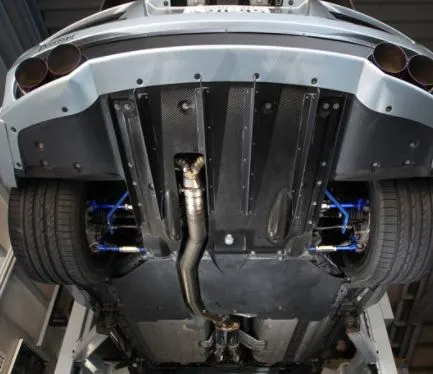
With under body coating :
Before And After Coating :