Underbody Coating
Under Body Coating:-
A car’s underbody is exposed to the most wear and tear caused by muddy water, potholed roads, stones and other obstacles on the road. Because it’s not in plain sight, we often do not see the damage. Underbody Treatments offers you a long-term solution for issues related to corrosion and rust.
Benefits :-
• Minimizes Sound: It minimizes the sound from underneath the car resulting a noiseless, smooth driving experience.
• Heat Insulation: It insulates the interior of the car from extreme temperatures from beneath the vehicle providing a comfortable cabin experience.
• Anti-chipping property: If any stone hits the coating it does not get chipped away hence protects the underbody from exposure to water.
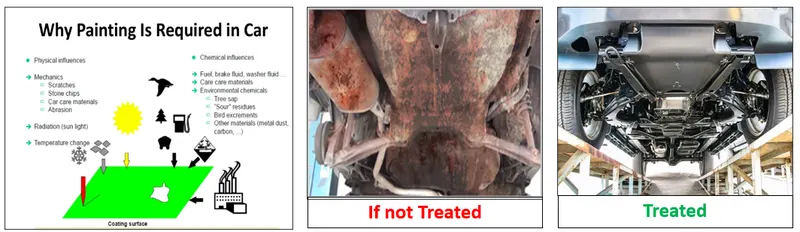
Under Body Coating Process:-
Coating process of a vehicle body (automotive coating process) comprises minimum five layers of paint, while the underbody coating process comprises the first two layers in the overall coating process. These two layers provide durable protection against corrosion; however, damage over time requires renewal of these coatings. Automotive aftermarket service providers often provide these services during scheduled vehicle maintenance. The following describes the flow of the painting process.
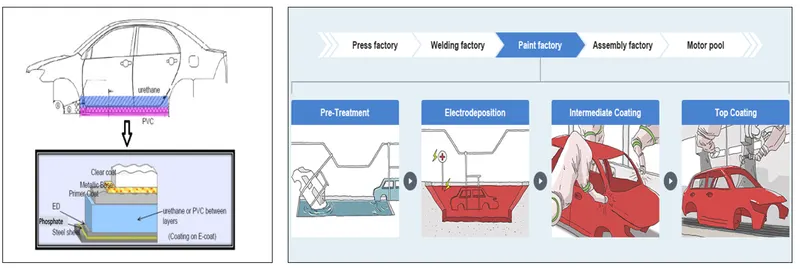
Pre-Treatment :-
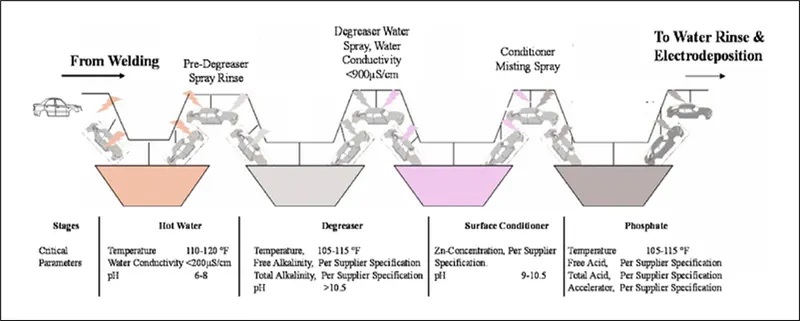
Prior to painting, we remove any iron powder and other dust from the surface of the car body, as these are the main causes of paint defects, and apply special surface treatment through three primary liquid dip processes of degreasing, conditioning and phosphating. The degreasing solution is composed of alkaline salts and surfactants and can include caustic soda, tri-sodium phosphate, and sodium carbonate. The surfactants are types of detergents for emulsifying oils and lubricants on the BIW.
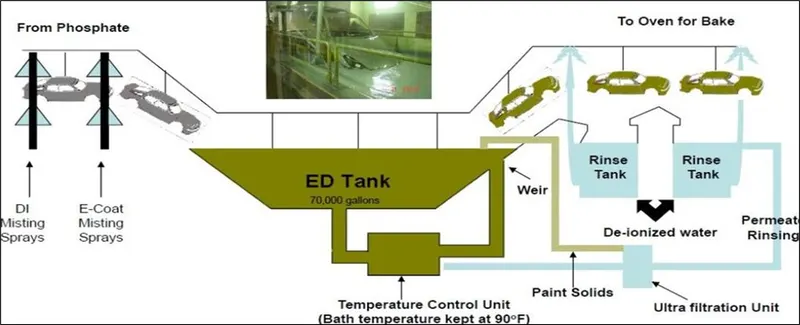
Electrodeposition (ED Coating) :-
Anticorrosive paint is applied as the undercoating to prevent rust on the car body. Dipping the body and applying a direct current in an Electro-deposition tank enable to make the coating thickness uniform with short time. After this process, the body is placed in a drying oven to dry the paint to form a coating film.
Rust-proof materials: Sealer/PVC
The third step is underbody coating (UBC) and seam sealing using PVC and urethane. The sealant is applied around and inside the doors, hood, trunk, and front dash and onto the exterior and interior of metal joints and outer area of the back wheel well.
Primer:-
The fourth coating step is the application of a primer surface or simply primer. It can be water-borne, solvent-borne or a powder. These primers
are used to improve adhesion between the E-coat and topcoat, provide chipping protection, enhance paint appearance and be environmentally compatible with emission regulations.
Top-coat: Final Color of Vehicle
The final step in the body coating process is to apply the topcoat, which consists of two layers- First is basecoat and second is clear coat. The basecoat contains the primary coloring pigment, and the clear coat provides a protective coating against environmental effects, corrosion, and
UV light degradation promotes unmatched color retention and provides a smooth unblemished even finish
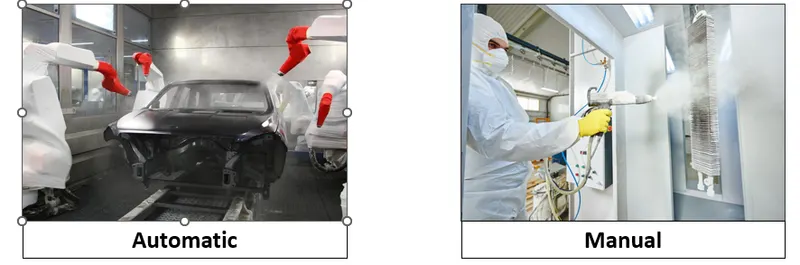
Types of Underbody Coating :-
Having undercoating professionally applied to your vehicle can be expensive, but fortunately, if your budget is tight, you can do it yourself for a fraction of the price. Here are some of the various types of undercoating available.
Rubberized Undercoating:-
Rubberized vehicle undercoating is easy to apply and offers sound-cushioning as well as protection from dust, moisture, and dings or dents.
Polyurethane Undercoating :-
The other option for undercoating your vehicle is to use a polyurethane-based sealant. This type of vehicle undercoating is a little bit quicker and easier to apply.
Wax or Paraffin-Based Undercoating’s:-
A paraffin-based undercoating will be the cheapest and quickest option available with which to protect the undercarriage of your vehicle. However, keep in mind that it will wear off quicker than other types of undercoating and will need to be stripped and reapplied at least once every year.
Asphalt-Based Undercoating :-
Asphalt-based undercoating generally contains a little bit of rubberized material that sets up firmly and also helps soften noise. Generally sold in five-gallon containers, this type of undercoating also needs more cure time than the other three, and is NOT paintable, making it best to use only for undercarriages.
General Requirements: Paint Testing :-
ØCED Paint Testing Requirements:-
|
S.No. |
Type of Tests |
Criteria |
Measuring Instrument |
|
1 |
CED Paint Thickness (Average) |
17~22 MICRON |
DFT Meter |
|
2 |
Rubbing Test |
No paint on cloth |
MIBK Solution cotton cloth 20 times rub, one direction on component 05 Piece/Lot |
|
3 |
Pencil Hardness |
>2H Grade Pencil |
2H Pencil |
|
4 |
Impact Test |
Impact Height |
Impact Tester |
|
5 |
Paint Adhesion |
No Paint Peel-off |
Tape Test |
|
6 |
Appearance |
Paint Free from Paint Defect like Pin Hole, Scratch, Overflow Etc. |
Visual |
Powder Paint Testing Requirements:-
|
S.No. |
Type of Tests |
Criteria |
Measuring Instrument |
|
1 |
Powder Paint Thickness |
80-120 Micron |
DFT Meter |
|
2 |
SST |
1000 Hr. |
SST Chamber |
|
3 |
Gloss |
35-45% |
Gloss Meter |
|
4 |
Pencil Hardness |
>2H Grade Pencil |
2H Pencil |
|
5 |
Paint Adhesion |
No Paint Peel-off |
Tape Test |
|
6 |
Appearance |
Free From Dent, scratch Etc. |
Visual |
Advantages of Underbody coating:-
ØUndercoating gives an extra layer of protection against rust and corrosion, protecting your car.
ØUndercoating will eventually wear out, but you can get years of protection from it. Even vehicles in warmer climates gain protection as debris is repelled and kept away from eating at the vehicle.
ØIt can be self-applied.
ØIt minimizes the sound from underneath the car.
ØIt insulates the interior of the car from the extreme temperature from beneath the vehicle.
ØThe coating does not chip away when hit by stones
Disadvantages of Underbody coating
ØUndercoating will not help you if corrosion already exists and the corrosion needs to be removed first before it can be applied, which can be expensive for you.
ØIt must be reapplied every 3 to 5 years for the best results
ØIt adds weight to the vehicle.