Underbody Coating
UNDER BODY COATING:
- Underbody coating is usually a dense cladding (often based on rubber) applied uniformly to the undercarriage of the automobile.
- It is normally sprayed or painted on when the car is just out of the dealership and is clean.
- But even if you are getting the undercoating applied after a couple of years, it’s fine too.
- This is because it can prevent further damage to the undercarriage.
- It provides long term protection from corrosion to car’s underbody.
- It also protects parts like internal body panels, frame rails and other inner cavities that are not physically accessible but are prone to corrosion.
The main thingis to save the car body from the corrosion for long years.
PROCESS OF UNDER BODY COATING
In the automobile industy the under body coating is a process done in paintshops after the welding process in done.
Most of the OEM Follows Modern automotive coating process.in which the modrem automotive coating process consist of five stages.
- Pre-treatment
- Electrophoretic deposition (ED)
- Rust-proof materials: Sealer/PVC
- Primer
- Top-coat
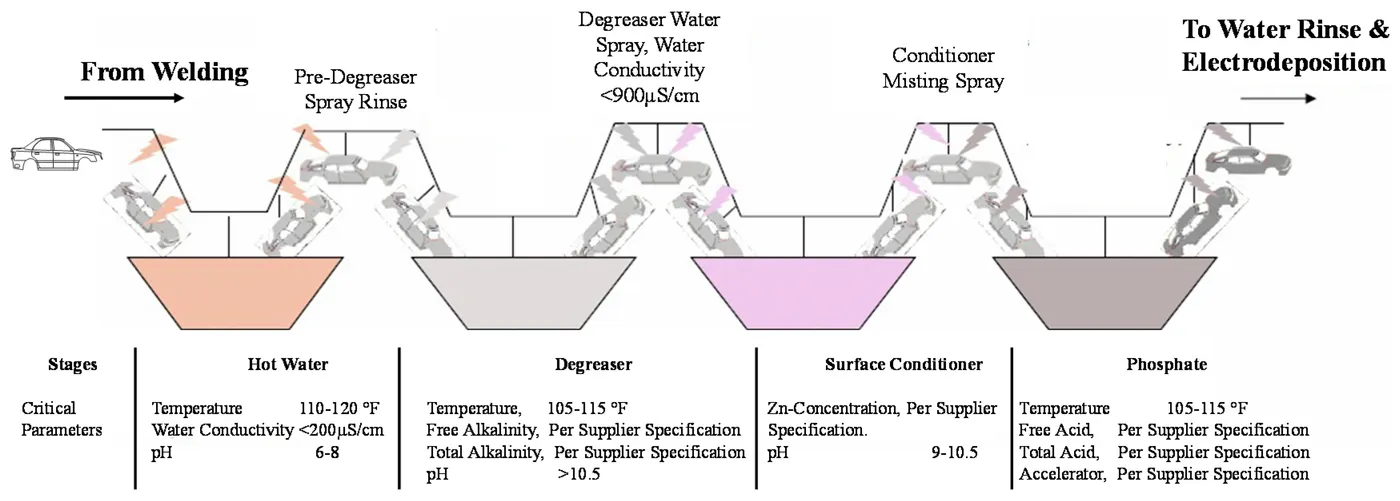
Pretreatment: Pre-treatment consists of cleaning the body surface to remove remaining oils from the stamping process and welding residues through three primary liquid dip processes of degreasing, conditioning and phosphating. The degreasing solution is composed of alkaline salts and surfactants and can include caustic soda, tri-sodium phosphate, and sodium carbonate. The surfactants are types of detergents for emulsifying oils and lubricants on the BIW
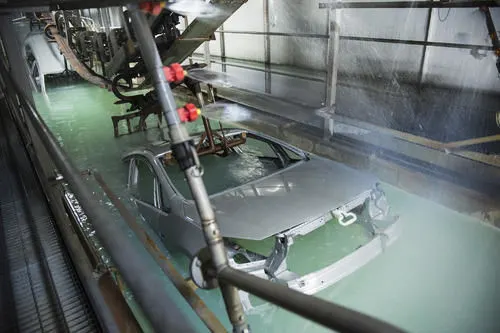
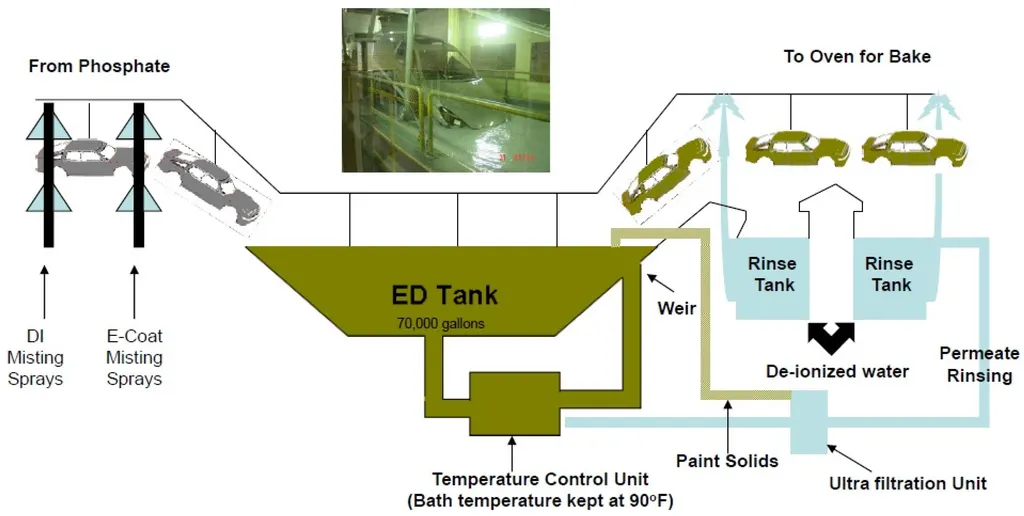
Electrophoretic deposition: Electrophoretic deposition coating is applied with electricity and is most often used as a primer before powder coating. This provides good corrosion protection with good adhesion properties ED coating is applied with electricity and is most often used as a primer before powder coating. This provides good corrosion protection with good adhesion properties
Sealer: Sealer is which the Under body coating (UDC) and PVC and Urethane Material is use to sealing the seam.The sealer is applied in the internal and external joints of the car body and in critical welded area of under car body to avoid rattle noise,Water leakages etc.,
Primer: Primer is also know as undercoat which is a preparatory coating put on materials before painting. Priming ensures better adhesion of paint to the surface, increases paint durability, and provides additional protection for the material being painted
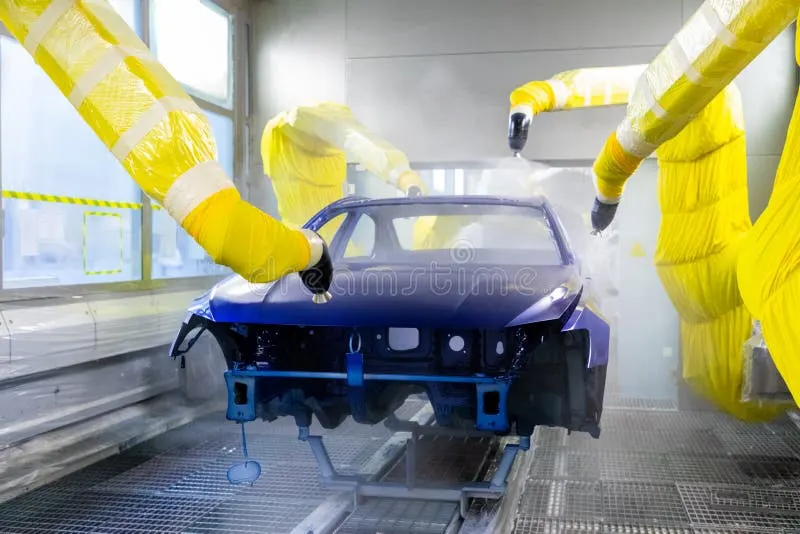
Top coating: Top coating is a transparent or translucent coat of paint applied over the underlying material as a sealer. In a paint system, the topcoat provides a resinous seal over the intermediate coats and the primer consist of 2 layers which is called as Base and Clear.Base coatis the first layer is which the actual colour coat of the car body.Clear coat is the second layer done after the base which provide the gloss and smoothness to the car body.
TYPES OFUNDR BODY COATING:
- Rubberized Underbody Coating
- Wax Based Underbody Coating
- Asphalt Based Automotive Underbody Coating
- Polyurethane Underbody Coating
Rubberized Underbody Coating: Rubberized undercoating is easy to apply, and generally offers the best protective coating for your car's undercarriage. It cushions surfaces against moisture, rust, dings, and dents. Rubberized undercoating is safe to use on quarter panels and wheel wells and dries with a soft rubbery finish
Wax Based Underbody Coating: Wax Underbody Coating Spray is a solvent containing, bitumen free anticorrosive agent based on wax, polymers and anticorrosive additives. The product can be precision and exhibits excellent sag resistance. It is fast drying, and even in a thin layer thickness it forms a closed water protecting film.
Asphalt Based Automotive Underbody Coating: The process of applying this coating is a bit time-consuming though. For standard vehicles, any of the aforementioned types of undercoating will provide sufficient protection. For large trucks and heavy machinery, asphalt-based undercoating provides a bit of extra durability against rocks, chips, and moisture. Asphalt-based undercoating generally contains a little bit of rubberized material that sets up firmly and also helps soften noise.
Polyurethane Underbody Coating:This coating closes up splits and fractures on the underbody of the vehicle. It offers up good protection against corrosion and also bonds with the metal. Unlike in the case of asphalt-based coating, you can paint over the polyurethane coating. polyurethane undercoating will come in canisters ready to preload into an application gun.
BENEFITS OF UNDER BODY COATING:
Minimizes Sound: It minimizes the sound from underneath the car resulting a noiseless, smooth driving experience.
Heat Insulation: It insulates the interior of the car from extreme temperatures from beneath the vehicle providing a comfortable cabin experience.
Anti-chipping property: If any stone hits the coating it does not get chipped away hence protects the underbody from exposure to water.