Underbody Coating
Que: Write a one-pager about Under-Body Coating and its purpose, its types in detail, and its pros and cons.
Ans: Under-Body coatings are those which are used to prevent a car's underbody from rusting and corrosion. This underbody coating is preventing from rusting, and bad road conditions such as big humps and potholes. Because of these humps underbody is getting touched and that's why the prevention is better to take. In monsoon, it is very useful because most of the time underbody is getting wet and this coating is able to prevent it from rusting.
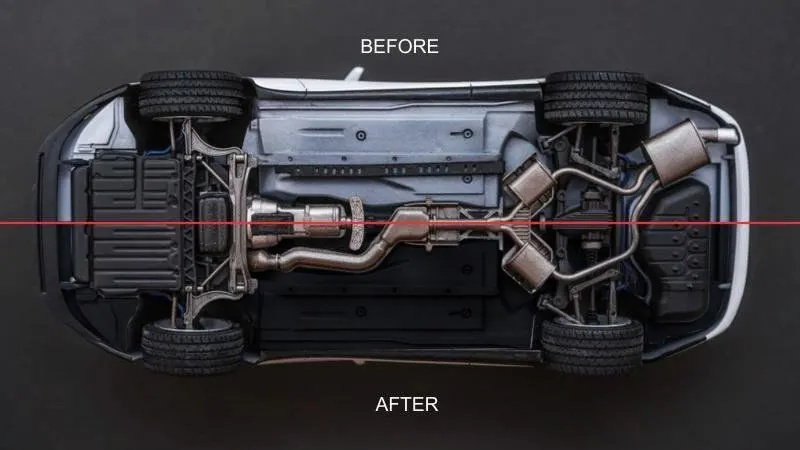
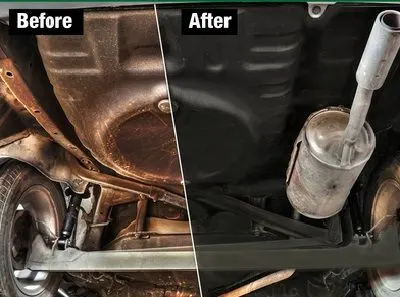
In this image, we clearly see that one side of the car is coated and another is not. And another image we clearly see that before it gets started rusting day by day another is coated one.
The underbody coating that is most commonly used on cars in India and supplied by companies such as 3M is a thick, rubberized paint that forms a 2-3 mm thick coating all along the underside of the car when sprayed on. You also get a thinner clear coat underbody coating which is like a lacquer that coats the entire underside of the car.
The damages occurred when underbody coating is not applied:
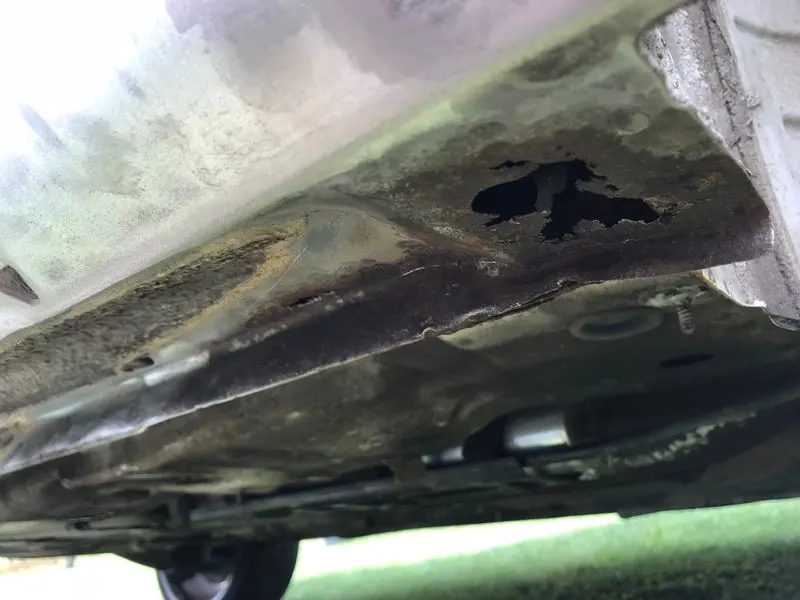
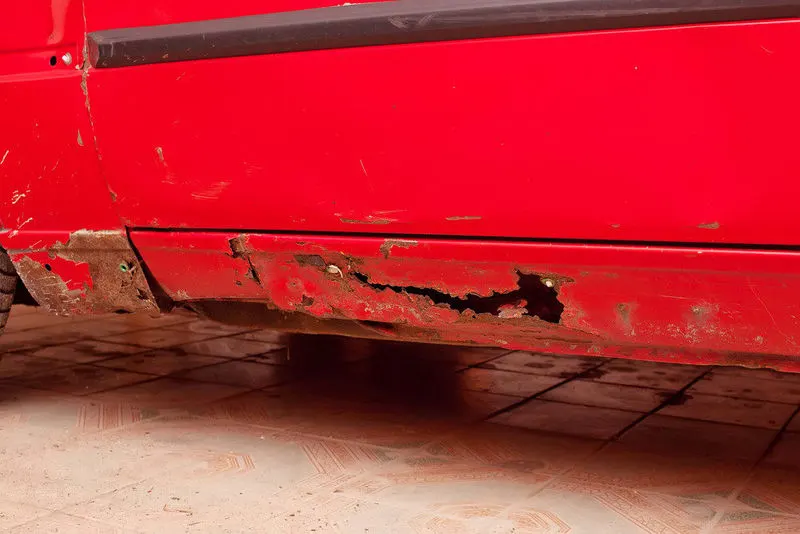
In the above images, there is rusting happens to the underbody.
Types of Under-Body Coating:
Underbody coatings are categorized into various types based on the type of material used and also the cost of the material.
Rubberized underbody coating:
These coatings are easy to apply and offer sound-cushioning as well as protection from dust, moisture, and dents. The coatings are safe even to use on wheel wells and quarter panels and when it is dried form a soft rubbery finish that prevents further rust and moisture from seeping.
Polyurethane underbody coating:
This type of undercoating is a lit a bit quicker and easy to apply. This type of undercoating often comes in a canister ready to preload into the application gun. This type of undercoating always requires surface preparations before applying.
Wax or paraffin-based underbody coating:
Wax or paraffin-based undercoating will be the cheapest and quickest option available in the market. But these coatings last only for one year of duration.
Asphalt-based underbody coating:
The above-mentioned undercoating is mainly used for light commercial vehicles. For vehicles such as trucks, buses, vans etc. asphalt-based undercoating is used for sufficient protection against rock chips and moisture. These asphalt-based undercoatings have a little bit of rubberised material that set up firmly and also helps in reduction in noise.
APPLICATION PROCEDURE OF UNDERBODY COATING:
- Lift up the vehicle, take off the wheel and plastic wheel covering.
- Thoroughly clean the underbody of the vehicle with high-pressure water.
- Blasting with compressed air could accelerate the drying.
- Mask off the adjacent areas and parts with paper were not allowed to spray, such as exhausting pipe, brake system, engine, paint surface and etc.
- Shake the can approx. 40 times before use, connect the can with a spray gun.
- Spray at room temperature and from a distance of approx. 25 cm in an X motion to build up a continuous coat. Do not spray on parts of the brake, engine, or exhaust system.
- Apply this product until the desired layer thickness is reached. If a thick layer is required, let layers dry in between.
- After each use, clean the spray by flushing with a suitable solvent.
ADVANTAGES:
- It provides a layer of protection against corrosion.
When an undercoating is properly applied to a vehicle, then you’ll be providing the underbelly with a layer of protection against rust and corrosion. Instead of contacting the metal components of the vehicle, the debris encounters the undercoating, which then proactively repels the dangerous items away. Although an undercoating will eventually wear out, it can provide years of protection against premature corrosion.
- It will extend the life of your vehicle.
A proper undercoating extends the life of your vehicle because of its rust-stopping power. Corrosion does more than affect the integrity of the metals in your vehicle. It can get into your metal wires and cables, affecting any component which is comprised of steel or aluminium. Even your transmission and engine have exposure to rust when there isn’t a vehicle undercoating applied.
- It can be applied to damaged areas.
Over time, the underbelly of your vehicle is going to develop nicks, chips, and scratches because of the debris you encounter while driving. Unlike older forms of undercoating, which included the use of asphalt and animal fat, modern products provide a real layer of protection because it can morph into the various areas of small damage.
A modern undercoating is usually wax-based, which creates a living barrier that your vehicle can use to promote a self-healing experience.
- It can be self-applied.
Rustproofing works best when you have this service professionally applied to your vehicle. If money is tight, however, and you have some basic car maintenance skills, then you can do the work yourself.
If this service is applied at the dealership, it may cost up to $1,500, depending on the make and model of your vehicle. Some dealers include it in a package of services that are priced even higher. When you do the job yourself, then the cost can be less than $100 for cars and under $150 for trucks and SUVs.
Just keep in mind that you’re going to be creating a bit of a mess while applying a DIY undercoat.
- It may help to reduce interior noise.
When you’re driving, the sounds of the road can be soothing if they aren’t too loud. For lightweight vehicles, the noise pollution can be overwhelming to the driver in some situations. Applying a layer of undercoating creates a barrier against the sound, which creates an interior that is quieter. After the service is performed, many drivers notice that audio levels are noticeably lower inside their vehicle.
- Save money:
It’s expensive to have your car undercoated by a professional since it can cost hundreds of dollars for one session. Moreover, you would also have to wait for a couple of days before the job is done. Instead of spending a fortune on an undercoating service, buy a quick-dry undercoat and do the job yourself.
DISADVANTAGES:
- It won’t do anything about the corrosion which is already present.
For an undercoating to be effective, it must be in place before the underbelly of your car begins to rust. If you apply it over corrosion, you won’t be making an improvement. It will look better… until the rust breaks its way through the layer of undercoating you’ve applied. If you have rust present, then it must be removed, with the metal repaired, before the undercoating is applied for best results.
- It works best on new cars.
If you’ve purchased a used vehicle, then the cost of preparing the underbelly for an undercoating might be more than the value of the car. You must remove all the residue from the bottom before it can be applied. Failing to do so will seal in the debris that is present already, which can lead to more problems. The best time to have an undercoating applied is when a vehicle is purchased new because it offers a superior level of protection then.
- Most vehicles make it five years before corrosion begins to show.
For vehicle owners who purchase something new every 3 to 5 years, then rustproofing may not be a good use of your cash. Although undercoating does add value to a used car, that only applies when the rustproofing product used provides a transferrable lifetime warranty. Most vehicles that are on the road today are able to make it five years before any corrosion begins to show. It may be 7 to 10 years before the functionality of the vehicle is negatively impacted by the lack of an undercoating.
If you wash your vehicle regularly, especially during the winter months, then you might be able to save the time and money required for this service.
- A third-party undercoating service might void your vehicle’s warranty.
Some new cars no longer need the undercoating service provided because the structure of the vehicle has it built-in already. If you hire a third-party provider to apply an undercoating, you could void the corrosion-perforation warranty that is factory-provided. Most vehicles today that leave the factory floor are all provided with included rust-proofing.
If you are purchasing a used vehicle, an undercoating to a clean underbelly could extend the life of the vehicle and give it more value. For new vehicle purchases, you should ask the dealer what rustproofing options are included before paying for a separate undercoating option. Ask for documentation of what is provided instead of taking the word of the salesperson or the service personnel.
Many dealers have language in their terms and conditions that only written agreements are binding.
- It adds weight to the vehicle.
Although the amount of weight added to a vehicle with an undercoating is minimal (between 10 to 20 pounds for most vehicles), there is an element of fuel economy to consider. When your vehicle weighs more, the distance you can travel on a single tank of fuel is reduced. The undercoating might reduce your efficiency by up to one mile per gallon, which creates an additional fuel cost over time that is worth considering.