Structural dynamics
Ans 1.
- Static Analysis :
- The Static analysis can only be performed if the structure which is going to simulate does not depend on time and where the loads are constant.
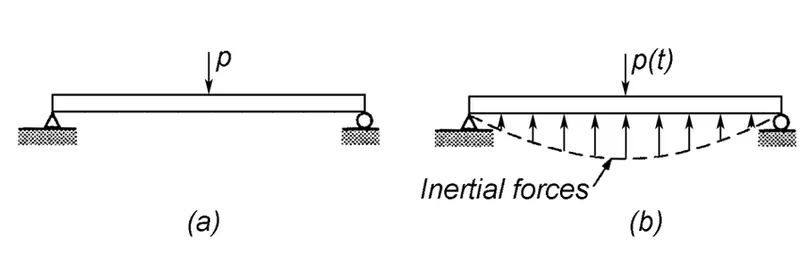
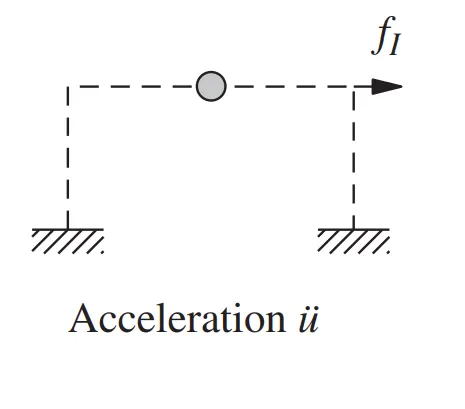
- Static analysis does not deals with inertia shows in fig.(a).
- In Static analysis only the stiffness matrix is ging to be solved.
- Static analysis is going to be done on static loads.
- Dynamic Analysis :
- In Dynamic Analysis the structure itself and loads might change with time.
- In Dynamic Analysis due to acceleration the inertial loads are developed which are taken into account shows in fig.(b).
- In Dynamic Analysis stiffness matrix, the mass matrix and damping matrix,(if not zero) is solved as well.
- For dynamic analysis the loads are either with respect to time or with frequency.
Ans 2.
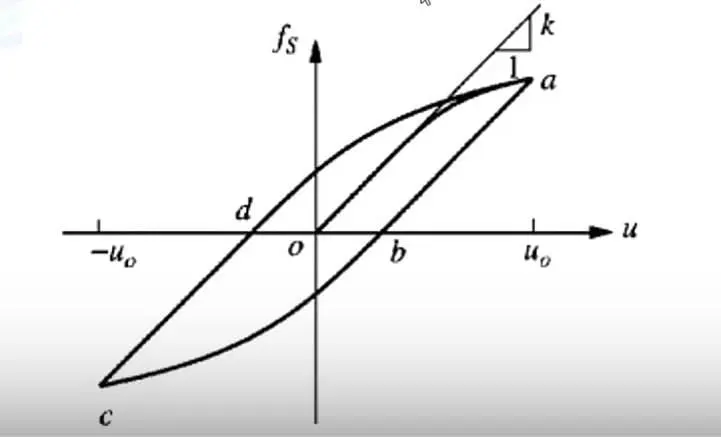
- Elastic Behaviour : Elastic Behaviour of the materials is the ability of a body to resist a destorting deforming force and return to its original shape and size when the force is removed.
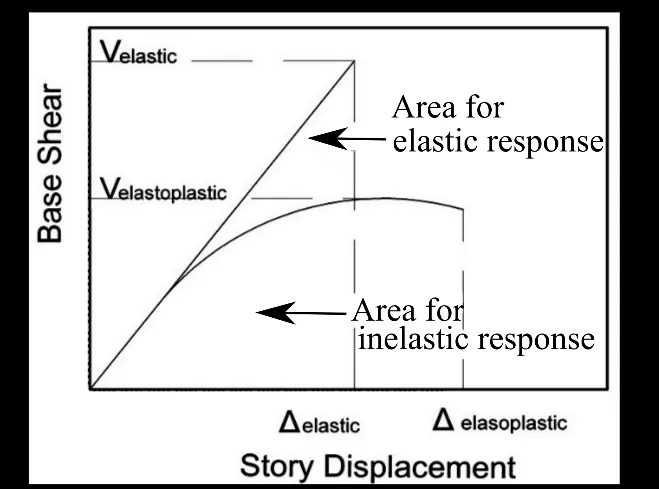
- Inelastic Behaviour : Inelastic behavior of materials is the deformation of a material that does not disappear on removal of the force that produced it.
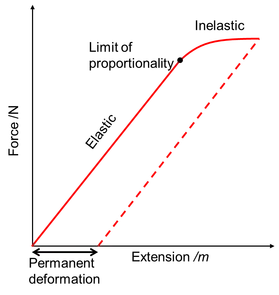
- Plastic behavior : Plastic behaviour of the materials is the ability of a body to Undergo some degree of defromation without rupture or failure.
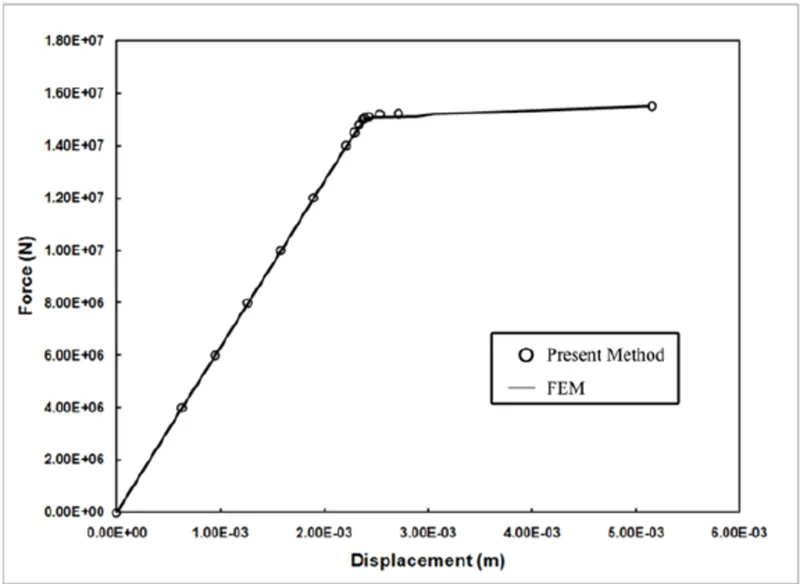
- Non-linear Inelastic behavior : The structural damage implies an inelastic behavior, the traditional design and analysis procedures that are based on linear elastic behavior can only implicitly predict the performance. By contrast, the objective of nonlinear seismic analysis procedures is to directly estimate the magnitude of inelastic seismic demands.
Ans 3.
The external force fI on the mass
component is related to the acceleration by fI = mu¨. where 'm' is mass component.
For a linear system the relationship between the lateral force fS and resulting deformation
u is linear, that is,
fS = ku
where k is the lateral stiffness of the system.
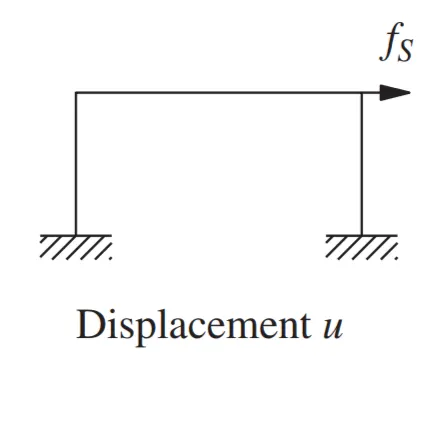
Figure 1.4.1a
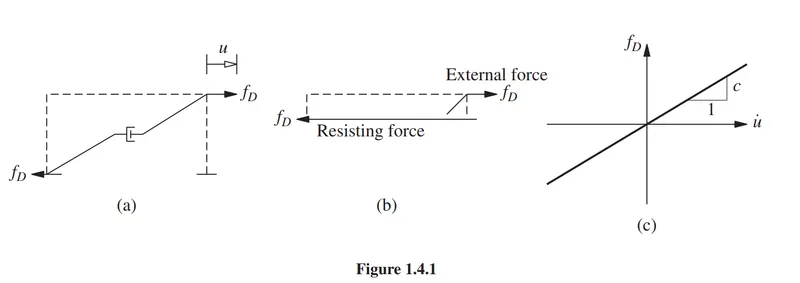
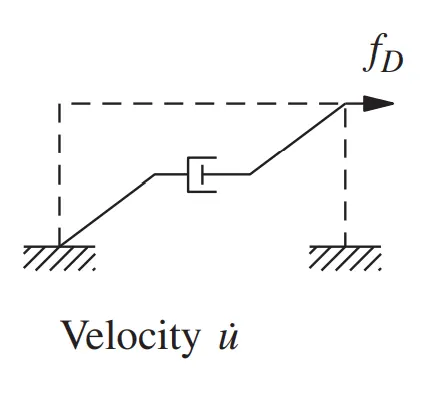
shows a linear viscous damper subjected to a force fD along the DOF u.
The internal force in the damper is equal and opposite to the external force fD (Fig. 1.4.1b).
As shown in Fig. 1.4.1c, the damping force fD is related to the velocity u˙ across the linear
viscous damper by
fD = cu˙
where the constant c is the viscous damping coefficient;
Ans 4.
- Natural period : The time required for the undamped system to complete one cycle of free vibration is the natural period of vibration of the system, which is denoted by Tn, in units of seconds.
"Tn = 2π/ωn"
- Natural frequency : A system executes 1/Tn cycles in 1 sec. This is called natural cyclic frequency of vibration, which is denoted by (fn) its units is hertz(Hz).
"fn = 1/Tn" - Relation between Tn & fn is :
"fn = ωn/2π"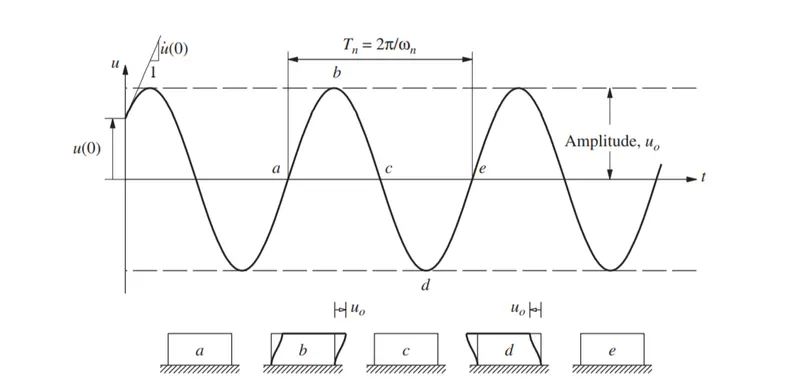
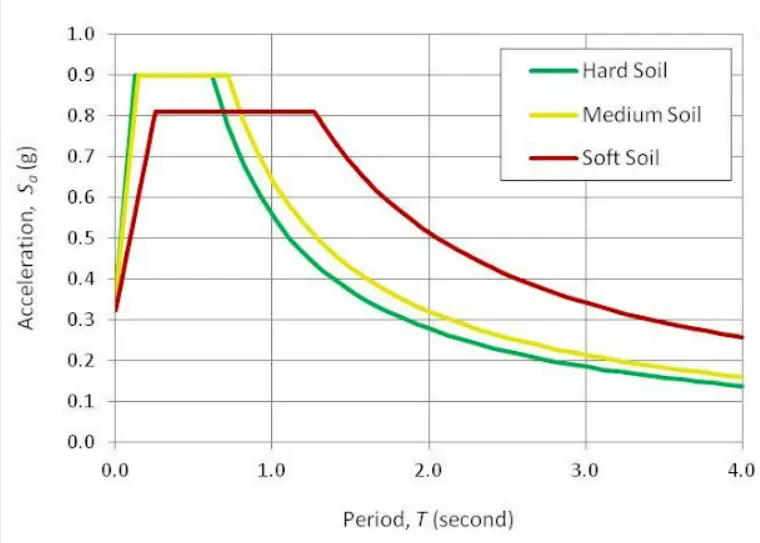
Ans 5. A response spectrum is a graphical plot of the frequency of an oscillator and its damping. The response spectrum plot represents the peak or steady-state response (velocity, displacement, or acceleration) of a series of oscillators of varying natural frequency. In vibration analysis of any system, the response spectrum is very useful as the resulting plot can provide the response of any linear system with respect to its natural frequency. The response spectrum finds its usage in interpreting seismic or earthquake events and slug flow events.
Parameters affecting Response Spectrum
The response spectral values are dependent on various factors like,
- Soil condition
- Energy release mechanism
- Damping in the system
- Epicentral distance
- Focal depth
- Richter magnitude
- Time period of the system
Ground shakes different buildings at different accelerations. This is because some buildings can respond quickly to the seismic waves as compared to the other high period buildings. How we develop a spectrum is quite important to understand as it explains the impact of soil conditions on different types of buildings and structures. Let us look at an image to understand this scenario.
................................THANK YOU..................................................