Identification of Cracks
Ans 1.
(a)
- Observations :
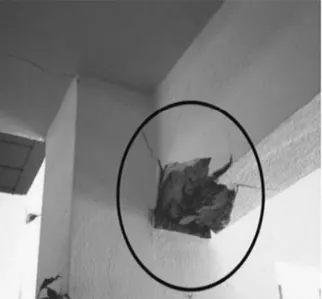
- The given image showing the Breakage of concrete from below.
- Concrete leaves out from reinforcement due to tensioning in beam which results in rupture of beam.
- The top part of beam is safe because of slab connection.
- The yeilding of rebar is going to be done at bottom of the beam because breakage occurs from bottom to top and the top is safe.
- Results :
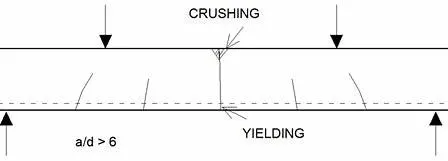
- From given image it is shown to be a Flexural Failure in beam because the magnitude of shear force and bending moment are higher at that point during earthquake.
- It is clearly shown that top part of beam experience compression and tension at the bottom part.
- Beacuse of slab it gives support to top part of beam therefore it is safe and due to uneven reinforcement provided at bottom it results in tensiion failure.
- Therefore the reinforcemnet reached yeilding hence it can't be repaired.
(b)
- Observations :
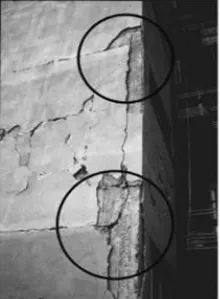
- The given image showing the Crack occured at corner were beam and column get join.
- It is found that the crack covers the entire structure.
- Beam and column get seperated from each other as shown in image.
- Concrete does not comes out fully.
- Results :
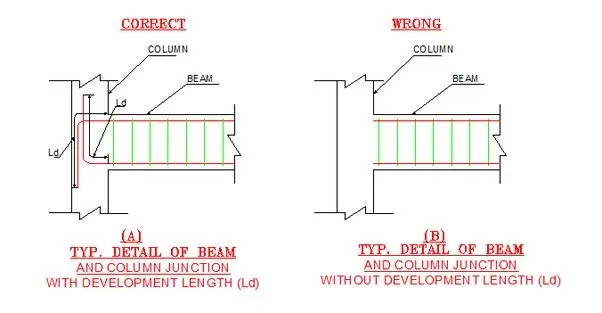
- Due to insufficient development length of reinforcement the beam gets pulled out.
- It occurs due to the horizontal movement of structure during earthquake and the beam gets seperated from column.
- It is not repairable because it is difficult to provide anchorage length between two concrete structure.
(c)
- Observations :
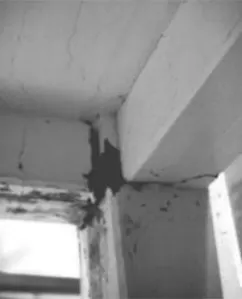
- The given image showing the Crack occured exactly at joining of beam and column.
- The beam gets cracked fully from its width horizontally.
- Beacause of this results in crack damage at slab also.
- Results :
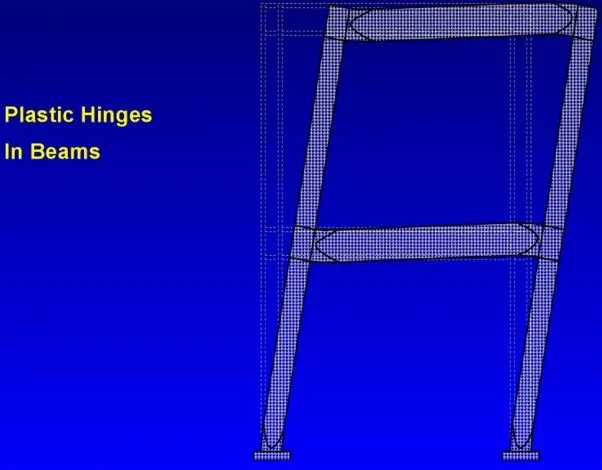
- It is plastic hinge failure.
- In this firstly the damage occurs at joint of beam and column.
- The damage occurs due to cyclic lateral loading And reversal of stresses.
- Due to this the slab also gets damaged because it is failed in supporting against the action.
- But after all the joint can get to be strengthened.
Ans 2.
(a)
- Observations :
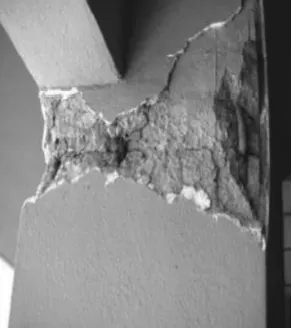
- The given image showing the damage occured at the top of column.
- Concrete Damaged from all side but the beam seems to be safe.
- The column seems to be the outer one.
- No wall construction is to be done at the building right now thats why it seems a basement area or parking etc.
- Results :
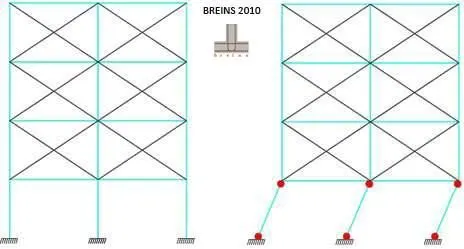
- The failure is called th esoft storey failure and formation of plastic hinge.
- As there is no walls are constructed at this floor so due to the lateral movement at the top of the storey columns ,plastic hinge is formed.
- it is observed that concrete is crushed at that portion so the condition of columns is either repiarable or jnon repairable.
(b)
- Observations :
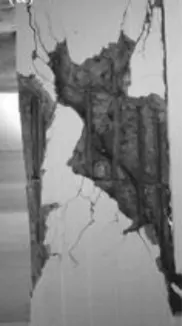
- The given image showing the concrete damage occured diagonally at the column.
- The vertical reinforcement remains same in there position.
- The spacing between the shear bars seems wider that means less rebar are provided.
- Results :
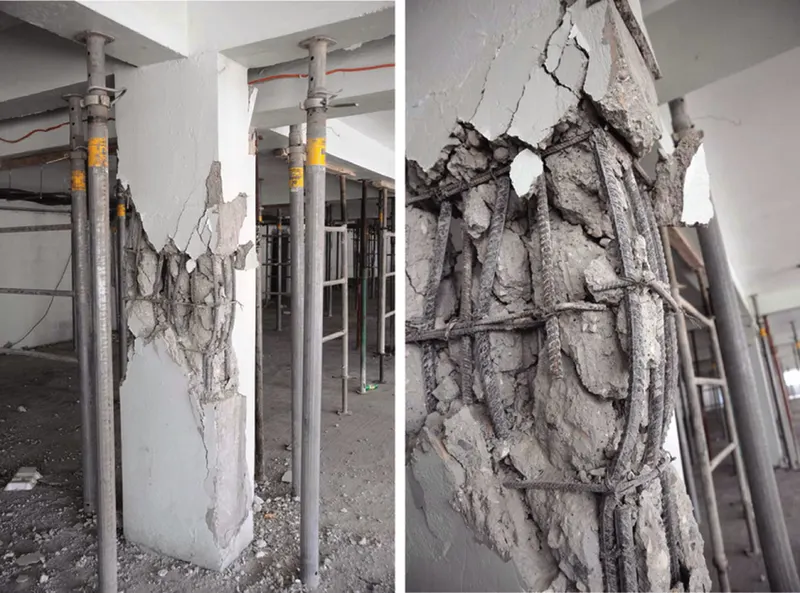
- This Failure is called as pure shear failure.
- Uneven spacing in reinforcement may results in this failure in concrete.
(c)
- Observations :
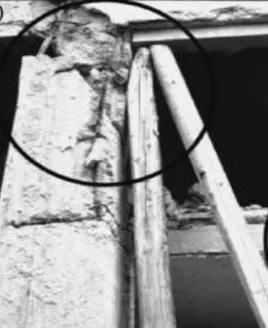
- The given image showing the Column get damaged fully.
- The failure occurs at the column top.
- It seems that there are 2 slabs connected to the column one is at the top and other is at 2/3rd of the height of column.
- Ater the structure gets failed it is suppoted by wooden pillers to avoid collapsing of structure by temporary support.
- Results :
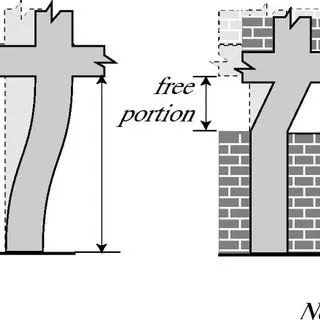
- This failure is called short column failure.
- May be this failure occurs due to providing additional slab or beam provided at mid part of column.
- This failure is also occurs due to unwanted connection of structure component which is not mentioned in the design.
- The repairing of this failure cant be possible.
..................................................THANK YOU....................................................................