Structural dynamics
1. Differentiate Static analysis and Dynamic analysis with proper representing pictures.
A.) STATIC ANALYSIS:
- Load is not variable with time and neglected due to the delayed application of load.
- Motion of the structure can be disregarded.
- The displacement that static analysis produces is larger.
- No changes occur in the size, position, or in direction of static forces.
- There is no inertia effect on static analysis.
- The analysis is insufficient for high ends if the building structures are static.
DYNAMIC ANALYSIS:
- Due to quick load application and vibrations, load varies over time.
- Motion of the structure cannot be disregarded.
- The displacement that static analysis produces is less.
- Dynamic forces changes in either size, position or in direction.
- Inertia effect is considered in dynamic analysis.
- The analysis is sufficient for high ends if the building structures are dynamic.
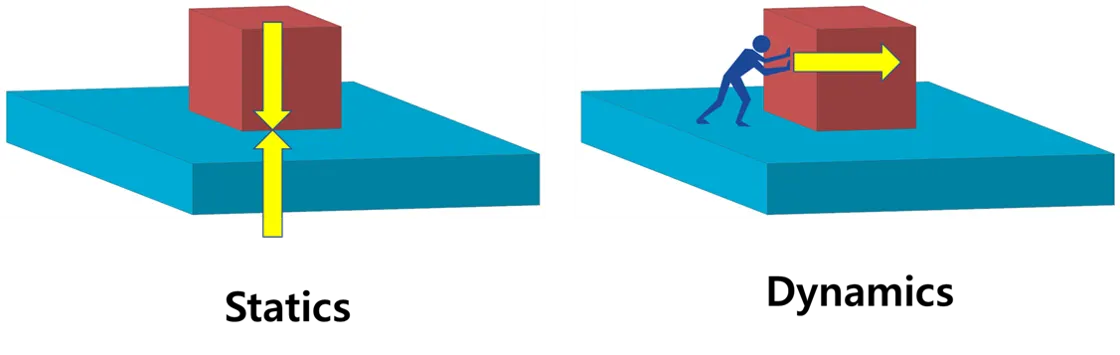
2. Explain the following with relevant force-displacement graph.
- Elastic behavior
- Inelastic behavior
- Plastic behavior
- Non-linear Inelastic behavior.
A.) 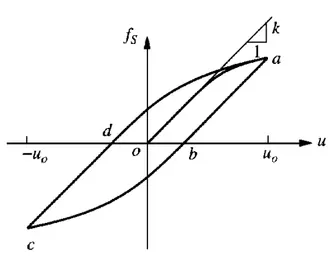
(a). Elastic behavior:
The characteristic of a material's elastic behaviour determines how long it can hold its form. The aforementioned graph makes it abundantly evident that the graph is linear up to a certain distance from "O" and exhibits its elastic features.
(b). Inelastic behavior:
When a material can't return to its original shape after a specific amount of deformation, it exhibits inelastic behaviour. Inelastic behaviour has been demonstrated in the top form of the curve up to point "a" in the aforementioned graph.
(c). Plastic behavior:
When the material has entirely lost its ductility, plastic behaviour occurs. Plastic behaviour happens during unloading after point "a" in the aforementioned graph.
(d). Non-linear Inelastic behavior:
After the line from "O" starts to bend toward point "a," non-linear inelastic behaviour starts to manifest.
3. Explain Mass, Stiffness & Damping components in the equation of motion.
A.) Mass Components:
- The centre of mass is the average position of all the system's components, weighted in accordance with their masses.
- The roof mass without the stiffness or damping of the frame.
- The external force fi on the mass component is related to acceleration by fi=mu¨.
Stiffness components:
- A building's stiffness is a measurement of the amount of force needed to move it a specific distance.
- The frame without damping or mass.
- The external force fs on the stiffness component is related to displacement u by fs=ku.
Damping components:
- The dissipation of vibratory energy through time and space in solid materials and structures is known as damping.
- The frame with its damping property but no stiffness or mass.
- The external force on the damping component is related to velocity by fd=cv.
mu¨+ fd + fs = p(t)
that is mu¨ + cu˙+ ku = p(t)
4. Provide relationship between Natural period (Tn) & Natural frequency (f) and provide their definitions.
A.) Natural period (Tn):
The time required for the undamped system to complete one cycle of free vibration is the Natural period.
Tn= (2π/Wn)
Natural frequency (f):
The number of cycles (or one complete revolution) executed by system in one second is called natural frequency.
fn =(1/Tn)
Therefore, the relation between natural period of vibration of the system(Tn) and natural frequency is fn=(1/Tn).