Structural dynamics
1.ans
Differentiate Static analysis and Dynamic analysis
- variation of load with time in dynamic analysis but not Varey in static analysis because of the load is slowly taken but the dynamic analysis is load variation with respect to time, it changes under vibrations
- motion cannot be disregarded
- two additional forces must be accounted in dynamics analysis 1. inertia force, 2. damping force
The main difference between static and dynamic analysis is TIME! If the load is applied so slowly, that inertia effects won't play a role, all you need is static analysis. Dynamic analysis handles impacts and other “fast” happening situations, but also vibrations (which happen in time).
2.ans
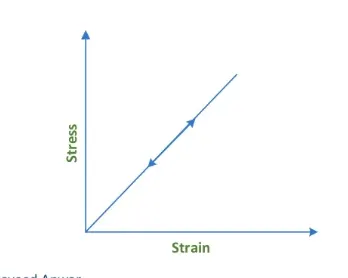
linear elastic: a linear elastics material one which the strain is proportional to stress
when the load is applied on the surface its take displacement and it remove the forces its gain original shape is called linear elasticity
both the loading and unloading curves are same line
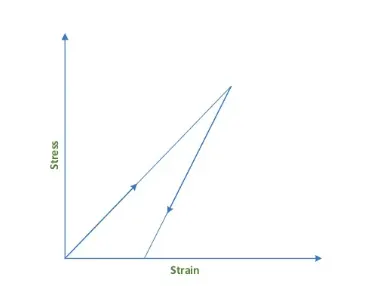
linear - in elasticity:
a linear in-elasticity material is one which the strain is proportional to stress
the loading and unloading lines are not same it takes deformation small permanently within the elastic limit
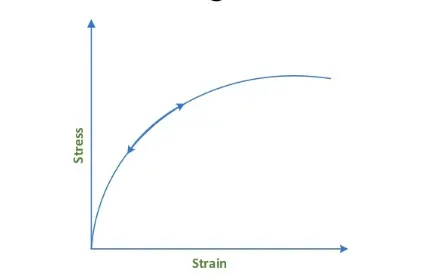
NON-LINEAR ELASTICITY:
a nonlinear elasticity material which one in not proportional to stress and strain
the loading and unloading curve lines are same but not straight lines the extension up to plastic limit state only
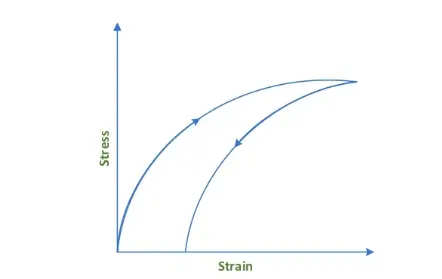
non-linear inelasticity:
a nonlinear elasticity material which one in not proportional to stress and strain
the loading and unloading curve lines are not same
3.ANS
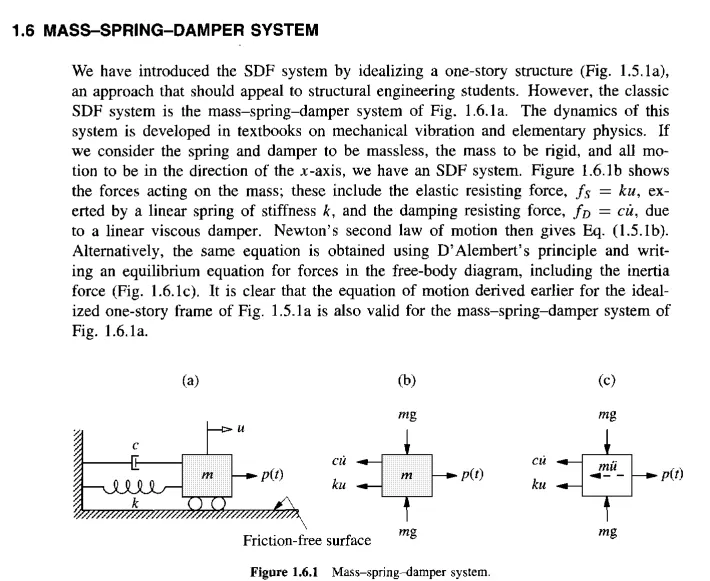
DAMPING FORCE:
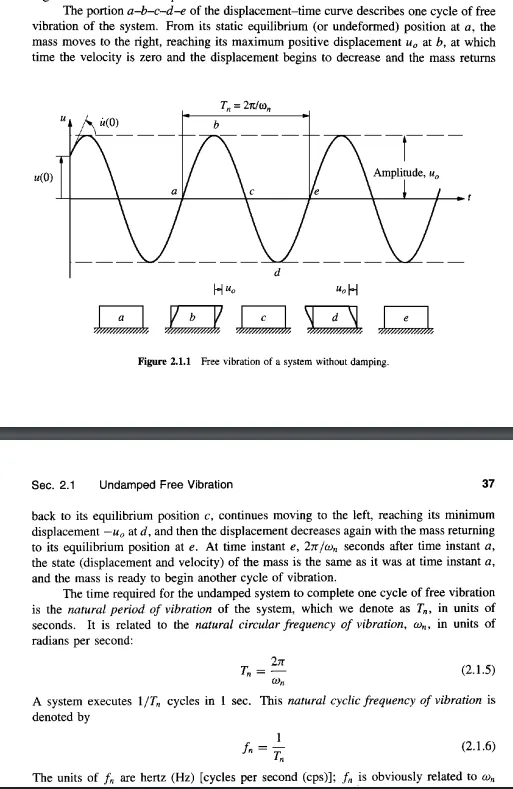
1. Its impact is evident from the steady decline in amplitude of a vibrating body
2. sources of damping in vibrating structures
-friction at steel connections
- opening and closing of microcracks in concrete
-friction between the structure and non-structural elements such as partition walls
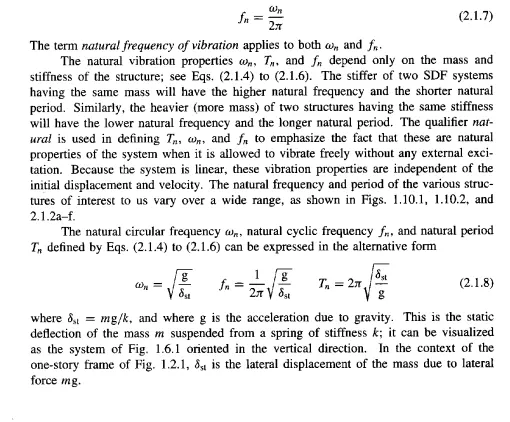
3.damping in structure is represented in an idealized manner called equivalent viscous damping
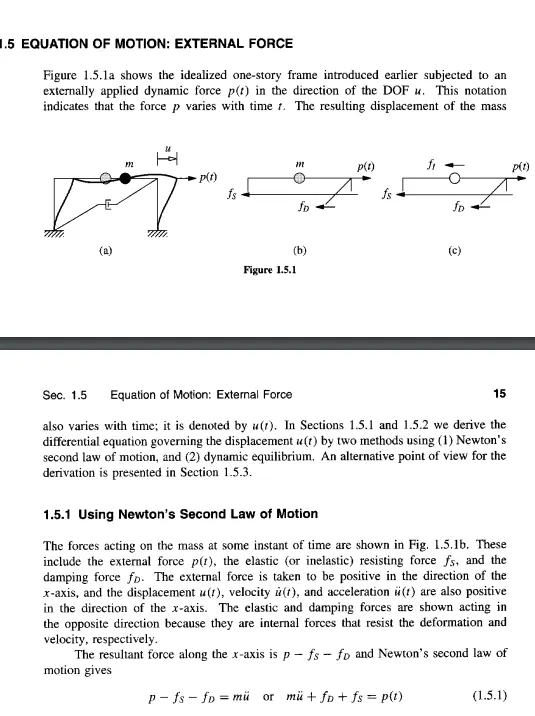
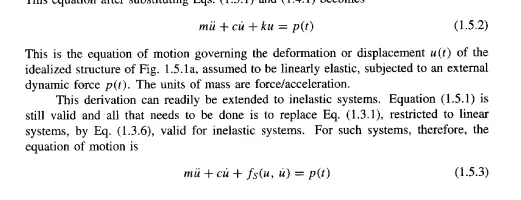
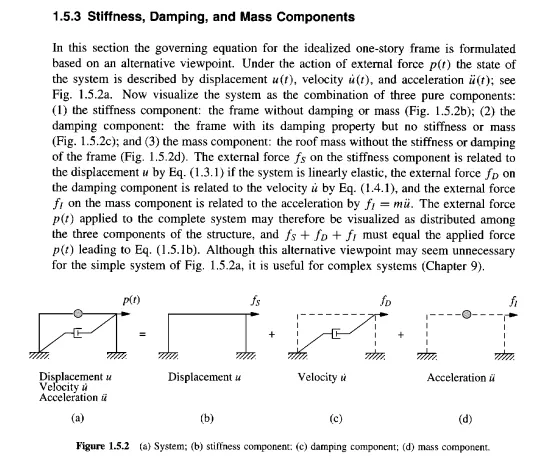
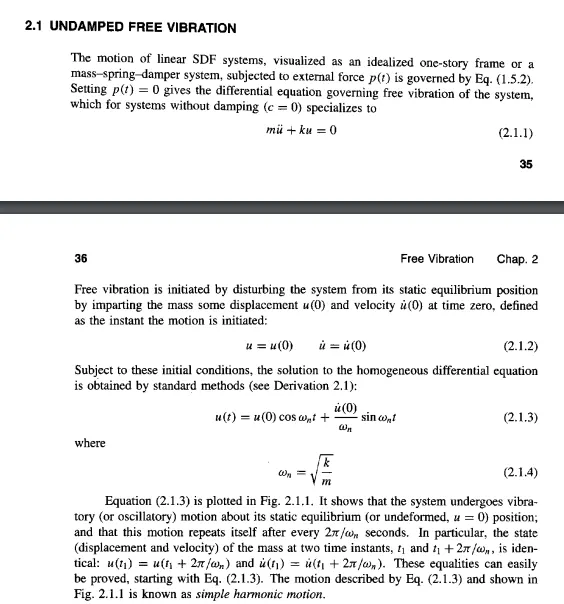
EQUATION OF MOTION:
4.ans
5.ANS
response spectrum:
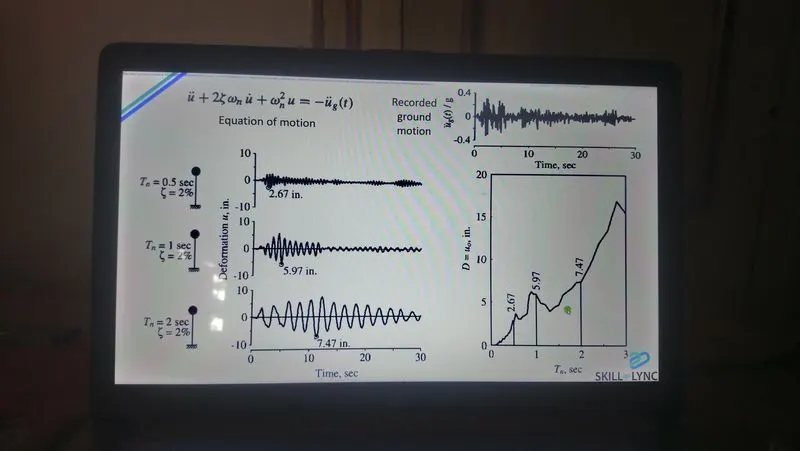
- a central concept in earthquake engineering response spectrum is a particular means of characterizing ground motion and their effects on structures of different Tn
- it provides a convenient means o summarize the peak response of all possible linear SDF system to a particular component of ground motion
- it's also provides a particular approach to apply the knowledge of structural dynamics to the design of structures and development of lateral force requirements in building codes
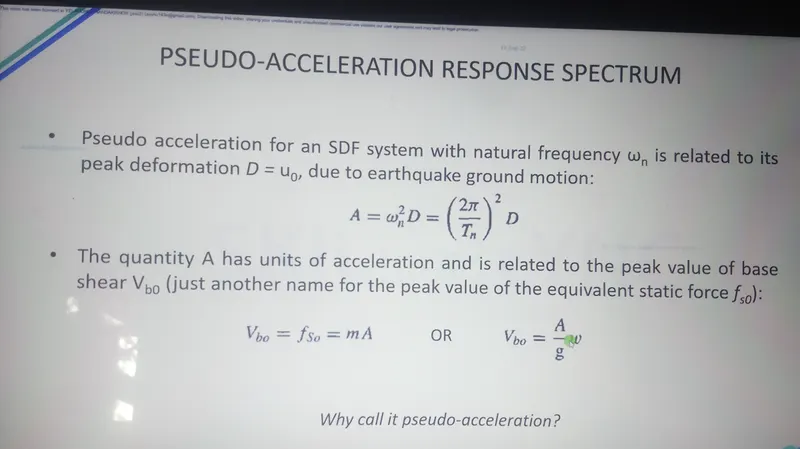
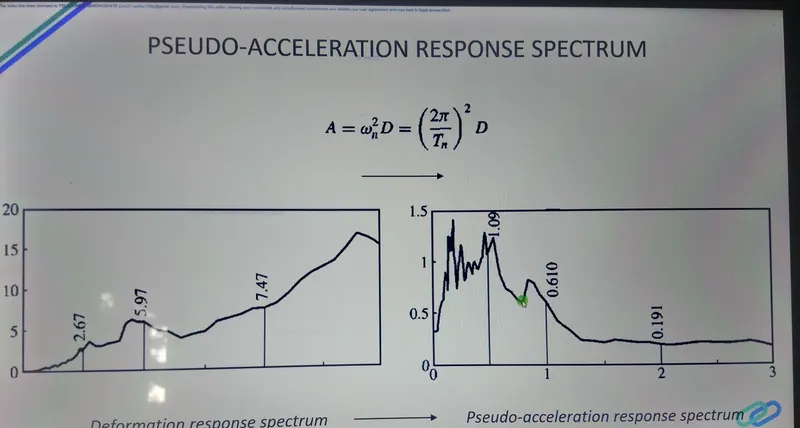
- A plot of the peak value of a response quantity (U, v and a) as a function of the natural vibration period Tn of th system is called the response spectrum for the that quantity
- each such plot is for SDF system having a fixed damping ratio, and several such plots for different values of damping ratio are included to cover the range of damping values encountered in actual structures
- the response spectrum can be of 3 types the deformation response is a plot of peak u against Tn for fixed damped ratio, a similar plot for peak u is the relative velocity response spectrum, and for peak u is the acceleration response spectrum