Structural dynamics
1.aim the diffrence between static analysis and dynamic analysis with proper reperesenting
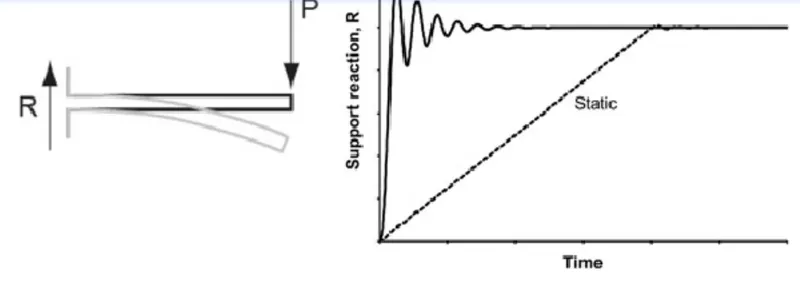
The main difference between static and dynamic analysis is TIME! If the load is applied so
slowly, that inertia effects won’t play a role, all you need is static analysis. Dynamic analysis
handles impacts and other “fast” happening situations, but also vibrations (which happen
in time).
.A static analysis can only be performed if the system being simulated does not depend on
time, and if the loads being applied are constant. In a dynamic analysis, the system itself,
the load application, or both might change with time.
indyanamic analysis the intertial loadsdeveloped by the system due to acceleration are take in to account static analysis dont consider inertia
mathematically the difference between static and dynamic analysis only the stiffness matrix of the fea model is solved in dyanmic model the additional stiffness of the matrix the mass matrix is solved that is one of the reason why dynamic analysisrequire more conseptutional than static analysis for the same structure
2.explain the following with relevant force displacement graph
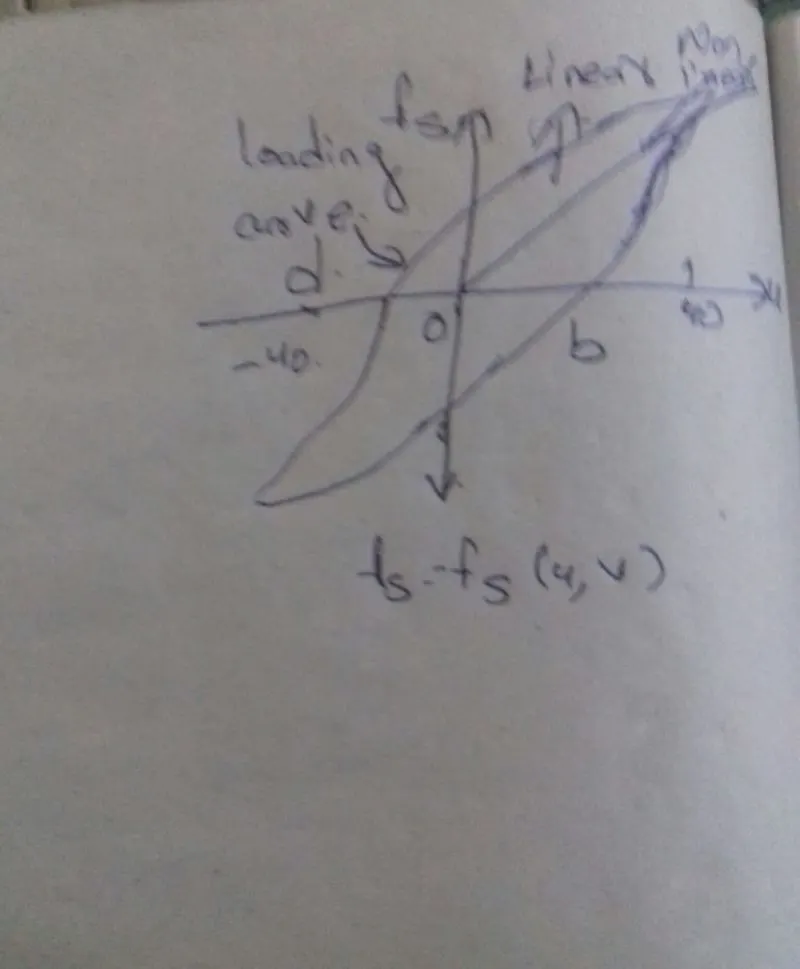
1.elastic behavior
elasstic behavior is the property of the materialup to which the material can retain its shape from the afermentioned
graph it s clearly that up to a certain point from o the graph is linear and shown its elastic properrty
2.inelastic behavior
inelastic property is the behavior of the material when the material cant retain its previous shape after a certain deformation in the aferrmantioned that shown in the upper shape of the curve
plastic behavior
platic behavior occurs when the material completely lost its ductility in the afermentioned graph in the plastic behavior occurs dduring unloading after point a
3. Explain Mass, Stiffness & Damping components in the equation of motion
aim mass stiffness and damping components in the equation of motion
Mass, Stiffness & Damping components in the equation of motion are as follows;
The Single Degree of Freedom System as a combination of 3 pure independent systems
stiffness component the frame without damping or mass . the stiffness component is related to dispalcement
fs=ku
the damping component the fame with its damping property external force on the damping component fd=cu
the mass component the roof mass with out the stiffness or damping of the frame
mu+fD+fs=pt mu+cu+ku= pt
4.Provide relationship between Natural period (Tn) & Natural frequency (f) and provide their definitions .
the relationship between natural perriodtn and natural frequencyf and provide their definition
natural period(tn) is the vibration of the system is the time required for the undamped system to complete one cycle of free vibration(unit in secconds) it is relatedd to natural circular frequency of vibration wn, in unit of raddians per second
tn= 2π/ωn or ωn = 2π/Tn
natural frequency(f) number of cycle9or one complete revolution)execcuted system in one seccond with units hertz
where f=1/tn
Natural vibration properties ωn, Tn and f depends only on mass and stiffness of the structure
5. Explain in detail about Response spectrum & its Graph
response spectrum
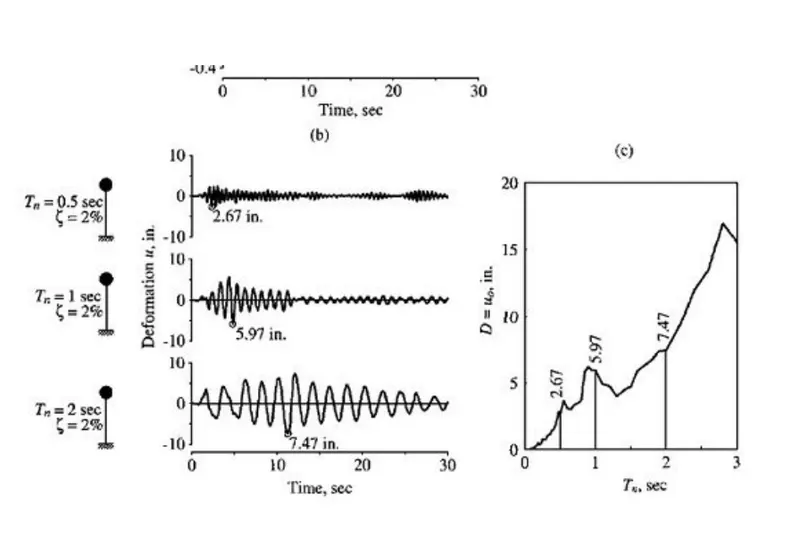
1.It’s the central concept in earthquake engineering, provides a convenient means to summarize the peak respose
of all possible linear sdf system to a particular component of ground motion
It provides a practical approach to apply the knowledge of structural dynamics to the design structure and development of lateral forces required in building codes
2.A plot of the peak value of a response quantity as a function of the natural vibration period
Tn of the system, or a related parametrs such a circular frequency wn, or cyclic frequency
a variety of response spectra can be defines depending oon the response frequency plotted. consider the following peak responses
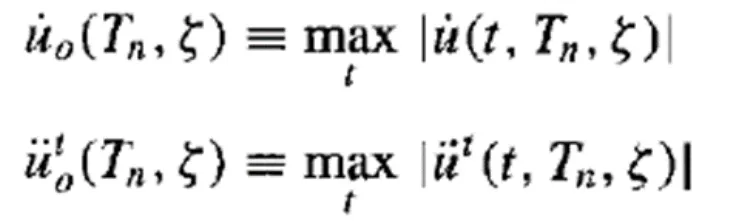
.The deformation response spectrum is a plot of u against T for fixed Շ (damping ration).
A similar plot for ů is the relative velocity response spectrum, and for ű is the acceleratio
response spectrum.