Steady Vs Unsteady flow over a cylinder
Aim: To simulate flow over a cylinder and study the phenomenon of Von Karman vortex street and aslo calculate Strouhal number,coefficient of lift and drag for given values of Reynolds number
Introduction:
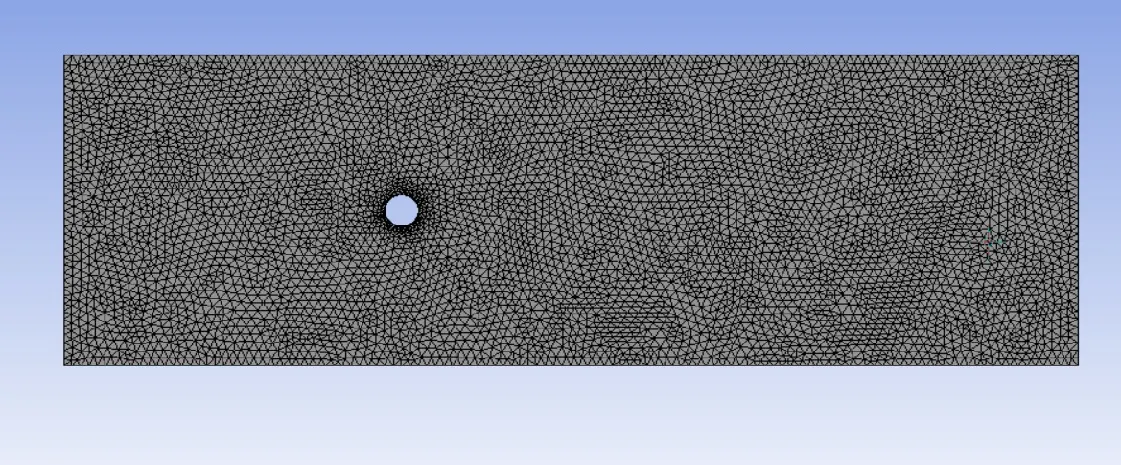
- The setup is as shown below
- After geometry creation Tri-dominant meshing is done with element size of 0.5m.Inflation layers are added to capture boundary layer around the cylinder
- Pressure based solver is used with SIMPLE algorithm to simulate the flow
- The flow is simulated for both Steady as well as Transient case
- When fluid flows past a blunt body, behind the body alternate vortices are formed which is called as Von Karman Vortex street and phenomenon is called a vortex shedding.The vortices shed after travelling certain distance
-
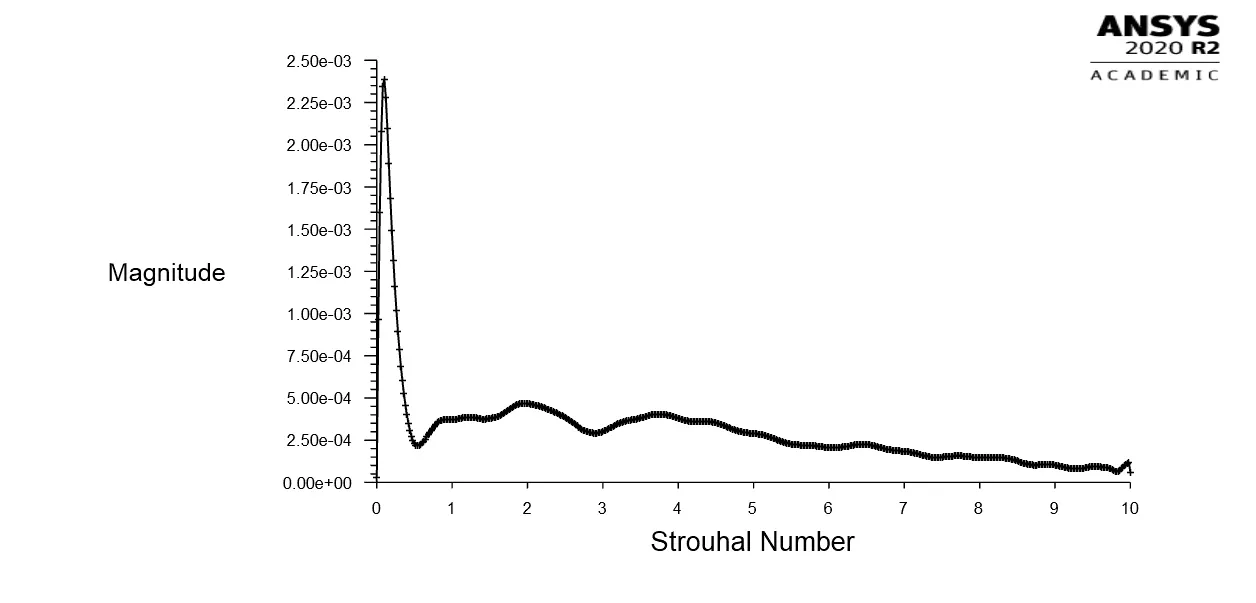
The phenomenon of vortex shedding depends on Reynolds Number.Vortex shedding is observed at Re>40.The frequency at which vortex shedding takes place is given by a dimensionless number named Strouhal Number
`St=(fD)/U`
PART 1
I)
- Steady Case with Reynolds number=100
- A user defined material is specified with density=1 kg/m3 with freestream velocity=1m/s therefore its dynamic viscosity equals to 0.2kgm/s
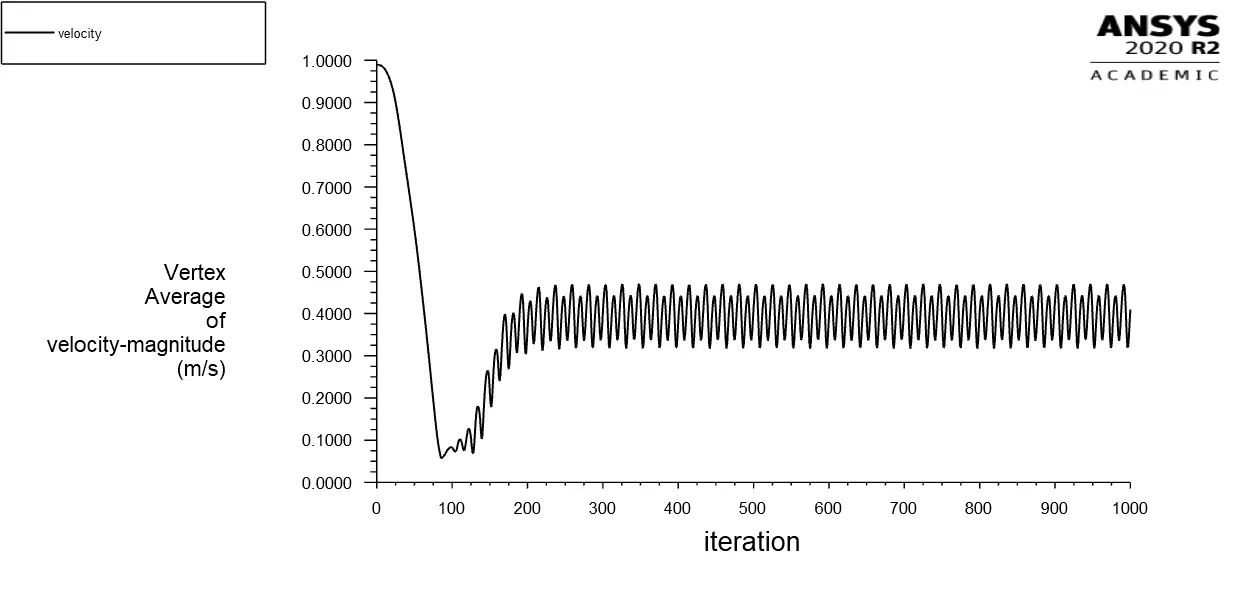
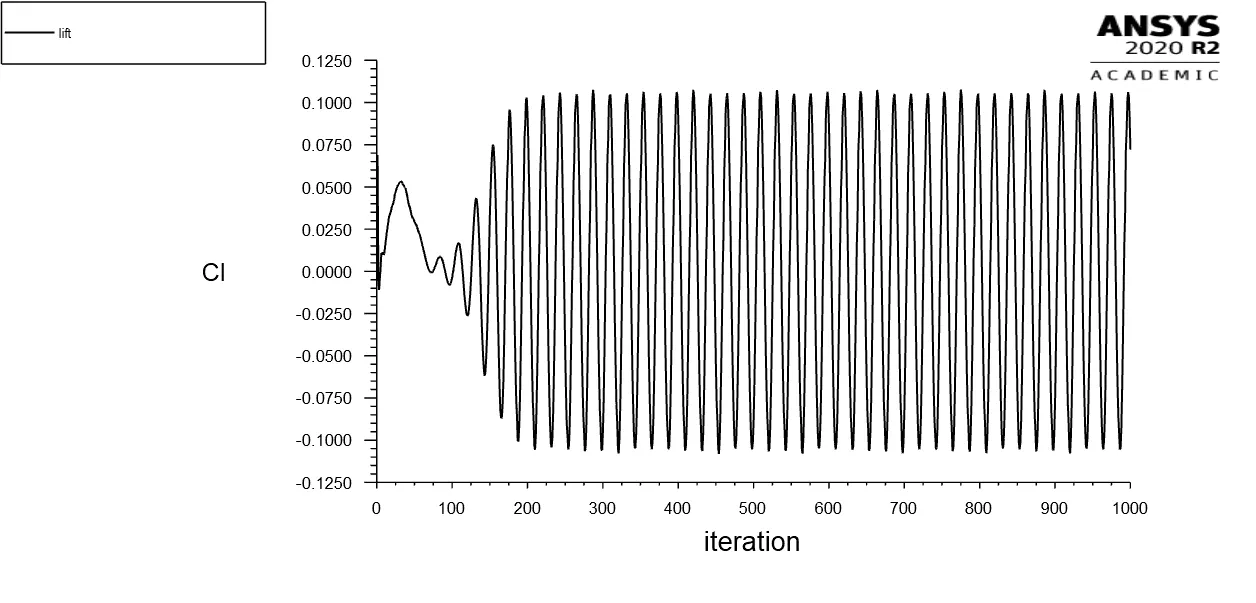
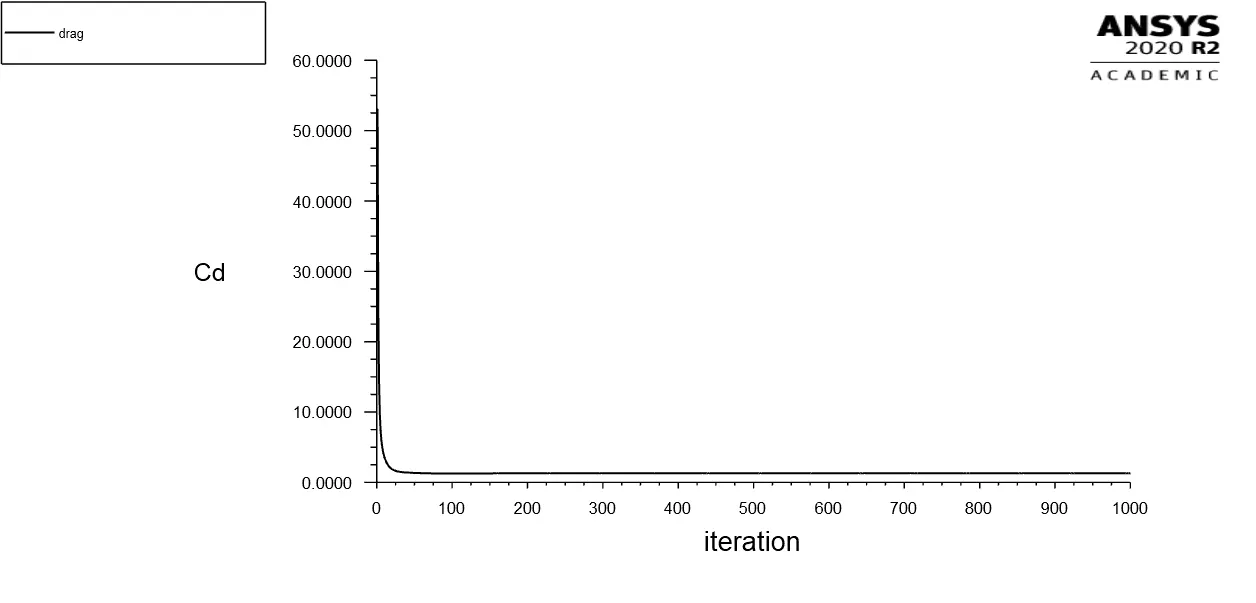
- Following plots and results are obtained as shown below
Velocity Plot at Point (8,0) in domain
Lift Plot
Drag Plot (Cd=1.3137277)
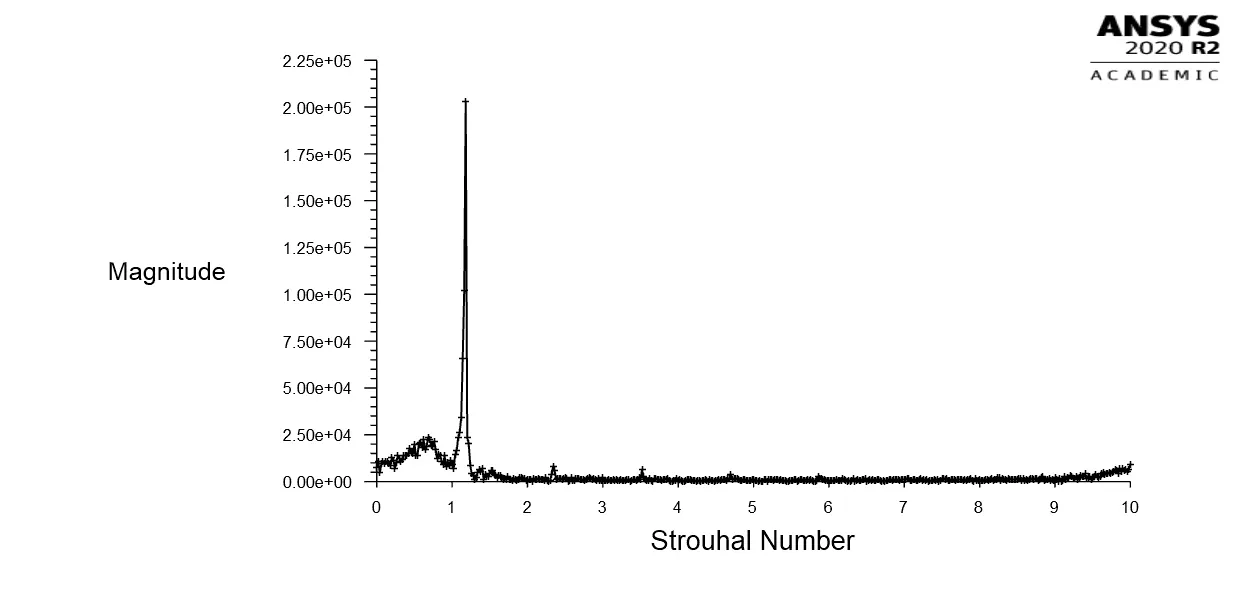
FFT plot for Strouhal Number
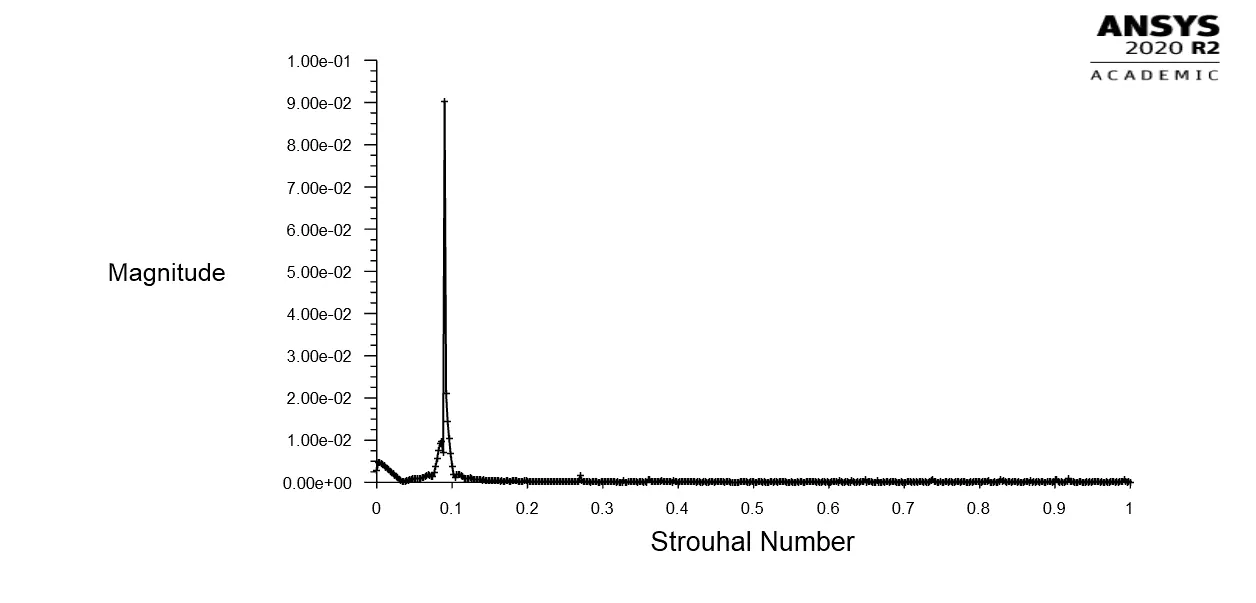
From the FFT plot and report Strouhal Number for this case is St=0.09
II)
- UnSteady Case with Reynolds number=100
- Following plots and results are obtained as shown below
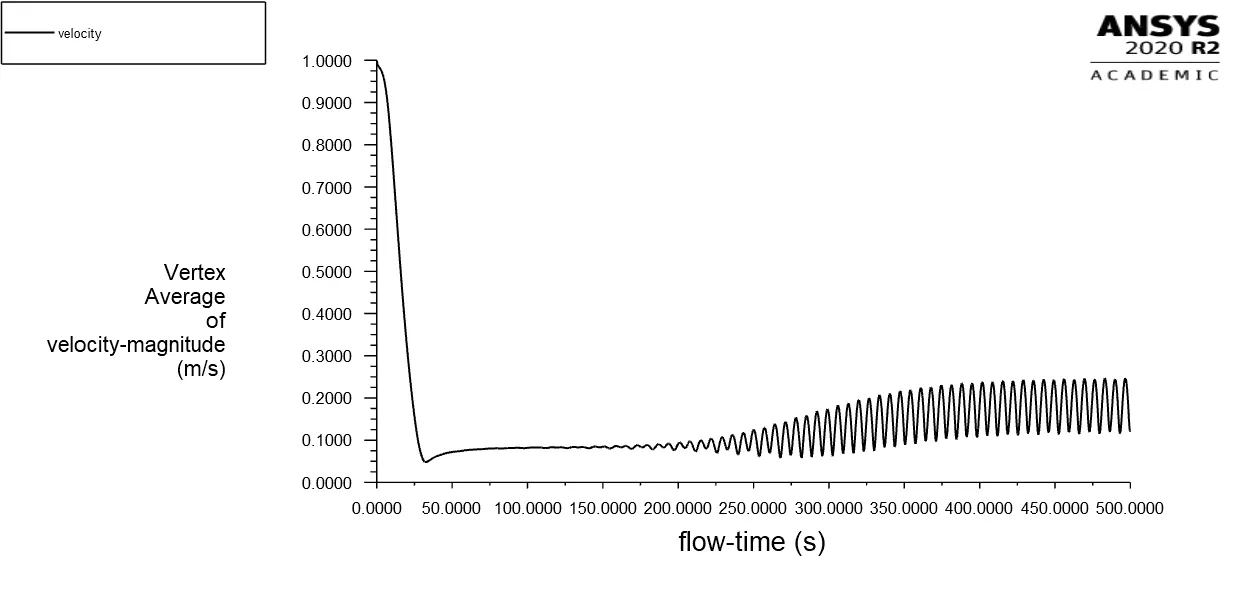
Velocity Plot
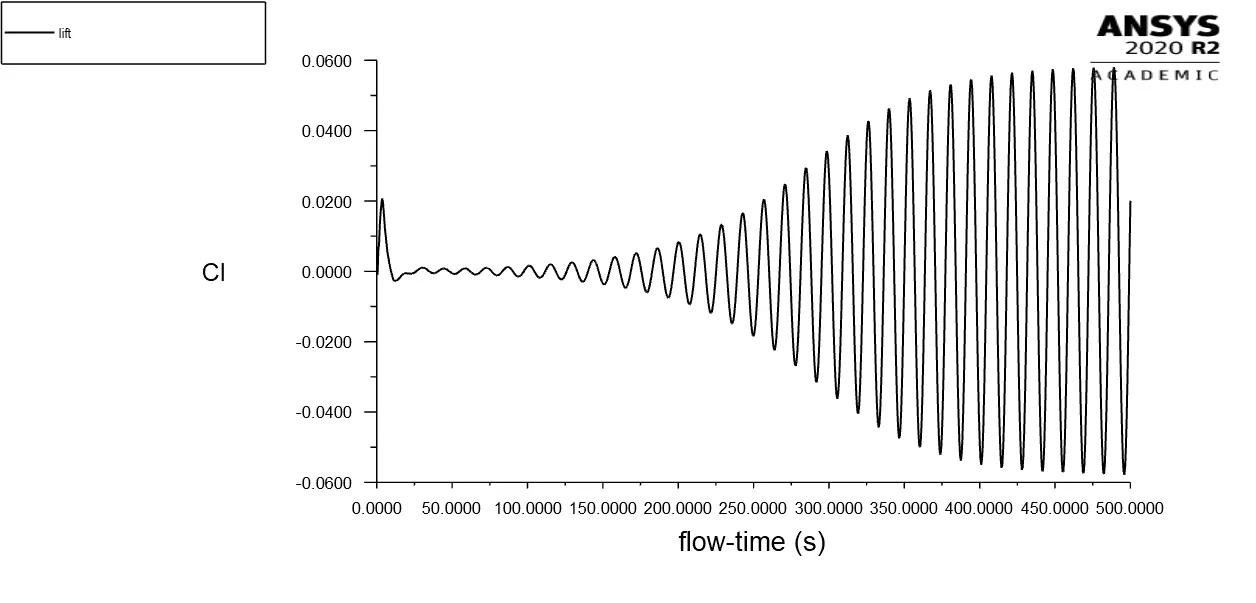
Lift Plot
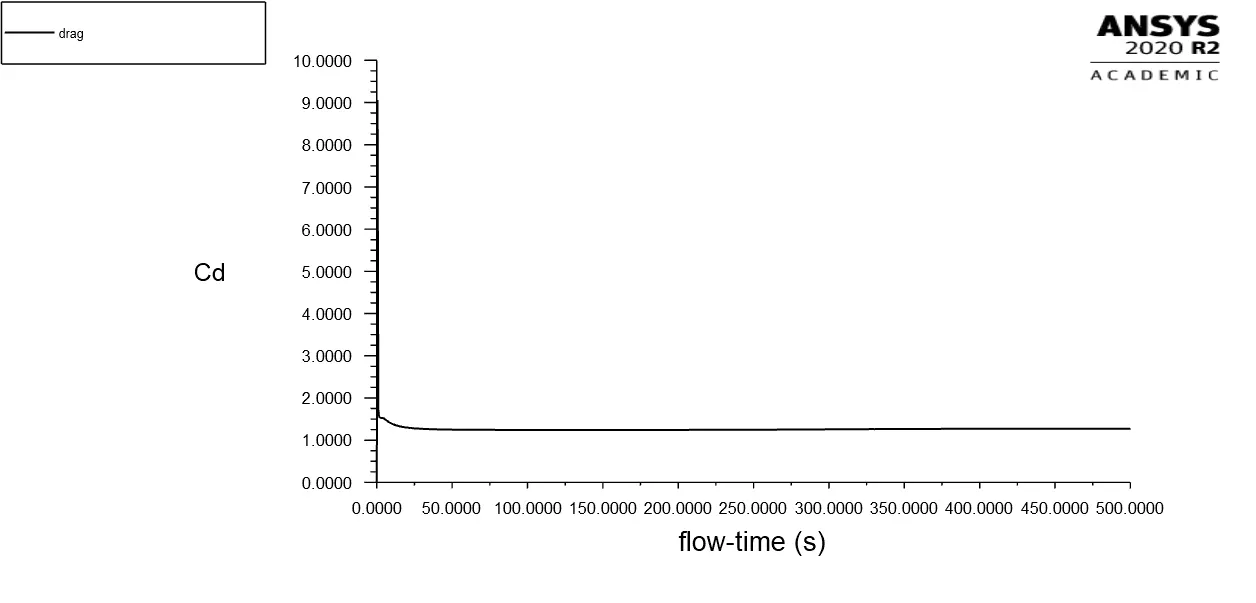
Drag Plot (Cd=1.2712)
FFT plot for Strouhal Number
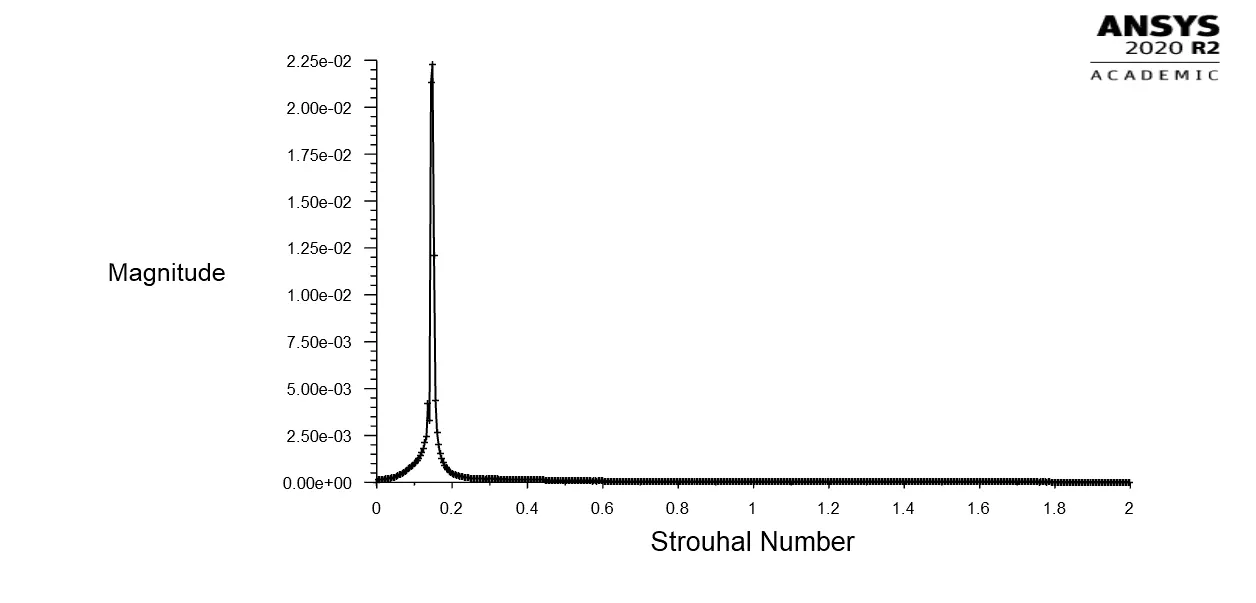
From the FFT plot and report Strouhal Number for this case is St=0.14
PART 2
- In this part Strouhal number and coefficient of lift and drag is to be calculated for Re=10,100,1000 and 10000
- Above Reynolds number is obtained by chnaging the free stream velocity of user defined fluid with viscosity=0.02 kgm/s
- Above cases are simulated over steady state solver
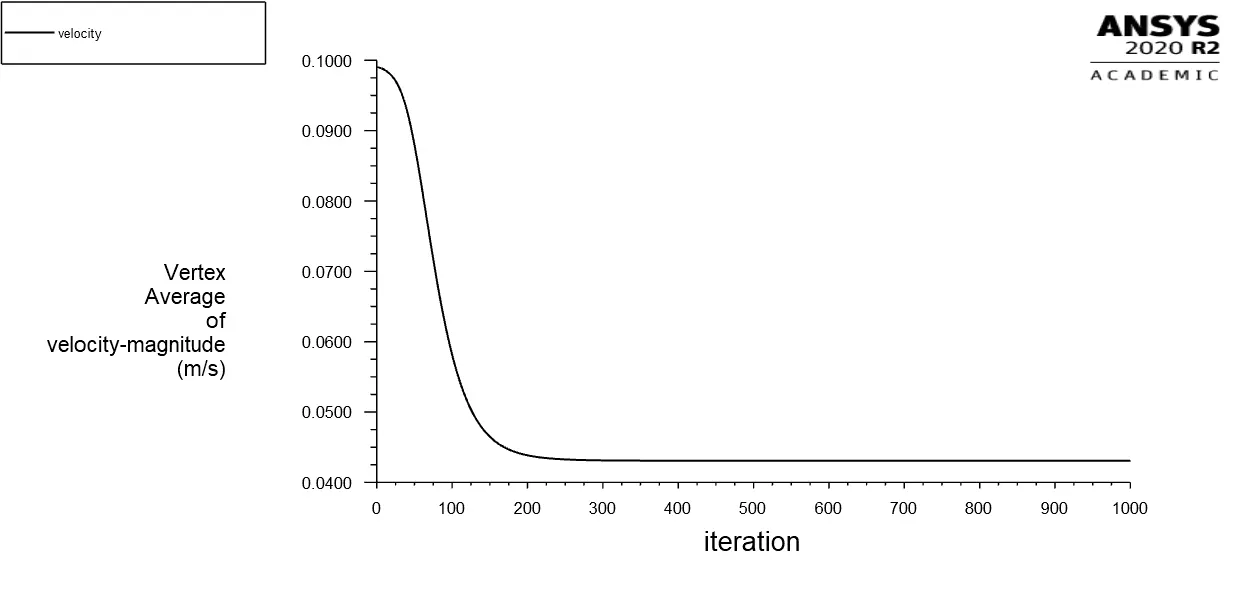
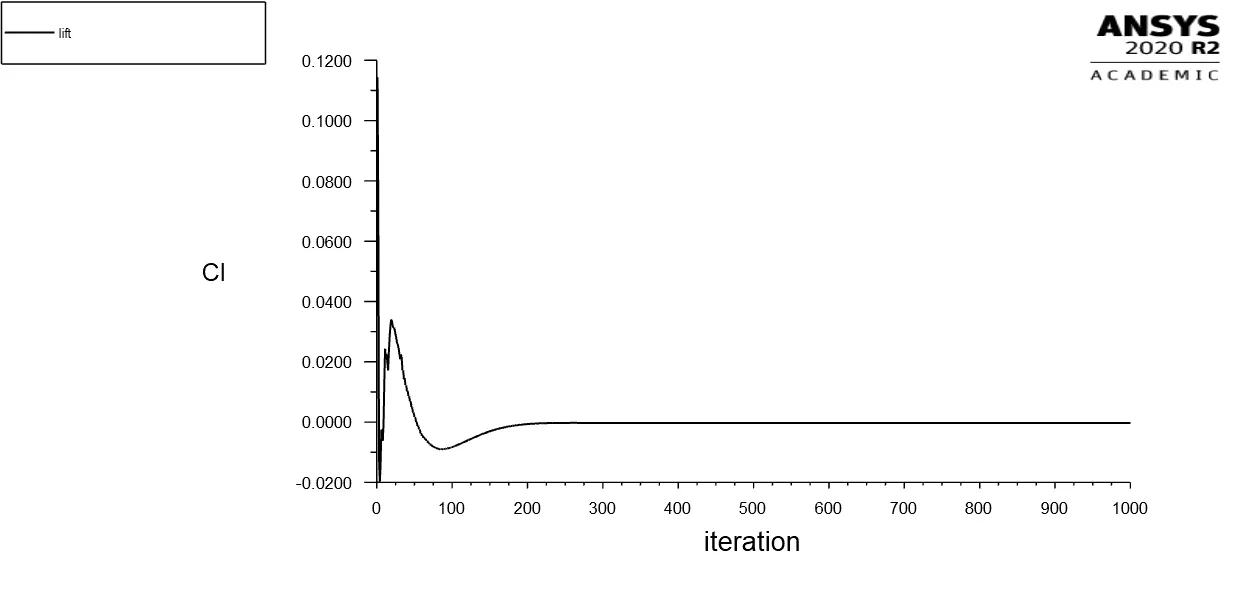
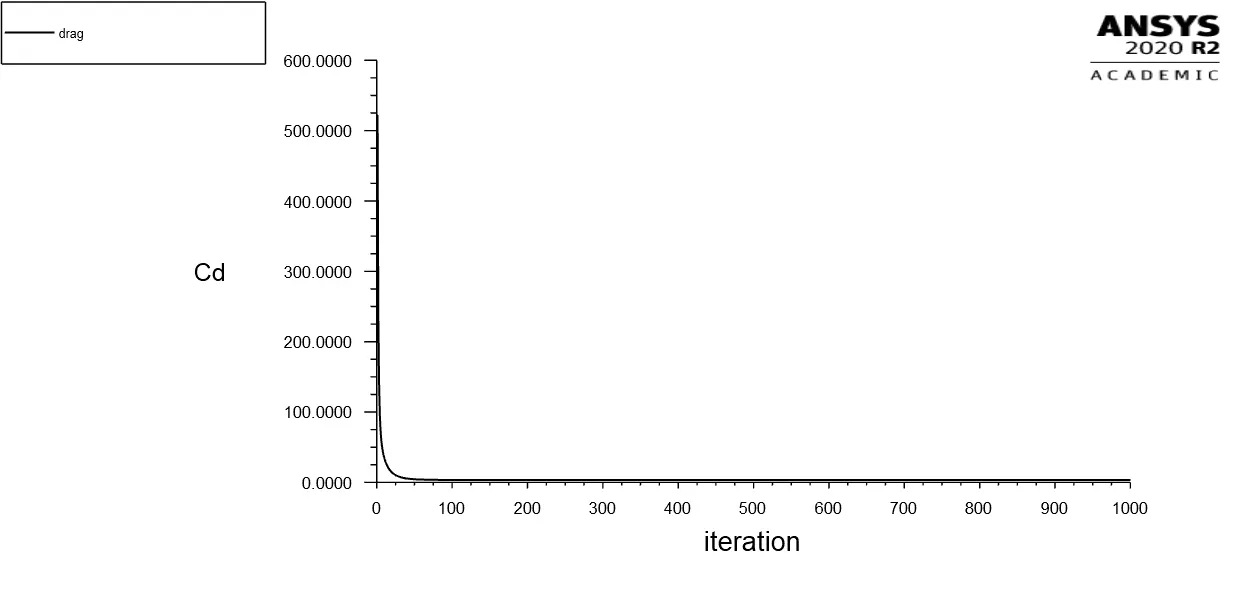
1) Re=10, V=0.1m/s
Velocity Plot
Lift Plot
Drag Plot (Cd=3.3137801)
FFT plot for Strouhal Number
2) Re=100, V=1m/s
For plots refer PART 1 Steady case
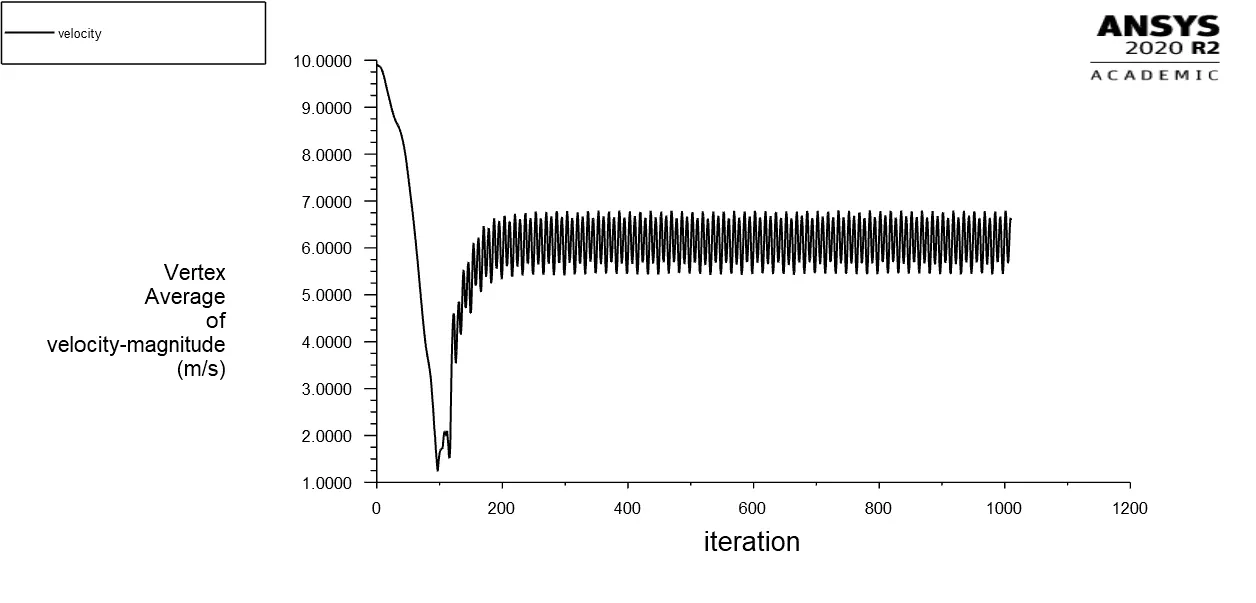
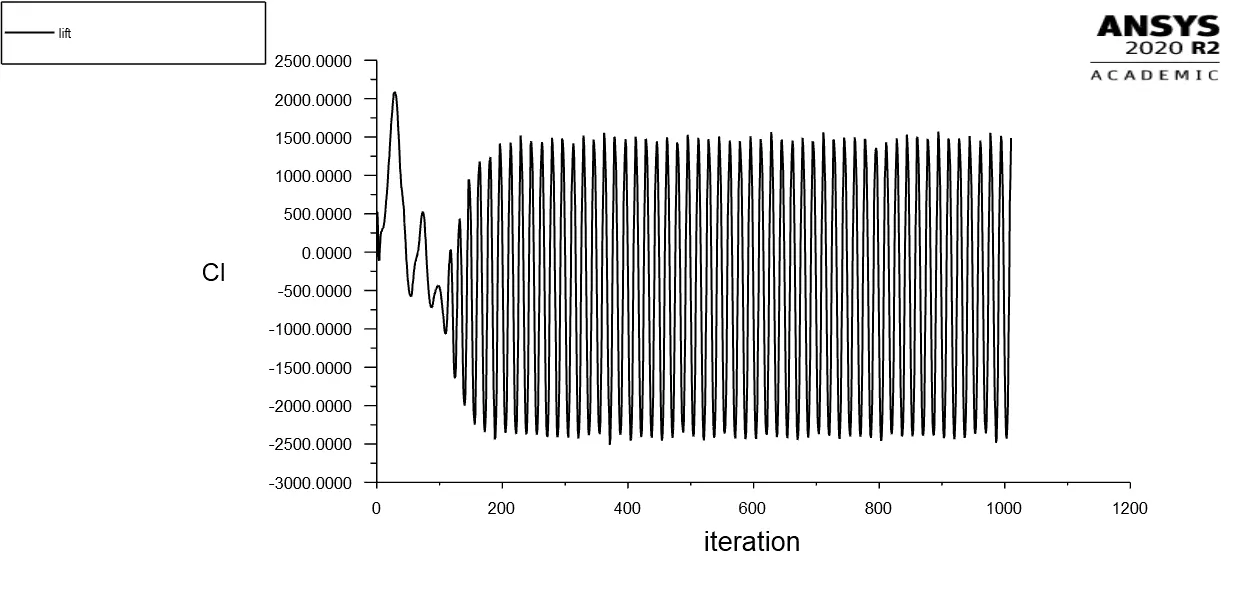
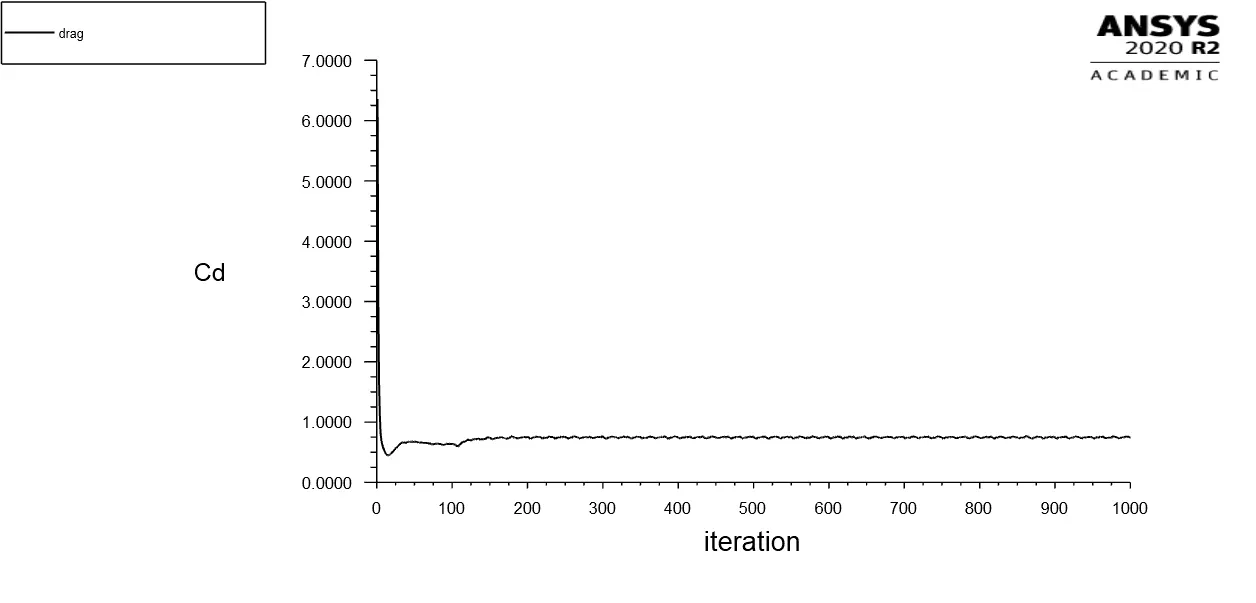
3) Re=1000, V=10m/s
Velocity Plot
Lift Plot
Drag Plot (Cd=0.73699438)
FFT plot for Strouhal Number
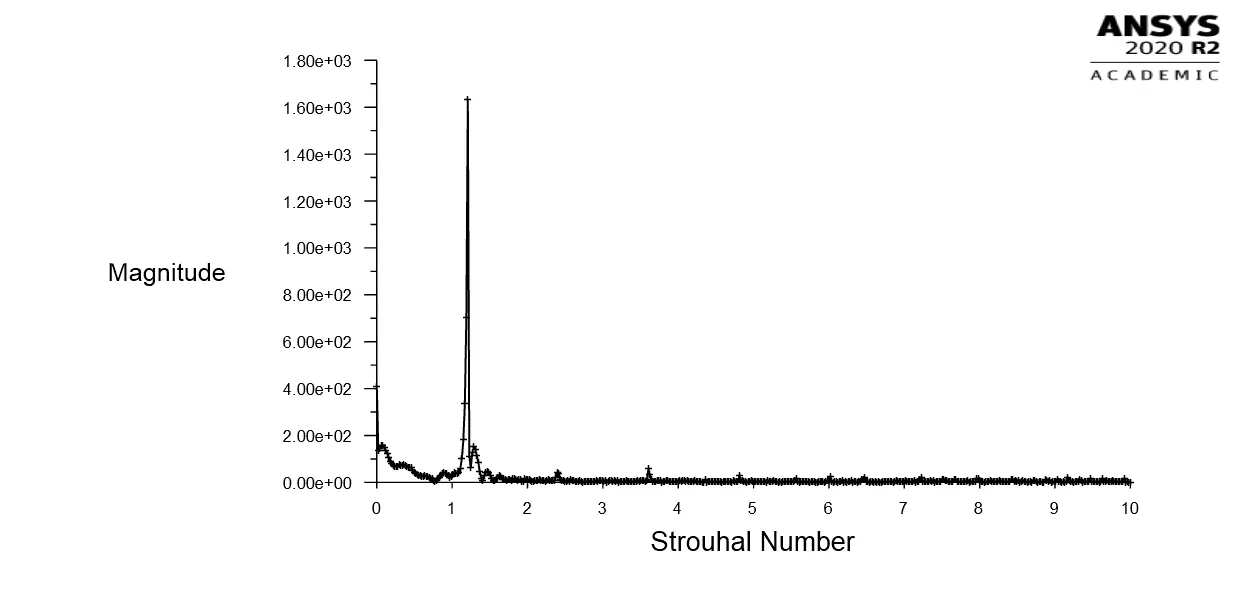
4)Re=10000 V=100m/s
Velocity Plot
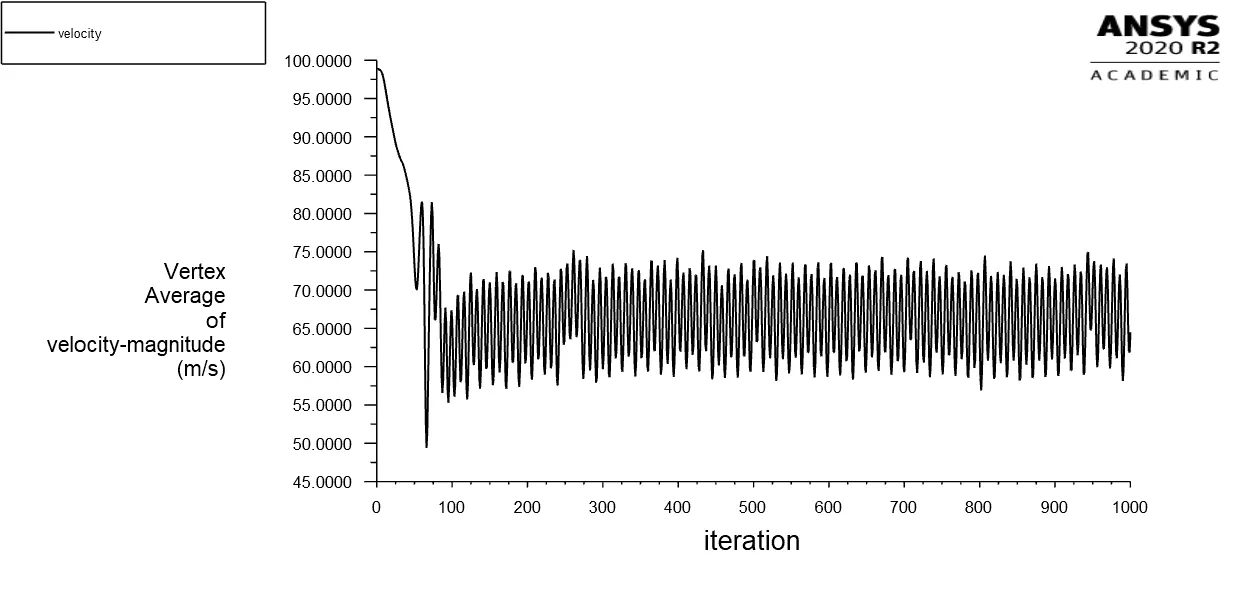
Lift Plot
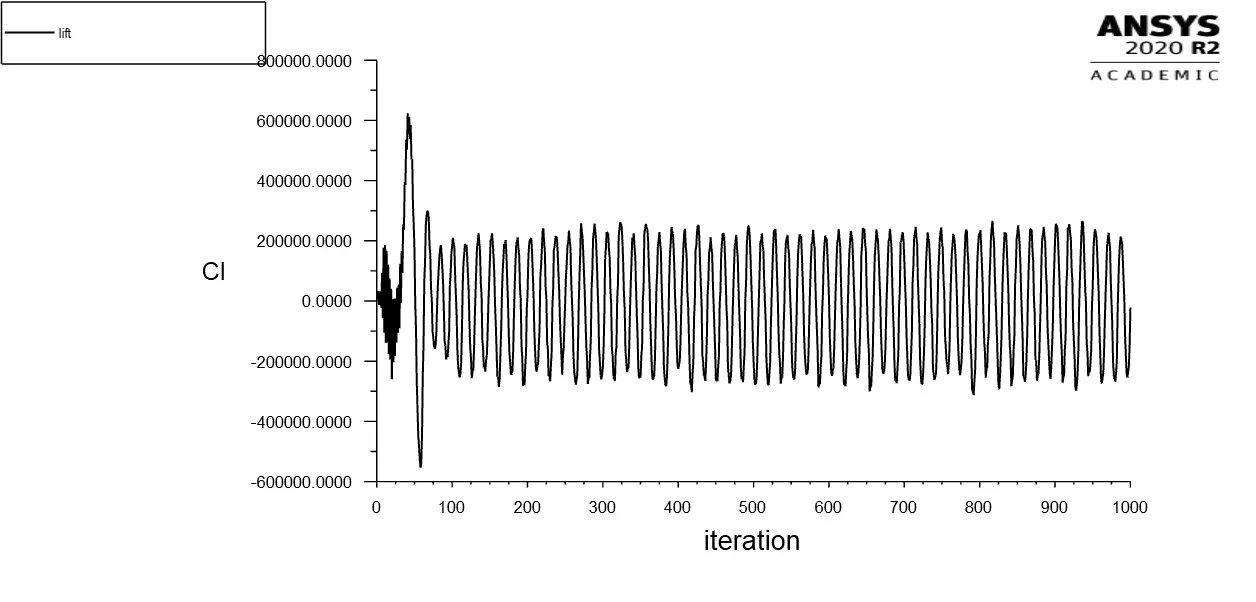
Drag Plot (Cd=0.69723)
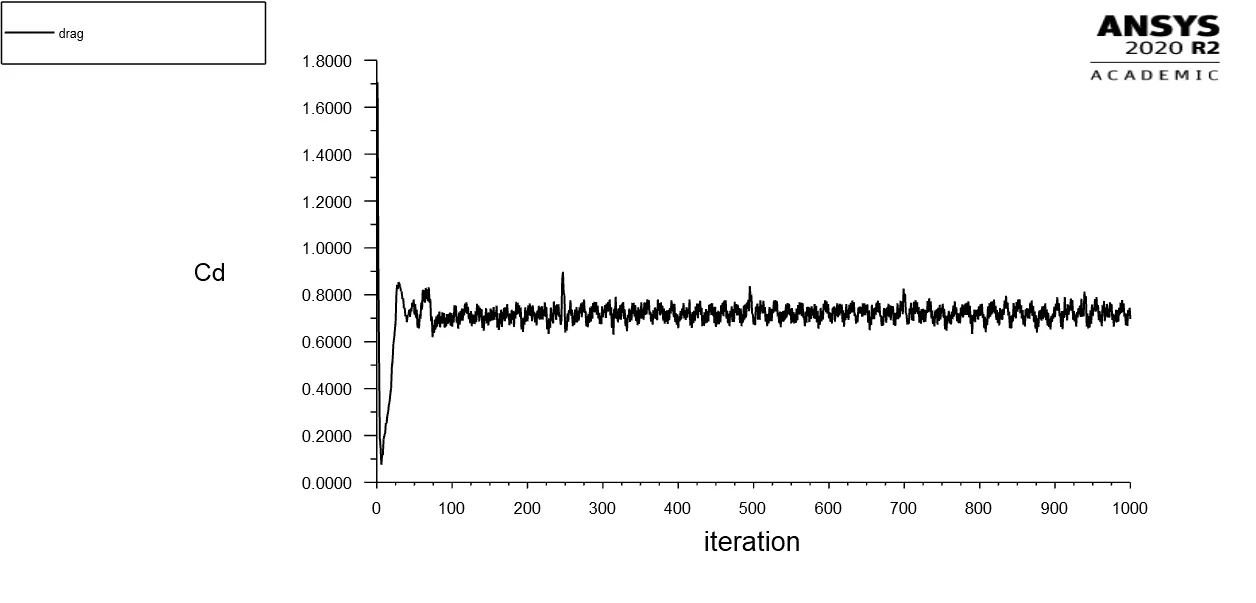
FFT plot for Strouhal Number
Results:
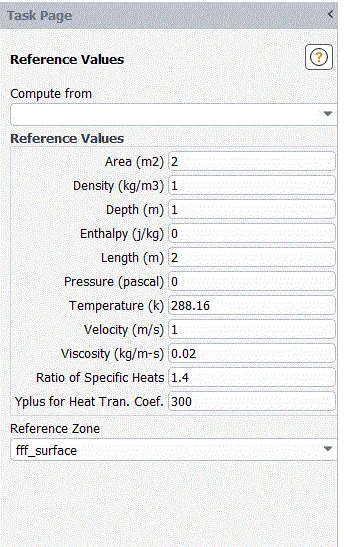
To calculate Drag and Lift coefficients following reference values are to be entered as shown below
1) Coefficeint Of Drag VS Reynolds number is listed below in the table (for steady solver)
| Re | Cd | |
| 1) | 10 | 3.3137801 |
| 2) | 100 | 1.3137277 |
| 3) | 1000 | 0.73699438 |
| 4) | 10000 | 0.69723 |
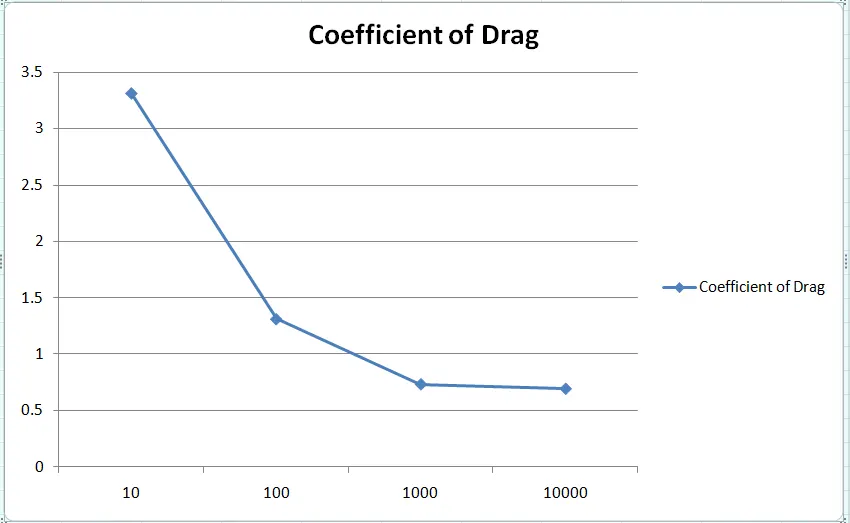
From the above plot we can say that as Reynolds number increases the value of coefficient of drag decreases
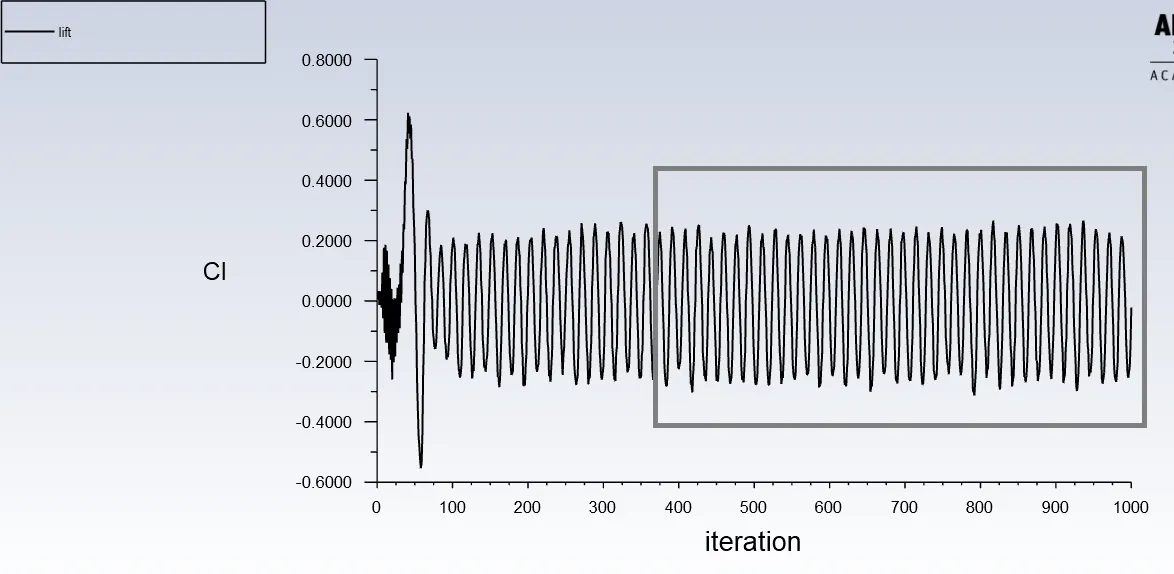
2) The solution can be considered as converged when a periodic wave (as shown below in grey colored box) is observed in lift plot or velocity plot
3) Contour of Vortex Shedding behind the cylinder
The phenomenon of vortex shedding depends on Reynolds Number.It is observed at Re>40.The frequency at which vortex shedding takes place is given by a dimensionless number named Strouhal Number
`St=(fD)/U`
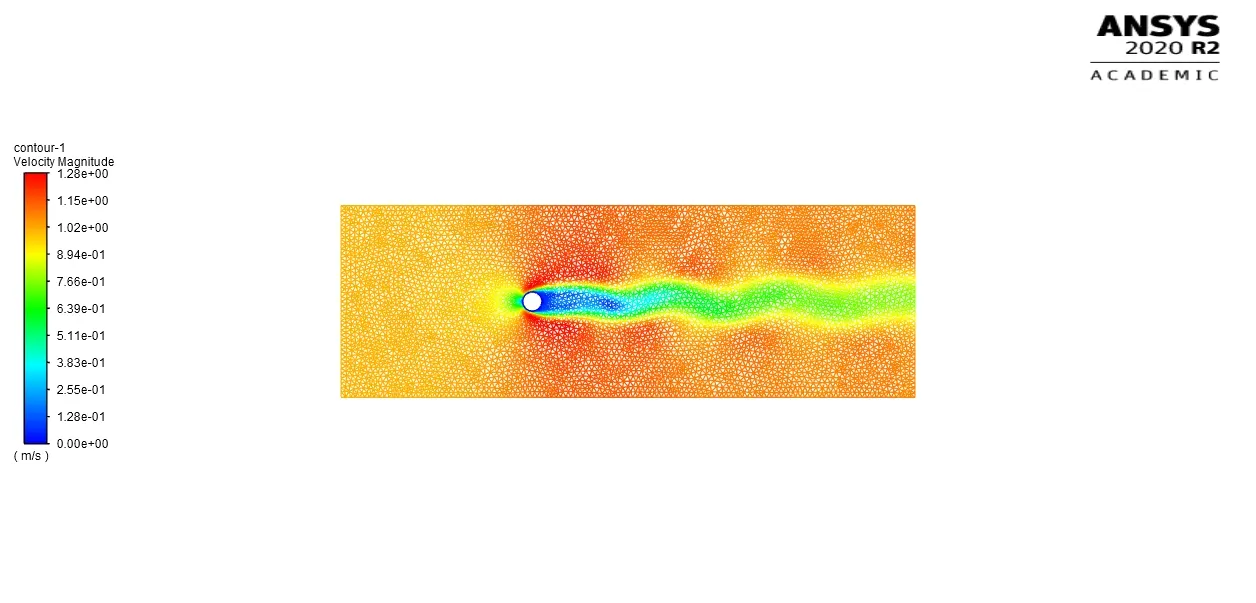
Video Link https://drive.google.com/file/d/1YHU17hmT8o8-y5OEeHLmphizcHY_hyCn/view?usp=sharing
4) The preffered material to avoid vortex shedding must have high dynamic viscosity (>0.05 in the above cases) so that the viscous force dominate over the inertia forces