Steady Vs Unsteady flow over a cylinder
Aim:
To simulate the flow over a cylinder and explain the phenomenon of Karman vortex street
- Simulate the flow with the steady and unsteady case and calculate the Strouhal Number for Re= 100.
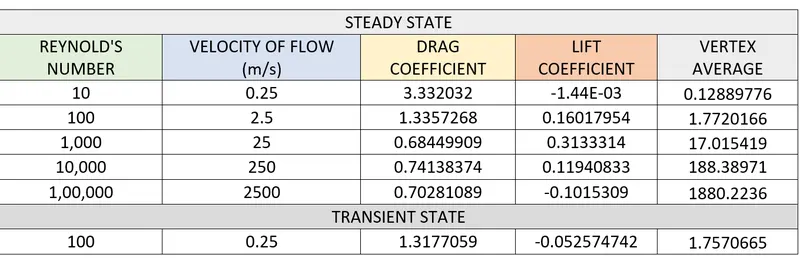
- Calculate the coefficient of drag and lift over a cylinder by setting the Reynolds number to 10,100,1000,10000, & 100000. (Run with steady solver)
- Discuss the effect of Reynolds number on the coefficient of drag. [ Results should be validated with any standard literature and error should be within 5 %]
Introduction:
In fluid dynamics, a Kármán vortex street (or a von Kármán vortex street) is a repeating pattern of swirling vortices, caused by a process known as a vortex shedding, which is responsible for the unsteady separation of flow of a fluid around blunt bodies. It is named after the engineer and fluid dynamicist Theodore von Kármán and is responsible for such phenomena as the "singing" of suspended telephone or power lines and the vibration of a car antenna at certain speeds.
A vortex street will form only at a certain range of flow velocities, specified by a range of Reynolds numbers (Re), typically above a limiting Re value of about 90. The (global) Reynolds number for a flow is a measure of the ratio of inertial to viscous forces in the flow of a fluid around a body or in a channel, and may be defined as a nondimensional parameter of the global speed of the whole fluid flow:

where:
 = the free stream flow speed (i.e. the flow speed far from the fluid boundaries
  like the body speed relative to the fluid at rest, or an inviscid flow speed, computed through the Bernoulli equation), which is the original global flow parameter, i.e. the target to be non-dimensionalised.
 = a characteristic length parameter of the body or channel
 = the free stream kinematic viscosity parameter of the fluid, which in turn is the ratio:

 = the reference fluid density.
 = the free stream fluid dynamic viscosity
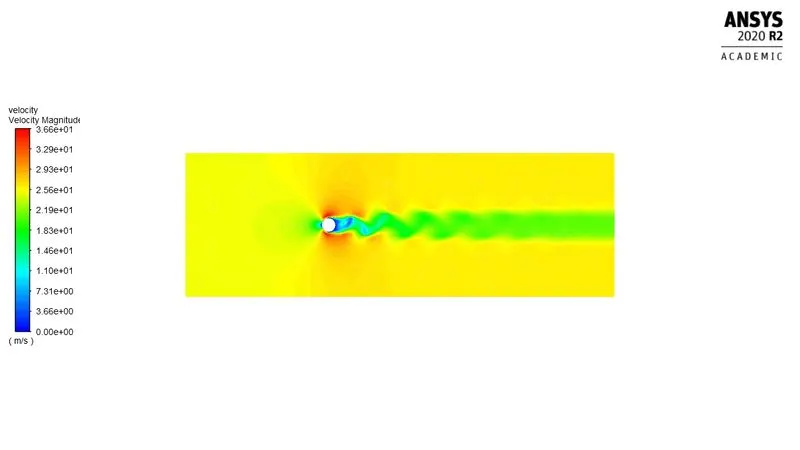
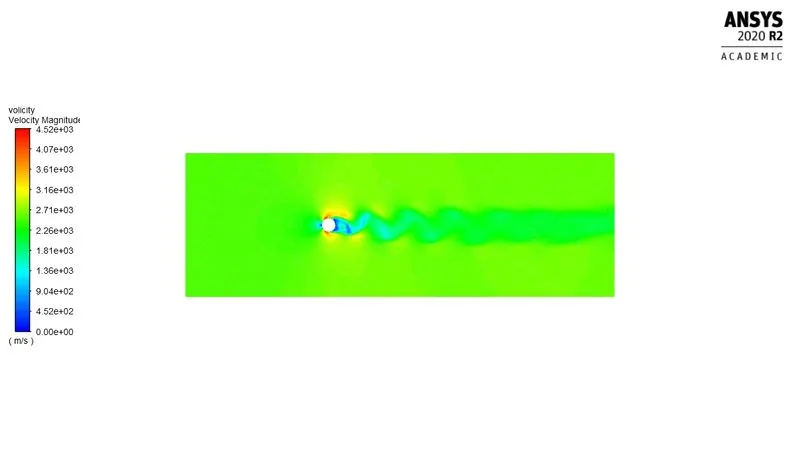
The range of Re values will vary with the size and shape of the body from which the eddies are being shed, as well as with the kinematic viscosity of the fluid. Over a large Red range (47<Red<105 for circular cylinders; reference length is d: diameter of the circular cylinder) eddies are shed continuously from each side of the circle boundary, forming rows of vortices in its wake. The alternation leads to the core of a vortex in one row being opposite the point midway between two vortex cores in the other row, giving rise to the distinctive pattern shown in the picture. Ultimately, the energy of the vortices is consumed by viscosity as they move further downstream, and the regular pattern disappears.
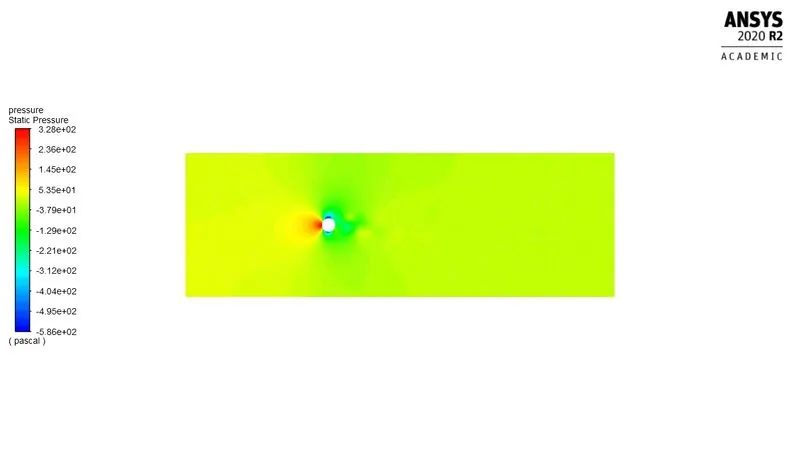
When a single vortex is shed, an asymmetrical flow pattern forms around the body and changes the pressure distribution. This means that the alternate shedding of vortices can create periodic lateral (sideways) forces on the body in question, causing it to vibrate. If the vortex shedding frequency is similar to the natural frequency of a body or structure, it causes resonance. It is this forced vibration that, at the correct frequency, causes suspended telephone or power lines to "sing" and the antenna on a car to vibrate more strongly at certain speeds.
Strouhal number: This dimensionless parameter St is known as the Strouhal number and is named after the Czech physicist, Vincenc Strouhal (1850–1922) who first investigated the steady humming or singing of telegraph wires in 1878.


- f = vortex shedding frequency.
- d = diameter of the cylinder
- U = flow velocity.
Modelling and Preparation:
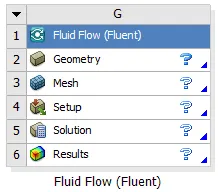
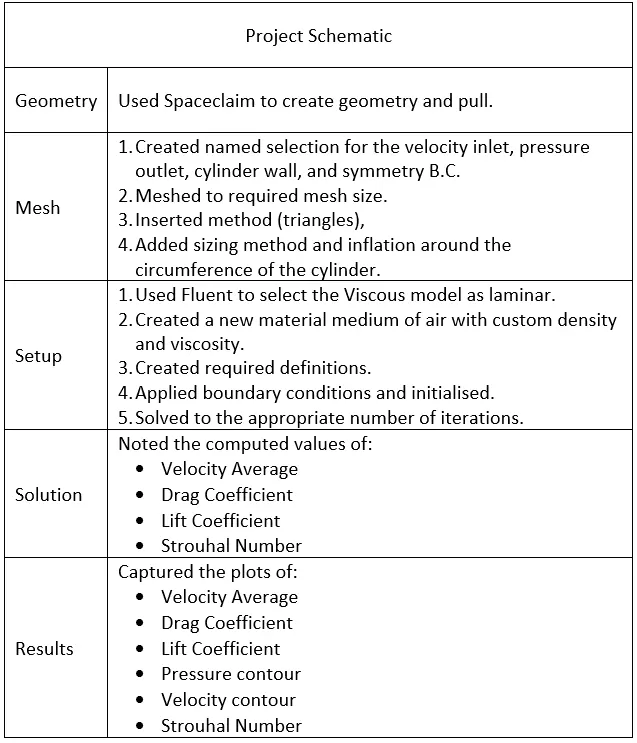
Project Schematic:
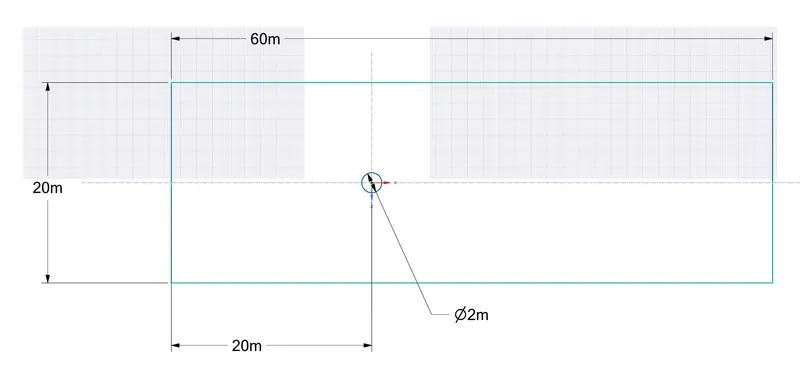
Model:
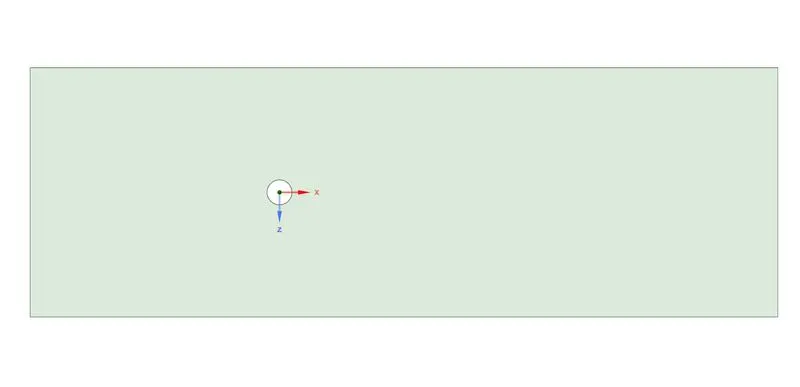
Meshed Model:
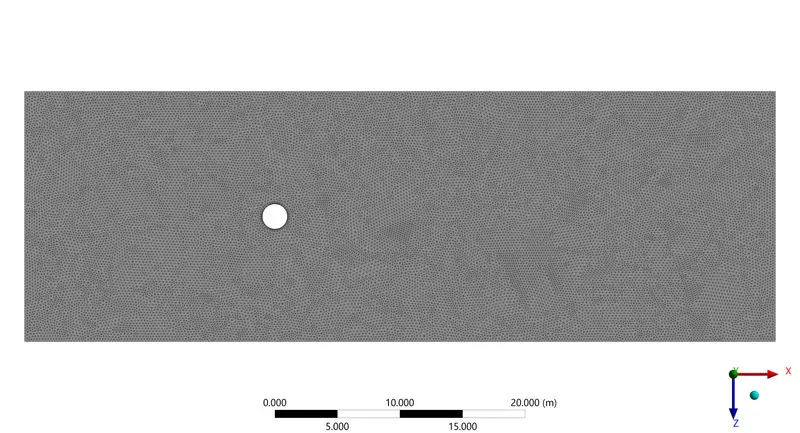
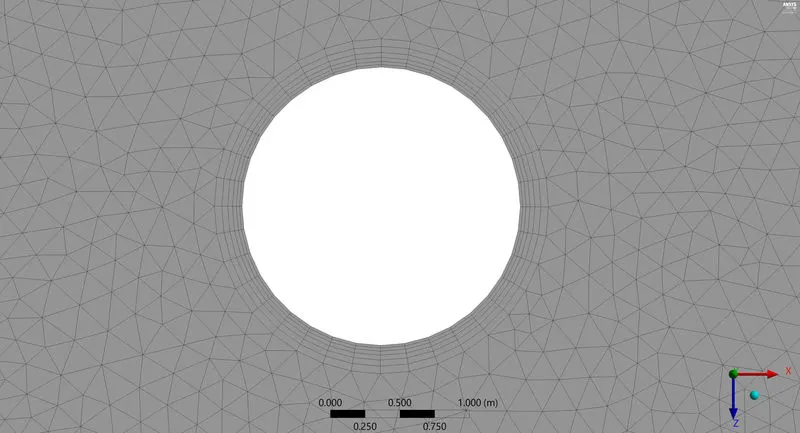
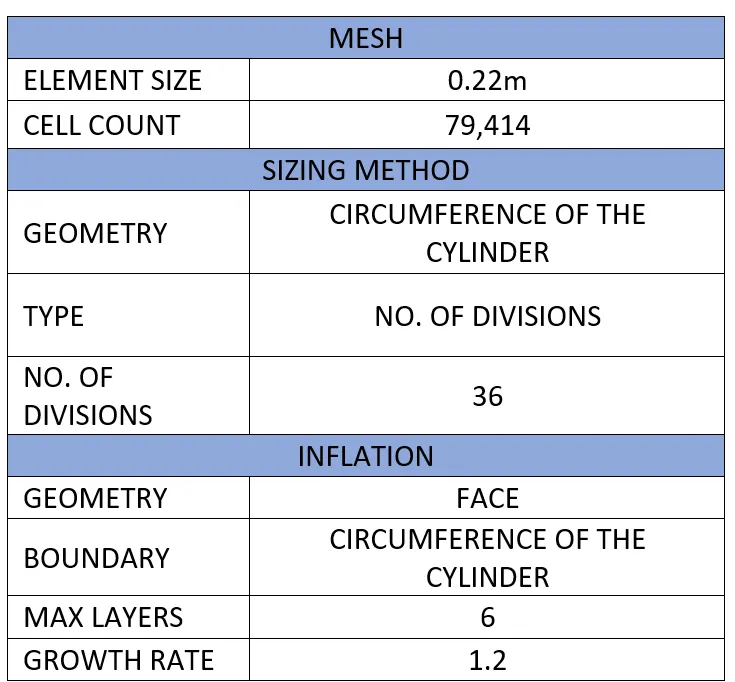
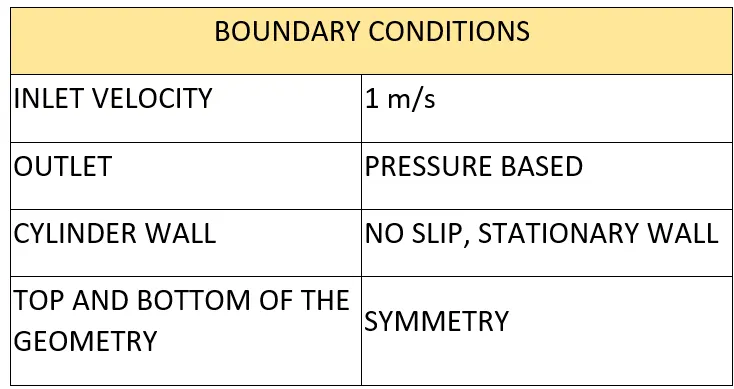
Preprocessor and Solver settings:
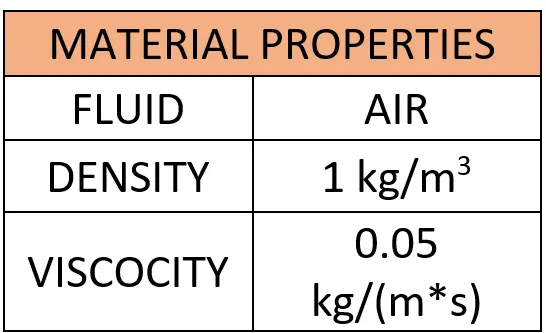
Solver:
- Type: Pressure based
- Velocity Formulation: Absolute
- Time: Steady for Re = 10, 100, 1000, 10,000, 1,00,000
Transient for Re = 100
Solution Methods:
- Scheme: SIMPLE
- Gradient: Least Squares Cell-Based
- Pressure: Second Order
- Momentum: Second order Upwind
Reference Values:
- Area: 2 m^2
- Density: 1kg/m^3
- Depth: 1 m
- Enthalpy: 0 J/kg
- Length: 2 m
- Pressure: 0 Pa
- Temperature: 288.16 K
- Velocity: changed w.r.t Re
- Viscosity: 0.05 kg/m-s
- Y plus: 10
Results:
Steady State:
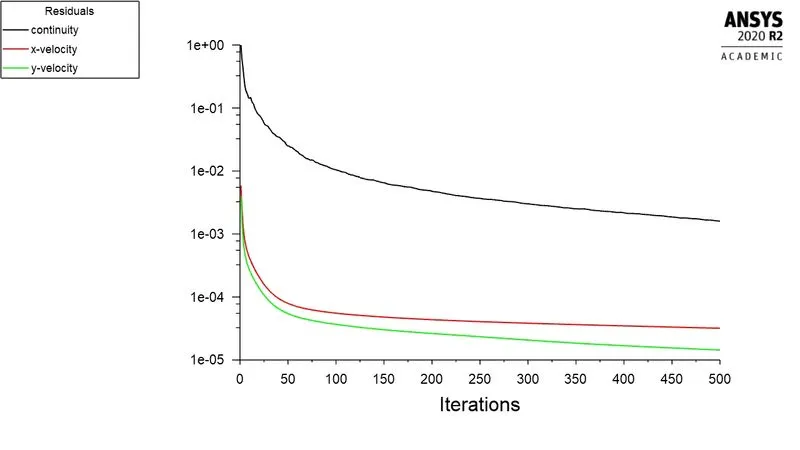
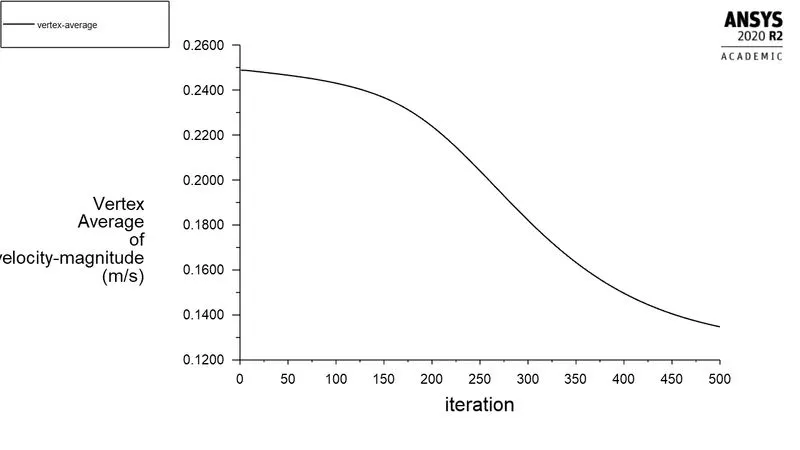
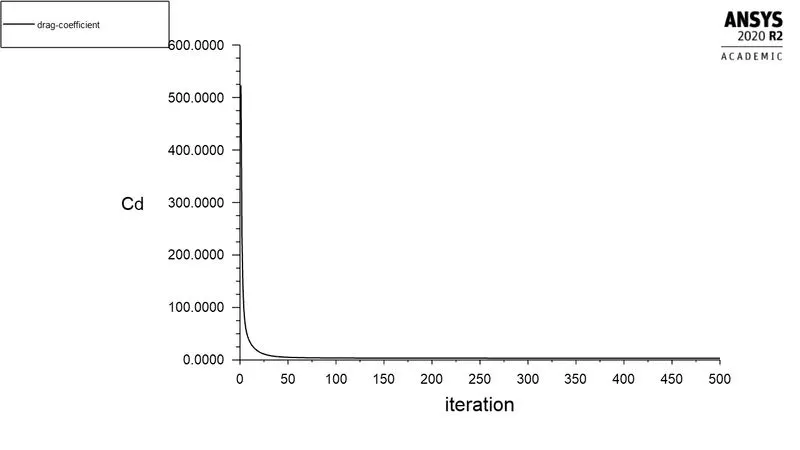
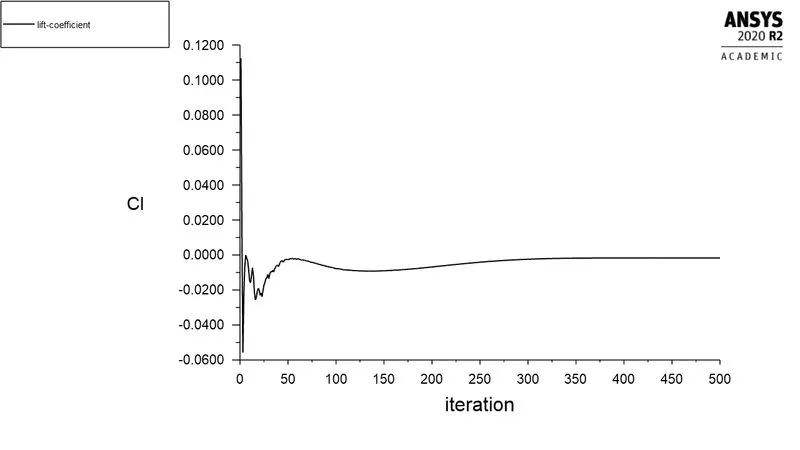
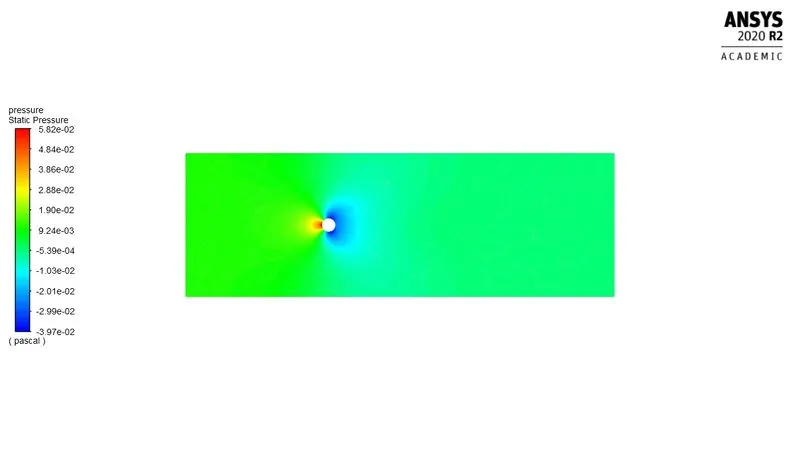
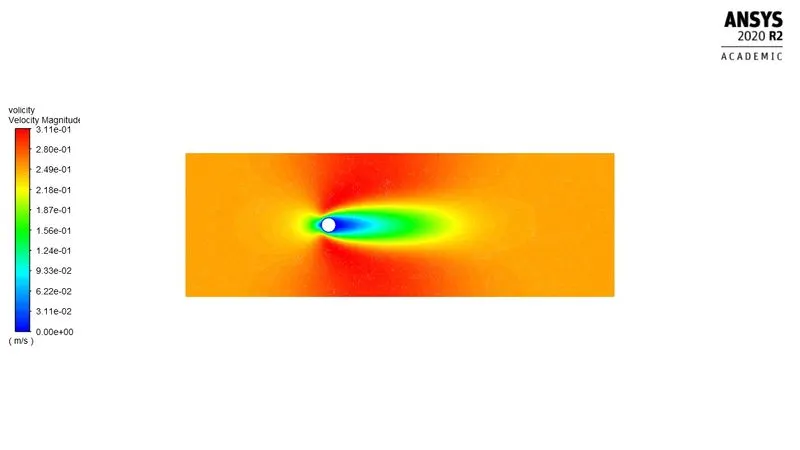
1. Re=10
-------------------------------
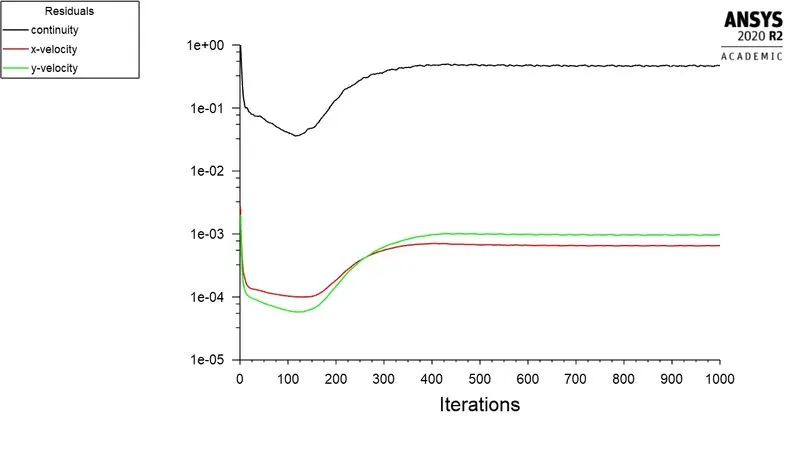
2. Re = 100
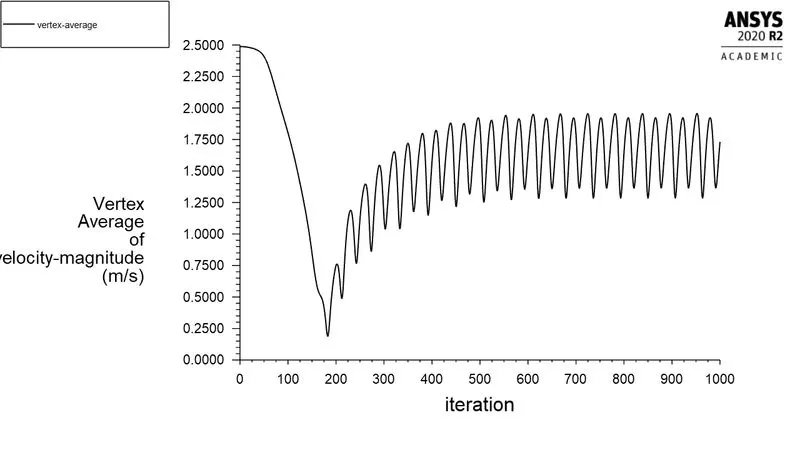
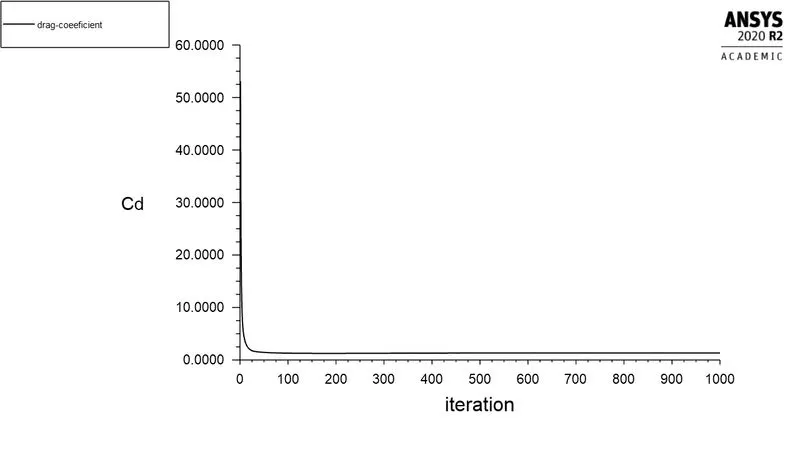
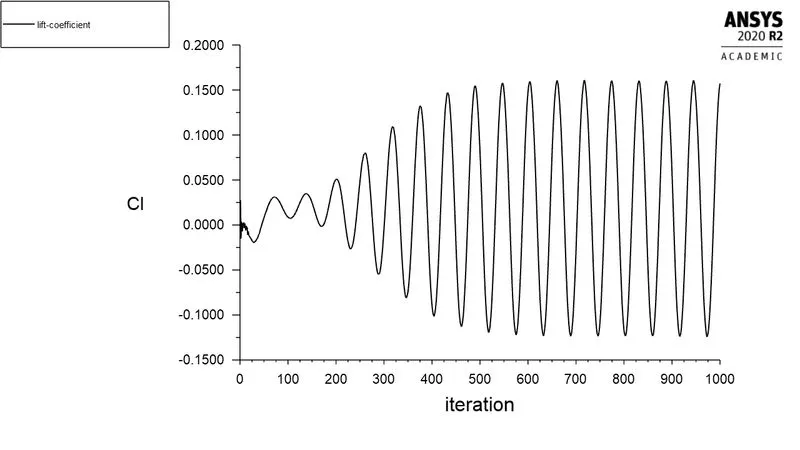
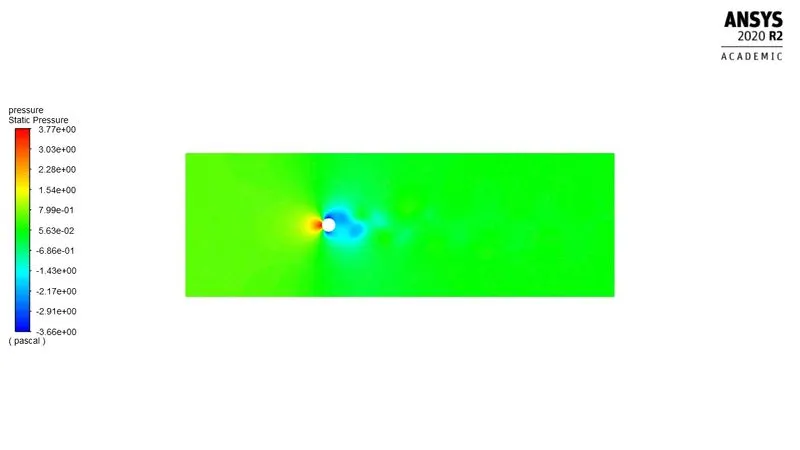
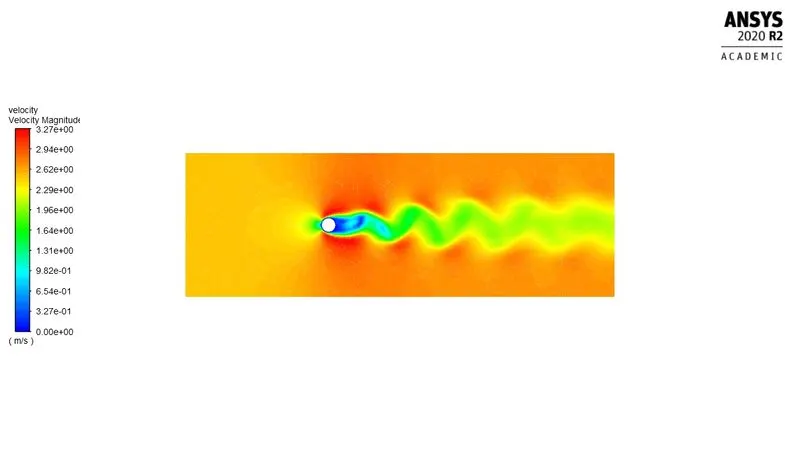
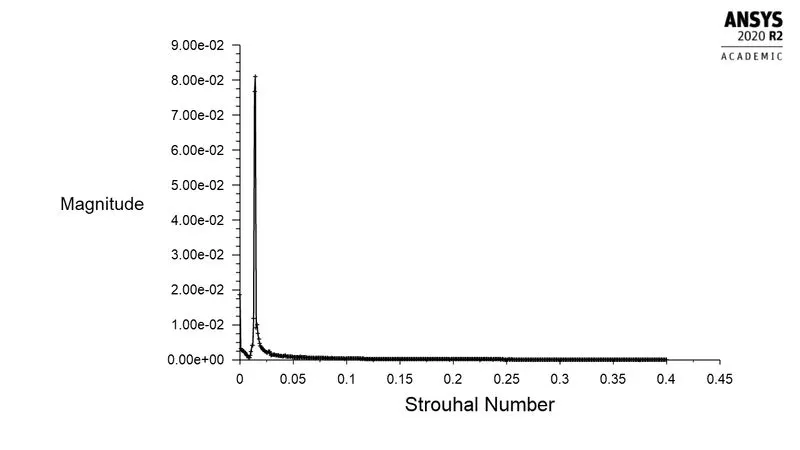
------------
3. Re = 1000
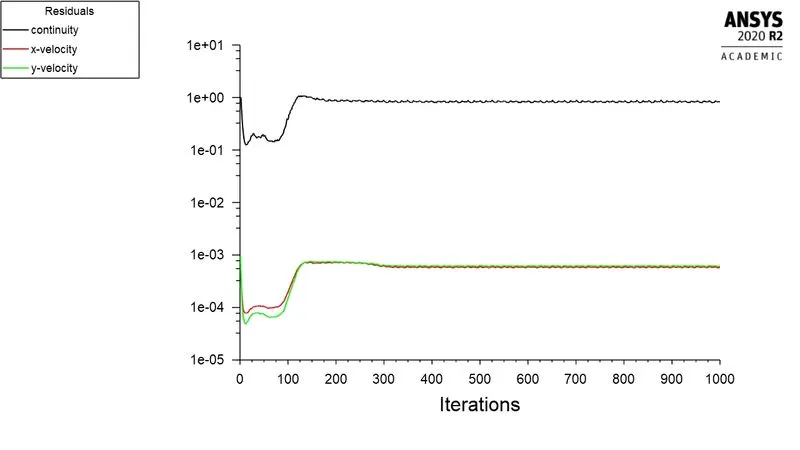
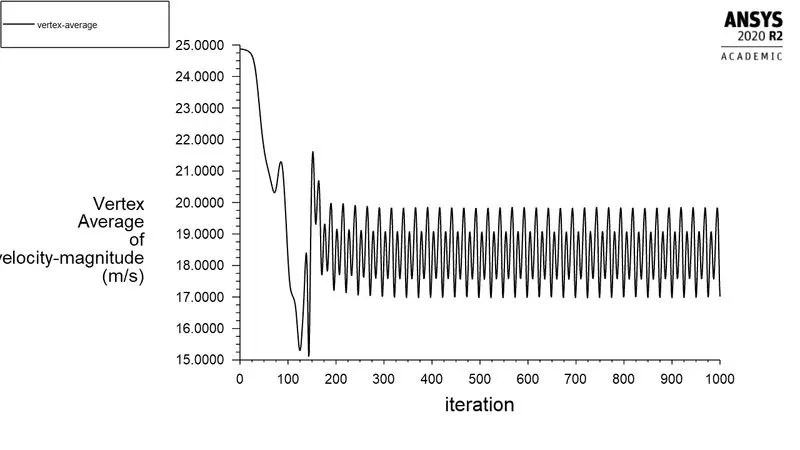
----------------------
4. Re = 10,000
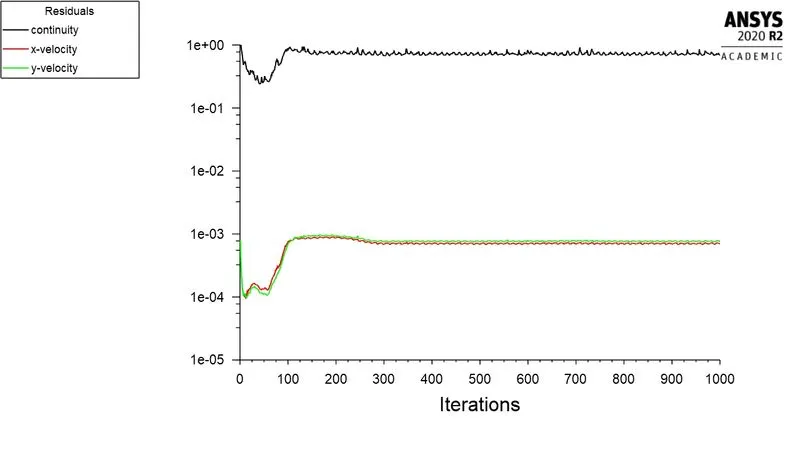
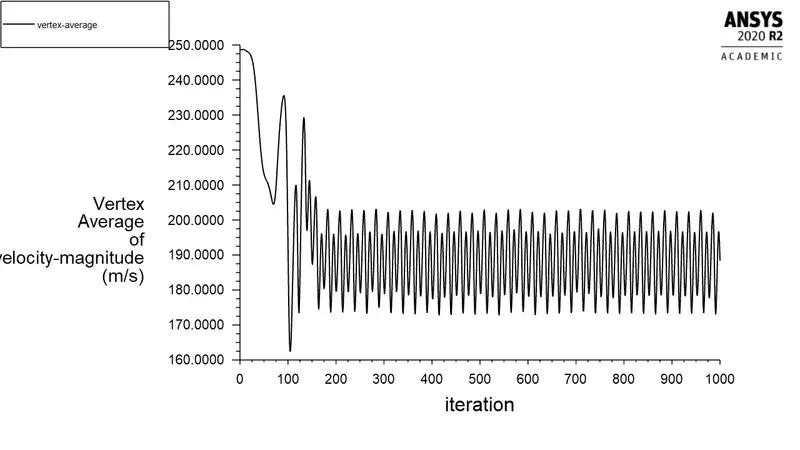
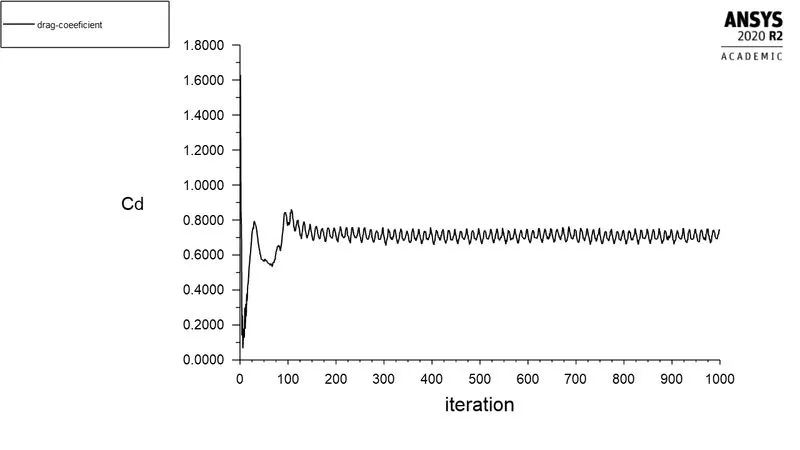
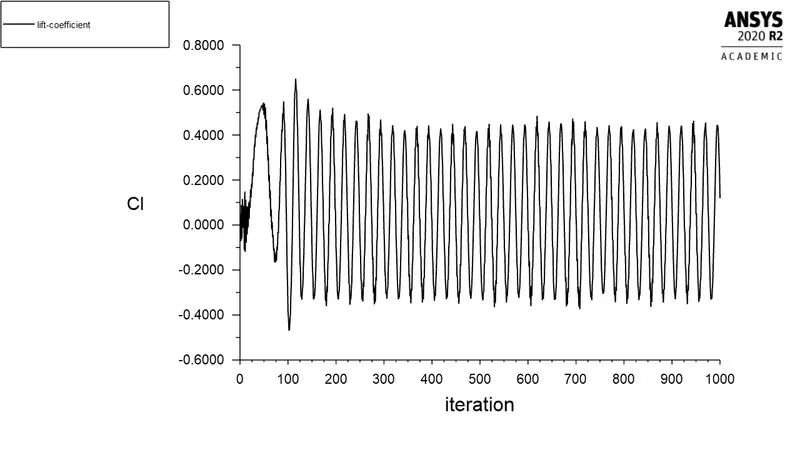
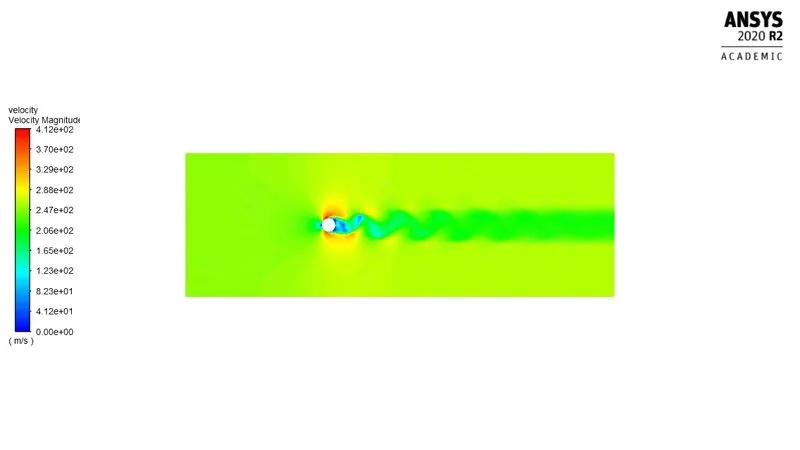
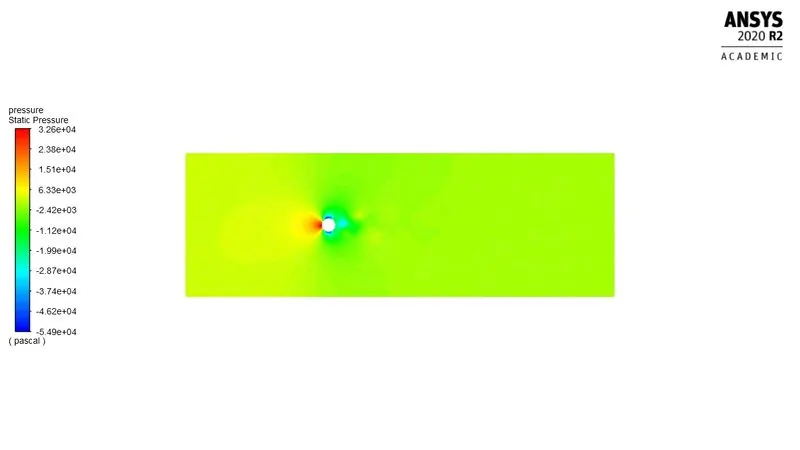
----------------
5. Re = 1,00,000
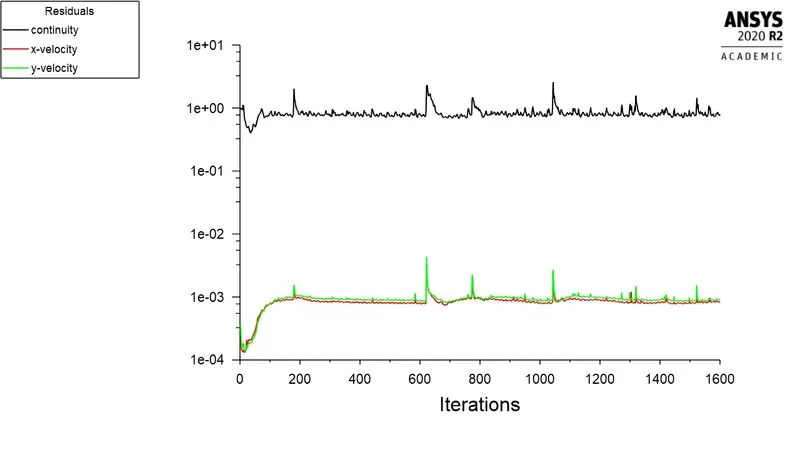
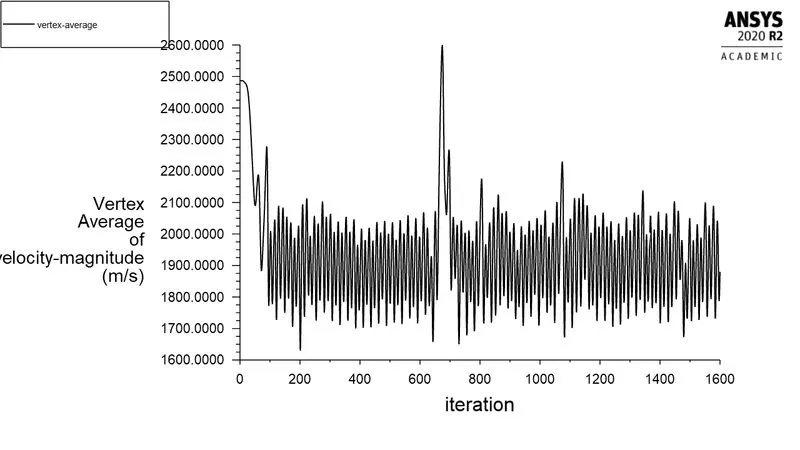
 \
\
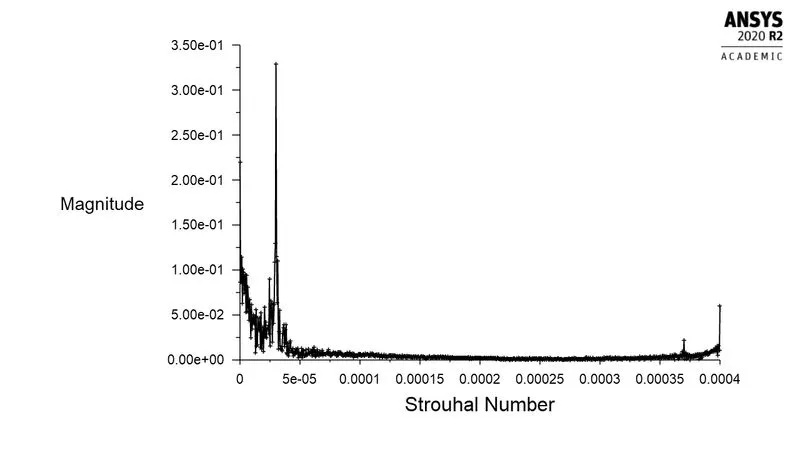
----------------------
Transient State:
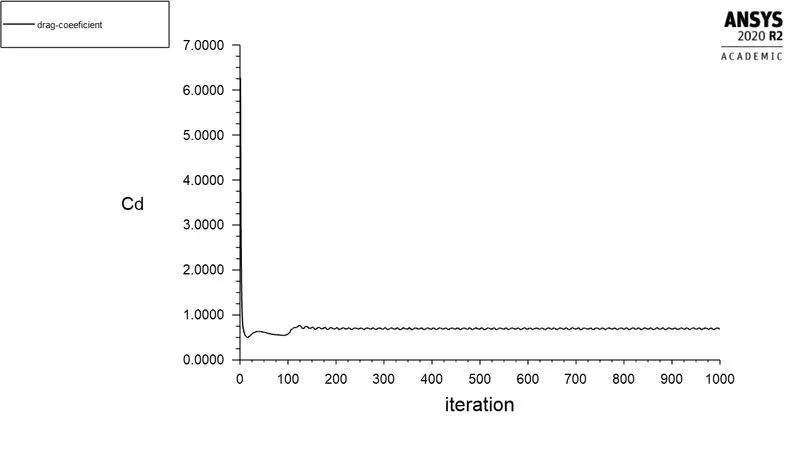
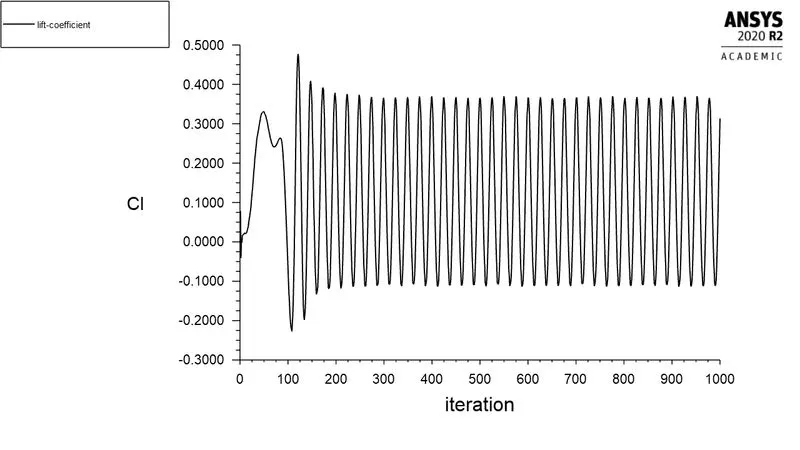
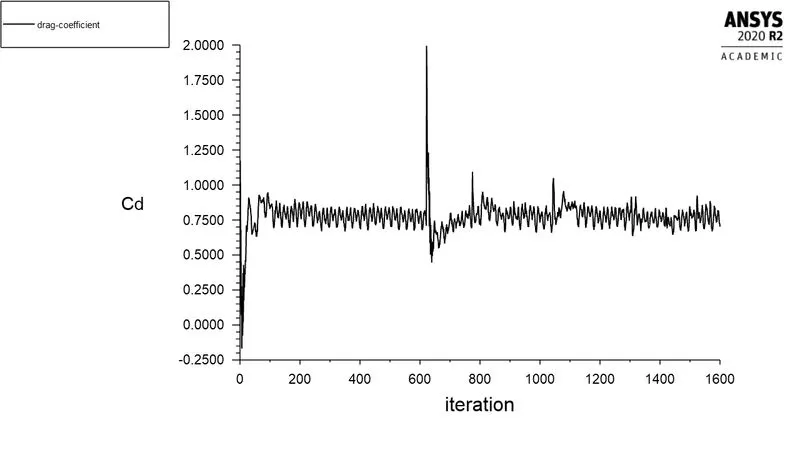
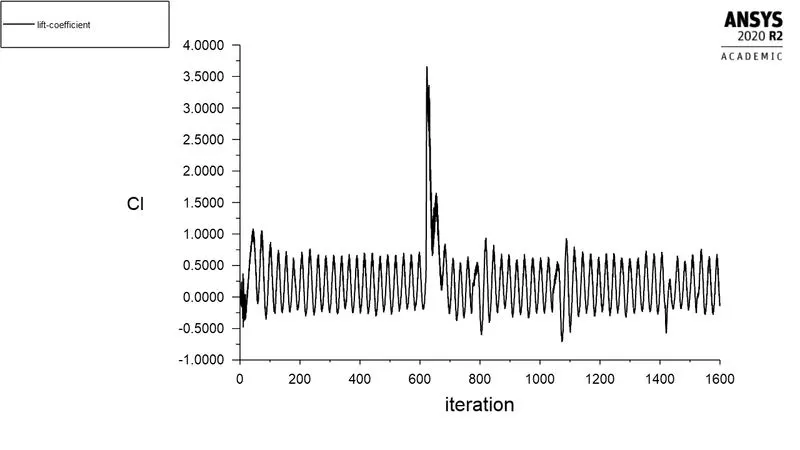
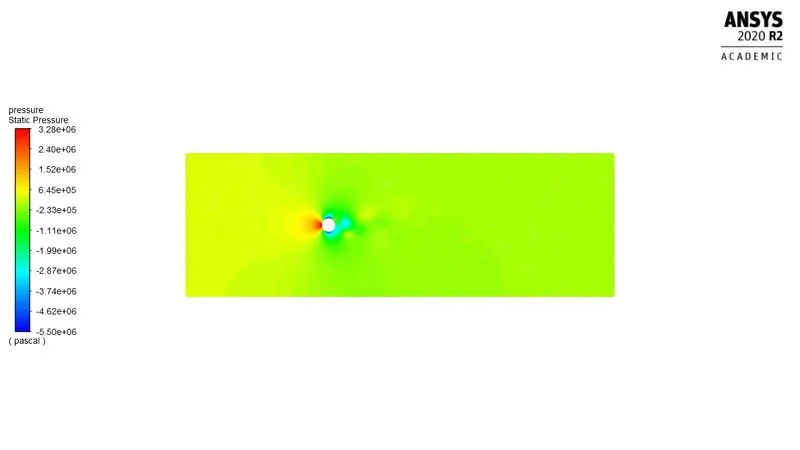
6. Re = 100
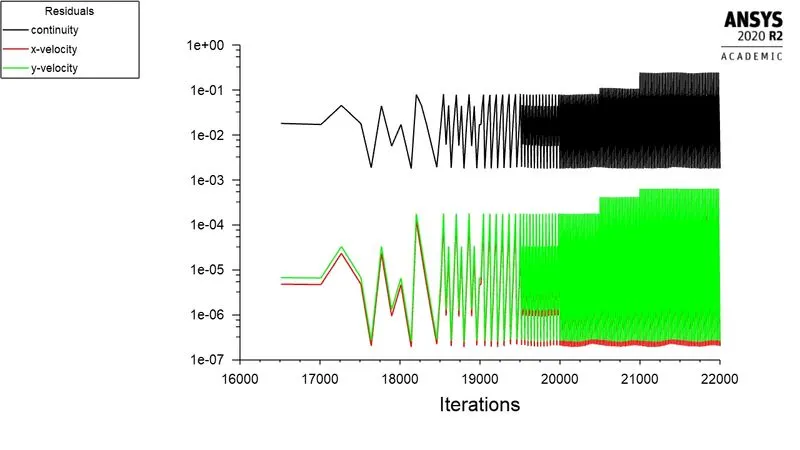
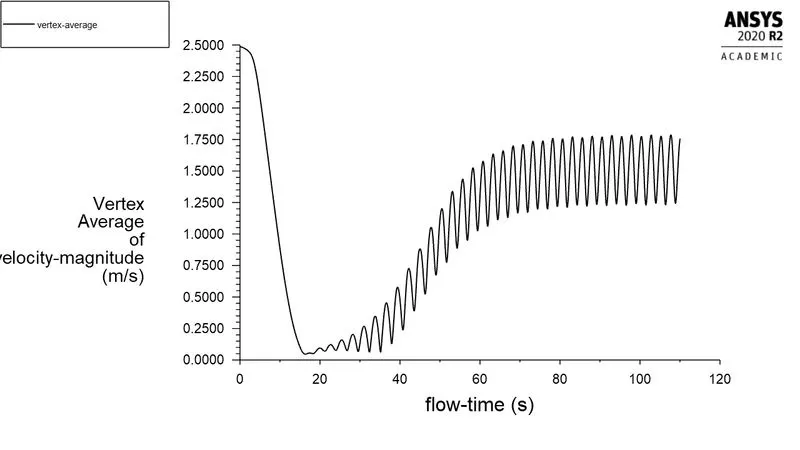
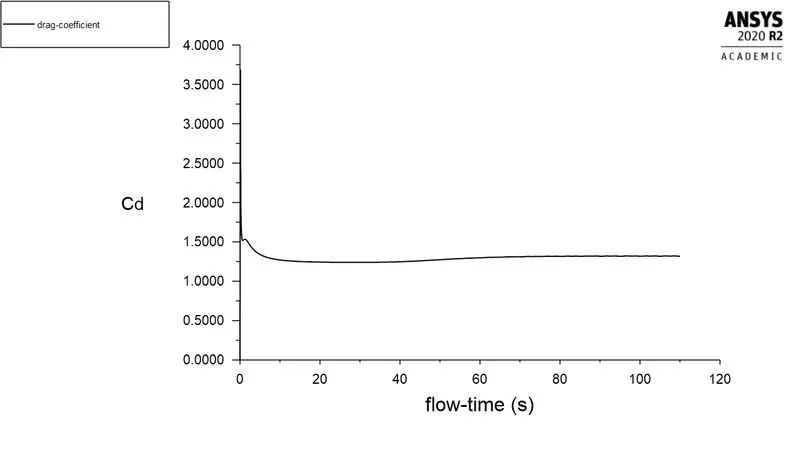
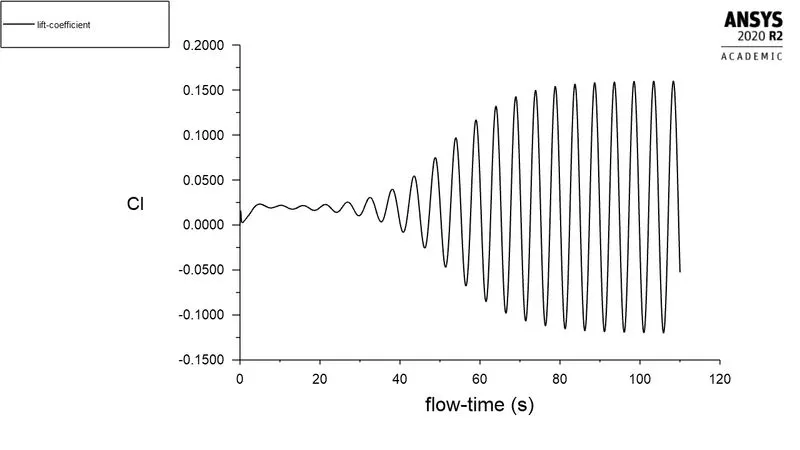
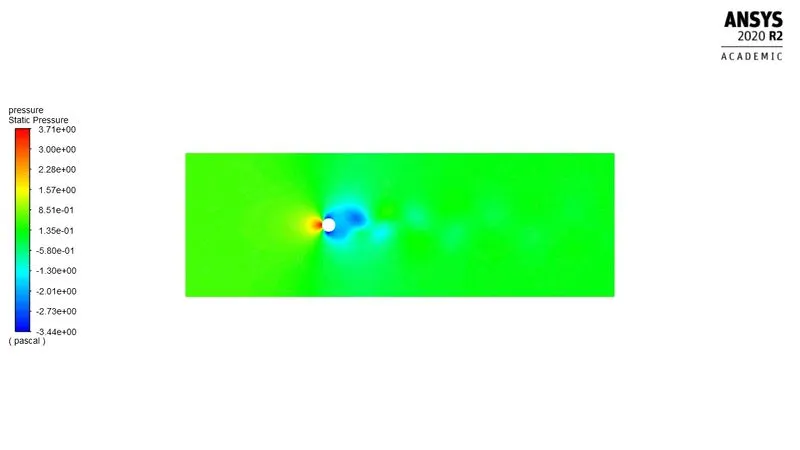
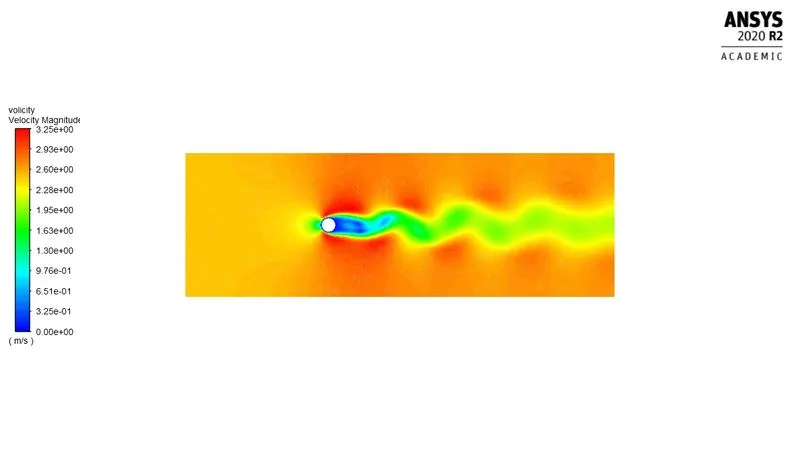
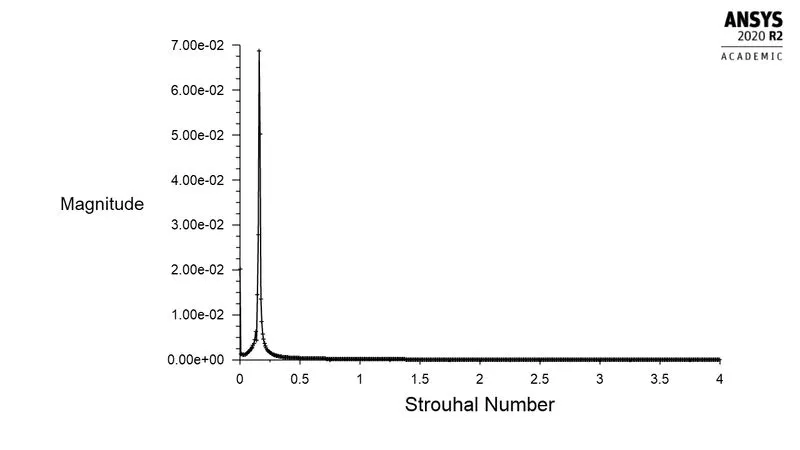
Strouhal Number for Re= 100
Steady-state: Sr ~ 0.0825
Transient-state: Sr ~ 0.06875
Conclusion:
1. As Reynold's number increased, the drag coefficient decreased.
2. The negative lift coefficient indicates a downward application of force.
3. We can observe that the vortex shedding occurs properly at Re = 100
4. The convergence of the solution is identified not by residuals but using the steady-state of lift coefficient plot.
Prefered material:
Numerical simulation of laminar flow past a circular cylinder