Simulating the mixing of hot and cold fluids in a Mixing Tee
OBJECTIVE: To study the effectivness of mixing of hot and clod fluids inside two different types of mixing tee for different Boundary conditions
CASE-1: SHORT MIXING TEE
Plots and contour using k-epsilon model
Momentum Ratio-2
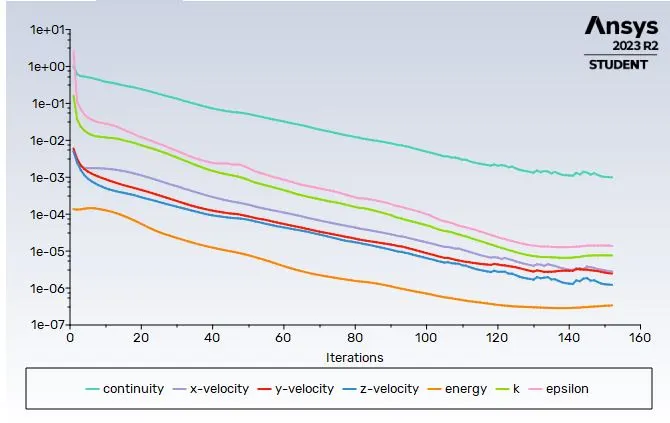
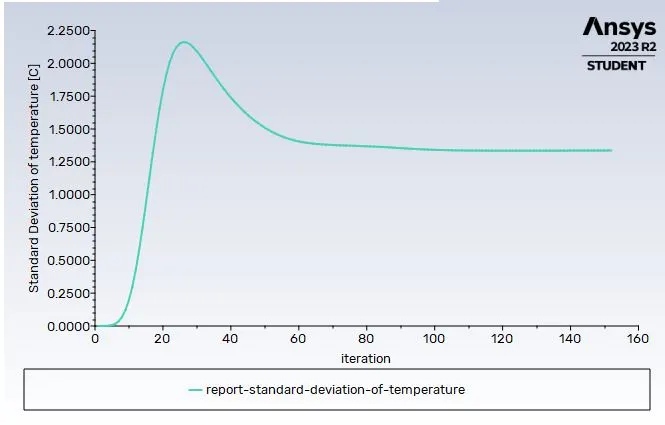
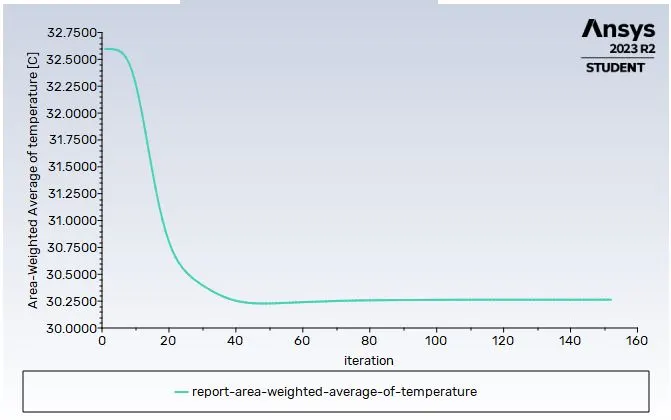
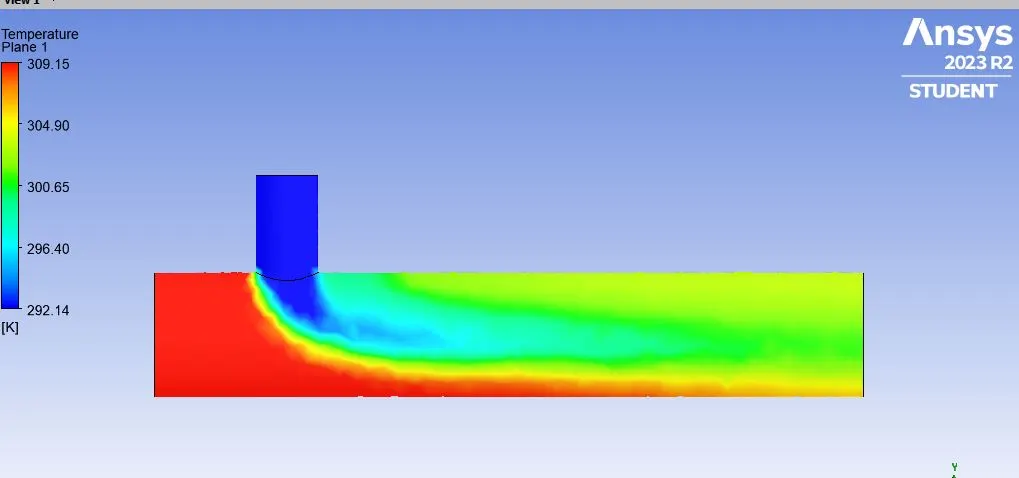
Temperature Contour
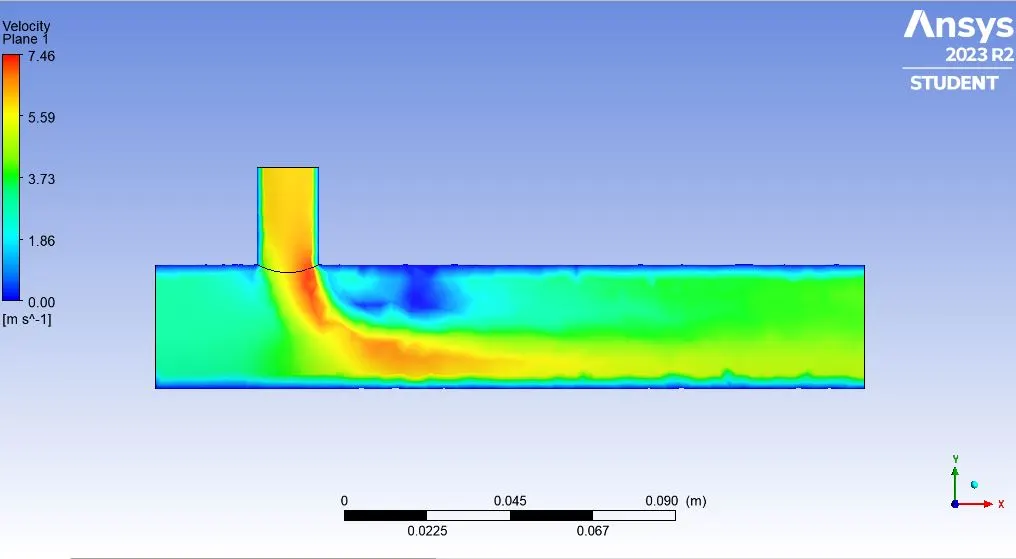
Velocity Contour
Momentum Ratio-4
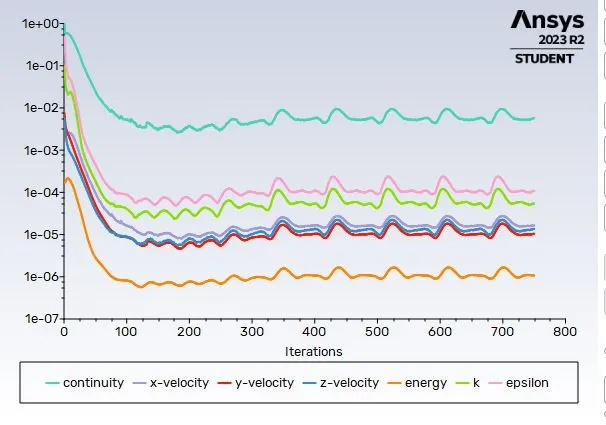
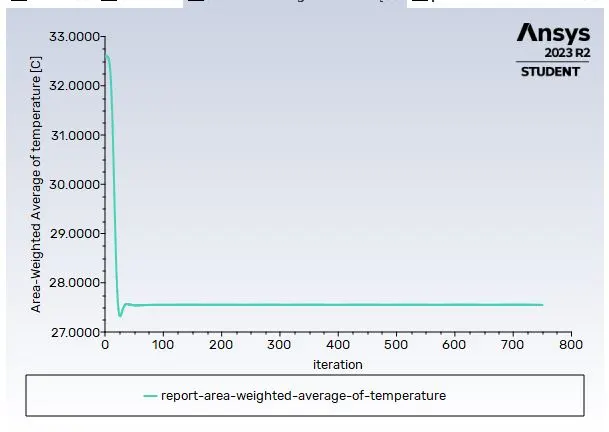
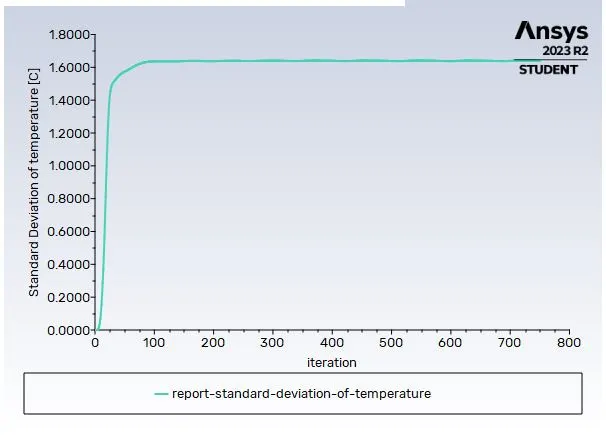
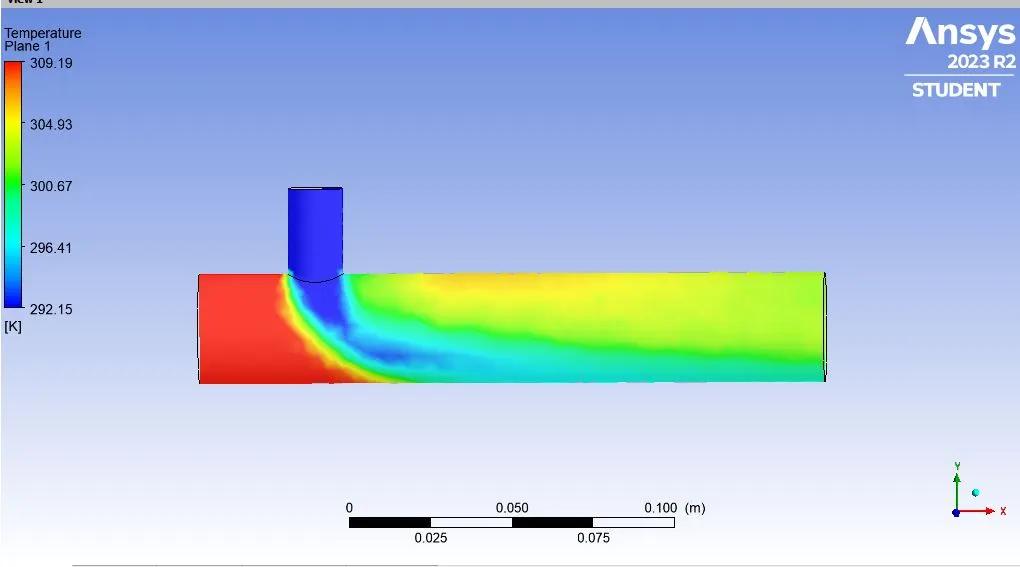
Temperature contour
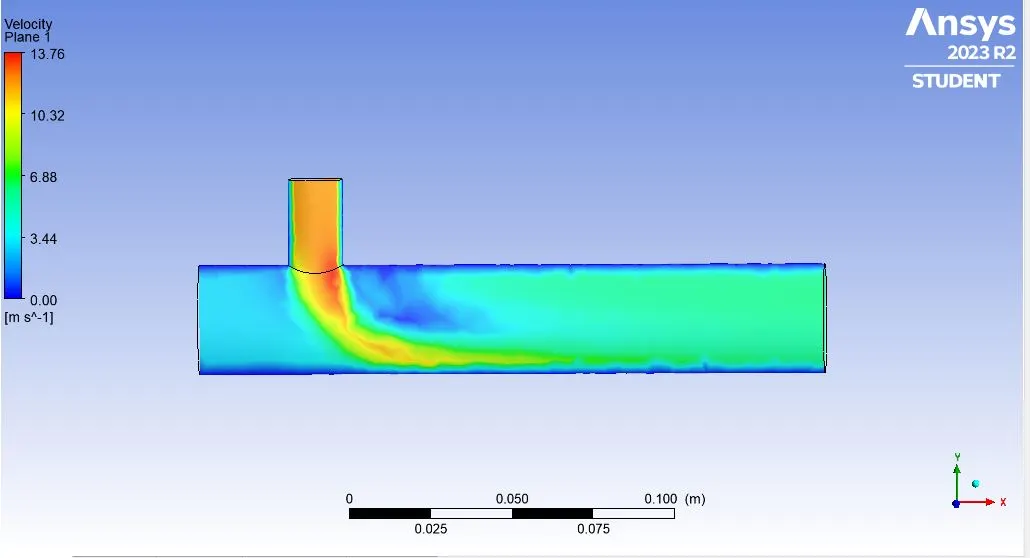
Velocity contour
Plots and contour using k-epsilon model
Momentum Ratio - 2
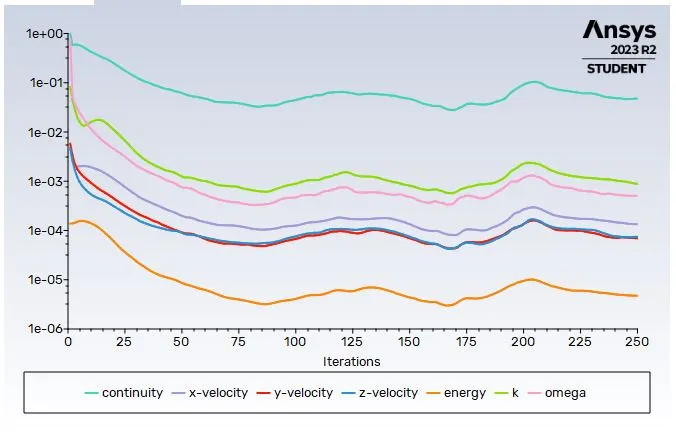
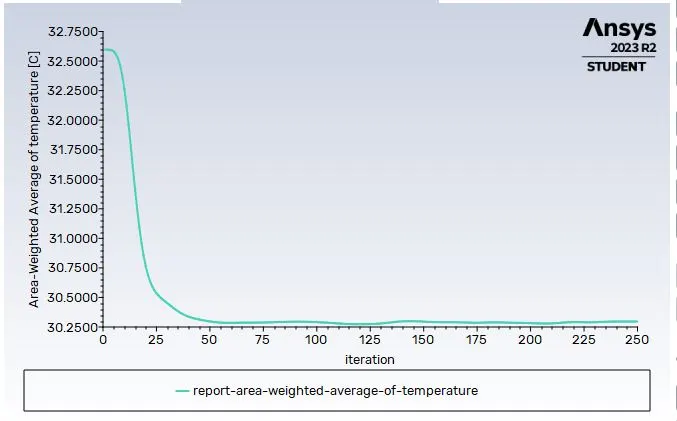
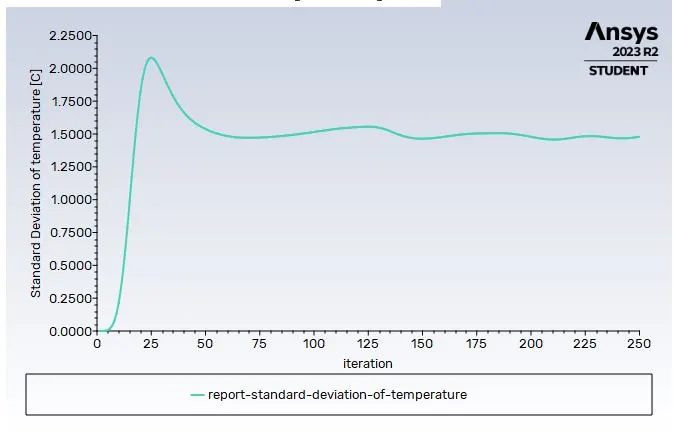
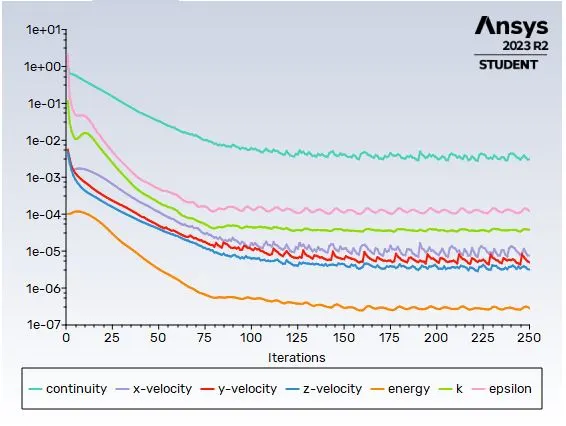
NOTE :We employed two distinct turbulence solvers for it: k-omega SST and realized k-epsilon.Since the answer was converged after only a few iterations using the k-epsilon model rather than the k-omega model, the outcomes in this case are better. In investigating fluid behavior close to walls, K-omega is preferable, however this is not the case here. Therefore, in future circumstances, the k-epsilon model is advised for the analysis of fluid in the flow zone that is far from the wall.
CASE-2: LONG MIXING TEE
Momentum Ratio-2
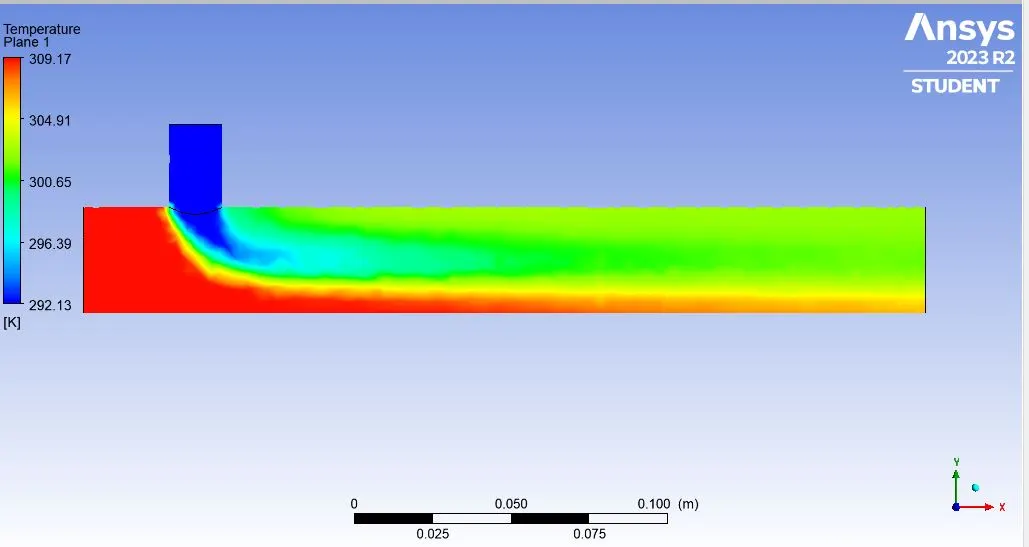
Temperature Contour
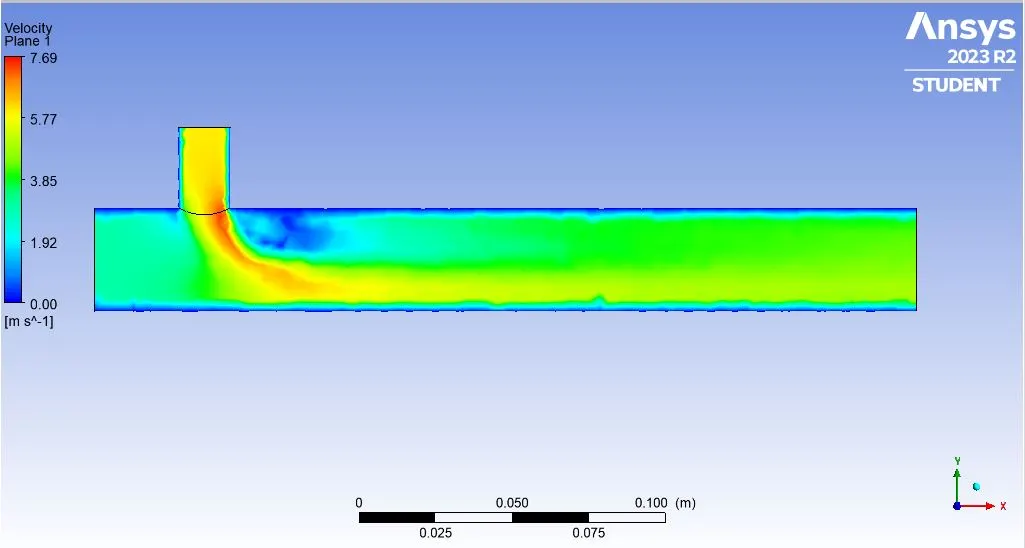
Velocity Contour
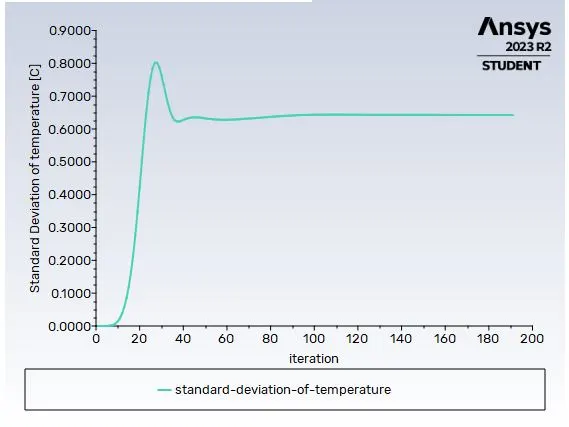
Momentum Ratio-4
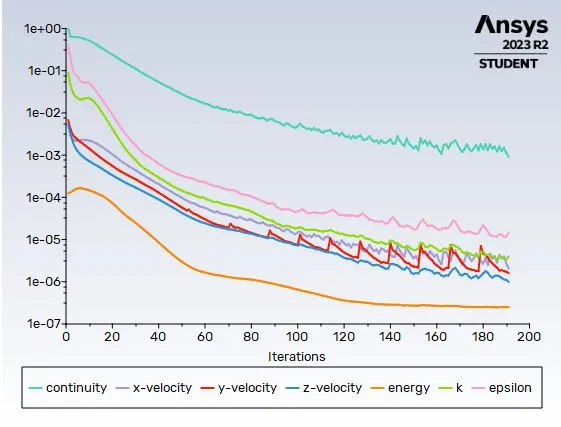
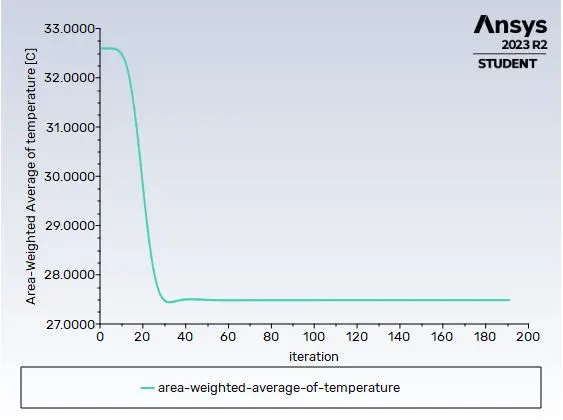
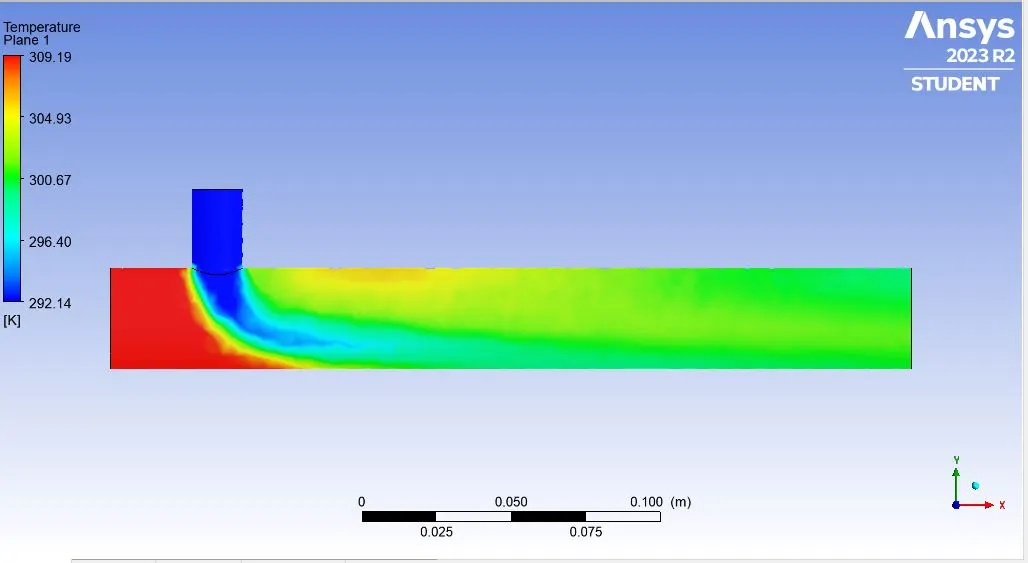
Temperature Contour
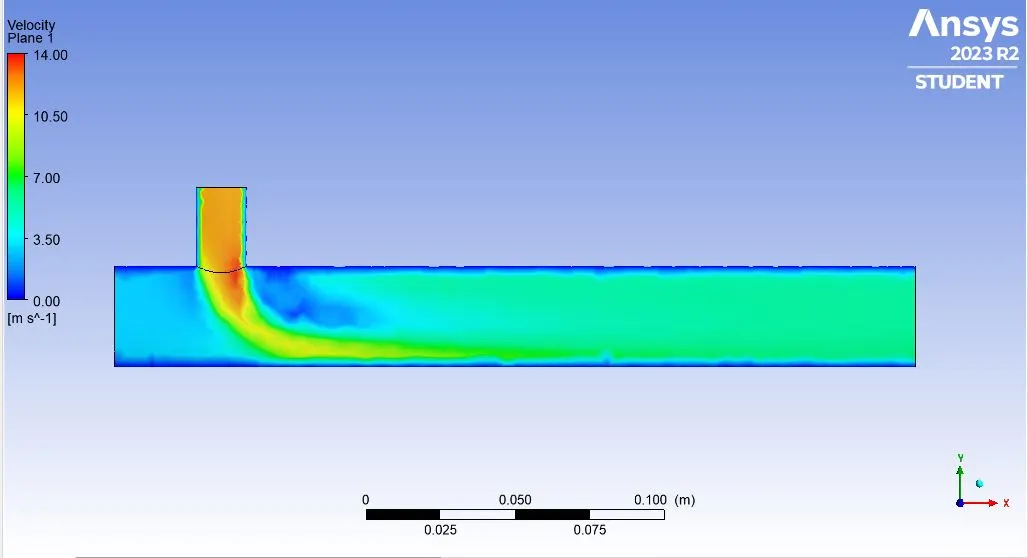
Velocity Contour
Results: The following table shows the different parameters obtained from the simulation of the two different mixing tees
| CASE set up | no. of cell count | Averrage outlet temperarture (degree celcius) | No. of iterations for convergence | Standard deviation of temperature |
| short mixing tee, mr=2 | 14400 | 30.25 | 152 | 1.4 |
| short mixing tee, mr=4 | 14400 | 27.54 | 350 | 1.6 |
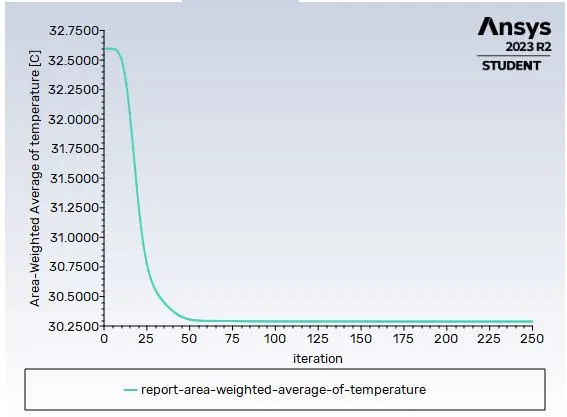
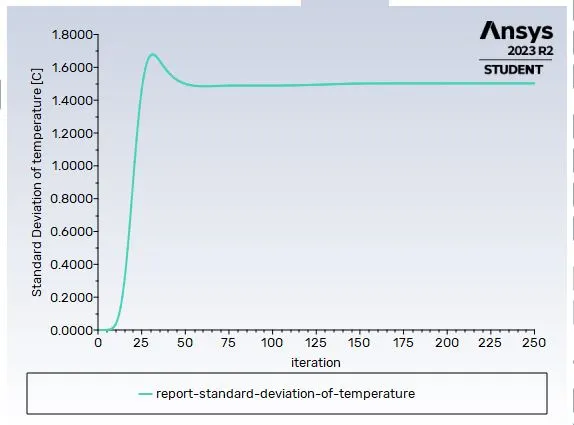
| Long mixing tee, mr=2 | 18069 | 30.28 | 150 | 1.5 |
| Long mixing tee, mr=4 | 18069 | 27.5 | 191 | 0.65 |