Section Modulus calculation and optimization
QUESTION:
Use the Section from your Hood design and calculate the section modulus using the formula S = I/y
S = Section Modulus
I = Moment of Inertia
y = distance between the neutral axis and the end of the object
Come up with a new section that has improved the section modulus of the previous section and mention what change you made that has increased the strength.
INTRODUCTION
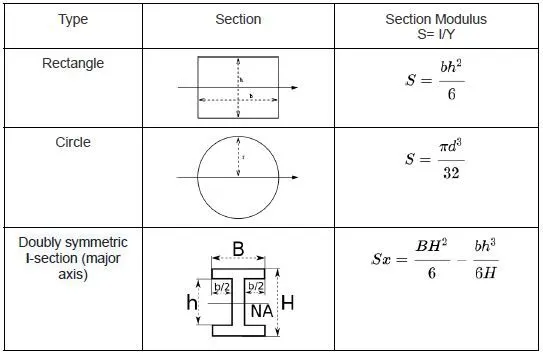
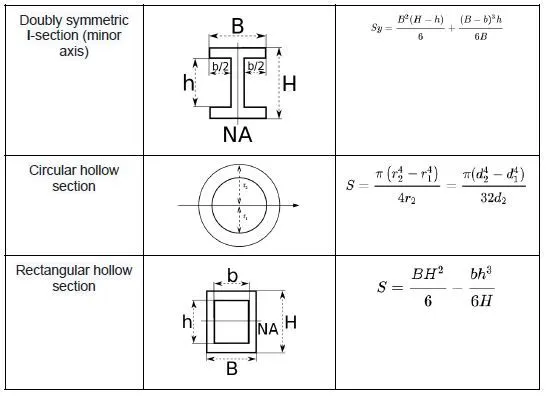
Section modulus is a geometric property for a given cross-section used in the design of beams or flexural members. Other geometric properties used in the design include an area for tension and shear, the radius of gyration for compression, and the moment of inertia and polar moment of inertia for stiffness. Any relationship between these properties is highly dependent on the shape. There are two types of section modulus the elastic section modulus and the plastic section modulus. The elastic section modulus is defined as,
S=I/y
S is the Section Modulus
I is the second moment of area (or area moment of inertia, not to be confused with a moment of inertia)
y is the distance from the neutral axis to any given fiber. It is often reported using y = c, where c is the distance from the neutral axis to the most extreme fiber.
section modulus of various cross-sections are given below in the following table,
IMPORTANCE
- It is significant for beam and flexural member design.
- The more the section modulus, the more the member is resistant to the bending of the beam.
- It is easier to calculate stresses in the beam and an exact measure of the strength of steel.
- If two beams are made of the same material and comparing the section modulus of the two beams, the beam with a bigger section modulus will be tougher and more capable to withstand larger loads.
PROCEDURE
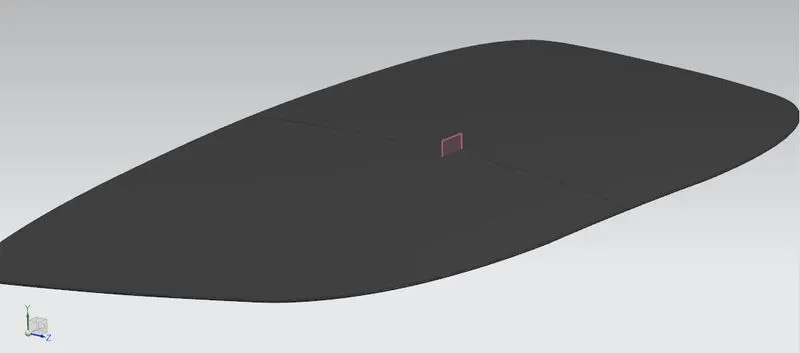
1. First create a datum plane that passes through the middle portion of the hood.
2. Create an intersection Curve with the help of the plane considering both the Outer & Inner panels of the hood. After that create a sketch concerning the datum plane created and project the curve into the sketch
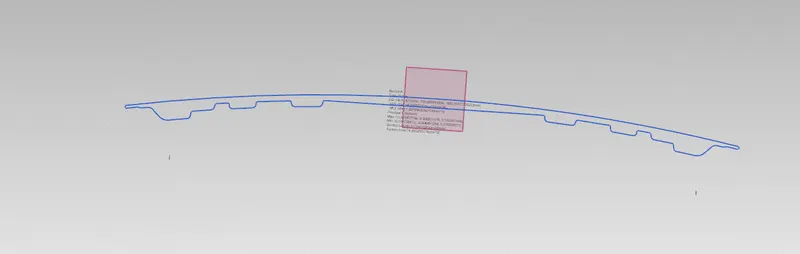
3. Measure the distance of the outer hood to find the value of y in the section modules equation
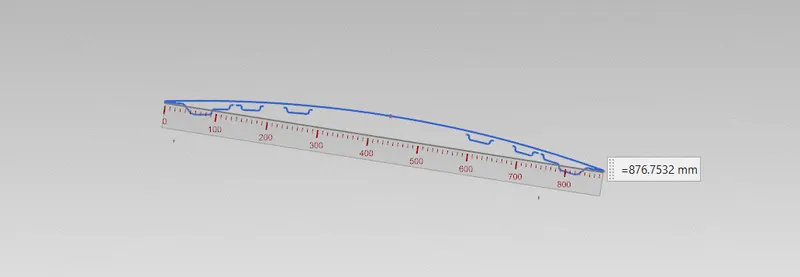
Here, Y = 876.7532/2= 438.3766 mm
Case 1:- In this initial hood design is used
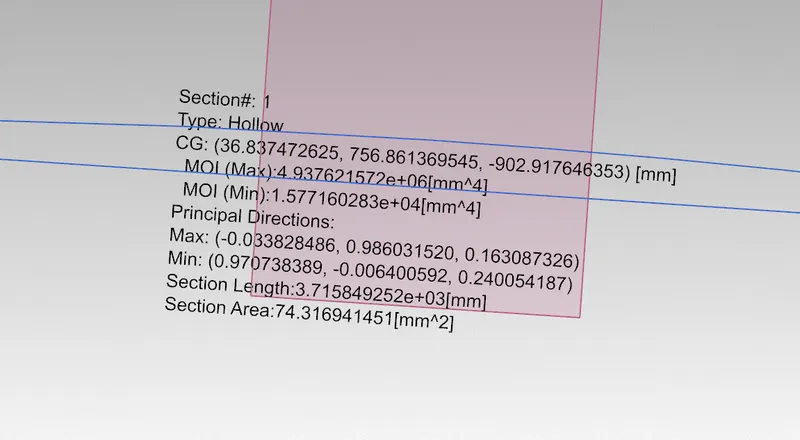
Now here,
I moment of inertia(min.) = 1.57716028*10^4 mm^4
y = distance from neutral axis to extreme end = 438.3766 mm
Hence, S = 35.977 mm^3
Case 2:- In this, the inner panel is offset to 0.5mm below
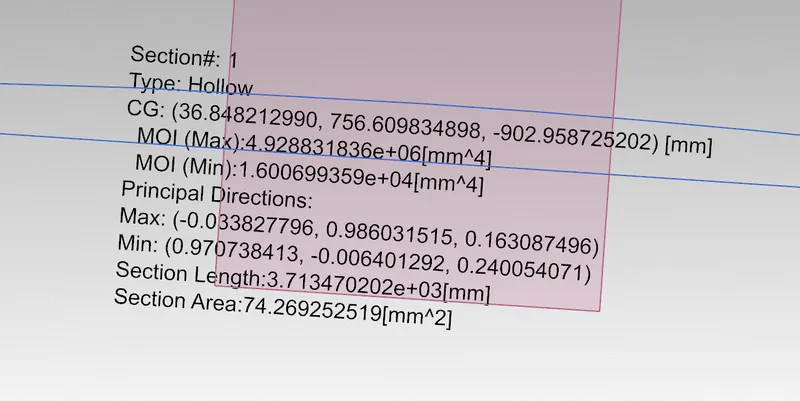
I = MOI(min.)= 1.600699*10^4 mm^4
Y = 438.3766 mm
hence, S = 36.514 mm^3
As the Moment of inertia is directly proportional to the 'section modulus', thus the value of the section modulus is increasing with the value of the moment of inertia.
CONCLUSION:
Thus, the section modulus of the Front Hood of a car was calculated and compared with the optimized hood and found a better result. Hence the conclusion is that when the sectional area of the hood increases the stiffness and resistance of the hood strength will also be increased. The Hood should design in such a way that it should absorb all maximum loads when a crash happens.