Section Modulus calculation and optimization
SECTION MODULUS CALCULATION AND OPTIMIZATION
INTRODUCTION
Section modulus is a geometric property for a given cross-section used in the design of beams or flexural members. Other geometric properties used in design include area for tension and shear, radius of gyration for compression, and moment of inertia and polar moment of inertia for stiffness.
OBJECTIVE
The objective of the project is to understand and find the section modulus of the hood which we designed and then to do the necessary changes to improve and optimize the section modulus of the hood usingNX Cad.
DESCRIPTION
Section modulus is the ratio of moment of ineria of the beam section about the neutral axis to the distance of extreme fibre from neutral axis.
Though generally section modulus is calculated for the extreme tensile or compressive fibres in a bending beam, often compression is the most critical case due to onset of flexural torsional (F/T) buckling.
Section modulus is defined as S = I / y, where I is the moment of area and y is the distance from the neutral axis to any given fibre.
The section modulus of the cross-sectional shape is of significant importance in designing beams. It is a direct measure of the strength of the beam. A beam that has a larger section modulus than another will be stronger and capable of supporting greater loads.
SOLUTION AND CALCULATION
The first thing we do is using intersection curve we make an intersection of the hood and the yz plane. Then we project the curve onto a sketch plane and then take the top curve of the outer panel and bottom curve of the inner panel and then join the two and fill any gap left using line command to get a cross section sketch of the hood.
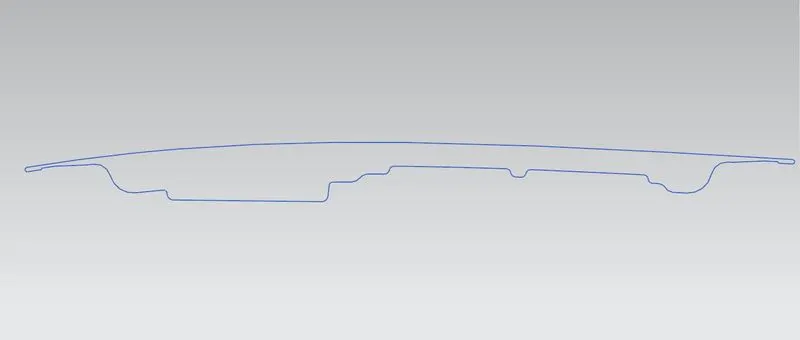
After this we then use the section inertia analysis tool and select the sketch to find the moment of inertia of the cross section of the hood.
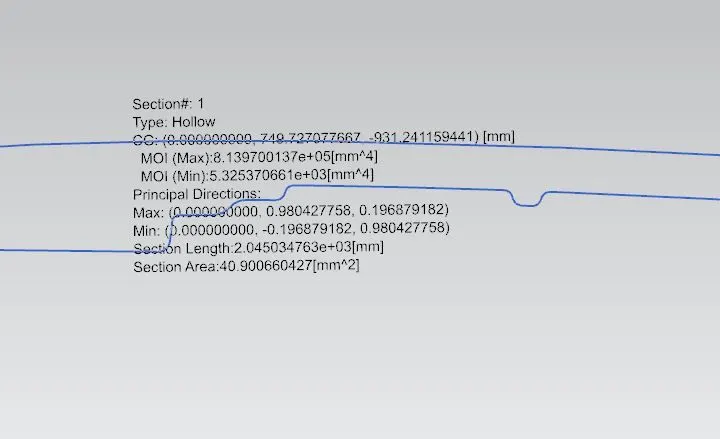
We will go with the minimum moment of inertia for calculation.The reason we use the minimum MoI is because a column is most likely to buckle in the direction that is the worst at resisting bending forces, if it isn't braced.
Then we measure the length of the section which we get as 484.5494mm to calculate the distance from the neutal axis which is half the length and we get it as 242.2747mm. This will not change and be same in all the cases.
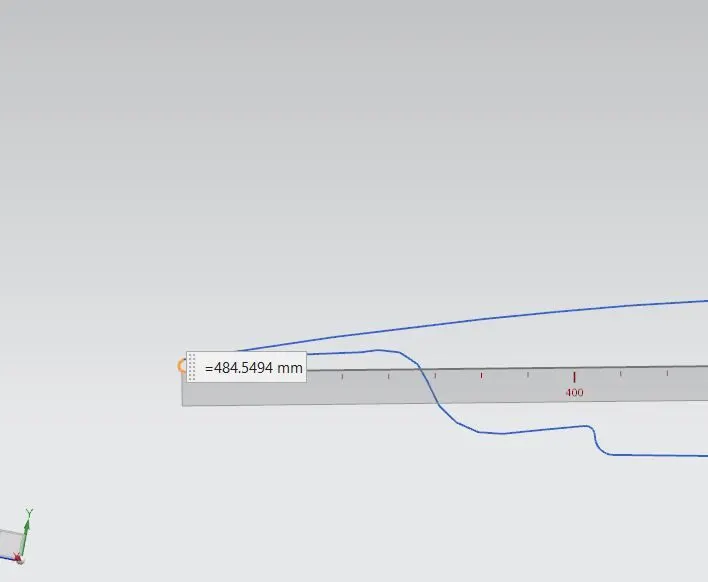
We then calculate the section modulus of the given section using the formula mentioned above.
We calcualte and get the value Smin= 21.9804 mm3
Now to increase the section modulus we will offset the the bottom curve to 0.25mm to the bottom.
Now we get new moment of inertia .
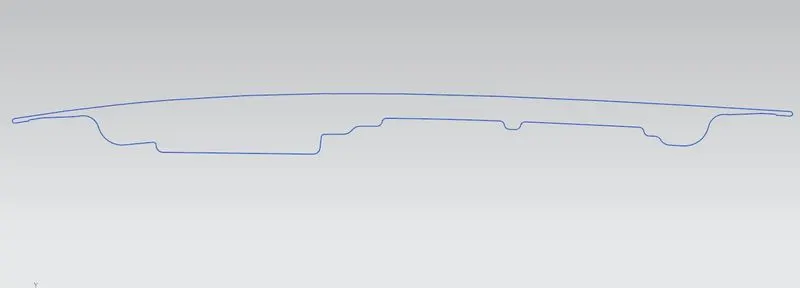
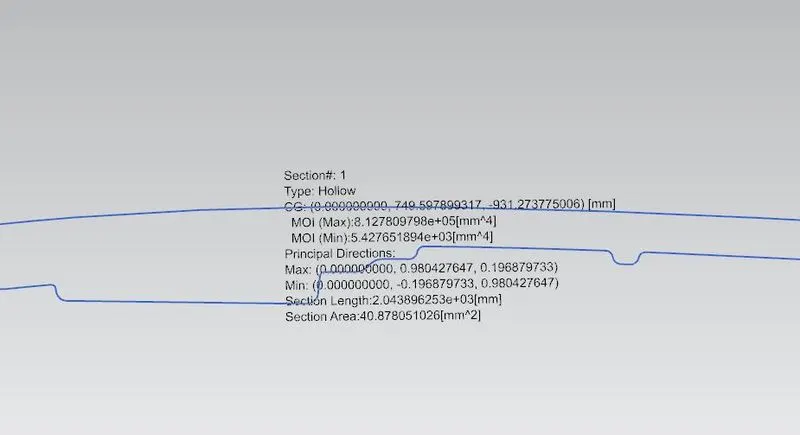
After calculating the section modulus we get is about 22.4027mm3
Now we offset the the bottom curve in the opposite direction i.e. towards up by 0.5.
And then we get the new moment of inertia.
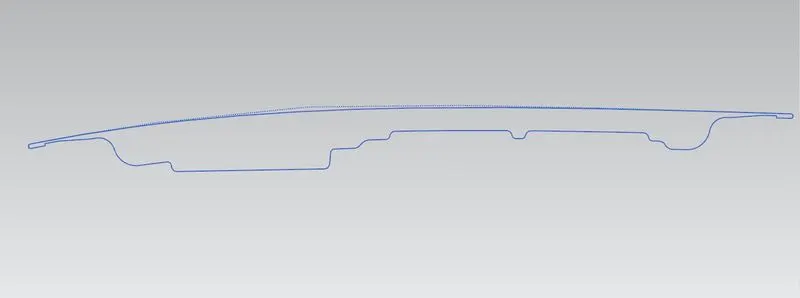
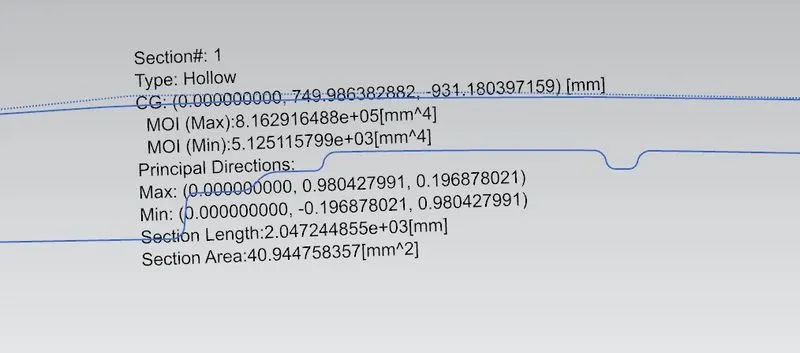
After calculating we get the section modulus of about 21.1541mm3.
Table-
|
CASE |
SECTION |
Imin(mm4) |
Smin(mm3) |
|
1 |
Original |
5.3253 x 10³ |
21.98 |
|
2 |
Offset 0.25mm down |
5.4276 x 10³ |
22.4 |
|
3 |
Offset 0.5mm up |
5.1257 x 10³ |
21.15 |
From the table we observe that the 2nd case gives us a higher value of section modulus.
CONCLUSION
From the above results and table we can conclude and say that offsetting the cross section of inner panel 0.25mm down would give better section modulus and this would then help in inceasing the strength of the hood.
From this we also understood how to find moment of inertia in NX Cad and also how to calculate section modulus.