Section Modulus calculation and optimization
Challenge 4:
Section Modulus Calculation and Optimization
SECTION MODULUS (SECTION FACTOR), S
A bending design requires a determination of the beam’s Section Modulus, a geometric property which is the ratio of I to c.
Maximum Fiber Stress
The maximum fiber stress at any section occurs at the point or points most remote from the neutral axis and is given by equation shown below when y = c; hence:
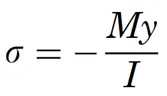
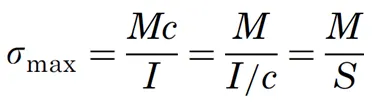
where S is the Section Modulus. The maximum fiber stress in the beam occurs at the section of greatest bending moment. If the section is not symmetrical about the neutral axis, the stresses should be investigated at both the section of greatest positive moment and the section of greatest negative moment.
Definition
The Section Modulus is defined as the ratio of total moment resisted by the section to the stress in the extreme fiber. It gives us an idea about how much of load the given structure can take. If the moment of inertia increases, the section modulus increases, and hence we can tell that the load bearing capacity increases.
In general, a beam is more efficient if the material is located farther from the neutral axis, where it is more highly stressed and provides a larger Section Modulus.
In the majority of cases the suspended span of the beam will be relatively long, so that the internal moments within it will be large.
Often several beams that have the same section modulus can be selected, and if deflections are not restricted, usually the beam having the smallest cross-sectional area is chosen, since it is made of less material, and is therefore both lighter and more economical than the others.
For the cross section of a beam, the Section Modulus with respect to either principal axis of inertia is the moment of inertia with respect to that axis, I, divided by the distance from that axis to the most remote point of the section, c. The Section Modulus is defined by the formula:
S = I/c
where:
S = Section Modulus
I = Moment of Inertia
c = Distance from the neutral axis to the extreme end of the object (outermost fiber).
CALCULATING HOOD SECTION MODULUS
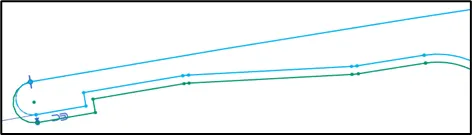
The first step consists of extract the hood section from the model. It was extracted the section along X vector since we take the frontal crash into account.
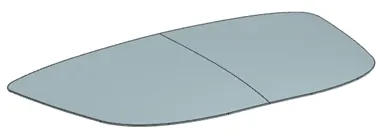
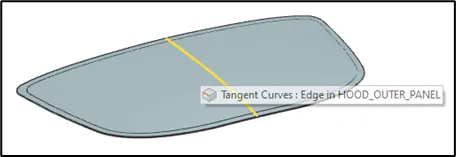
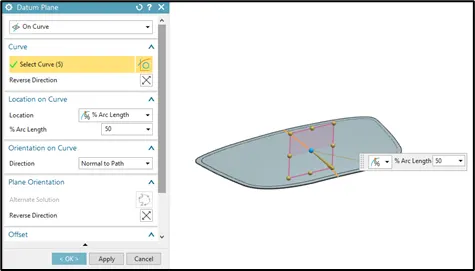
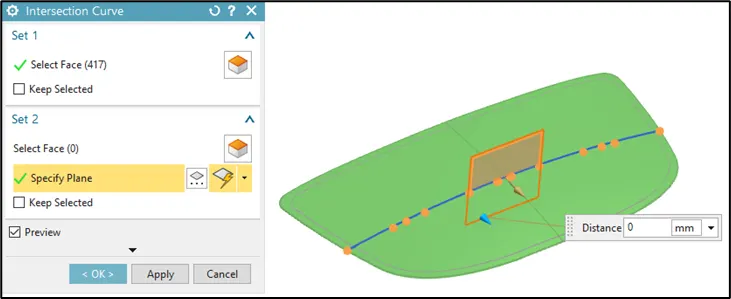
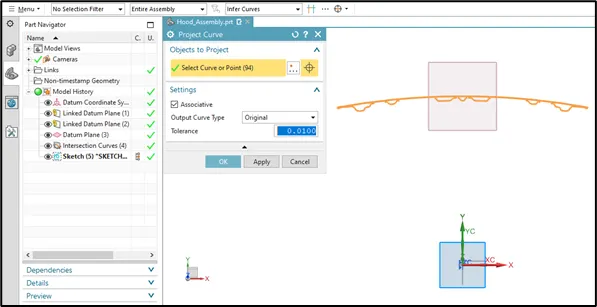
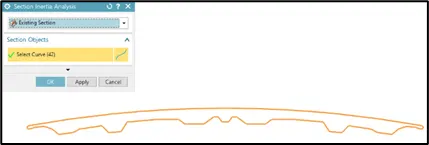
Editing and rebuilding the projected curve to leave it prepared for Inertia Analysis (should be a Closed Section):
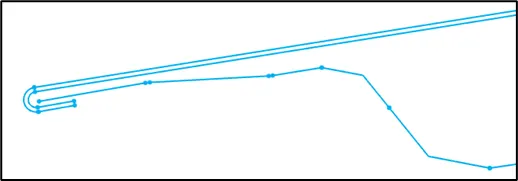
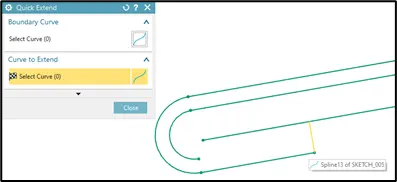
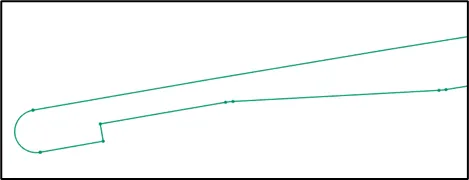
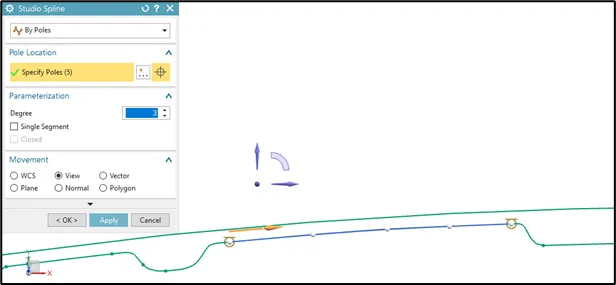

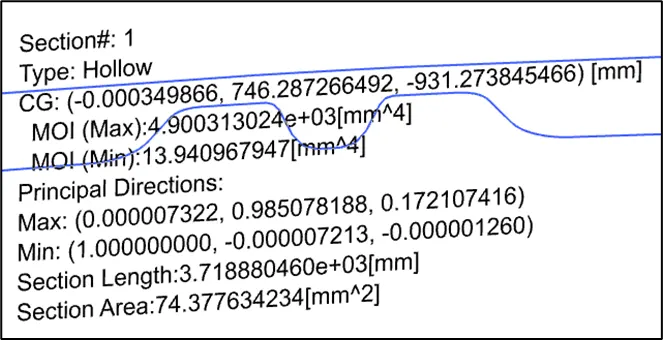
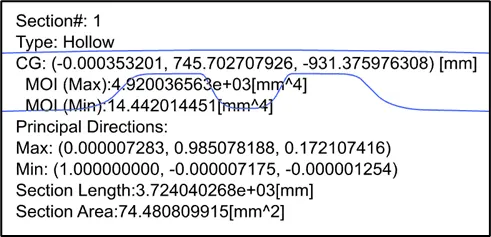
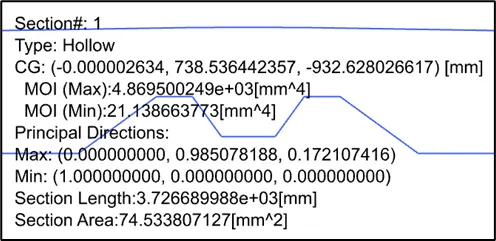
Calculating Section Geometric Properties in NX:
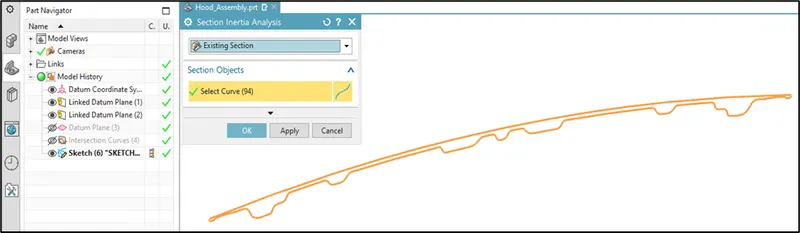

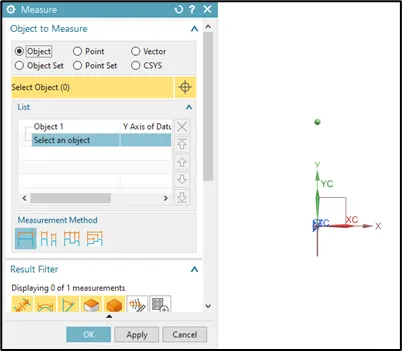
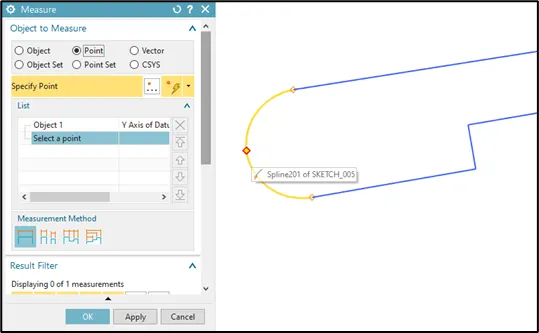
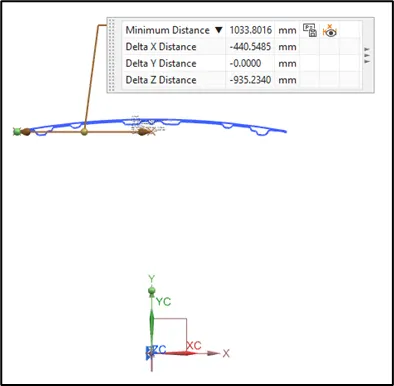
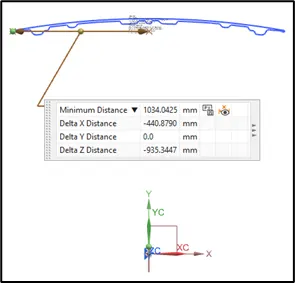
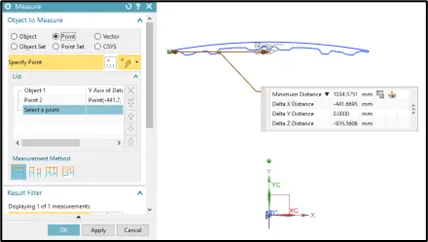
Then, we get the distance to the outermost fiber or point should be in X direction.
The design always has to be done for the minimum resistance towards bending of a section. Using this geometrical data from Hood section, it is calculated the Section Modulus using the formula:
S = I/c
where:
S = Section Modulus
I = Minimum Moment of Inertia (Min MOI) = 13.940967947
c = Distance from the center to the outer edge of hemmed outer panel = 440.5485 mm

Section Inertia Optimization
Some of options about how optimize the Hood Section Modulus to increase stiffness are summarized below:
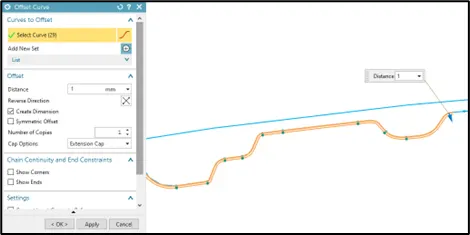
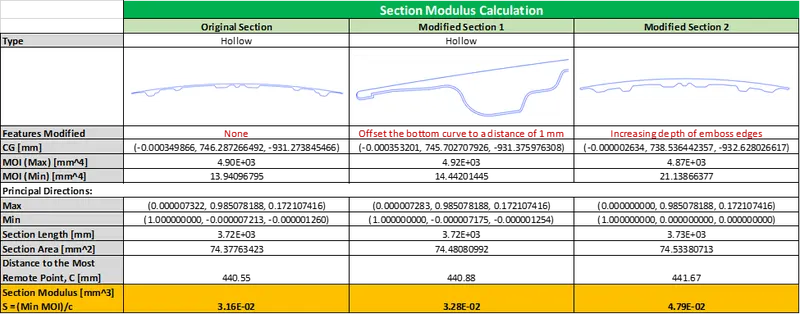
Modified Section 1: Offset the bottom curve to a distance of 1 mm.
Modified Section 2: Increasing depth of emboss edges.

Section Inertia Analysis Chart
To compare all the results, below is presented a summary chart showing the differences between original section and the modifications. It should be noticed that section modifications like increasing inner panel and emboss depth contribute to increase the hood bending stiffness.
Conclusion:
In summary, any geometry modification of a section will affect its bearing capacity. In this case, both proposals of section modification optimized the Section Modulus compared to the original which would mean that in case of crash, the hood will be able to withstand higher loads.
REFERENCES
- Young, W. C. – Roark’s Formulas for Stress and Strain – McGraw Hill - 7 Ed (2002).
- Gere J, M., Timoshenko, Stephen P. - Mechanics of Materials - Springer - 3 Ed.
- Hibbeler, R. C. - Mechanics of Materials - Pearson (2017).