Section Modulus calculation and optimization
TITLE: SECTION MODULUS CALCULATION AND OPTIMIZATION
OBJECTIVE:
- To calculate the section modulus for a previously designed hood.
- To make improvements in this hood so that section modulus will be improved.
EXPLANATION:
Section modulus is a geometric property for a given cross section used in the design of beams or flexural members. It is the direct measure of the Flexural strength of the section.Higher the section modulus of a structure, the more resistive it becomes to bending.
Section modulus (S) is defined as the ratio of polar moment of Inertia (I) to the radius of the shaft or the distance from the neutral axis and the extreme end of the object (y)
Section modulus (S) = I/y
Where,
S = Section modulus
I = Moment of Inertia
Y = Distance between the neutral axis to the farthest fiber.
CALCULATION OF SECTION MODULUS:
For the existing section:
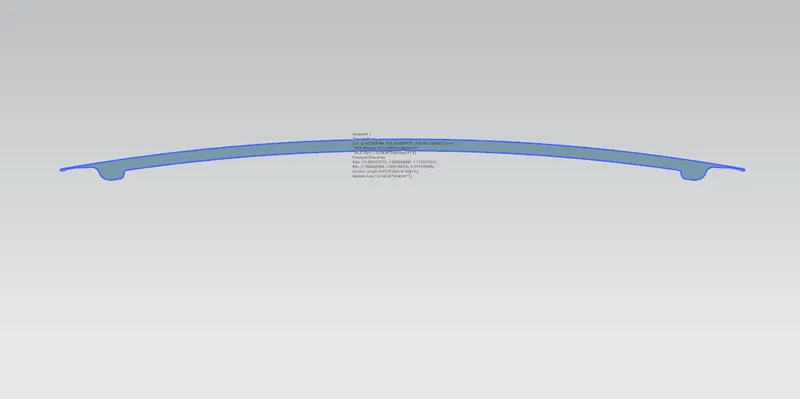
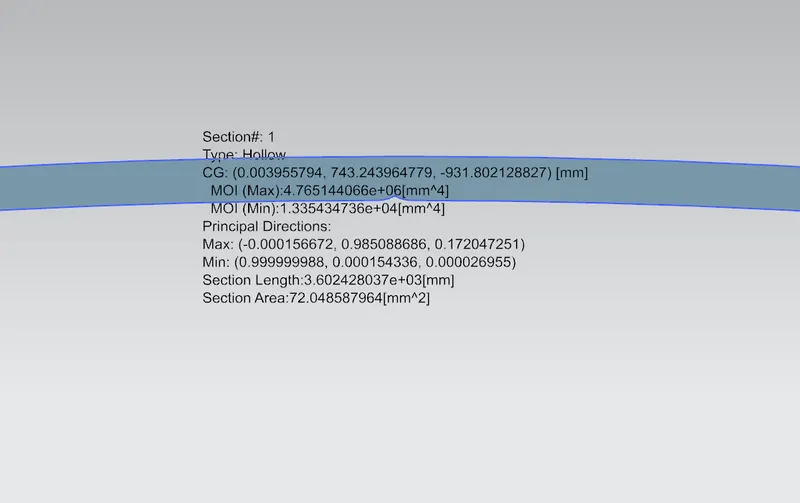
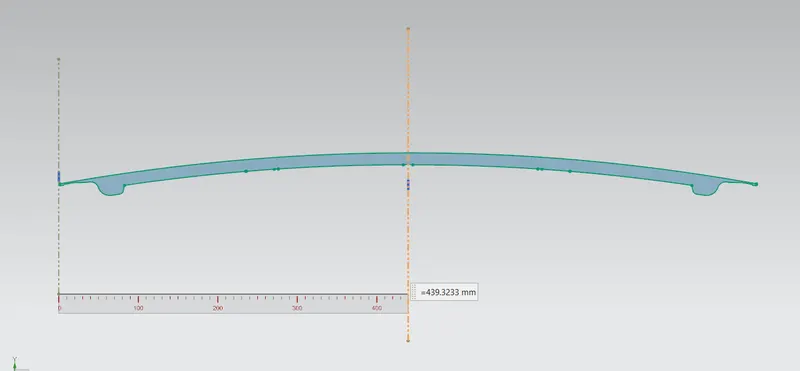
I = 1.335*10⁴ mm⁴
Y = 439.32 mm
S = I/Y = 30.38 mm³
For improved design:
For the improved design I offsetted the lower edge of the inner panel by 0.5 mm downward.
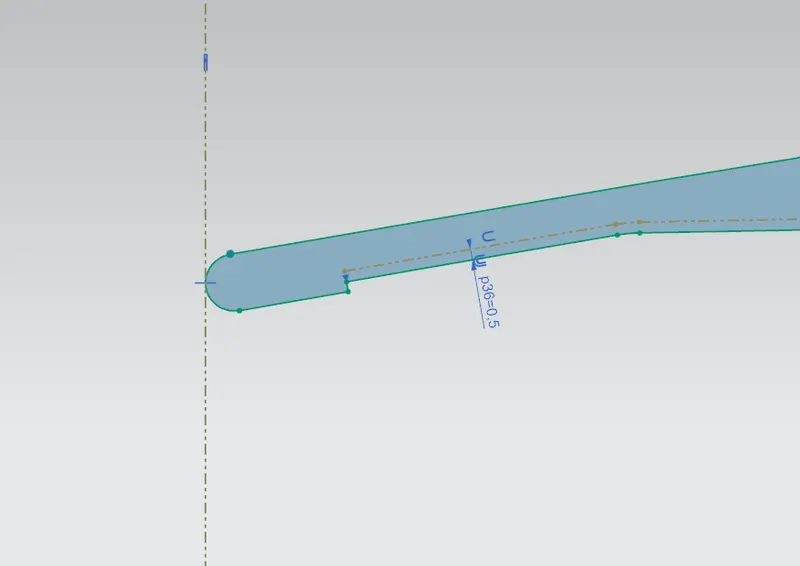
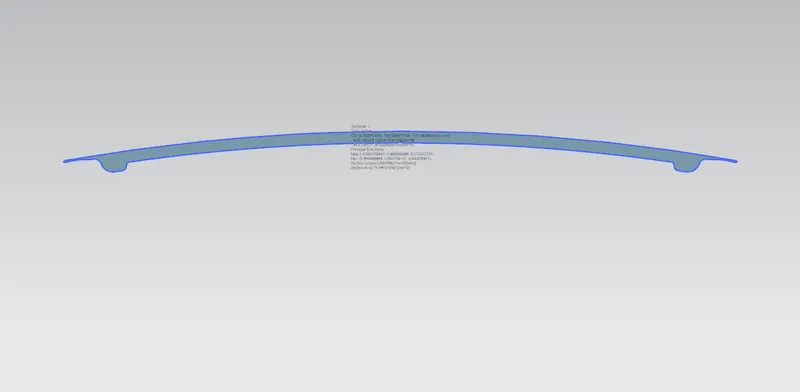
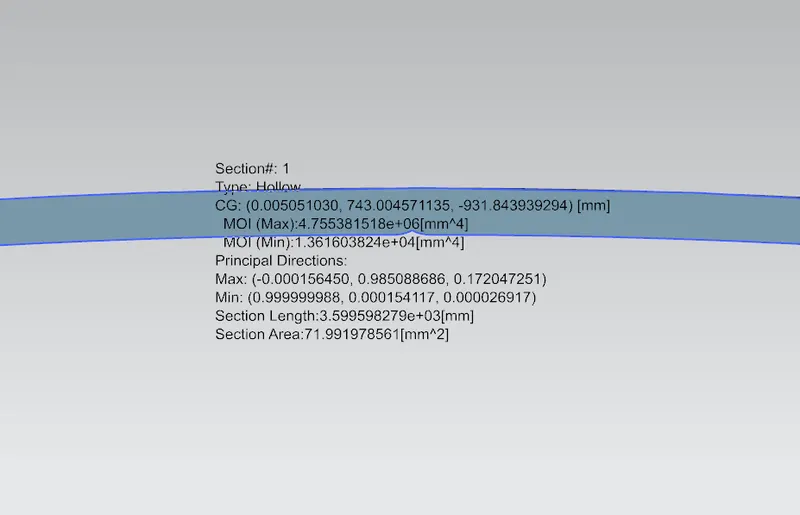
I = 1.3616*10⁴ mm⁴
Y = 439.32 mm
S = I/Y = 31 mm³
Positive outcome of improved design:
% increase in the section modulus = (31-30.38)/30.38 * 100
= 2.04%
Due to this modification, a 2% increase in the section modulus of the Hood. As section modulus is directly proportional to the moment of inertia, the value of the Flexural strength of the section is increased. and it becomes more resistant to bending.
CONCLUSION:
- Thus for increasing the Section modulus of the hood we have to increase the gap between the inner panel and outer panel of the hood.
- By increasing the gap by 0.5mm I get a 2% increase in the section modulus.
- Overall I learned about the importance of the section modulus and how we can increase or decrease it.