Benchmarking
Benchmarking:
What is Benchmarking?
Benchmarking is a process of measuring the performance of a company’s products, services, or processes against those of another business considered to be the best in the industry, aka “best in class.” The point of benchmarking is to identify internal opportunities for improvement. By studying companies with superior performance, breaking down what makes such superior performance possible, and then comparing those processes to how your business operates, you can implement changes that will yield significant improvements.
That might mean tweaking a product’s features to more closely match a competitor’s offering, changing the scope of services you offer, or installing a new customer relationship management (CRM) system to enable more personalized communications with customers.
There are two basic kinds of improvement opportunities: continuous and dramatic. Continuous improvement is incremental, involving only small adjustments to reap sizeable advances. Dramatic improvement can only come about through reengineering the whole internal work process.
Key Benefits
In addition to helping companies become more efficient and profitable, benchmarking has other benefits, too, such as:
- Improving employee understanding of cost structures and internal processes
- Encouraging team-building and cooperation in the interests of becoming more competitive
- Enhancing familiarity with key performance metrics and opportunities for improvement company-wide
In essence, benchmarking helps employees understand how one small piece of a company’s processes or products can be the key to major success, just as one employee’s contributions can lead to a big win.
BENCHMARKING PROCEDURE
Considerations
- Before an organization can achieve the full benefits of benchmarking, its own processes must be clearly understood and under control.
- Benchmarking studies require significant investments of manpower and time, so management must champion the process all the way through, including being ready and willing to make changes based on what is learned.
- Too broad a scope dooms the project to failure. A subject that is not critical to the organization’s success won’t return enough benefits to make the study worthwhile.
- Inadequate resources can also doom a benchmarking study by underestimating the effort involved or inadequate planning. The better you prepare, the more efficient your study will be.
Plan
- Define a tightly focused subject of the benchmarking study. Choose an issue critical to the organization’s success.
- Form a cross-functional team. During Steps 1 and 2, management’s goals and support for the study must be firmly established.
- Study your own process. Know how the work is done and measurements of the output.
- Identify partner organizations that may have best practices.
Collect
- Collect information directly from partner organizations. Collect both process descriptions and numeric data, using questionnaires, telephone interviews, and/or site visits.
Analyze
- Compare the collected data, both numeric and descriptive.
- Determine gaps between your performance measurements and those of your partners.
- Determine the differences in practices that cause the gaps.
Adapt
- Develop goals for your organization’s process.
- Develop action plans to achieve those goals.
- Implement and monitor plans.
Comparison of 5- seater Vehicle:
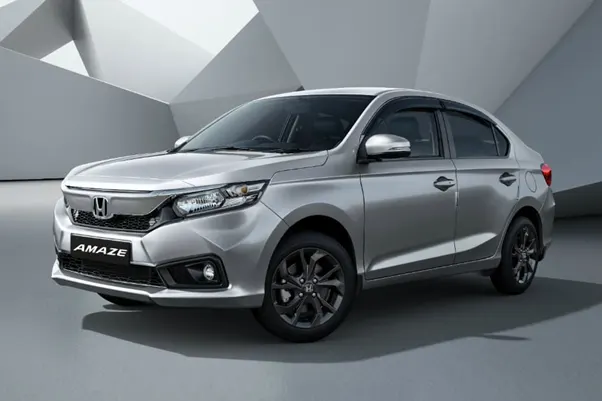
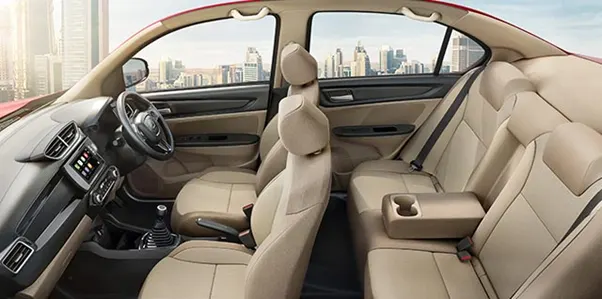
Honda amaze (Special edition diesel):
A key feature to focus on:
Milage - 24.7 kmpl
Ex-showroom price - Rs. 8.47 lakh
On-road price - Rs. 9.61 lakh
Summary:
The Honda Amaze is the most economical subcompact saloon by the Japanese carmaker. It is available in four variants - E, S, V, and VX. Honda offers the Amaze with one petrol and one diesel engine. Besides, there are five paint alternatives - Platinum White Pearl, Lunar Silver Metallic, Golden Brown Metallic, Modern Steel Metallic, and Radiant Red.
It gets halogen headlamps with LED DRLs and fog lamps. Besides, it gets LED turn signals in ORVMs, 15-inch alloy wheels, an anti-lock braking system with EBD, rear parking sensors with a camera, etc.
The cabin of the Amaze features a dual-tone color theme. Additionally, there is a 6.9-inch infotainment touchscreen that supports Apple CarPlay and Android Auto, a multifunctional steering wheel, hands-free calling and music streaming via Bluetooth, dual airbags, cruise control, and paddle shifters, a start/stop button, voice command, etc.
The Amaze comes with two powertrains - a 1.2-liter inline four-cylinder engine either mated to a five-speed manual or a CVT automatic while a 1.5-liter inline-four diesel engine also comes with a five-speed manual or the CVT.
Honda offers the saloon with two special variants - Exclusive Edition and Special Edition. The Exclusive Edition features suede upholstery for seats, LED scuff plate and chrome inserts around windows, fog lamps, tailgate, and an Exclusive Edition badge. Meanwhile, the Special Edition has a Digi pad 2.0 touchscreen infotainment display, a sliding armrest, seat covers, and a Special Edition badge.
Positives:
- Comfortable ride over all surfaces, noiseless suspension even over broken roads
- Improved overall interior space with increased storage spaces, including 1-liter bottle holders on all doors
- Diesel-CVT is smooth, efficient, and well suited for the city
- Largest-in-segment luggage compartment, well-shaped too
- Comfortable seats front and rear, no issues seating tall passengers behind each other
- Long standard safety equipment list - ABS+EBD, dual airbags, ELR seatbelts, ISOFIX anchor points
Negatives:
- Missing feature list - automatic headlamps, automatic wipers, projector headlamps
- Fit and finish issues, and cost-cutting is evident
- Rear headroom is at a premium, and fixed headrests are not comfortable
- The diesel engine is still noisy
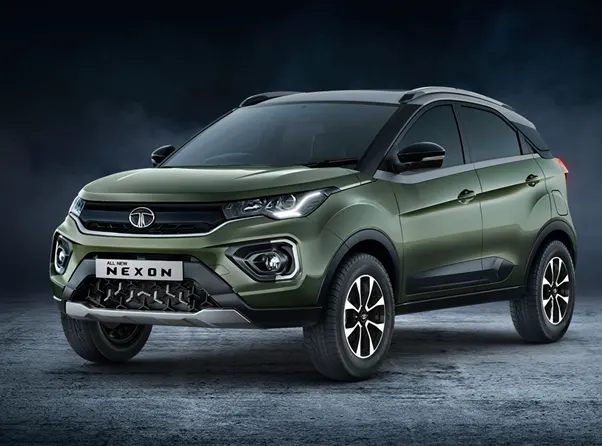
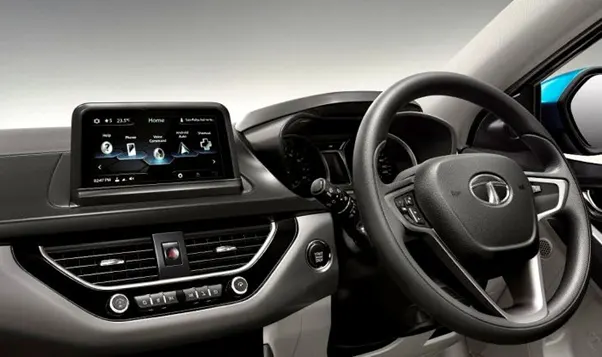
Tata Nexon (XE Diesel):
A key feature to focus on:
Milage – 16.8 kmpl
Ex-showroom price - Rs. 8.49 lakh
On-road price - Rs. 9.69 lakh
Summary:
The Tata Nexon is a compact SUV from the Indian automaker. Launched, in 2017, it received a facelift in 2019 and is offered across eight trim levels with a BS6-compliant powertrain and added equipment.
In terms of exterior design, you get headlamps with a sharp design combined with a much sleeker grille as compared to the pre-facelift model. Even the bumper design is revised which has now a larger intake and a contrasting skid plate. In profile and at the back, things remain more or less unchanged. Also part of the update is a new alloy wheel design.
On the inside, the Nexon continues to be spacious with its well-laid-out cabin. You’ve got a revised instrument cluster with an all-digital readout. The floating infotainment screen gets mobile connectivity features as well. Apart from the new upholstery, Nexon’s updated cabin also packs in new equipment to get it up to the mark with the competition. This includes a sunroof, fast mobile charger, rain-sensing wipers, and cruise control to name a few.
In terms of powertrain, the Tata Nexon facelift is powered by BS6 compliant versions of the 1.2-liter turbocharged petrol engine and the 1.5-liter diesel engine. Transmission options include a six-speed manual gearbox and an automated manual transmission for both engines.
The Tata Nexon is a rival to the other compact SUVs like the Maruti Suzuki Vitara Brezza, Hyundai Venue, Ford EcoSport, Honda WR-V, and the Mahindra XUV300. Future rivals include the Nissan Magnate, Renault Kiger, and the Kia Sonet.
Positives:
- Handsome looks
- Impressive ride quality
- Easy to drive with good handling
- Feature-packed
- A safe car with solid build quality.
Negatives:
- Uninspiring bottom-end engine performance
- Mediocre fuel efficiency
Maruti Suzuki VitaraBrezza (VXI):
A key feature to focus on:
Milage – 17.03 kmpl
Ex-showroom price - Rs. 8.57 lakh
On-road price - Rs. 9.62 lakh
Summary:
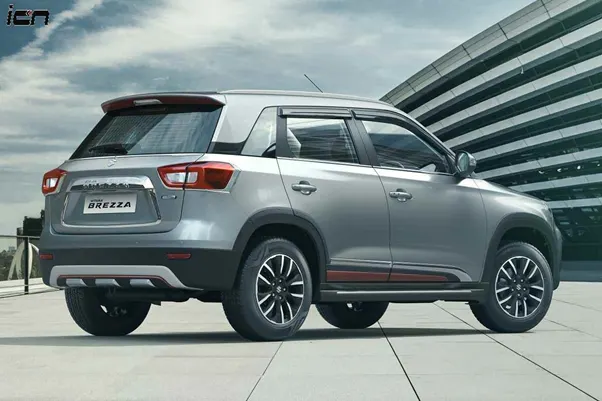
The Maruti Suzuki Vitara Brezza is available with updated styling, additional equipment, and a new petrol engine. The facelifted Vitara Brezza is available in three new color options including Torque Blue, Oven Red, and Autumn Orange. The compact SUV is also available in three new dual-tone color options - Sizzling Red with Midnight Black roof, Torque Blue with midnight Black roof, and Granite Grey with Autumn Orange roof.
Exterior
Feature highlights of the Maruti Suzuki Vitara Brezza facelift include projector headlamps with LED DRLs, a new grille, new 16-inch dual-tone alloy wheels, LED tail-lights, and a revised rear bumper for freshness. As for the rear, the Vitara Brezza gets new LED taillights and a slightly restyled rear bumper.
Interior
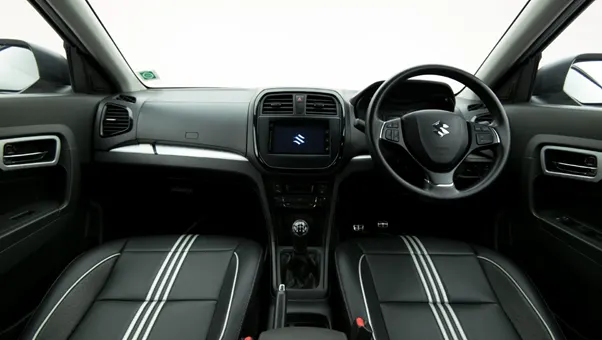
The vehicle gets fabric upholstery with an all-black theme. The car gets a leather-wrapped steering wheel, auto-dimming IRVM, and the SmartPlay infotainment system. The top-spec variant gets features like auto-dimming IRVMs and a leather-wrapped steering wheel.
Engine
The Maruti Vitara Brezza is powered by a 1.5-liter K-Series petrol engine that produces 103bhp and 138Nm of torque. It is offered with a five-speed manual transmission and an automatic transmission with Smart Hybrid technology.
Positives:
- A smooth petrol engine is relaxing and fun!
- Comfortable ride quality. Tackles bumps, and potholes much better.
- Spacious cabin for a family of five. Ample boot space too.
Negatives:
- Old-school 4-speed automatic feels slow on inclines and highways.
- Missing features sunroof, rear-AC vents, side, and curtain airbags.
- No option for a diesel engine.
Tata Altroz (XT) :
A key feature to focus on:
Mileage – 25.11 km
Ex- showroom price - Rs. 8.44lakh
On-road price - Rs. 9.62 lakh
Summary:
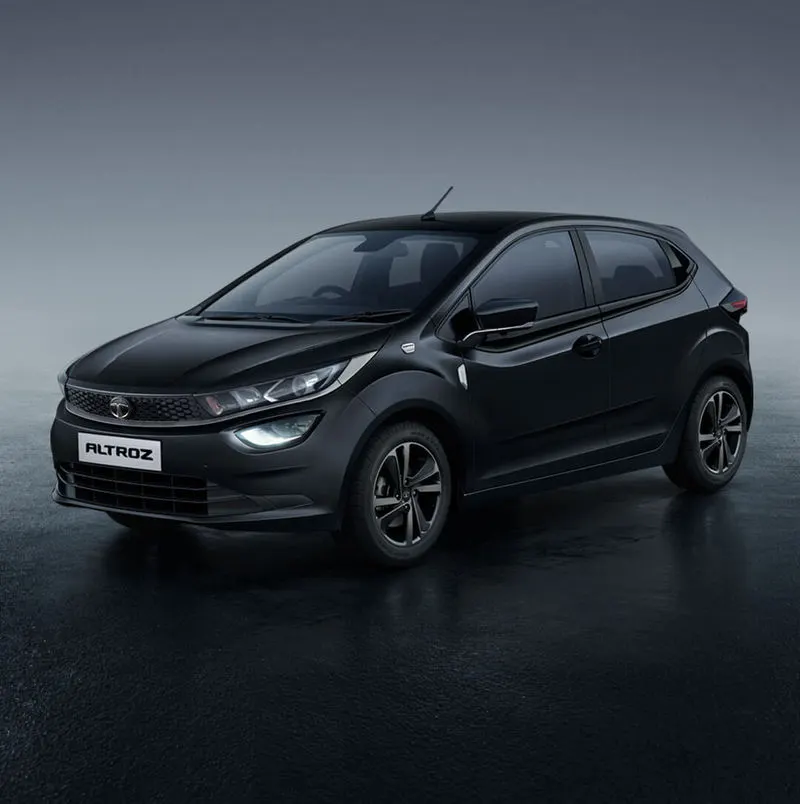
Tata Altroz is a premium hatchback car. It comes with three powertrain alternatives; all are paired with a single five-speed manual. The car is available in five different colors – Harbour Blue, Avenue White, Midtown Grey, Downtown Red, and High-Street Gold. The Altroz has been awarded five stars by Global. CA.
The Altroz is based on a new modular platform, named ALFA. It has a 3,990mm length and 2,501mm wheelbase. Also, it has a 165mm ground clearance and 345-l345-liter space. Besides, the front features dual headlamps and below them, there is an integrated DRLs and fog lamps unit. It comes with 16-inch alloy wheels depending on the variant.
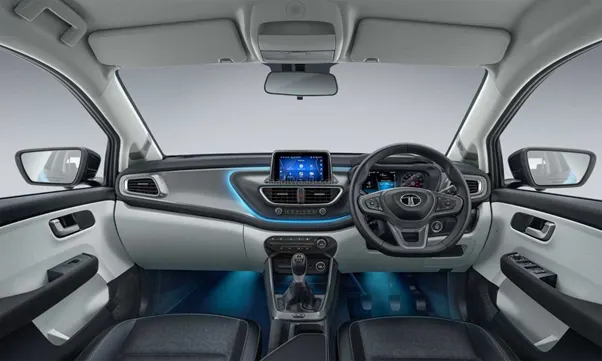
Inside, the Altroz features a dual theme color interior. The dashboard has a floating seven-inch touchscreen and another seven-inch screen with an analog dial for the instrument cluster. The infotainment system supports Apple CarPlay and Android Auto as well as the ConnectNext app suit. Besides, there is a 15-liter cooled glove box.
The car comes with many features such as cruise control, ABS with EBD, corner stability control, reverse camera, auto headlamps, rain-sensing wipers, three words navigation, etc.,
There are three engine alternatives – 1.2-liter three-cylinder petrol, 1.2-litre three-cylinder turbocharged petro, l an1.5-liter in-line four-cylinder turbocharged diesel engine. All are mated to a five-speed manual transmission.
Positives:
- Five-star safety rating
- Leatherette upholstery makes the cabin feel more premium
- Voice command recognition is accurate and quick
- Best-in-class ride and handling package
Negatives:
- Premium features like ventilated seats, wireless charger, and sunroof still missing
- No option for an automatic transmission yet
- Cabin insulation is lacking
Conclusion:
As Mr. D.S. Pughazhyendhii is living in a crowded city like Bangalore. After buying the car he will be using that car to commute to the office and also, he wants to visit his native place Madurai which is 500km away from Bangalore once a month. So, mileage will be one of the key aspects of his car that’s why I am picking the Tata Altroz (XT) as this car has a mileage (ARAI) of 25.11 km with the diesel variant. Also, Mr. D.S. Pughazhyendhii looking for a car for his family the so, safety of the family is one of the main aspects to be looked at during purchasing a new car. Tata Altroz fulfills the safety aspect as it it is having 5-star safety rating.